The Short Answer
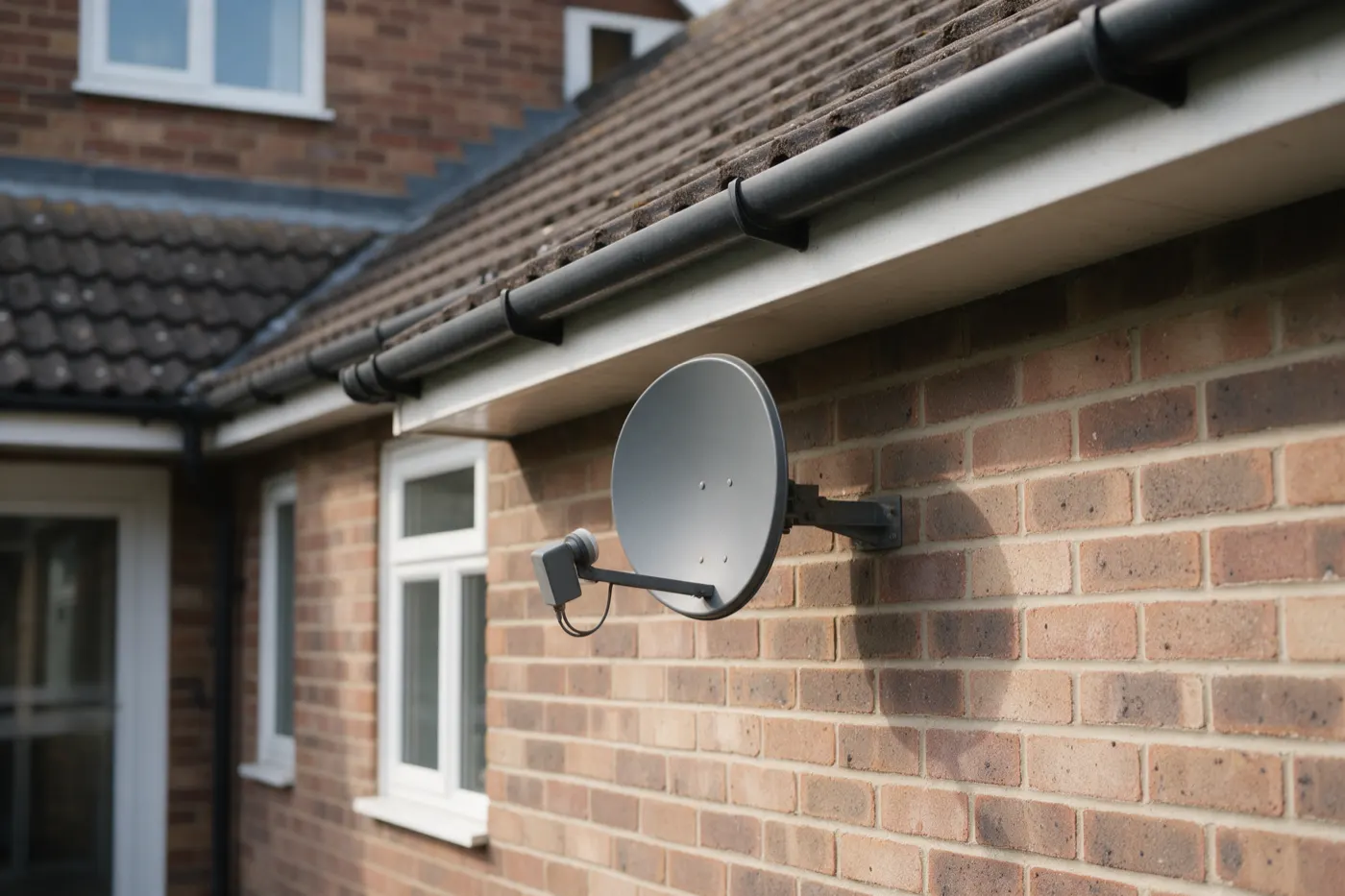
On our estimates, a new outdoor TV aerial costs about £200 to £350 supplied and fitted with a pole and bracket. Replacing an existing aerial is £120 to £200; a loft aerial £110 to £200. Most jobs take one to two hours.
Picture breaking up isn't always the aerial: a repair or realignment (£80 to £150) may fix it. I'd ask the installer to test the signal before replacing anything.
Aerial prices
| Item | Typical cost |
|---|---|
| New outdoor aerial, pole and bracket | £200 to £350 |
| Replace an existing aerial | £120 to £200 |
| Loft aerial | £110 to £200 |
| Repair or realign an aerial | £80 to £150 |
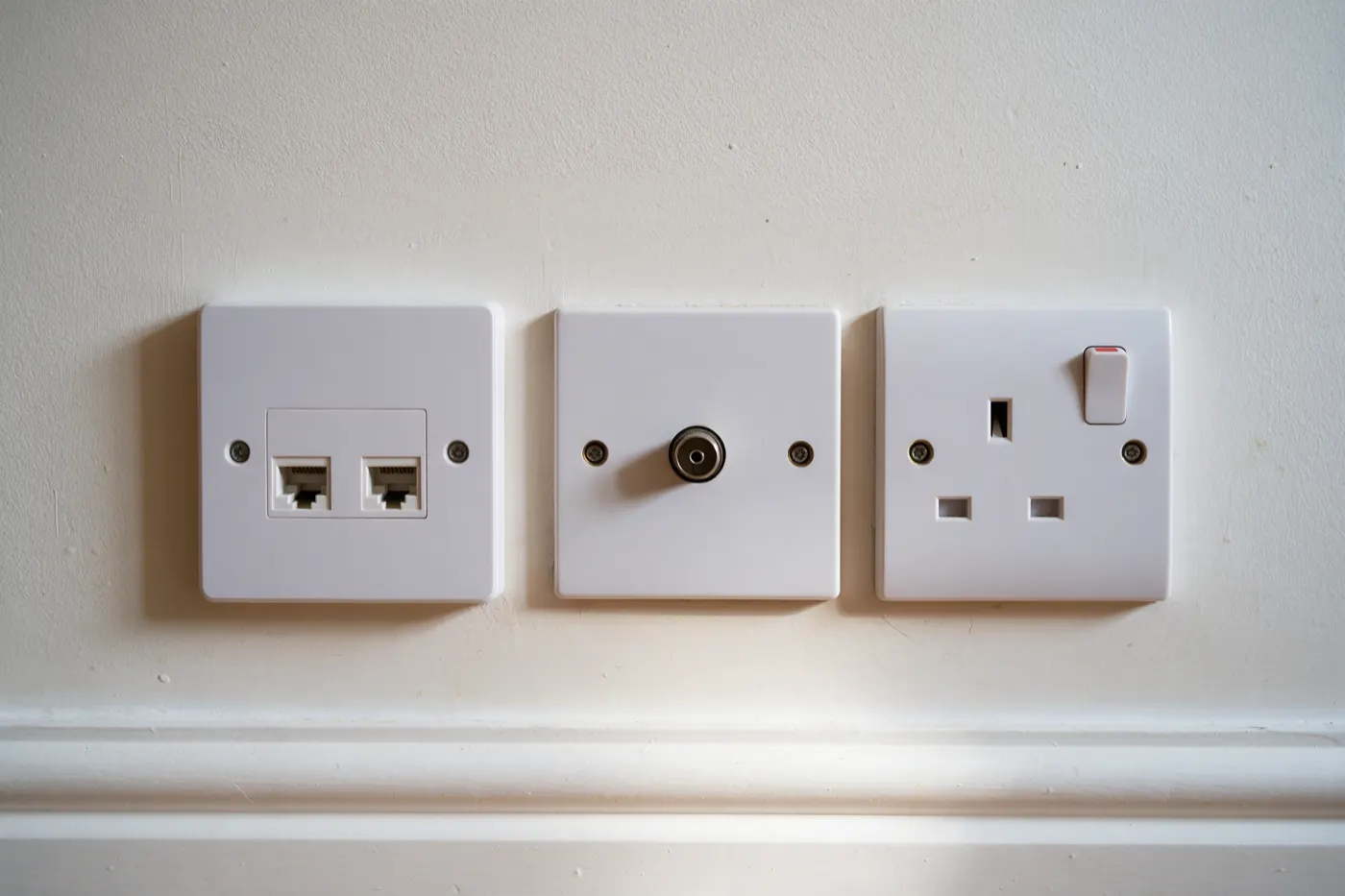
| Each extra TV point | £70 to £150 |
Loft or outdoor?
A loft aerial is cheaper and out of the weather, but the aerial industry's code of practice doesn't recommend fitting TV aerials in lofts, and notes that Ofcom treats any indoor aerial as an unprotected service if there's interference. I'd only use a loft aerial where the signal is strong, and go outdoors everywhere else.
What a proper installation involves
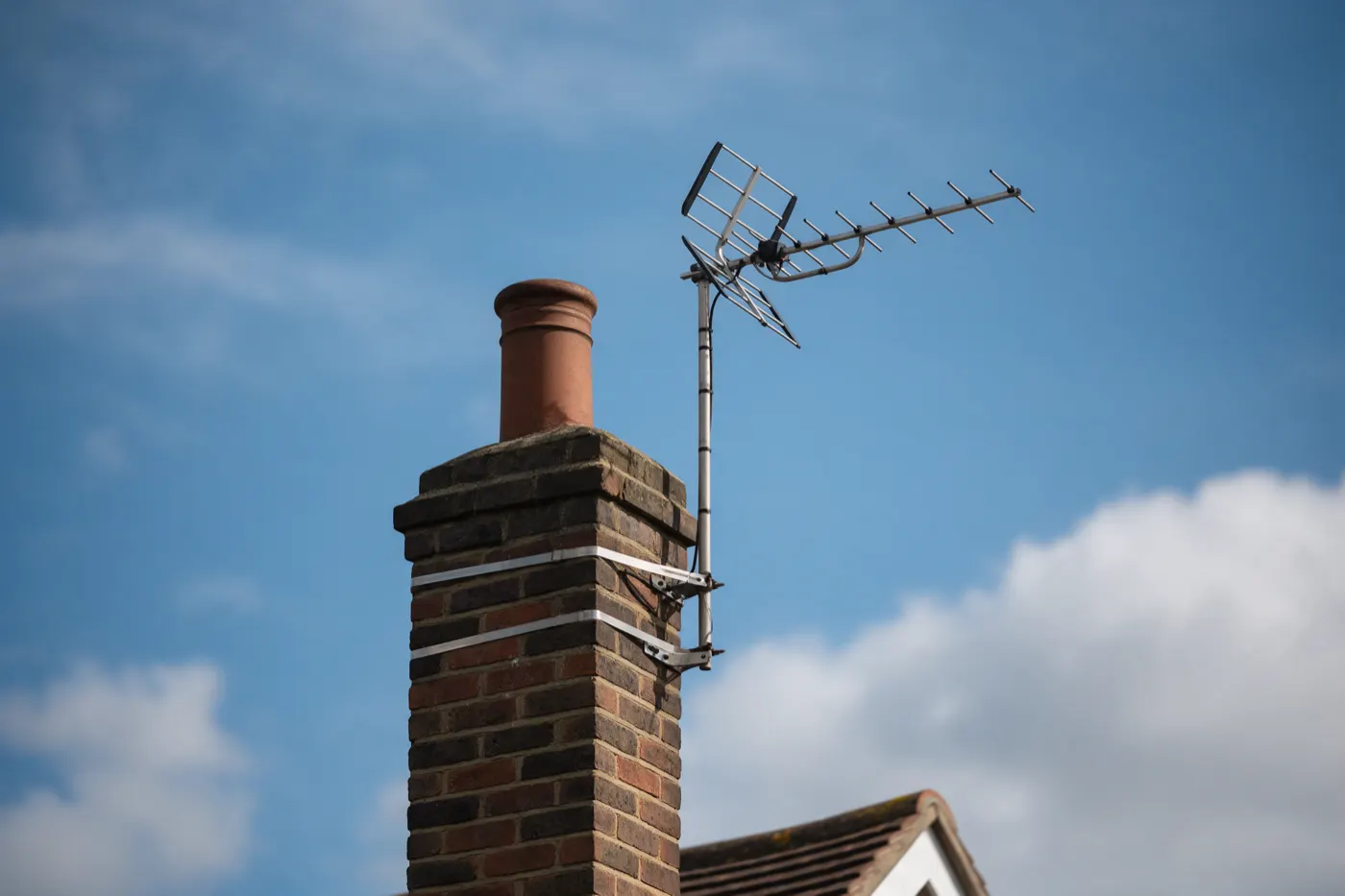
What a good aerial installer does, which is a useful checklist for comparing quotes:
- A survey with a signal meter first: which way your transmitter is, how strong the signal is, and the best place to mount the aerial (chimney, gable wall, or the loft if the signal allows).
- The right aerial: usually a wideband aerial for Freeview, with a filter where mobile phone masts (4G and 5G) interfere, and a higher-gain aerial in weak signal areas.
- Secure fixings: a chimney lashing or wall bracket and a mast tall enough to clear obstructions, without catching too much wind.
- Alignment by meter, not guesswork, then the aerial locked off.
- External-grade, UV-stable coax cable, neatly clipped with a drip loop, and the hole through the wall sleeved and sealed against water and draughts.
- For more than one TV: a masthead amplifier or a splitter with a distribution amplifier, with each feed labelled.
I'd ask each installer to put in writing which aerial and cable they'll use and that they'll test the signal at every TV point before they leave.
Are TV aerials being phased out?
Not yet. In a written answer to Parliament on 3 July 2026, the government said Freeview is secured until at least 2034 and no decision has been made about what happens after that. Its Green Paper of June 2026 consults on 2034 and 2044 as possible dates to switch it off. So an aerial bought now has years of use left, and I'd still fit one if you watch live TV.
A smart TV doesn't change that. Freeview says you need an aerial to watch Freeview live through the TV guide, though some channels can be watched over the internet without one. It recommends a wideband aerial (Type T or Type W), which covers all the frequencies used for digital TV.
Choosing an installer
I'd use an installer registered with the Confederation of Aerial Industries (CAI). Ask for the price to include testing the signal at each TV point.
Satellite and wall mounting
For Freesat or Sky, see satellite dishes; for the TV itself, TV wall mounting.
Get tv aerial quotes
Aerials are priced by where they go and how many TV points you want.
Free, no obligation. We're paid by MyJobQuote when a tradesperson buys your job, never by you.
Frequently asked questions
Are TV aerials being phased out?
Not before 2034. The government told Parliament on 3 July 2026 that Freeview is secured until at least then, with 2034 and 2044 both being consulted on as possible switch-off dates.
Which aerial is best for a smart TV?
The same as for any TV: Freeview recommends a wideband aerial (Type T or W). A smart TV can stream some channels without an aerial, but you need one to watch Freeview live through the TV guide.
Can I fit a TV aerial myself?
An indoor or loft aerial, yes, and Freeview says these may work where the signal is strong. Most aerials go on a chimney or roof, though, which is work at height: I'd leave those to an installer.
Is it worth installing a TV aerial?
If you watch live Freeview, I think so: it's secured until at least 2034. If you only stream, you may not need one.
How much does a new TV aerial cost?
On our estimates, about £200 to £350 for a new outdoor aerial, supplied and fitted.
How much does it cost to add a TV point?
About £70 to £150 per extra point on our estimates.
Is a loft aerial as good as an outdoor one?
Not usually. The aerial industry's code of practice doesn't recommend loft aerials. They can work where the signal is strong.
Do I need a 5G filter on my aerial?
Only if mobile signals interfere with your TV reception. A good installer tests the signal and fits a 4G or 5G filter where it's needed.
Can one aerial feed several TVs?
Yes, through a splitter or distribution amplifier. Each extra TV point costs about £70 to £150 on our estimates.
How long does it take to fit a TV aerial?
Usually one to two hours.
How we priced thisView sources (3, 1 official)
Rules come from the legislation and official guidance, read at source. Prices are our estimates: we check them against trade price data, retailer shelf prices and specialists' price lists, then build them up from their parts so the totals add up. Below are the sources behind the page; the trade price guides we only compare against aren’t listed. Where sources disagreed, we've said so. More on our method.
- IndustryDo I need an aerial?, Freeview. Checked 16 Oct 2026.
- OfficialWritten question UIN 13126, Freeview service (answered 3 July 2026 by the DCMS minister), UK Parliament. Checked 16 Oct 2026.
- IndustryCode of Practice 1: installation of terrestrial and satellite TV reception systems (Ed 5, Nov 2021), 16.6 loft fixing, Confederation of Aerial Industries. Checked 16 Oct 2026.