The Short Answer
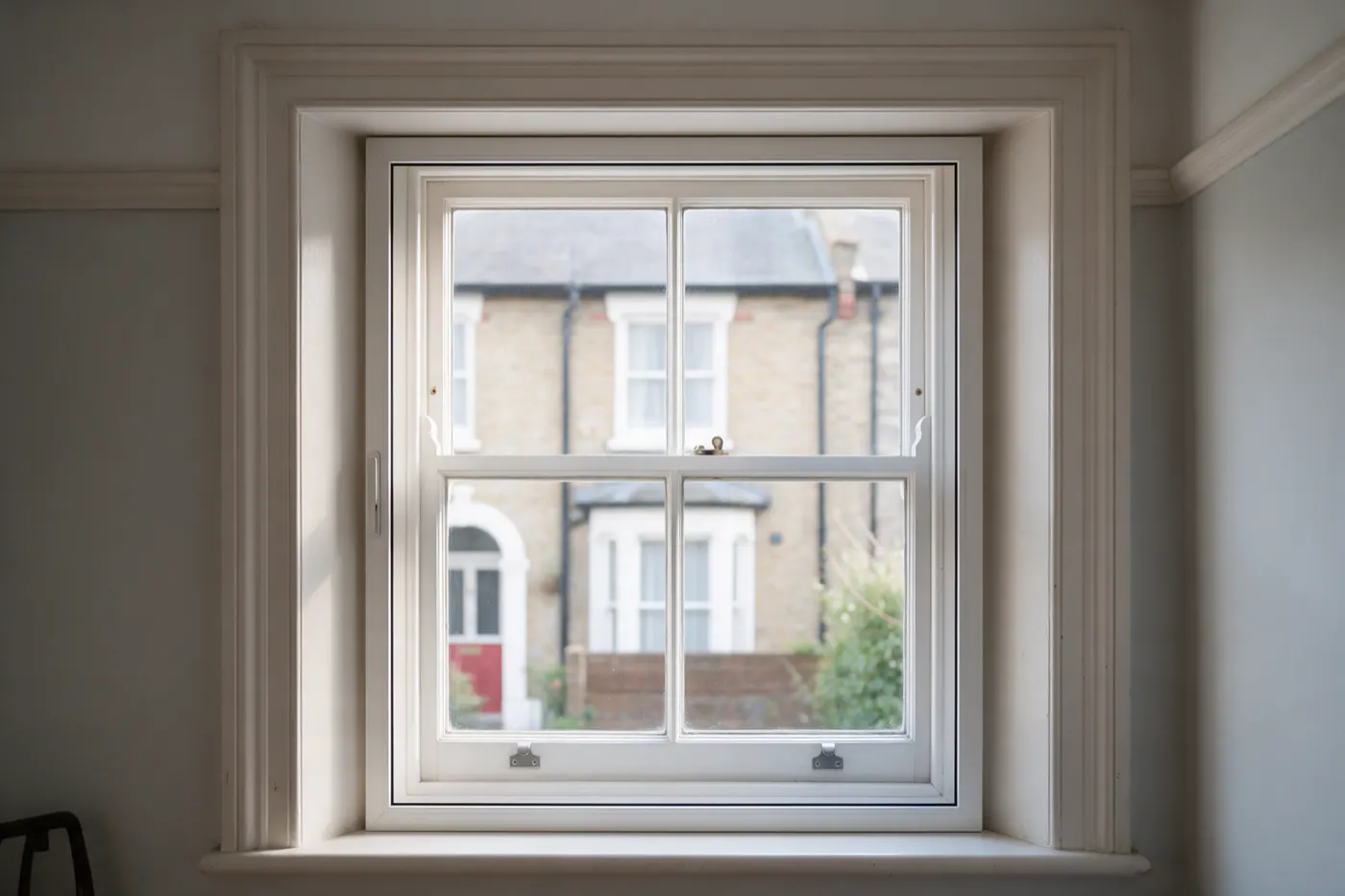
On our estimates, refurbishing a sash window (new cords, repairs, easing, draught-proofing) costs £650 to £1,000 per window and usually takes about a day. A new timber double-glazed sash is £1,700 to £3,500, and a uPVC sash £720 to £1,450.
Repair first if you can. Historic England says the idea that old windows are "worn out" comes largely from a culture of replacement rather than an assessment of their condition, and that draught-proofing or secondary glazing improve them significantly for much less than new windows.
Sash windows: repair or replace?
The same windows priced four ways, so you can see what refurbishing saves against replacing.
Draught-proof only
£1,250 to £2,000
Not enough for windows in this state.
Full refurbishment
£3,250 to £5,000
New cords, spliced repairs to rot, eased sashes and pulleys, draught-proofing, redecoration.
New uPVC sash windows
£3,600 to £7,200
Cheapest replacement; check first in a conservation area or on a listed building.
New timber sash, double glazed
£8,500 to £17,500
Like-for-like look with modern glazing and seals.
Including VAT. A full refurbishment usually takes about a day per window. On a listed building, replacement needs listed building consent, and Historic England's guidance is to repair significant historic windows wherever possible.
Sash window prices
| Job | Per window |
|---|---|
| Replace all four sash cords | £150 to £200 |
| Draught-proofing (brush seals and new beads) | £250 to £400 |
| New sill or sill repair | £160 to £320 |
| Full refurbishment | £650 to £1,000 |
| New uPVC sash window | £720 to £1,450 |
| New timber sash, double glazed | £1,700 to £3,500 |
| Conservation-grade timber replica | £1,800 to £3,600 |
| Secondary glazing instead | £300 to £650 |
Repair or replace?
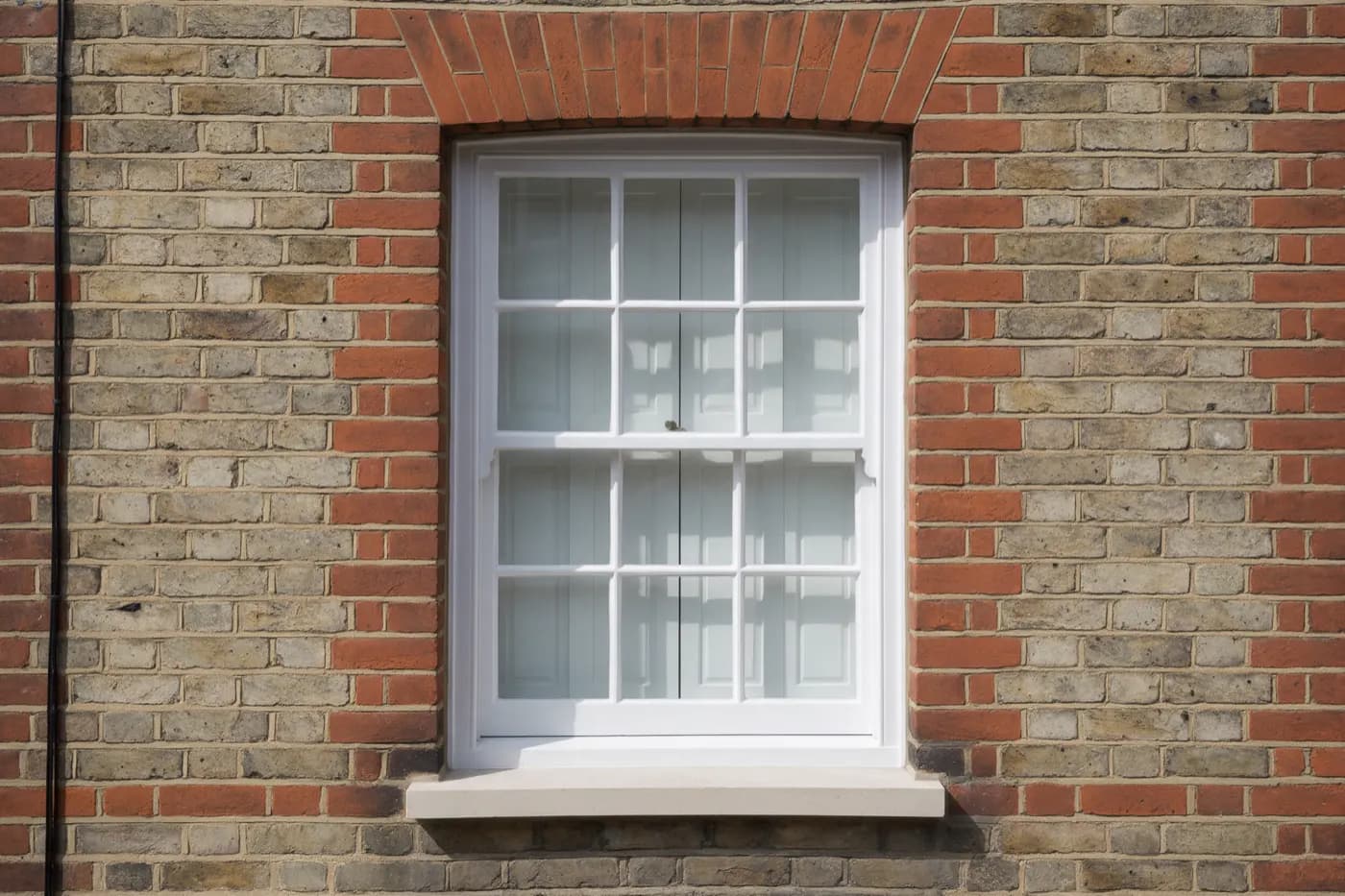
Most sash problems are what Historic England calls overhaul work. Its list of why sashes stop moving: paint build-up, stop beads fitted too tight, pulleys seized with paint or lack of oil, broken cords, timber swollen with water, or heavier replacement glass.
| Problem | What it usually needs |
|---|---|
| Broken cords, sash won't stay up | New cords (part of an overhaul) |
| Sticking, painted shut, seized pulleys | Overhaul: free the sashes, strip paint build-up, oil the pulleys, refit beads |
| Rattles and draughts | Draught-proofing |
| Rot in the sill or bottom rail | A spliced repair: rotten wood cut out and new timber let in to match |
| Rotten beyond repair | An accurate copy of the original |
| A later window of the wrong pattern | Replacement with the right pattern |
So repair is usually cheaper, and sash windows are very repairable: an overhaul is about a day's skilled work per window. I'd only replace a sash that's rotten through or that was the wrong pattern to begin with.
Making sash windows warmer
Historic England puts windows at about 10 to 20% of a building's heat loss, and says that in many older buildings the cost of double glazing will seldom be covered by energy savings within the life of the units. Draught-proofing and secondary glazing improve old windows significantly, and simply closing curtains, blinds and shutters can save as much heat as double glazing. Prices are above; see secondary glazing.
Listed buildings and conservation areas
Historic England's guidance for listed buildings, in short:
- Historic windows that contribute to the building's significance should be kept and repaired, and replaced with accurate copies only if beyond repair.
- Where historic windows survive without historic glass, slim-profile double glazing may be possible, but not if the frames would need replacing to take it.
- Later windows that don't follow the historic pattern can usually be replaced with ones that do.
Any of this needs listed building consent. In a conservation area, check whether an Article 4 direction controls window changes.
Get sash windows quotes
Sash windows can be repaired, upgraded or replaced. Tell specialists which, and how many.
Free, no obligation. We're paid by MyJobQuote when a tradesperson buys your job, never by you.
Frequently asked questions
Is it cheaper to repair or replace sash windows?
Repair, usually by a long way: a full refurbishment is £650 to £1,000 per window against £1,700 to £3,500 for a new timber double-glazed sash, on our estimates.
How much does it cost to replace a sash window in the UK?
On our estimates, £1,700 to £3,500 for a new timber double-glazed sash, £720 to £1,450 in uPVC, fitted.
Are sash windows easy to repair?
For a skilled joiner, yes: most problems (broken cords, sticking, paint build-up, seized pulleys) are routine overhaul work, and rotten sections can be spliced with new timber. A full refurbishment usually takes about a day per window.
Can a broken window sash be repaired?
Usually. Rotten parts can be cut out and new timber spliced in to match, which is Historic England's recommended repair. Only a sash rotten beyond repair needs replacing.
How much does sash window repair cost?
On our estimates, £150 to £200 for new cords, £250 to £400 to draught-proof, or £650 to £1,000 for a full refurbishment per window.
Can I put double glazing in sash windows?
Often, with slim double-glazed units. On listed buildings it may be possible where the historic glass hasn't survived, but it needs listed building consent.
How we priced thisView sources (6, 2 official)
Rules come from the legislation and official guidance, read at source. Prices are our estimates: we check them against trade price data, retailer shelf prices and specialists' price lists, then build them up from their parts so the totals add up. Below are the sources behind the page; the trade price guides we only compare against aren’t listed. Where sources disagreed, we've said so. More on our method.
- OfficialTraditional Windows: their care, repair and upgrading (HEAG039, rev. February 2017), Historic England. Checked 15 Oct 2026.
- OfficialModifying historic windows as part of retrofitting energy saving measures (updated 23 July 2024), Historic England. Checked 15 Oct 2026.
- IndustryEnergy efficient windows and doors (updated 20 May 2026), Energy Saving Trust. Checked 15 Oct 2026.
- Trade guideCost of replacing sash windows, Checkatrade. Checked 15 Oct 2026.
- Trade guideSash window restoration costs, Checkatrade. Checked 15 Oct 2026.
- Trade guideSecondary glazing costs, Checkatrade. Checked 15 Oct 2026.