The Short Answer
On our estimates, steel railings cost about £100 to £220 per metre supplied and fitted, so £600 to £1,300 for a 6m front boundary. Fixed on top of a dwarf wall they're £120 to £250 per metre.
True wrought iron is no longer made, so new railings sold as "wrought iron" are a different metal: ask what you're getting. For rust, the Galvanizers Association says galvanising on its own usually protects steel well, with paint on top mainly for colour.
Railing prices
| Job | Typical cost |
|---|---|
| Steel railings set in the ground, per metre | £100 to £220 |
| Railings on top of a wall, per metre | £120 to £250 |
| 6m front boundary, set in the ground | £600 to £1,300 |
| Metal side gate | £300 to £750 |
Fitting, and how long it takes
We estimate most railing jobs at one to two days, and fitting a single matching gate at roughly 6 hours of work. Railings are heavy: a small run is a manageable DIY job for someone competent, with help, but I'd leave anything longer than a short stretch, or anything fixed to the top of a wall, to a fabricator or fencer. If there's an old fence or railing to go, get its removal priced in the same quote.
Wrought iron, cast iron and steel
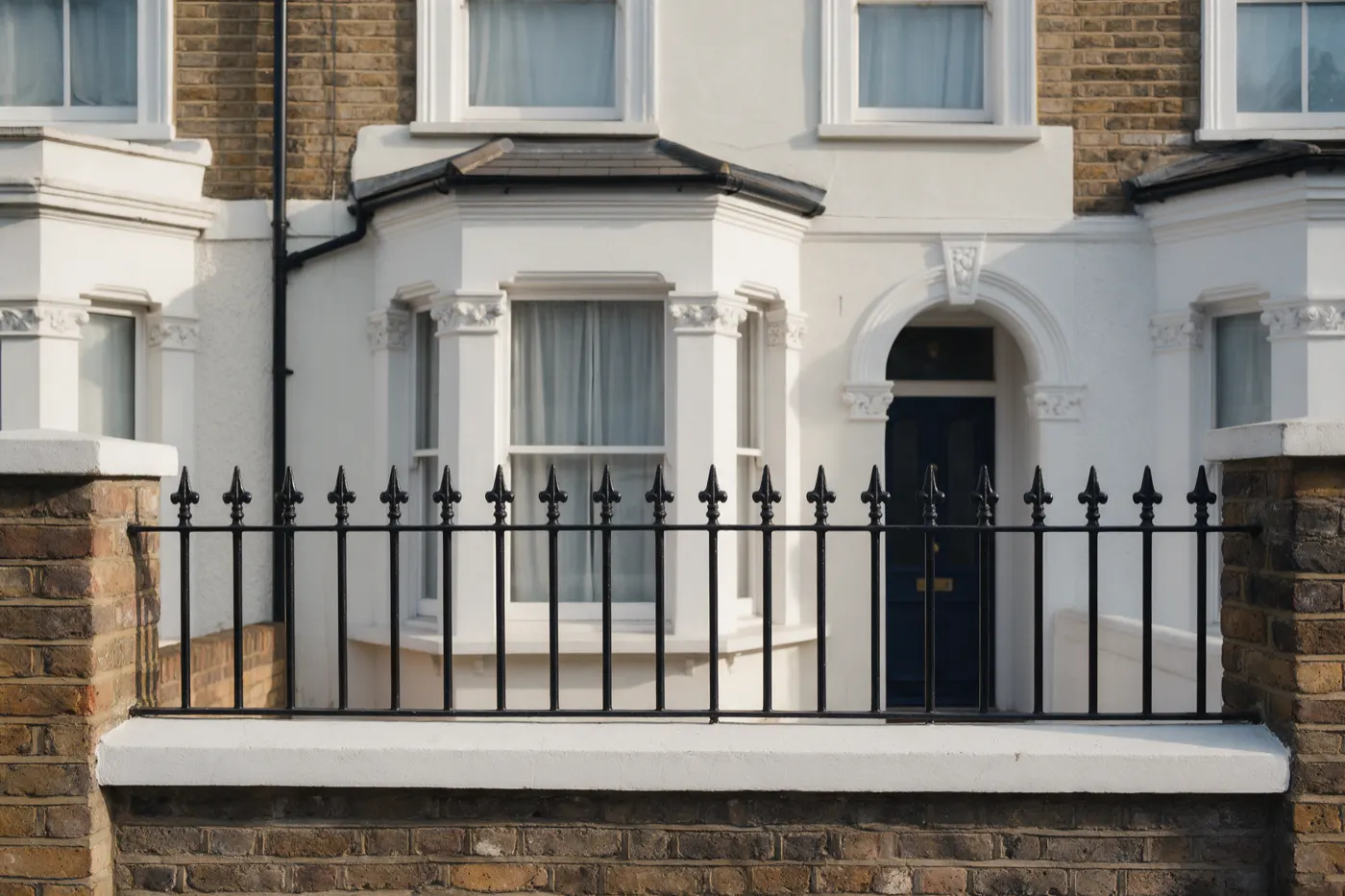
Building Conservation explains that puddled wrought iron is no longer manufactured; historic wrought ironwork is repaired with reclaimed wrought iron. Wrought iron bends without breaking, while cast iron is brittle. Modern railings are usually mild steel, which rusts more readily, so the finish matters (below). If you have period railings, get them repaired by a specialist before you price replacements, and on a listed building, ask the council before changing them.
Stopping rust
The Galvanizers Association says a galvanized coating usually gives enough protection on its own. Paint or powder coat over it adds colour, and if that top coat gets chipped, the galvanizing underneath means there's no urgency to repair it. I'd ask for galvanised railings, painted if you want a colour.
Height and listed buildings
Railings can be up to 2m high without planning permission, or 1m next to a road used by vehicles; anything at a listed building needs consent. More on our fencing page. In a conservation area, I'd ask the council's conservation officer before ordering.
Related
For timber boundaries see fencing; for gates, garden gates; for the wall underneath, garden walls.
Get railings & decorative metalwork quotes
Railings are priced by length, style and what they're fixed to.
Free, no obligation. We're paid by MyJobQuote when a tradesperson buys your job, never by you.
Frequently asked questions
How much do railings cost per metre?
On our estimates, about £100 to £220 per metre supplied and fitted, or £120 to £250 on top of a wall.
What is the average cost of a metal railing?
For a 6m front boundary, about £600 to £1,300 supplied and fitted, on our estimates.
What is the price per meter for wrought iron railings?
New railings in a wrought iron style are about £100 to £220 per metre fitted on our estimates. True wrought iron isn't made any more; repairing old wrought ironwork is specialist work, priced by the job.
Do you need planning permission for metal railings?
Not if they're within 1m next to a road used by vehicles or 2m elsewhere, unless the house is listed.
How long does it take to fit railings?
Most jobs take one to two days, with a single gate taking roughly 6 hours to fit.
Do railings add value to a house?
Original railings can add to the look and value of a traditional house, but we haven't found any data on what value new railings add.
How do I stop railings rusting?
Galvanised steel resists rust on its own; paint on top adds colour, and chips in the paint aren't urgent to fix.
How we priced thisView sources (3, 1 official)
Rules come from the legislation and official guidance, read at source. Prices are our estimates: we check them against trade price data, retailer shelf prices and specialists' price lists, then build them up from their parts so the totals add up. Below are the sources behind the page; the trade price guides we only compare against aren’t listed. Where sources disagreed, we've said so. More on our method.
- OfficialThe Town and Country Planning (General Permitted Development) (England) Order 2015, Schedule 2 Part 2 (gates, fences, walls; means of access), legislation.gov.uk. Checked 15 Oct 2026.
- IndustryHistoric railings, Building Conservation. Checked 16 Oct 2026.
- IndustryHDG Datasheet 15: painting and powder coating on galvanizing, Galvanizers Association. Checked 16 Oct 2026.