The Short Answer
On our estimates, replacing a misted double-glazed unit costs £150 to £350 for the first one, which carries the glazier's visit, and £80 to £200 for each extra pane done at the same time. A large patio door or conservatory panel is £250 to £450.
Mist between the panes means the seal has failed and the unit is letting air in. The Energy Saving Trust's advice is to replace the glass, not the whole window, so if the frame is sound it costs a fraction of a new window (£450 to £900).
Misted glass replacement calculator
The first unit carries the cost of the visit, so each extra pane done at the same time costs much less. Count them all before you book.
Estimated total
£150 to £350
| First window unit, including the visit | £150 to £350 |
Sealed unit replacement prices
| Job | Typical cost |
|---|---|
| First standard unit, including the visit | £150 to £350 |
| Each extra unit, same visit | £80 to £200 |
| Large unit (patio, bay, conservatory) | £250 to £450 |
| New uPVC window instead | £450 to £900 |
Published prices for this job vary widely. Our reading is that it's mostly the visit: the first unit pays for the glazier's trip to measure and fit, and later units on the same visit cost far less. So I'd count every misted pane before you book.
Is it the unit, or condensation?
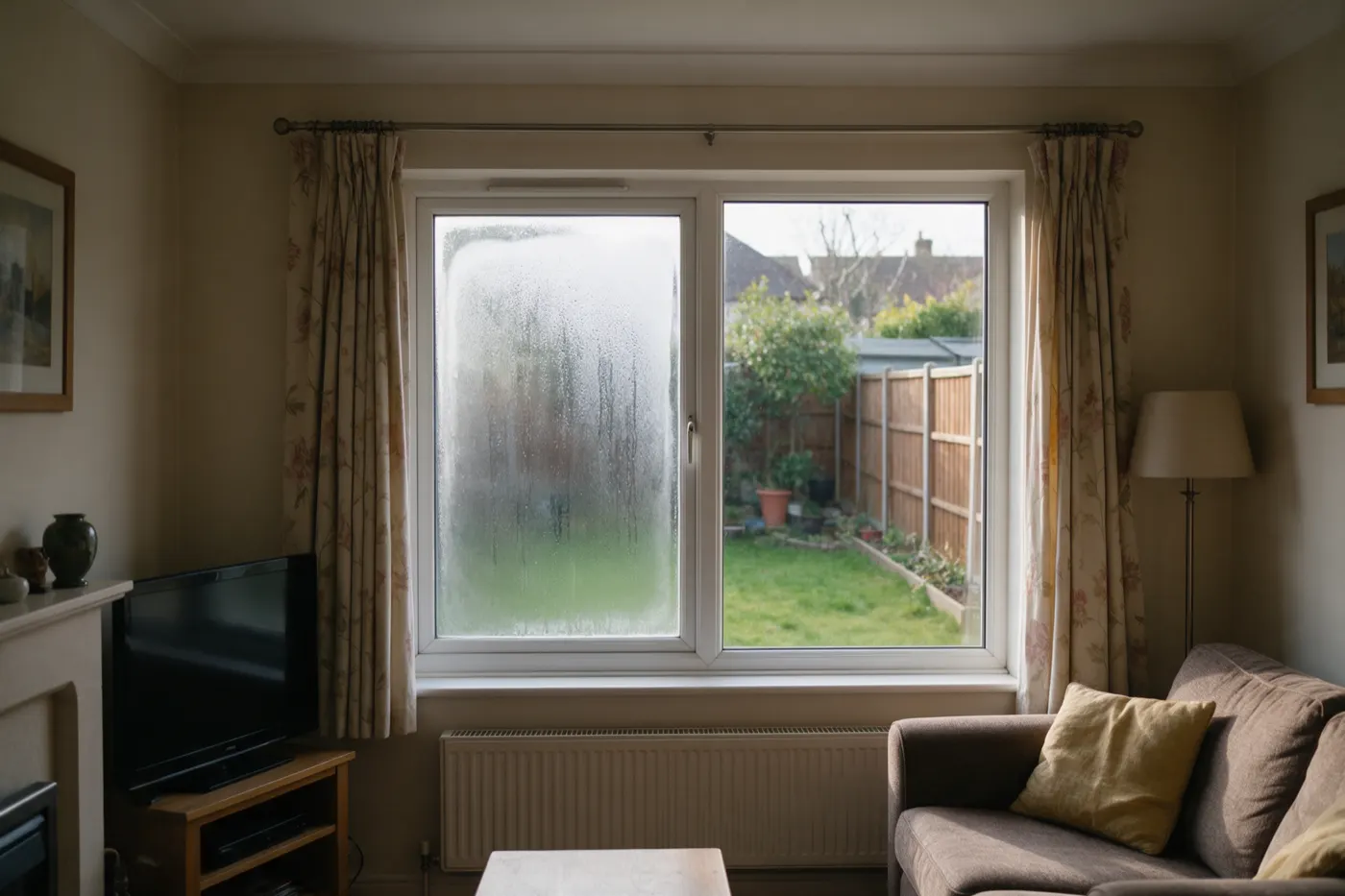
- Between the panes: the seal has failed. The Energy Saving Trust says the unit is letting air in, which reduces its effectiveness, and you can replace the panes rather than the whole window.
- On the outside of the glass: not a problem. The Energy Saving Trust calls it a sign the glass is very efficient; it clears quickly.
- On the inside of the glass or the walls: not a failed unit. The Energy Saving Trust says it could be a sign of a damp problem, so look at ventilation.
Is it worth replacing misted units?
Usually, yes, if the frames are sound: a new unit costs a fraction of a new window and puts the insulation back. The Energy Saving Trust says double glazing as a whole lasts 20 to 35 years, though sealed units can mist sooner. If many units in old, tired frames are failing at once, compare with new windows.
Check the guarantee first: new sealed units come with one, so if yours are still covered, the installer or maker may replace them free.
Do you need building regulations?
No. Approved Document L says replacing the glass in an existing frame isn't a "controlled fitting", so the window energy rules don't apply. A good glazier will still fit safety glass where it's needed: glazing below 800mm from the floor in windows, and below 1,500mm in and beside doors (Approved Document K).
Get misted glass replacement quotes
Glaziers need the size and number of panes, and whether it's misted, cracked or smashed.
Free, no obligation. We're paid by MyJobQuote when a tradesperson buys your job, never by you.
Frequently asked questions
How much does it cost to replace a misted double glazing unit?
On our estimates, £150 to £350 for one standard unit including the visit, and £80 to £200 for each extra unit done at the same time.
Is it worth replacing misted windows?
If the frames are sound, replace the misted units, not the windows: it's far cheaper and restores the insulation. The Energy Saving Trust recommends replacing the panes rather than the whole window.
Can misted up double glazing be repaired?
The reliable fix is a new sealed unit in the existing frame. The mist is between the panes because the seal has failed, so it won't clear on its own.
How long should double glazing last before misting?
The Energy Saving Trust says double glazing lasts 20 to 35 years if it's good quality and well installed, though sealed units can mist sooner. Check whether yours are still under guarantee.
Do I need a new window if the glass is misted?
Usually not. If the frame is sound, replacing just the sealed unit is much cheaper.
Does replacing the glass need building regulations approval?
No. Replacing the glass in an existing frame isn't a controlled fitting under Approved Document L.
How we priced thisView sources (3, 2 official)
Rules come from the legislation and official guidance, read at source. Prices are our estimates: we check them against trade price data, retailer shelf prices and specialists' price lists, then build them up from their parts so the totals add up. Below are the sources behind the page; the trade price guides we only compare against aren’t listed. Where sources disagreed, we've said so. More on our method.
- IndustryEnergy efficient windows and doors (updated 20 May 2026), Energy Saving Trust. Checked 15 Oct 2026.
- OfficialApproved Document L: Conservation of fuel and power, Volume 1 Dwellings (2021 edition incorporating 2023 amendments), GOV.UK. Checked 16 Oct 2026.
- OfficialApproved Document K: Protection from falling, collision and impact (2013 edition), Section 5, GOV.UK. Checked 15 Oct 2026.