The Short Answer
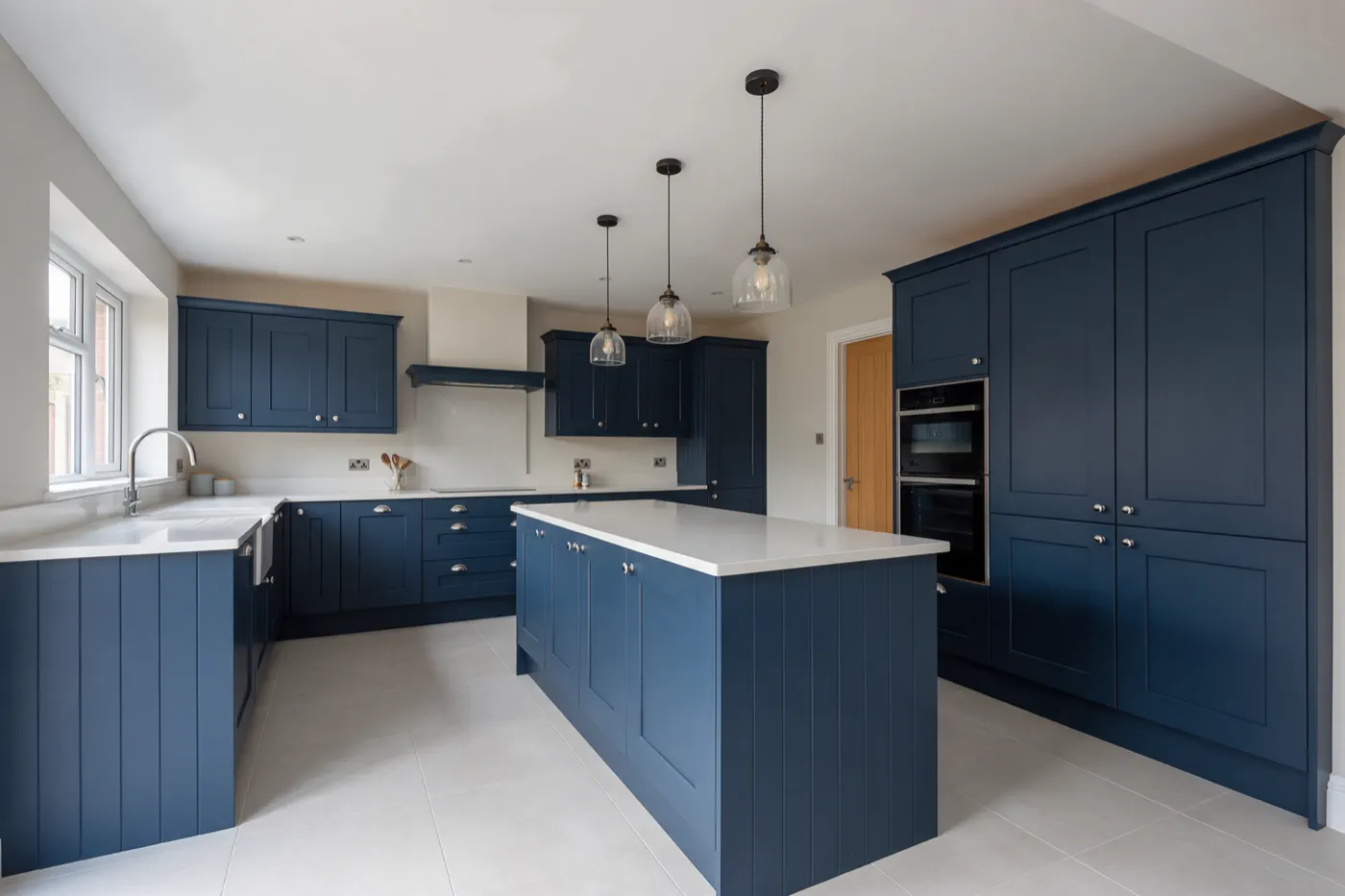
New doors for a whole kitchen cost about £1,300 to £3,000, or £70 to £160 a door supplied and fitted, on our estimates. A whole new mid-range kitchen is £10,000 to £20,000, so new doors cost a fraction of that.
Fitting usually takes a kitchen fitter about a day, two for a big kitchen. It only works if the cabinets are sound: new doors won't sit properly on warped, damaged or damp units.
Replacement doors vs new kitchen
Count your doors and fronts. We'll price the refresh and compare it with a whole new kitchen of the same size.
Estimated total
£1,920 to £4,390
| 14 standard doors, supplied and fitted | £980 to £2,240 |
| 2 tall doors | £240 to £440 |
| 6 drawer fronts | £270 to £660 |
| 2 end panels | £120 to £240 |
| Matching plinth, about 5m | £130 to £230 |
| 22 handles | £90 to £330 |
| 32 soft-close hinges | £100 to £260 |
Replacement door prices
| Item | Typical cost |
|---|---|
| Standard door, supplied and fitted | £70 to £160 each |
| Tall door, supplied and fitted | £120 to £220 each |
| Drawer front, fitted | £45 to £110 each |
| Off-the-shelf door, supply only | £22 to £60 each |
| Made-to-measure Shaker door, supply only | about £72 |
| End panel | £60 to £120 each |
| Plinth | £25 to £45 per metre |
| Handles | £4 to £15 each |
| Respray, whole kitchen of about 20 fronts | £1,450 to £2,650 |
| Whole kitchen, new doors and fronts | £1,300 to £3,000 |
New doors, respray or vinyl wrap?
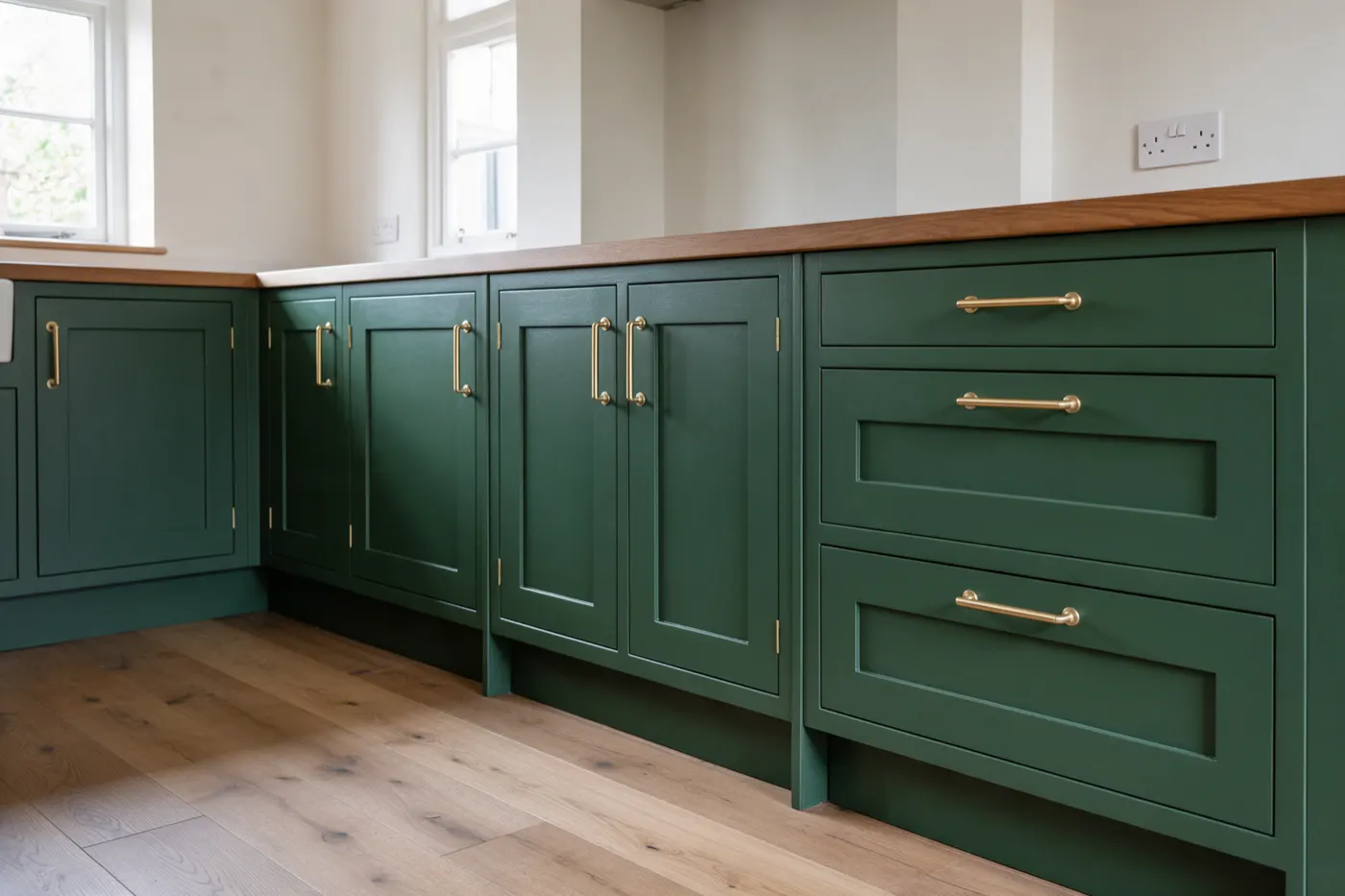
New doors change the style as well as the colour, and you can buy them off the shelf if your cabinets are a standard size, or made to measure if not.
Respraying keeps your doors and changes the colour. When we checked in October 2026, The Kitchen Respray Factory's published list charged £68 for a medium door and £32 a drawer front, plus VAT, collected and sprayed in its workshop; £244 to take everything off and refit it; and £750 to spray the fixed cabinets on site to match. Acrylic doors need a special primer, and I'd ask what guarantee the finish carries against flaking.
Vinyl wrap covers the old doors in film. Wraps are hard to repair once scratched, and damage can eventually let water into the MDF core underneath.
My view: spray if you like the shape of your doors and just want a new colour; replace them if the style is what dates the kitchen.
Door materials and finishes
- Melamine-faced chipboard.
- MDF with a veneer, foil or vinyl facing, or painted: what most high-street kitchens use. Painted MDF can be repainted later.
- Solid timber: the most expensive, and it can be sanded and refinished.
- Gloss or matt: gloss shows fingerprints more; matt hides marks.
Measuring, hinges and appliance doors
- Measure the back of the old door, not the front, where bevelled edges throw the measurement. Doors are 4 to 5mm smaller than the cabinet: a 600mm unit usually takes a 596mm door. Most are 22mm thick.
- Hinges. Ask for doors pre-drilled for 35mm hinge cups, measuring from the top or bottom of the old door to the centre of each hinge hole (usually two, sometimes three). I'd replace the hinges at the same time: old ones work loose.
- Integrated appliances. Fridge and dishwasher doors clip on, released by screws inside the appliance; the appliance manual shows how.
Where to buy: B&Q, Howdens and made to measure
- B&Q sells GoodHome doors off the shelf (£22 to £60 each when we checked in October 2026). They're sized for GoodHome cabinets, so other makes usually need made-to-measure doors.
- Howdens sells only to trade, and each depot sets its own prices, so there's no public price list. Your fitter buys them, and their estimate can include their own costs and a commission: ask to see the door price separately from the labour.
- Made-to-measure makers cut doors to your sizes, which suits older or non-standard cabinets. Order a sample first.
Is it worth it?
On sound units, I think so: it costs a fraction of a new kitchen and takes about a day. It isn't worth it if the units are failing, if you want a different layout, or if the worktops and sink are being replaced too, because by then you're most of the way to a new kitchen. Compare with our new kitchen costs.
Get replacement kitchen doors quotes
Doors are priced per door and drawer front, so a quick count gets you an accurate quote.
Free, no obligation. We're paid by MyJobQuote when a tradesperson buys your job, never by you.
Frequently asked questions
What is the average cost to replace kitchen cupboard doors?
About £70 to £160 per door and £45 to £110 per drawer front, supplied and fitted, on our estimates; a whole kitchen is typically £1,300 to £3,000.
Is it worth just replacing kitchen doors?
If the units are sound and you're happy with the layout, yes: it costs a fraction of a new kitchen. If cabinets are damaged or damp, replace those too.
Does B&Q do replacement kitchen doors?
Yes: GoodHome doors off the shelf, £22 to £60 each when we checked in October 2026. They're sized for GoodHome cabinets, so other makes may need made-to-measure doors.
How much are Howdens replacement kitchen doors?
Howdens doesn't publish prices: it sells only to tradespeople, and each depot sets its own prices. Your fitter buys the doors and quotes you; ask to see the door price separately from labour and any commission.
How long does it take to fit new kitchen doors?
About a day for a kitchen fitter, and a second day for a big kitchen with lots of doors and drawers.
Is spraying kitchen doors better than replacing them?
Only if you like the door style: spraying changes the colour, not the shape. On The Kitchen Respray Factory's published prices, about £1,450 to £2,650 for a kitchen of 20 or so fronts, including VAT.
How we priced thisView sources (6)
Rules come from the legislation and official guidance, read at source. Prices are our estimates: we check them against trade price data, retailer shelf prices and specialists' price lists, then build them up from their parts so the totals add up. Below are the sources behind the page; the trade price guides we only compare against aren’t listed. Where sources disagreed, we've said so. More on our method.
- Trade guideReplacement kitchen doors cost: 2026 UK prices, Checkatrade. Checked 15 Oct 2026.
- IndustryGoodHome Highline cabinet door prices, B&Q. Checked 15 Oct 2026.
- IndustryShaker Super Matt White made-to-measure kitchen door (pricing tool, 715 x 496mm), Kitchen Door Workshop. Checked 15 Oct 2026.
- IndustryKitchen respray price list, The Kitchen Respray Factory. Checked 15 Oct 2026.
- Trade guideSpray paint kitchen cabinets cost guide (last updated 7 September 2022), Checkatrade. Checked 15 Oct 2026.
- IndustryOur pricing (trade-only pricing and quotes), Howdens. Checked 15 Oct 2026.