The Short Answer
On our estimates, rendering a typical semi (about 90m² of wall) costs £4,050 to £7,000 in painted sand and cement, including scaffold, and takes 6 to 9 days. Through-coloured monocouche or a silicone thin coat is £55 to £85 per m², against £35 to £60 for sand and cement. Taking old render or pebbledash off first adds £20 to £45 per m².
One rule most quotes skip: rendering more than 50% of a wall counts as renovating it under the building regulations, so building control can expect you to insulate it where that's practical. Ask about it before you sign.
House rendering calculator
Rendering is priced per square metre of wall after taking off windows and doors. Pick your house for a typical area, or enter your own.
Estimated total
£4,050 to £7,000
| Sand and cement, painted, 90m² | £3,150 to £5,400 |
| Scaffolding | £900 to £1,600 |
Rendering prices by house and system
| House | Wall area | Sand and cement, painted | Monocouche | Silicone thin coat |
|---|---|---|---|---|
| Terraced house | About 45m² | £2,400 to £4,000 | £3,300 to £5,100 | £3,300 to £5,100 |
| Semi-detached house | About 90m² | £4,050 to £7,000 | £5,900 to £9,300 | £5,900 to £9,300 |
| Detached house | About 130m² | £5,800 to £10,000 | £8,400 to £13,300 | £8,400 to £13,300 |
| Detached bungalow | About 80m² | £2,800 to £4,800 | £4,400 to £6,800 | £4,400 to £6,800 |
| Item | Typical cost |
|---|---|
| Sand and cement, painted, per m² | £35 to £60 |
| Monocouche (through-coloured), per m² | £55 to £85 |
| Silicone or acrylic thin coat, per m² | £55 to £85 |
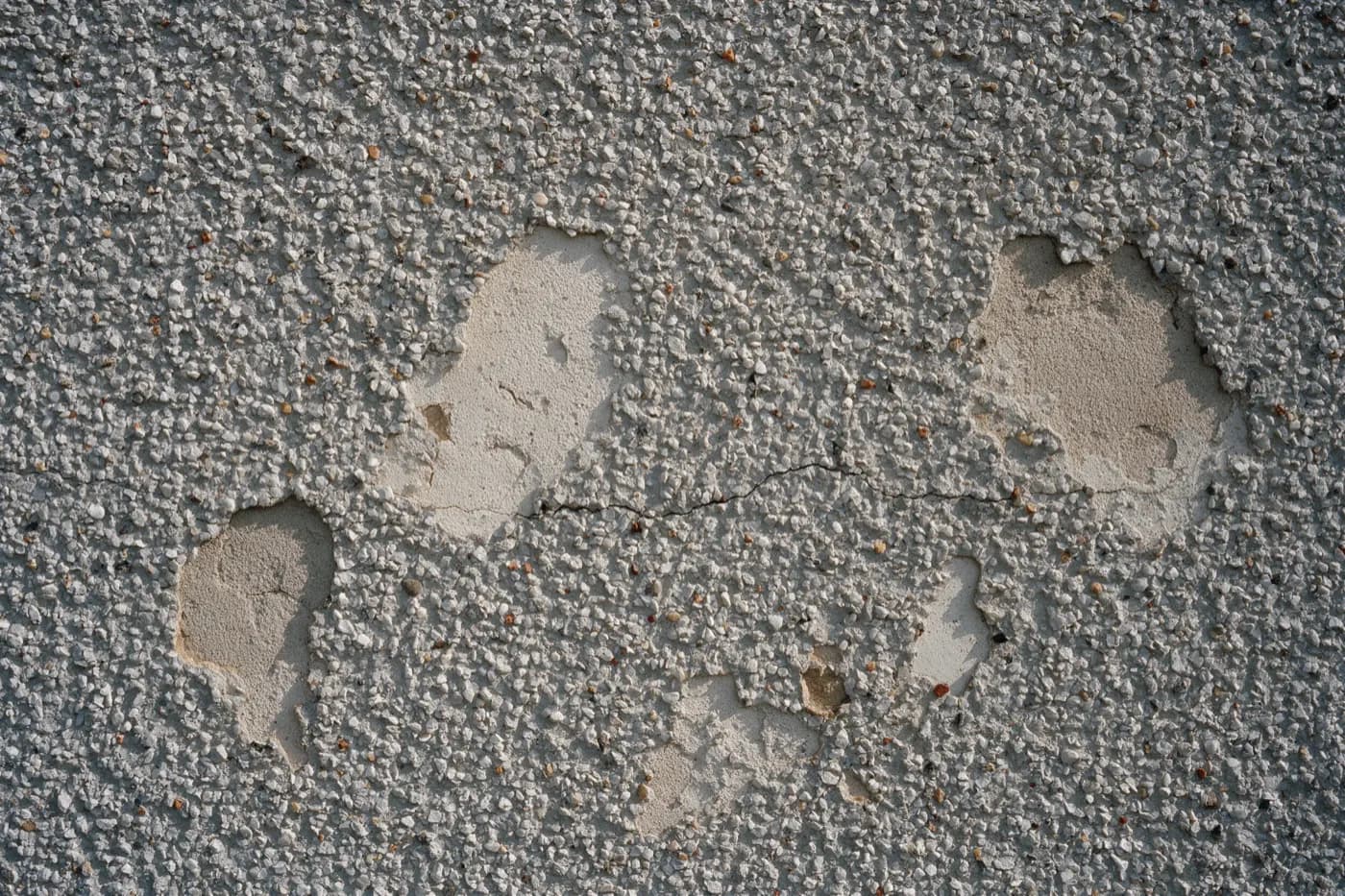
| Removing old render or pebbledash, per m² | £20 to £45 |
| External wall insulation with render finish, per m² | £150 to £200 |
| Patch repair | £150 to £320 |
| Scaffold, semi, up to four weeks | £900 to £1,600 |
A bungalow usually takes 4 to 6 days on site, a semi 6 to 9 days and a detached house 7 to 14 days.
Which render?
| System | Per m² | What it is |
|---|---|---|
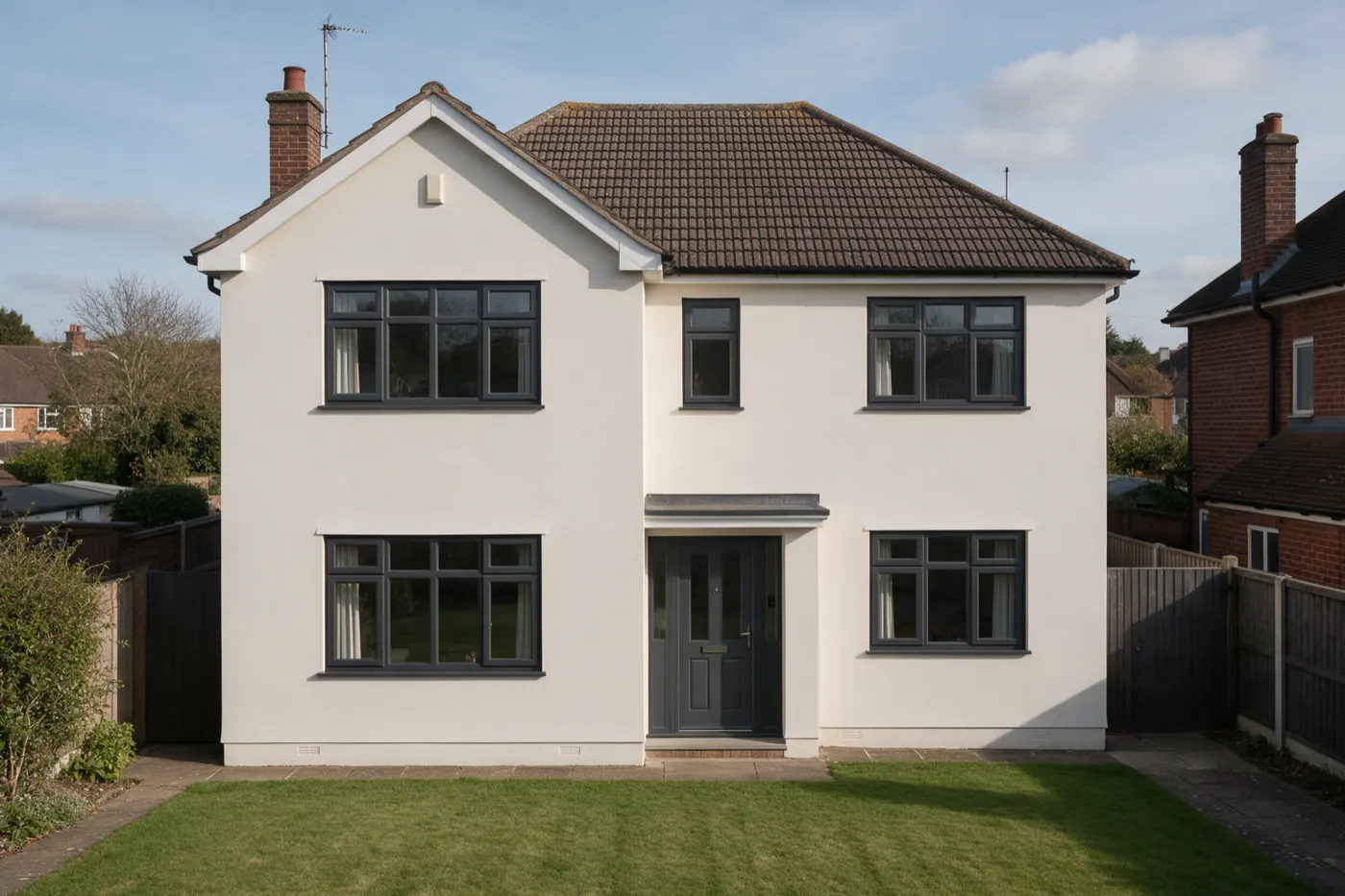
| Sand and cement, painted | £35 to £60 | The cheapest; painted after |
| Monocouche (through-coloured) | £55 to £85 | One coat with the colour in the render |
| Silicone or acrylic thin coat | £55 to £85 | A coloured finish over a base coat |
With a coloured render, ask for a sample. K Rend, one of the bigger silicone render makers, recommends a sample panel on site, because shades vary between products. It also notes that its warranty covers the product only: the workmanship is down to whoever applies it, so check their previous jobs and references.
The insulation rule
Under Approved Document L, rendering the outside of a wall is renovating a thermal element. If you render more than 50% of a wall (measured as the whole elevation that wall is in), or more than 25% of the whole outside of the house, the wall should be improved to a U-value of 0.3 W/m²K, as far as that's technically possible and pays back within 15 years.
For a solid wall that means external wall insulation under the render, at about £150 to £200 per m². If it isn't feasible or won't pay back, the guidance asks for the best improvement that will. Building control makes the call, so talk to them (or a renderer who deals with them) before you commit.
See also external wall insulation.
Do you need planning permission to render?
- In a conservation area, National Park, Area of Outstanding Natural Beauty (National Landscape) or the Broads: yes. Permitted development rights don't cover cladding any part of the outside with render, pebbledash, stone, timber, plastic or tiles there.
- Elsewhere: rendering is permitted development only if the materials are "of a similar appearance" to the existing house. Rendering a brick house changes its appearance, so I'd ask the council before starting.
- Listed building: listed building consent for any significant external work.
- Flats: householder permitted development rights don't apply.
Older solid walls
Historic England's advice for older homes: fix whatever is making the wall damp first (a cracked downpipe, an overflowing drain, poor ventilation), and match repairs to the original materials. Early renders were lime-based, and it warns that modern impervious materials such as cement fillings and impermeable coatings can make an old wall decay faster. It also points out that renders crack and let damp into the wall behind, so a render isn't a fix for a wet wall. If your house is old and solid-walled, get advice from someone who works on older buildings before choosing a render.
Getting a render job right
- Weather. K Rend gives most of its products a working range of 5 to 35°C and says new render needs protecting from rain and frost for the first 48 hours. That's why I'd book rendering for spring to early autumn.
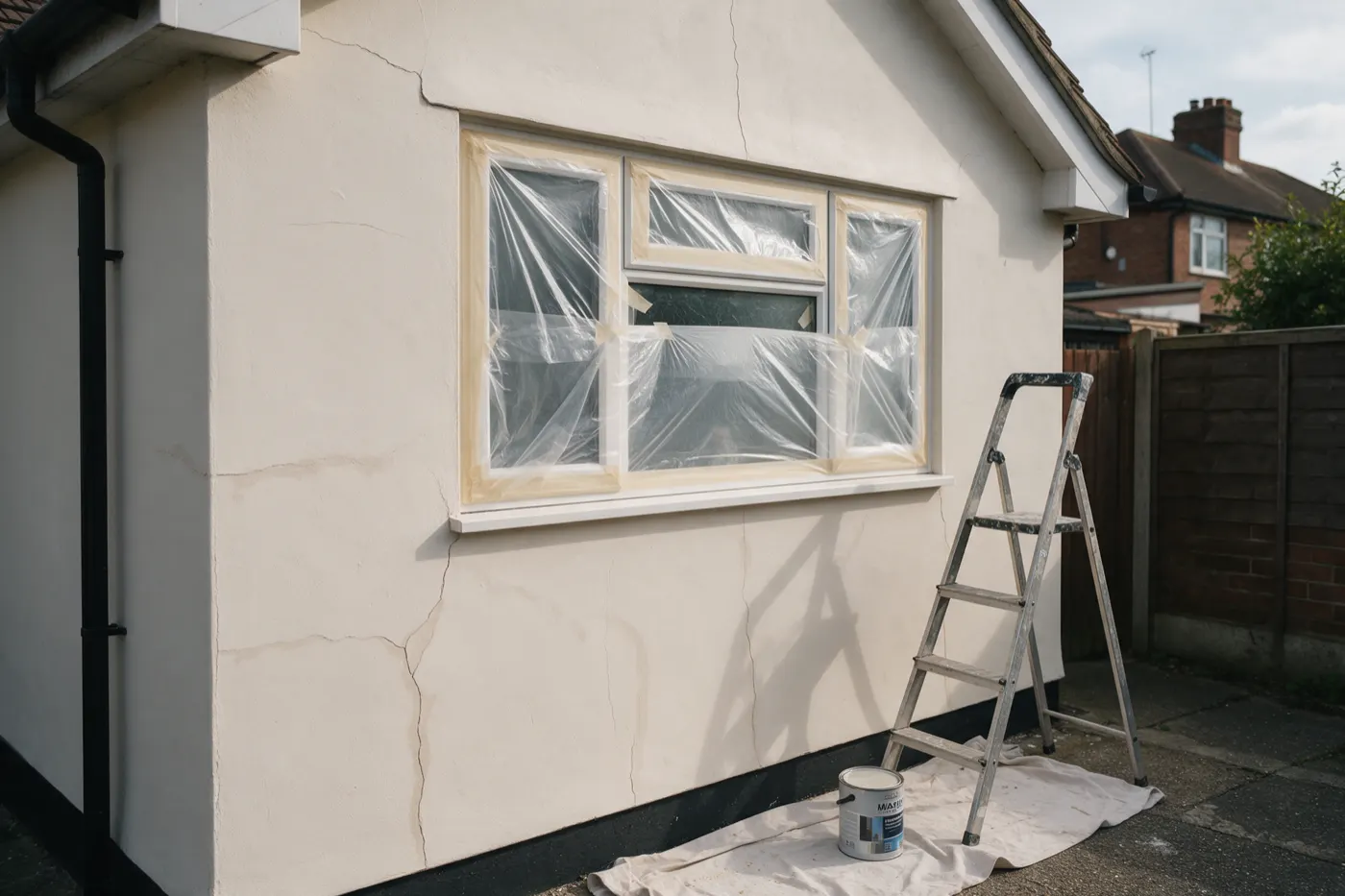
- The wall first. Repairs to the wall underneath only show once old render is off; ask how they'll be priced.
- Pebbledash? See pebbledash removal costs.
Get external rendering quotes
Renderers price per square metre of wall. Tell them how much, what's there now and the finish you want.
Free, no obligation. We're paid by MyJobQuote when a tradesperson buys your job, never by you.
Frequently asked questions
How much does it cost to render a house?
On our estimates, about £4,050 to £7,000 for a typical semi in painted sand and cement, scaffold included. Monocouche or silicone costs more per m².
How much to re-render a 3 bed semi?
About £4,050 to £7,000 in painted sand and cement with scaffold, plus £20 to £45 per m² if the old render has to come off first, on our estimates. It takes 6 to 9 days.
How much is rendering per m²?
On our estimates, £35 to £60 for sand and cement, £55 to £85 for monocouche and £55 to £85 for silicone or acrylic, before scaffold.
What time of year should you render a house?
When it's dry and frost-free. K Rend gives a working range of 5 to 35°C and says to protect new render from rain and frost for 48 hours, so spring to early autumn is safest.
Is rendering a house worth it?
On a sound wall, for the look, it can be. As a cure for damp it isn't: Historic England says to fix the cause of damp first, and renders crack and let damp into the wall behind.
Do I need building regulations to render my house?
If you render more than 50% of a wall, or more than 25% of the whole building envelope, the wall should be insulated where that's practical and pays back within 15 years, and building control should be involved.
Do I need planning permission to render my house?
In a conservation area, National Park, National Landscape (AONB) or the Broads, yes. Elsewhere only if the finish isn't of similar appearance to the existing house, which rendering brick usually isn't, so ask the council.
How we priced thisView sources (9, 6 official)
Rules come from the legislation and official guidance, read at source. Prices are our estimates: we check them against trade price data, retailer shelf prices and specialists' price lists, then build them up from their parts so the totals add up. Below are the sources behind the page; the trade price guides we only compare against aren’t listed. Where sources disagreed, we've said so. More on our method.
- OfficialApproved Document L: Conservation of fuel and power, Volume 1 Dwellings (2021 edition incorporating 2023 amendments), GOV.UK. Checked 16 Oct 2026.
- OfficialThe Building Regulations 2010, regulation 3: meaning of building work, legislation.gov.uk. Checked 15 Oct 2026.
- OfficialThe Town and Country Planning (General Permitted Development) (England) Order 2015, Schedule 2 Part 1, legislation.gov.uk. Checked 16 Oct 2026.
- OfficialExternal walls: planning permission, Planning Portal. Checked 15 Oct 2026.
- OfficialThe Building Regulations 2010, Schedule 3: self-certification schemes (para 16, roof coverings), legislation.gov.uk. Checked 15 Oct 2026.
- IndustryThe homeowners guide to K Rend (23 May 2023), K Rend. Checked 15 Oct 2026.
- OfficialRepairing walls of an older home, Historic England. Checked 15 Oct 2026.
- Trade guideHouse rendering cost, Checkatrade. Checked 15 Oct 2026.
- Trade guideScaffolding hire costs in the UK, Checkatrade. Checked 15 Oct 2026.