The Short Answer
By our estimate, a mid-range kitchen of about 12 units costs £10,000 to £20,000 fitted, with units, worktops, appliances, fitting, plumbing, electrics and flooring. A small budget kitchen is about £5,000 to £10,000, and a large one with stone worktops and an island £22,000 to £45,000.
Fitting takes about one to two weeks. The biggest saving is keeping the layout: once the sink, cooker or gas and electric points move, you're paying for plumbing, wiring and making good before you've bought a cupboard.
New kitchen cost estimator
Pick what you're planning. Every figure comes from the price book on this page, and the breakdown shows its working.
Estimated total
£9,230 to £17,640
| Units, 12 at mid quality (supply) | £2,640 to £4,680 |
| Laminate worktops, about 4m fitted | £240 to £480 |
| Mid-range: oven, hob, hood, integrated dishwasher and fridge | £1,500 to £3,200 |
| Removing the old kitchen and fitting the new one | £2,880 to £3,840 |
| Plumbing (sink, dishwasher, washing machine) | £250 to £650 |
| Electrics (sockets, lighting, appliance connections) | £350 to £1,100 |
| LVT (luxury vinyl tile), 12m² | £540 to £1,140 |
| Skip or waste removal | £230 to £350 |
| Plastering and decorating | £600 to £2,200 |
New kitchen prices by size
| Kitchen | What's in it | Our estimate, fitted |
|---|---|---|
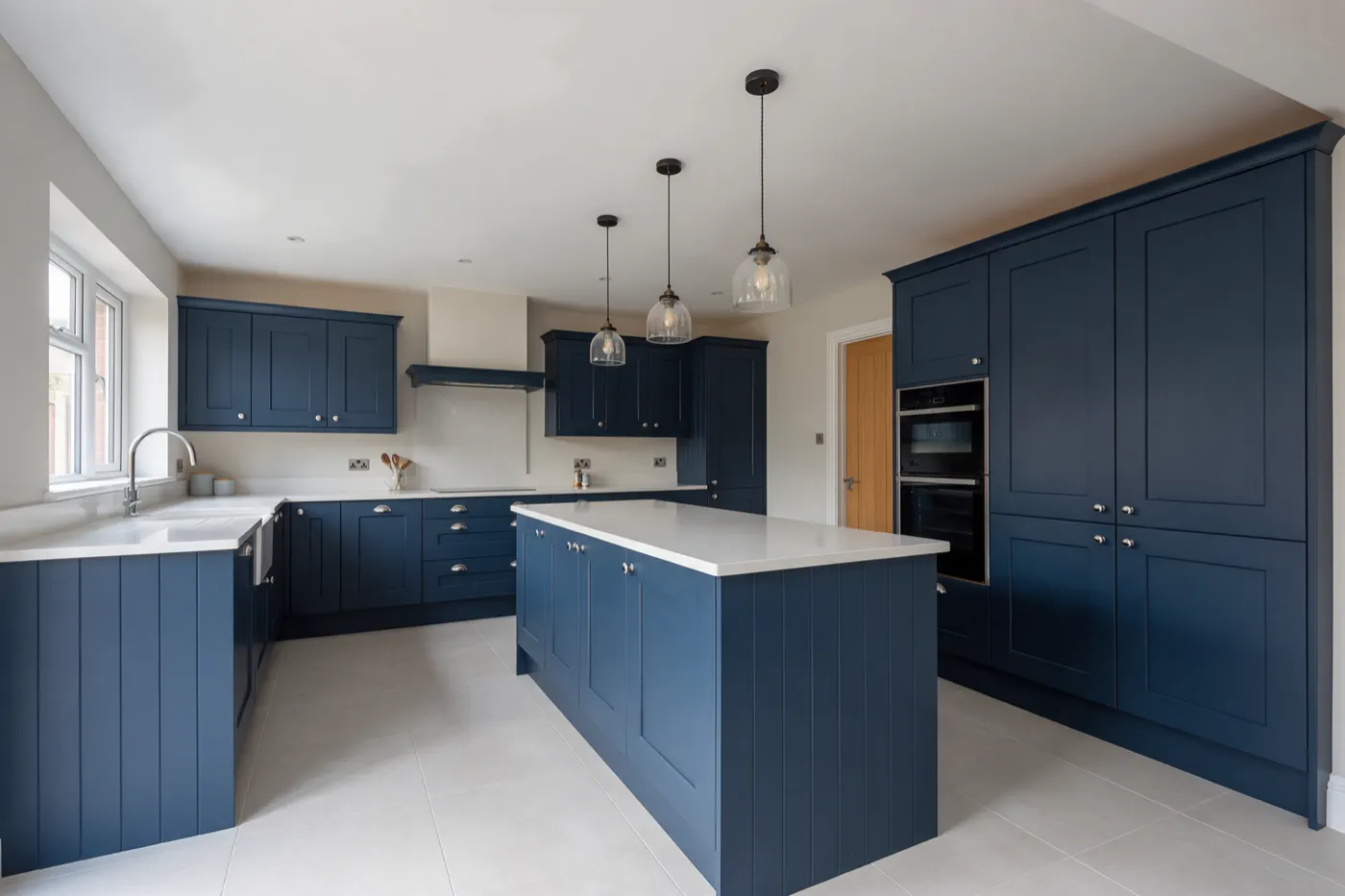
| Small (about 8 units) | Budget units, laminate worktops, oven, hob and hood, vinyl floor, same layout | £5,000 to £10,000 |
| Medium (about 12 units) | Mid-range units, wood or quartz worktops, integrated dishwasher and fridge, LVT floor | £10,000 to £20,000 |
| Large (about 16 units) | Premium units, quartz worktops, premium appliances, wood floor, an island | £22,000 to £45,000 |
Where the money goes
Read the small print on kitchen adverts: an advertised price usually means the units only, without appliances, worktops or fitting, and budget flat-pack kitchens often leave out worktops and fitting too. These are the parts every complete quote is made of:
| Part | Typical cost |
|---|---|
| Units, budget (chipboard) | £110 to £200 per unit |
| Units, mid-range (MDF) | £220 to £390 per unit |
| Units, premium (solid wood) | £550 to £1,050 per unit |
| Laminate worktop, fitted | £60 to £120 per metre |
| Quartz worktop, fitted | £200 to £380 per metre |
| Appliances: oven, hob and hood | £450 to £1,100 |
| Appliances: mid-range with integrated dishwasher and fridge | £1,500 to £3,200 |
| Fitting | £240 to £320 per unit |
| Plumbing: sink, dishwasher, washing machine | £250 to £650 |
| Electrics: sockets, lighting, appliance connections | £350 to £1,100 |
| Flooring, LVT, supplied and laid | £45 to £95 per m² |
| Plastering and decorating | £600 to £2,200 |
| Moving the sink or cooker | £500 to £1,600 |
| Island | £1,200 to £4,500 |
Units are usually the biggest single cost, roughly a third of the total, with worktops, appliances and fitting each a sixth to a fifth.
Units: what they're made of, rigid or flat-pack
Most affordable kitchens are chipboard. MDF is the usual base for painted or vinyl-wrapped doors and has to be properly sealed. Solid wood is the premium choice. The per-unit prices in the table above follow those three.
Fitting: who does what, and how long it takes
| Kitchen | Fitting labour |
|---|---|
| 8 units | £1,900 to £2,550 |
| 12 units | £2,900 to £3,850 |
| 16 units | £3,850 to £5,100 |
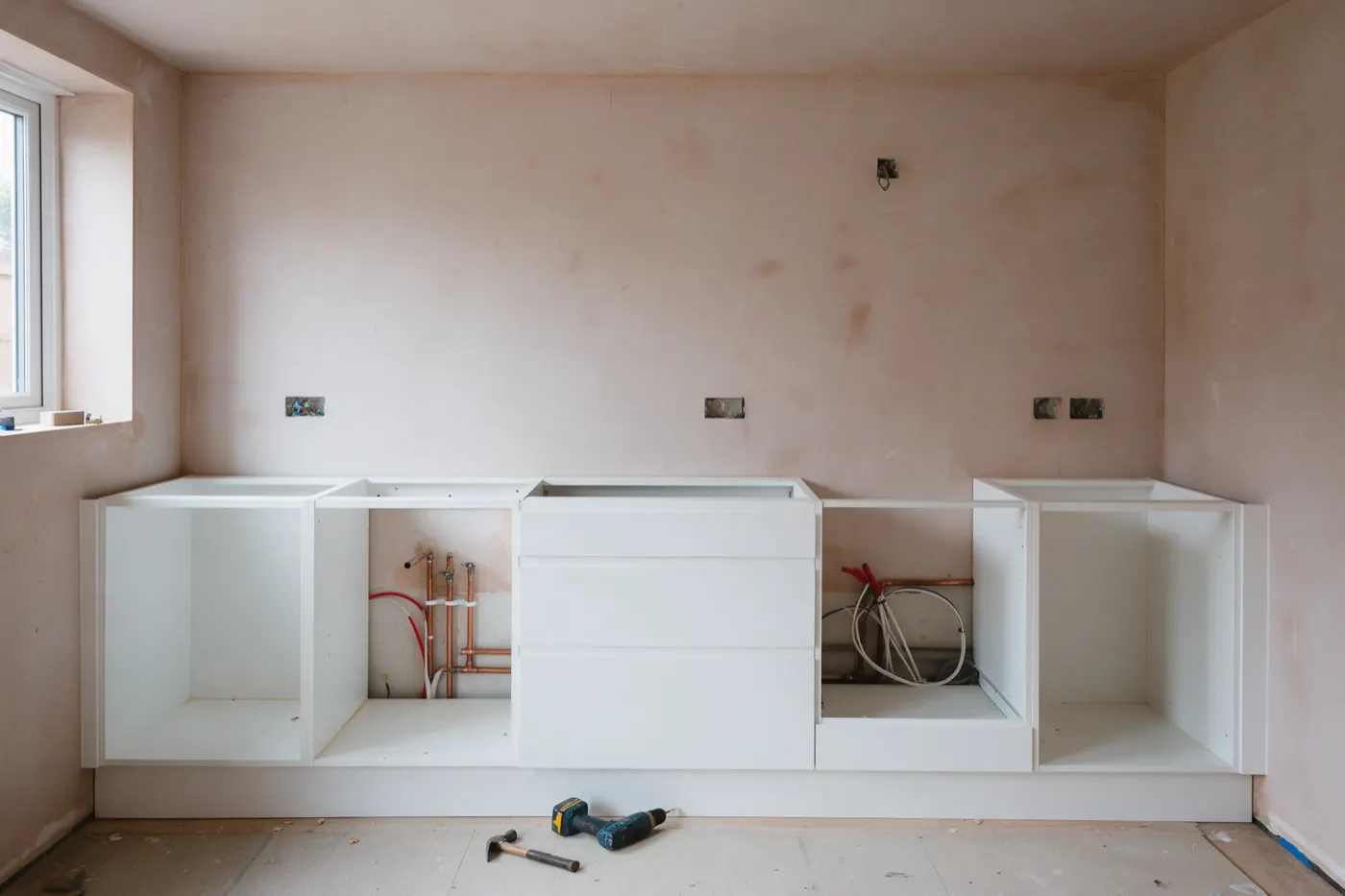
A typical refit runs in this order, over one to two weeks:
- The old kitchen comes out.
- First fix: pipes and cables moved by a plumber, an electrician and, for gas, a Gas Safe engineer.
- Plastering, if needed.
- Units fitted, level and fixed.
- Worktops: laminate and wood are cut on site; stone is templated once the units are in and fitted a week or two later.
- Second fix: sink, taps and appliances connected; tiling, flooring and decorating.
Ask whether a quote is a dry fit (units, worktops and doors, with no plumbing or electrics) or a wet fit (the complete job, with the sink, taps and appliances connected). Some fitters only do the dry fit and expect you to bring your own plumber and electrician. More on stone in our worktops guide.
The rules: planning, building regs, gas, electrics and ventilation
Planning. The Planning Portal says a planning application for a kitchen is generally not needed unless it's part of an extension. If the building is listed, ask the council first.
Building regulations. Refitting a kitchen with new units doesn't generally need approval, though drainage or electrical work in the refit may. Putting a kitchen in a room that wasn't one before is likely to need approval, for ventilation, drainage, structure and fire safety.
Gas. Disconnecting, moving or connecting a gas hob or cooker must be done by a Gas Safe registered engineer: it's the law, not advice. Ask for their Gas Safe ID card: the back lists the kinds of gas work they're qualified for. See checking a gas engineer.
Electrics. In England a kitchen isn't a "special location", so adding sockets or lights to an existing kitchen circuit isn't notifiable (it must still meet the wiring regulations). A new circuit, such as one for a cooker or induction hob, and a new consumer unit are notifiable: a registered electrician self-certifies them. Government guidance gives a built-in cooker as its example: not notifiable unless it needs a new circuit.
Ventilation. Approved Document F says an existing extract fan or ducted cooker hood should be kept or replaced, and checked, when work is done in a kitchen. You don't have to add extraction to a kitchen that never had it, unless the work makes ventilation worse. Replacing a hood on its existing wiring isn't notifiable. If you are fitting extraction:
| Set-up | Minimum extract rate |
|---|---|
| Cooker hood that vents outside | 30 litres per second |
| No hood, or a recirculating hood | 60 litres per second |
The hood should be at least as wide as the hob and, unless the maker says otherwise, 650 to 750mm above it.
How to save, and what not to pay for
- Keep the layout. Moving the sink or cooker adds £500 to £1,600 on our estimates before you've bought a cupboard.
- Consider buying the kitchen yourself and hiring a fitter. It's common and can cost less than a supplier's fitting service, but check first whether using your own installer affects the kitchen's warranty.
- Price appliances separately. Get the model numbers on the plan and compare them before you sign.
- Mix worktops. I'd put stone on an island or a short run and laminate or wood on the long runs.
- Ignore "was" prices. One quartz fabricator we checked in October 2026 was advertising 40 to 50% off its list price. Compare fitted totals.
- Look at used kitchens. Pre-owned kitchens are sold through specialist dealers, some of which will also buy your old one.
Spend on the basics. In Magnet's survey of 2,000 people who'd bought a kitchen in the last ten years, 15% wished they'd spent more on flooring, 10% on cabinets and 11% on storage, and 20% regretted not adding underfloor heating. Smart gadgets averaged £1,188, and plenty skip them to save.
Hiring a fitter and paying safely
Citizens Advice's guidance for England, applied to a kitchen:
- Get written quotes (a fixed price) from at least three traders, not estimates (a rough guess). A trader can't charge more than the quote unless you agree extra work or they made a genuine mistake.
- A quote should list the work and materials separately, say how long it's valid and whether it includes VAT, and say when the price can change.
- Check the trader's insurance and tell your own buildings insurer about the work.
- Get a written contract covering dates, tidying up and who pays for skips, materials, subcontractors and payments. You may be able to cancel within 14 days.
- Pay by card, in stages. Avoid deposits; if one is unavoidable on a long job, don't agree to more than 25%. Paying by credit card for work costing £100.01 to £30,000 gives you a section 75 claim if things go wrong.
Get new kitchen quotes
A few questions about your kitchen so fitters can give you a real price, not a guess.
Free, no obligation. We're paid by MyJobQuote when a tradesperson buys your job, never by you.
Frequently asked questions
How much does a new kitchen cost in the UK in 2026?
By our estimate, a mid-range 12-unit kitchen costs £10,000 to £20,000 supplied and fitted. A small budget kitchen is £5,000 to £10,000 and a large premium one £22,000 to £45,000.
How much does it cost to rip out and fit a new kitchen?
Fitting, including taking the old one out, is about £240 to £320 per unit on our estimates: £1,900 to £2,550 for 8 units, £2,900 to £3,850 for 12. Plumbing, electrics and plastering are often extra.
How much does a B&Q fitted kitchen cost?
B&Q doesn't publish a fitted price. After a planning appointment, one of its approved local installers surveys the job and quotes; the survey has a charge, refunded if you go ahead. Compare that quote with an independent fitter's for the same plan.
Can you redo a kitchen for £20,000?
A medium, 12-unit kitchen with mid-range units, wood or quartz worktops and integrated appliances comes in at £10,000 to £20,000 on our estimates, so usually yes, if the layout stays the same.
How long does it take to fit a kitchen?
About one to two weeks for a typical kitchen. Stone worktops add a wait: they're templated once the units are in, and DIY Kitchens, for example, fits them 7 to 10 working days later.
Do I need building regulations approval for a new kitchen?
Not for refitting with new units, says the Planning Portal, though drainage or electrical work in the refit may need it. A new circuit or consumer unit is notifiable (a registered electrician self-certifies it), and gas work must be done by a Gas Safe registered engineer.
Can a kitchen fitter disconnect my gas cooker?
Only if they're on the Gas Safe Register. Ask to see their Gas Safe ID card: the back lists the kinds of gas work they're qualified to do.
Do I need an extractor fan in a new kitchen?
If the old kitchen had one, Approved Document F says keep or replace it. If it never had one you don't have to add it, provided the work doesn't make ventilation worse. If you fit one, the minimum is 30 litres a second for a hood venting outside, or 60 if there's no hood or it recirculates.
How we priced thisView sources (17, 9 official)
Rules come from the legislation and official guidance, read at source. Prices are our estimates: we check them against trade price data, retailer shelf prices and specialists' price lists, then build them up from their parts so the totals add up. Below are the sources behind the page; the trade price guides we only compare against aren’t listed. Where sources disagreed, we've said so. More on our method.
- IndustryHow much does a new kitchen cost?, Federation of Master Builders (HomePicks). Checked 15 Oct 2026.
- Trade guideNew kitchen: cost breakdown 2026, Checkatrade. Checked 14 Oct 2026.
- Trade guideHow much does kitchen fitting cost in 2026?, Checkatrade. Checked 15 Oct 2026.
- IndustryHow much does a new kitchen cost? (survey of 2,000 kitchen buyers), Magnet. Checked 14 Oct 2026.
- IndustryQuartz worktops (templating and fitting terms), DIY Kitchens. Checked 15 Oct 2026.
- IndustryMinerox quartz worktop prices per m², Gemini Worktops. Checked 15 Oct 2026.
- IndustryOur installation service (kitchens): survey and quote, B&Q. Checked 15 Oct 2026.
- IndustryLaminate and solid wood worktop prices (3m lengths), Wickes. Checked 15 Oct 2026.
- OfficialKitchens and bathrooms: planning permission, Planning Portal. Checked 15 Oct 2026.
- OfficialIs building regulations approval needed for work to a kitchen or bathroom?, Planning Portal. Checked 15 Oct 2026.
- OfficialThe Gas Safety (Installation and Use) Regulations 1998, regulation 3, legislation.gov.uk. Checked 15 Oct 2026.
- OfficialUnderstand the Gas Safe ID card, Gas Safe Register. Checked 15 Oct 2026.
- OfficialThe Building Regulations 2010, regulation 12(6A) and (9): notifiable electrical work and 'special location' (England), legislation.gov.uk. Checked 14 Oct 2026.
- OfficialThe Building Regulations 2010, Schedule 4 (England and Wales versions), legislation.gov.uk. Checked 14 Oct 2026.
- OfficialApproved Document P: Electrical safety, dwellings (2013 edition), GOV.UK. Checked 15 Oct 2026.
- OfficialApproved Document F: Ventilation, Volume 1 Dwellings (2021 edition; 2026 edition from 24 March 2027), GOV.UK. Checked 14 Oct 2026.
- OfficialBefore you get work done on your home (England), Citizens Advice. Checked 15 Oct 2026.