The Short Answer
On our estimates, a new polished concrete floor, poured, polished and sealed, costs about £140 to £180 per m², so a 30m² kitchen-diner is £4,300 to £5,400. If there's already a sound concrete slab, polishing it is far cheaper, at about £50 to £80 per m² for a basic finish.
The finish you choose and the work underneath set the price: excavation and the floor build-up for a new slab, and underfloor heating if you're adding it.
Polished concrete prices
| Job | Typical cost per m² |
|---|---|
| Polish an existing slab, basic matte or gloss finish | £50 to £80 |
| Mid-range polished finish | £80 to £110 |
| High-end custom finish | £110 to £130 |
| New floor poured, polished and sealed | £140 to £180 |
What drives the price
The factors:
- the floor area;
- how deep the excavation needs to go, and the structural layers (the build-up) underneath a new floor;
- the condition of any existing floor;
- underfloor heating, a popular addition that adds to the budget;
- the finish: sealers, coatings and other treatments.
A written quote should make clear whether it's for pouring a new slab or polishing an existing one, and whether sealing and preparation are included. I'd make sure of both before comparing prices.
Finishes
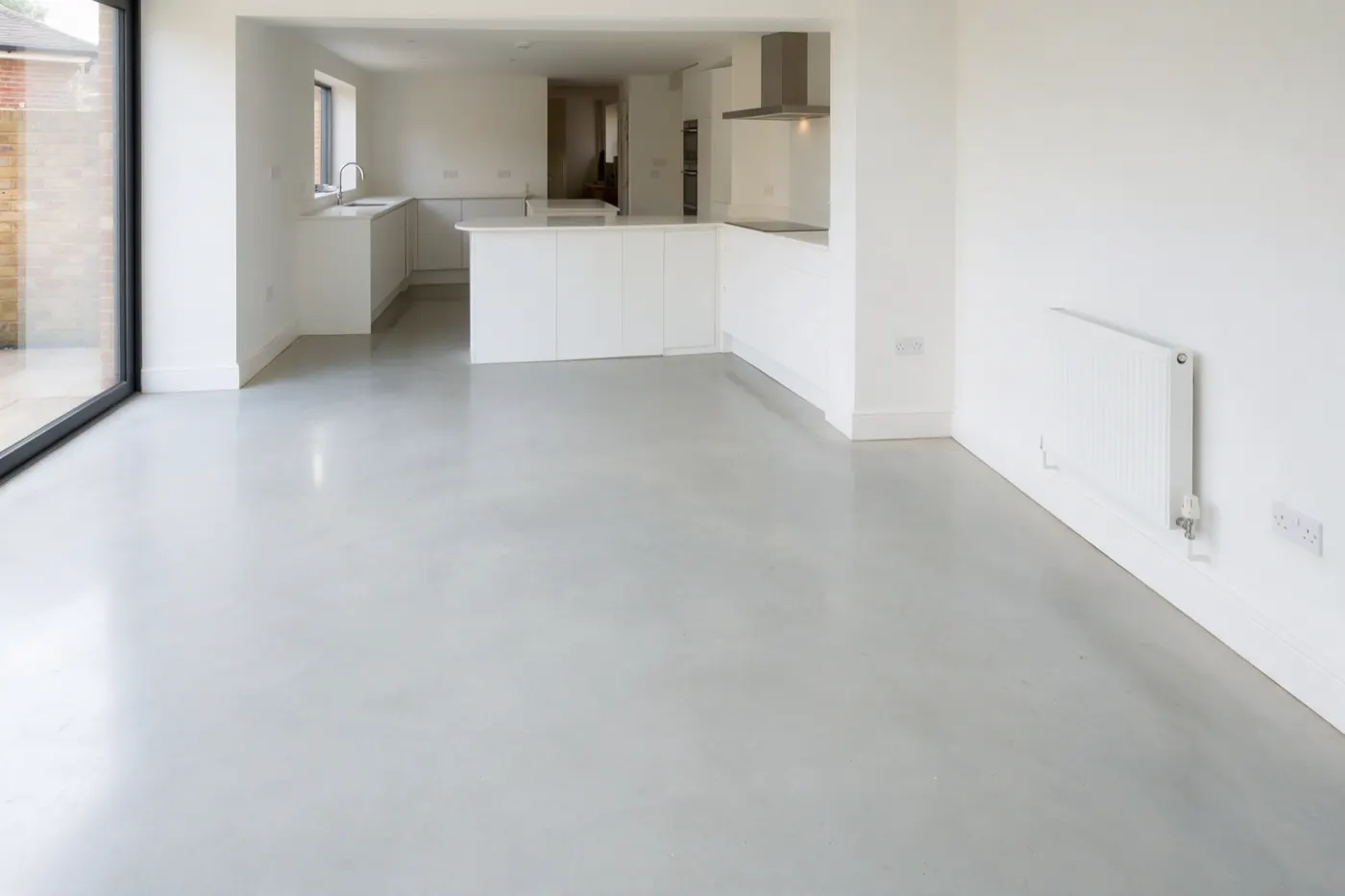
We split finishes into three bands: a basic polish (a simple matte or gloss finish) at £50 to £80 per m², mid-range at £80 to £110, and high-end custom finishes at £110 to £130 or more. Pigments and stains for a custom look add to the materials.
Why people choose it, and looking after it
The appeal: durable and long-lasting, low maintenance, suits modern interiors, comes in a range of colours and finishes, works with underfloor heating, reflects light, and once sealed can be waterproof, anti-slip and stain-resistant.
Upkeep is simple: sweep up grit regularly, mop as needed, and use wax or sealant where the installer recommends it. Little and often keeps it looking its best.
How long, and can you do it yourself?
Polishing an existing floor is usually simpler and quicker than pouring and finishing a new one; the contractor should give you a timescale once they've seen the floor. As for DIY, it isn't realistic in most cases: the surface has to be level, smooth and properly finished, and a poor installation may crack later. A compromise is professional installation with you doing the sealing, but only if the installer agrees.
Polished concrete or tiles?
On our estimates, tiles cost about £45 to £110 per m² supplied and fitted, against £140 to £180 for a new polished concrete floor. So where you're starting from scratch, tiles are usually cheaper; polishing a sound existing slab can be cheaper than tiling over it. See tiling costs. For underfloor heating under any hard floor, see underfloor heating.
Get polished concrete floor quotes
Polished concrete is priced per m², by whether there's a slab to polish or a new one to pour.
Free, no obligation. We're paid by MyJobQuote when a tradesperson buys your job, never by you.
Frequently asked questions
Is it expensive to have a polished concrete floor?
A new one is: about £140 to £180 per m² poured, polished and sealed, on our estimates. Polishing an existing slab is about £50 to £80 per m².
Is it cheaper to tile or have polished concrete?
For a new floor, tiles are usually cheaper (about £45 to £110 per m² against £140 to £180). Polishing an existing slab can cost less than tiling.
Can you lay a polished concrete floor yourself?
Not realistically: it needs a level, smooth, properly finished surface, and poor installation can crack later.
Can you polish an existing concrete floor?
Yes, if it's sound: about £50 to £80 per m² for a basic finish, on our estimates.
How we priced thisHow our estimates are made
Rules come from the legislation and official guidance, read at source. Prices are our estimates: we check them against trade price data, retailer shelf prices and specialists' price lists, then build them up from their parts so the totals add up. This page relies on our own estimates and the trade price guides we compare against, which we don’t list. Where sources disagreed, we've said so. More on our method.