The Short Answer
On our estimates, treating woodworm with a spray costs about £150 to £200 for a 25m² area such as a loft floor, and fumigation or fogging £700 to £800. A survey first costs £140 to £190 for a three-bed house. Most treatments take 1 to 3 days.
Don't pay for treatment until someone independent has checked whether the woodworm is still active and whether treatment is needed at all.
Woodworm treatment prices
| Area treated | Boron spray | Fumigation or fogging |
|---|---|---|
| 15m² | £120 to £150 | £500 to £600 |
| 25m² | £150 to £200 | £700 to £800 |
| 35m² | £200 to £280 | £900 to £1,000 |
| Item | Typical cost |
|---|---|
| Survey, 1 to 2 bed home | £80 to £130 |
| Survey, 3 bed home | £140 to £190 |
| Survey, 4 bed or larger | £200 to £250 |
| Repairing damaged joists or floorboards | £200 to £800 |
Get a survey first
I'd use an independent surveyor. The survey should tell you three things: whether treatment is needed at all, whether the infestation is active, and how much structural damage there is. I'd use that to decide between a spray, fumigation, timber repairs, or leaving it.
I'd get the survey from someone who isn't selling the treatment. If you're buying a house and the survey flags woodworm, I'd get this done before renegotiating.
Deal with the damp first
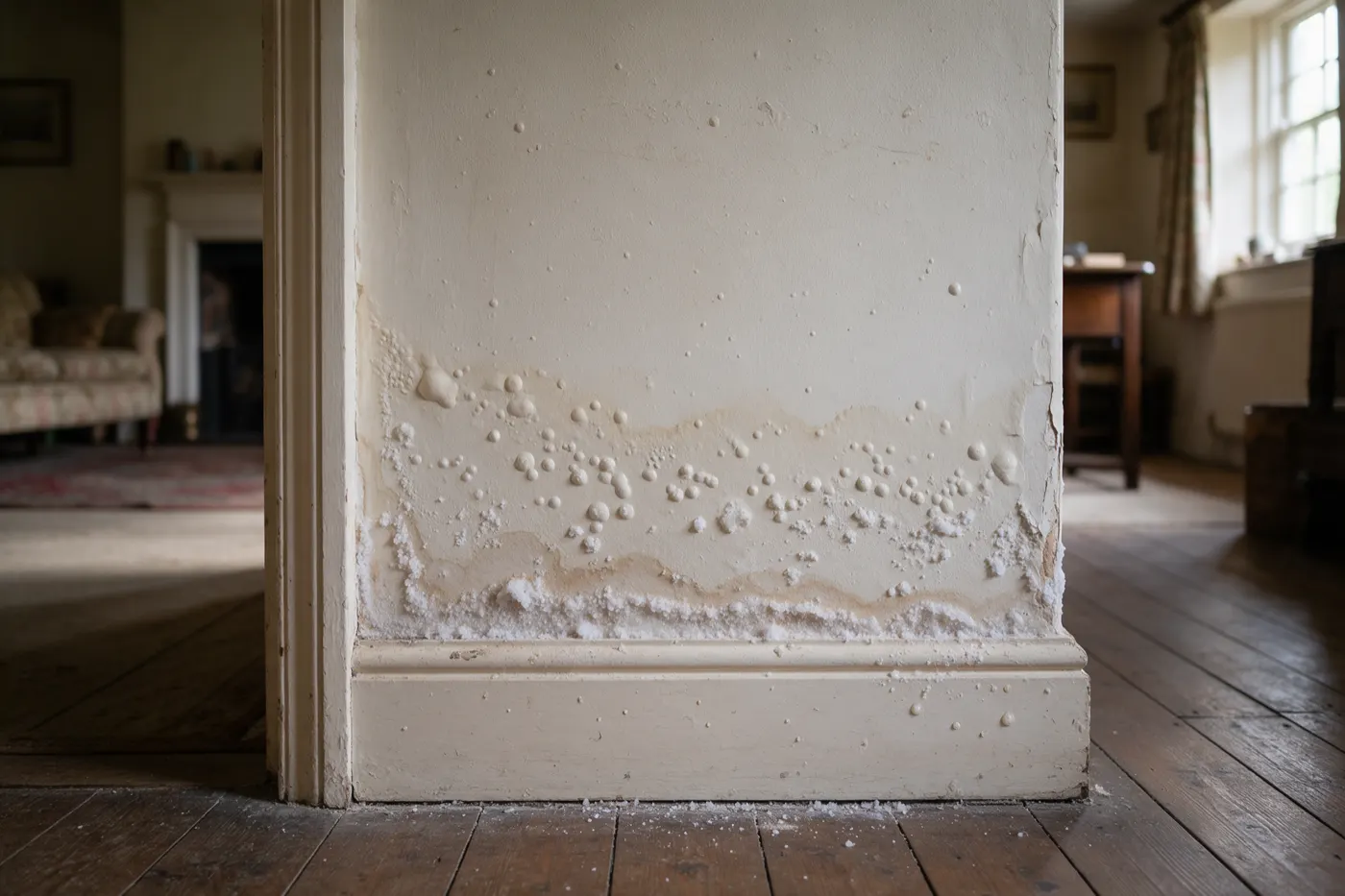
Woodworm is more common in damp areas, so treatment on its own can be wasted if the timber stays damp. Fix the leak, the condensation or the bridging first. See damp proofing for finding the cause.
Can woodworm be got rid of completely?
Usually, yes. Specialists quoted by Which? say most infestations can be treated successfully with very little disruption. Two things to expect: the treatment doesn't soak right through the timber, so you may still see beetles coming out of treated wood for a while (they meet the treatment on the way out to breed), and new holes in areas that weren't treated mean it's time to call the professional back.
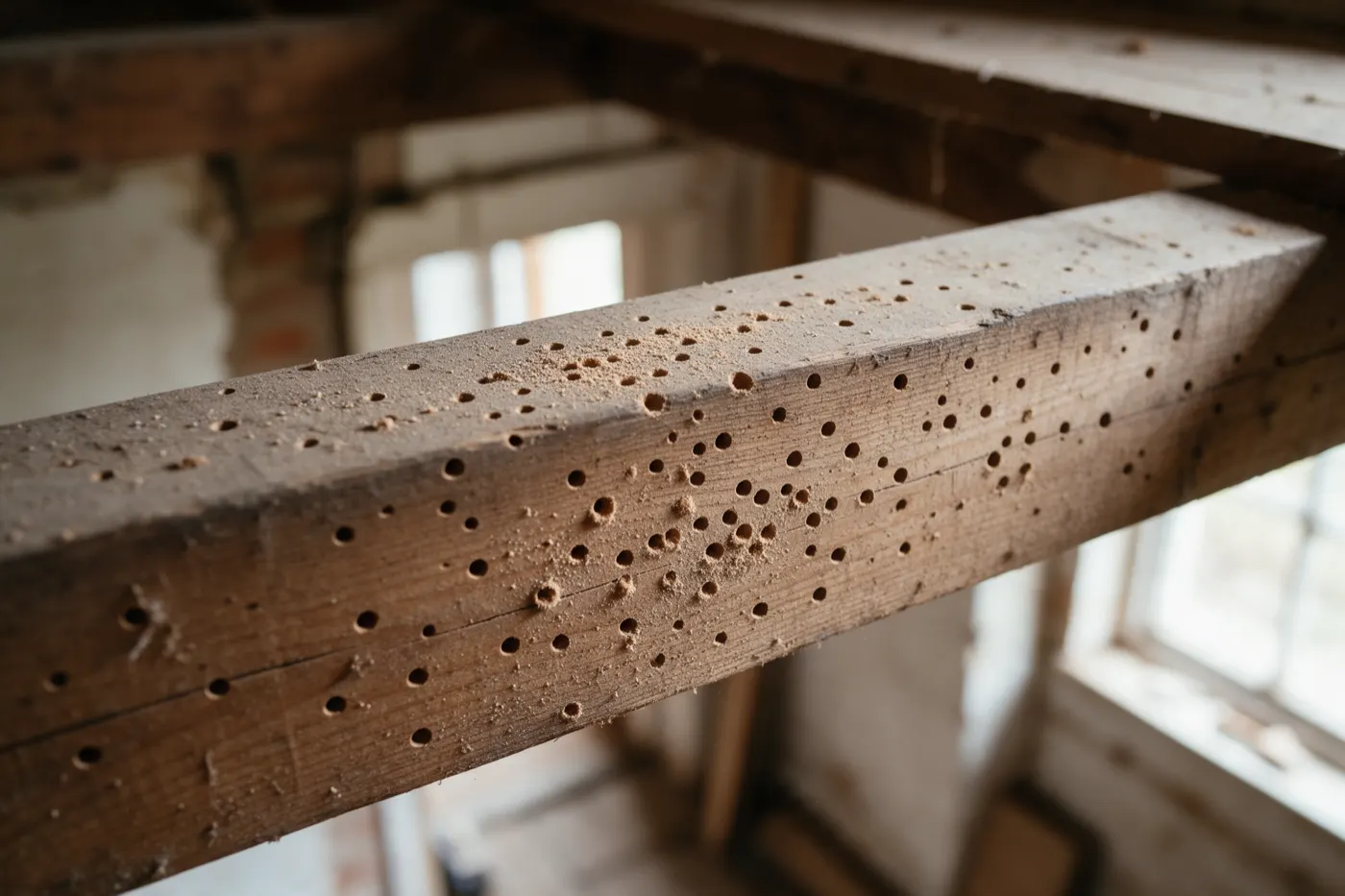
Telling whether woodworm is still active is the hard part. The Property Care Association says the usual signs are fresh bore dust (frass) around the 1 to 2mm exit holes and dead adult beetles, though even those can mislead. Keeping the timber dry is the main protection against it coming back.
Insurance, and selling a house with woodworm
Don't expect your home insurance to pay. Both policy wordings we read, NatWest's and Policy Expert's, exclude damage caused by woodworm, insects, vermin and rot; NatWest lists it among changes that happen over time. Check your own policy, but plan to pay for treatment yourself.
You can sell a house with woodworm, or one that's been treated. The Law Society's guidance on the property information form (TA6) says to answer truthfully and as accurately as you can from your own knowledge; buyers can rely on your answers, and misleading ones can lead to a compensation claim after completion. Pass on any treatment guarantee and the paperwork, and ask the company whether the guarantee transfers to the new owner.
Dry rot
Dry rot is decay of wood by a fungus, Serpula lacrymans. Specialists writing for Building Conservation explain that it depends totally on moisture, so the main treatment is getting the building dry and keeping it dry. It can spread from the timber into plaster and masonry.
Where the moisture comes from is the first question. The usual suspects they list:
- roofs, gutters and downpipes;
- parapets, flashings and rain getting through render;
- around windows and doors;
- defective or bridged damp proof courses;
- plumbing leaks.
Heating and ventilation help a building dry; dehumidifiers dry the air, but a wall dries by evaporation, which takes time. In some older buildings drying out can take years, so other measures are often needed meanwhile. All the woodwork nearby should be inspected to see how far it has spread.
Dry rot costs depend entirely on how far it's gone, from a small repair to replacing structural timbers, so we don't give a range. Get it surveyed, fix the water, then price the timber repairs.
Get woodworm & dry rot treatment quotes
Treatment depends on what's in the timber and how far it's spread.
Free, no obligation. We're paid by MyJobQuote when a tradesperson buys your job, never by you.
Frequently asked questions
Can you get rid of woodworm completely?
Usually. Specialists quoted by Which? say most infestations can be treated successfully. You may still see some beetles emerge from treated timber for a while; new holes in untreated areas mean the treatment needs extending. Keeping the timber dry stops it coming back.
Is woodworm covered by house insurance?
Usually not. Both home insurance policy wordings we read (NatWest and Policy Expert) exclude damage caused by woodworm, insects, vermin and rot.
Can you sell a house with woodworm?
Yes. Answer the property information form truthfully, as the Law Society's guidance says buyers can rely on it, and pass on any treatment guarantee, checking whether it transfers to the buyer.
How much does woodworm treatment cost?
On our estimates, about £150 to £200 to spray a 25m² area, or £700 to £800 for fumigation.
Do I need a survey for woodworm?
Yes, ideally an independent one. It should tell you whether the woodworm is active, whether treatment is needed and how much damage there is.
How long does woodworm treatment take?
Usually 1 to 3 days.
What causes dry rot?
A fungus, Serpula lacrymans, which depends on moisture. The main cure is finding the source of the water and drying the building out.
Is dry rot worse than woodworm?
It can spread from timber into plaster and masonry, and the building has to be dried out, which can take a long time. Get a survey either way.
How we priced thisView sources (6)
Rules come from the legislation and official guidance, read at source. Prices are our estimates: we check them against trade price data, retailer shelf prices and specialists' price lists, then build them up from their parts so the totals add up. Below are the sources behind the page; the trade price guides we only compare against aren’t listed. Where sources disagreed, we've said so. More on our method.
- IndustryHow to treat woodworm (with Which? Trusted Trader specialists), Which?. Checked 16 Oct 2026.
- IndustryWoodworm advice for homeowners, Property Care Association. Checked 16 Oct 2026.
- IndustryHome insurance policy booklet (March 2025): general exclusions, NatWest. Checked 16 Oct 2026.
- IndustryHome insurance policy wording (November 2024): exclusions, Policy Expert. Checked 16 Oct 2026.
- IndustryTA6 (6th edition) (2025): explanatory notes for sellers and buyers, The Law Society. Checked 16 Oct 2026.
- IndustryDry rot and its treatment in historic buildings (Carey and Grant), Building Conservation. Checked 16 Oct 2026.