The Short Answer
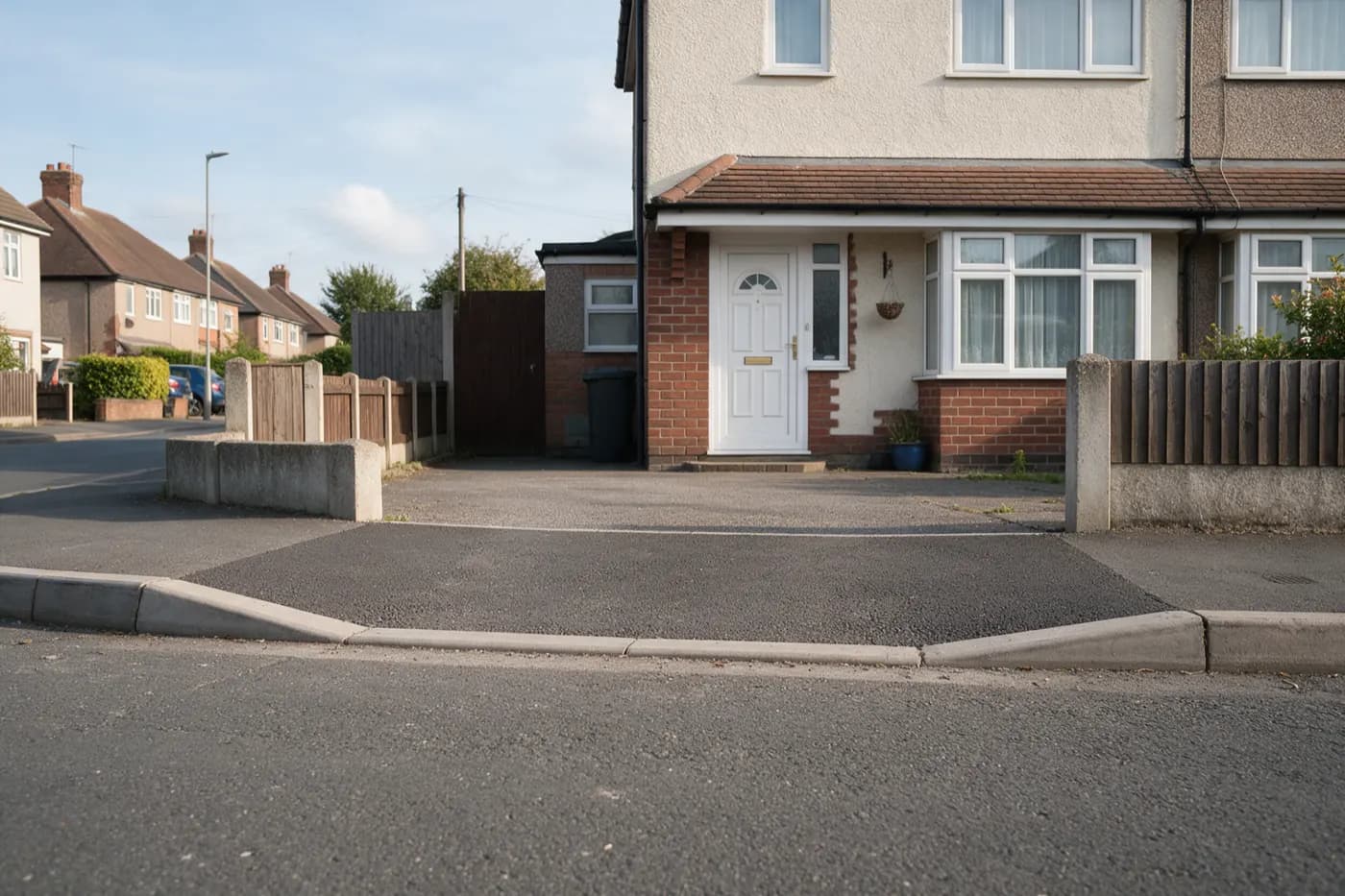
On our estimates, a dropped kerb for a house costs about £1,200 to £3,000 all in, including the council's application or inspection fee (£50 to £300). Crossing a grass verge costs more.
You can't just hire a builder to do it. The pavement belongs to the highway authority, which must approve the crossing and then quotes for the work. Councils also want to see a parking space big enough for a car, and a new access onto a main road needs planning permission first.
Dropped kerb prices
| Item | Typical cost |
|---|---|
| Application or inspection fee | £50 to £300 |
| Dropped kerb, about 3m wide, built | £1,200 to £3,000 |
| Extra for crossing a grass verge | £500 to £1,500 |
Two council examples from October 2026: Manchester City Council's new dropped kerbs started at £1,575 for about 3m, and it said a verge crossing is the most expensive type. Liverpool City Council charged £100 for the site inspection, credited against the work if approved, and quoted within 21 working days.
How to apply
- Check the parking space. Councils set minimum sizes; Manchester's, for example, was 4.8m deep by 3.5m wide for a car parked straight on.
- Check planning. A new access onto an A, B or other classified road needs planning permission; onto a residential street it usually doesn't, as long as the drive itself is permitted (see driveway planning). Liverpool also flags conservation areas and turning a garden into a new drive.
- Apply to the council's highways team and pay the fee. They inspect, then approve, modify or refuse, and send a quote.
- Pay and book. The council or its contractor builds it. In Liverpool, a contractor of your own needs a street works (Section 50) licence.
- Build the drive before or alongside, so the kerb lines up with a usable surface.
The law
Under the Highways Act 1980, anyone can ask the highway authority to build a vehicle crossing; it can approve, change or refuse the request, and if it approves it gives you a quote to pay up front. If you regularly drive over a kerbed pavement or verge without one, the council can serve notice that it will build a crossing and recover the cost from you, or set conditions on how you use the pavement. The Highway Code also says you must not drive on or over a pavement except to gain lawful access to property or in an emergency. The government's front garden guidance adds that the footpath may need strengthening to protect pipes and cables underneath.
Get dropped kerb quotes
Most councils build dropped kerbs themselves or approve a contractor. A few details help them quote.
Free, no obligation. We're paid by MyJobQuote when a tradesperson buys your job, never by you.
Frequently asked questions
How much does it cost to have a dropped kerb installed?
On our estimates, about £1,200 to £3,000 including the council's fees, for a standard crossing of about 3m. Verges and wider crossings cost more.
Do I need permission for a dropped kerb?
Yes, always from the council as highway authority. Planning permission is also needed for a new access onto an A, B or other classified road.
Can I do a dropped kerb myself?
No. The council has to approve and quote for the crossing. Some let you use your own contractor, but they need a street works licence.
Can I use my driveway without a dropped kerb?
Not by driving over the kerb. The Highway Code says you must not drive on or over a pavement except to gain lawful access to property, and if you do it regularly the council can serve notice to build a crossing and charge you for it. It can also damage the pavement and the pipes and cables underneath.
Can I get a free dropped kerb?
Usually not: councils charge for the inspection and the work. We found no national grant for dropped kerbs. Disabled Facilities Grants pay for adaptations such as ramps and better access to the home and garden, and don't list dropped kerbs, but if a disabled person in the house needs one to get in and out, I'd ask the council's occupational therapist when they assess you.
How long does a dropped kerb application take?
Weeks rather than days: an inspection, a decision and a quote, then a slot for the work. Liverpool, for example, quoted within 21 working days.
How we priced thisView sources (8, 7 official)
Rules come from the legislation and official guidance, read at source. Prices are our estimates: we check them against trade price data, retailer shelf prices and specialists' price lists, then build them up from their parts so the totals add up. Below are the sources behind the page; the trade price guides we only compare against aren’t listed. Where sources disagreed, we've said so. More on our method.
- OfficialHighways Act 1980, section 184: vehicle crossings over footways and verges, legislation.gov.uk. Checked 16 Oct 2026.
- OfficialThe Highway Code, rule 145 (driving on or over a pavement), GOV.UK. Checked 16 Oct 2026.
- OfficialDisabled Facilities Grants, GOV.UK. Checked 16 Oct 2026.
- OfficialThe Town and Country Planning (General Permitted Development) (England) Order 2015, Schedule 2 Part 2 (gates, fences, walls; means of access), legislation.gov.uk. Checked 15 Oct 2026.
- OfficialGuidance on the permeable surfacing of front gardens (September 2008), Department for Communities and Local Government (GOV.UK). Checked 15 Oct 2026.
- OfficialDropped kerbs: definition and requirements, Manchester City Council. Checked 15 Oct 2026.
- OfficialApply for a dropped kerb, Liverpool City Council. Checked 15 Oct 2026.
- IndustryCosts for a new driveway in the UK, Federation of Master Builders. Checked 15 Oct 2026.