The Short Answer
On our estimates, polished (Venetian) plaster costs about £90 to £150 per m² supplied and applied. A single feature wall of 10 to 12m² is £900 to £1,800, a whole room £1,800 to £3,500, and a bathroom with a sealed finish £2,000 to £4,000. Most jobs take one to two days.
That's several times the price of ordinary plastering (£15 to £30 per m² for a skim), because it's a specialist lime-based finish applied by hand in several coats.
Polished plaster prices
| Job | Typical cost |
|---|---|
| Per m², supplied and applied | £90 to £150 |
| Feature wall (10 to 12m²) | £900 to £1,800 |
| Whole room (20 to 25m² of wall) | £1,800 to £3,500 |
| Bathroom, with a sealed finish | £2,000 to £4,000 |
What it is, and what moves the price
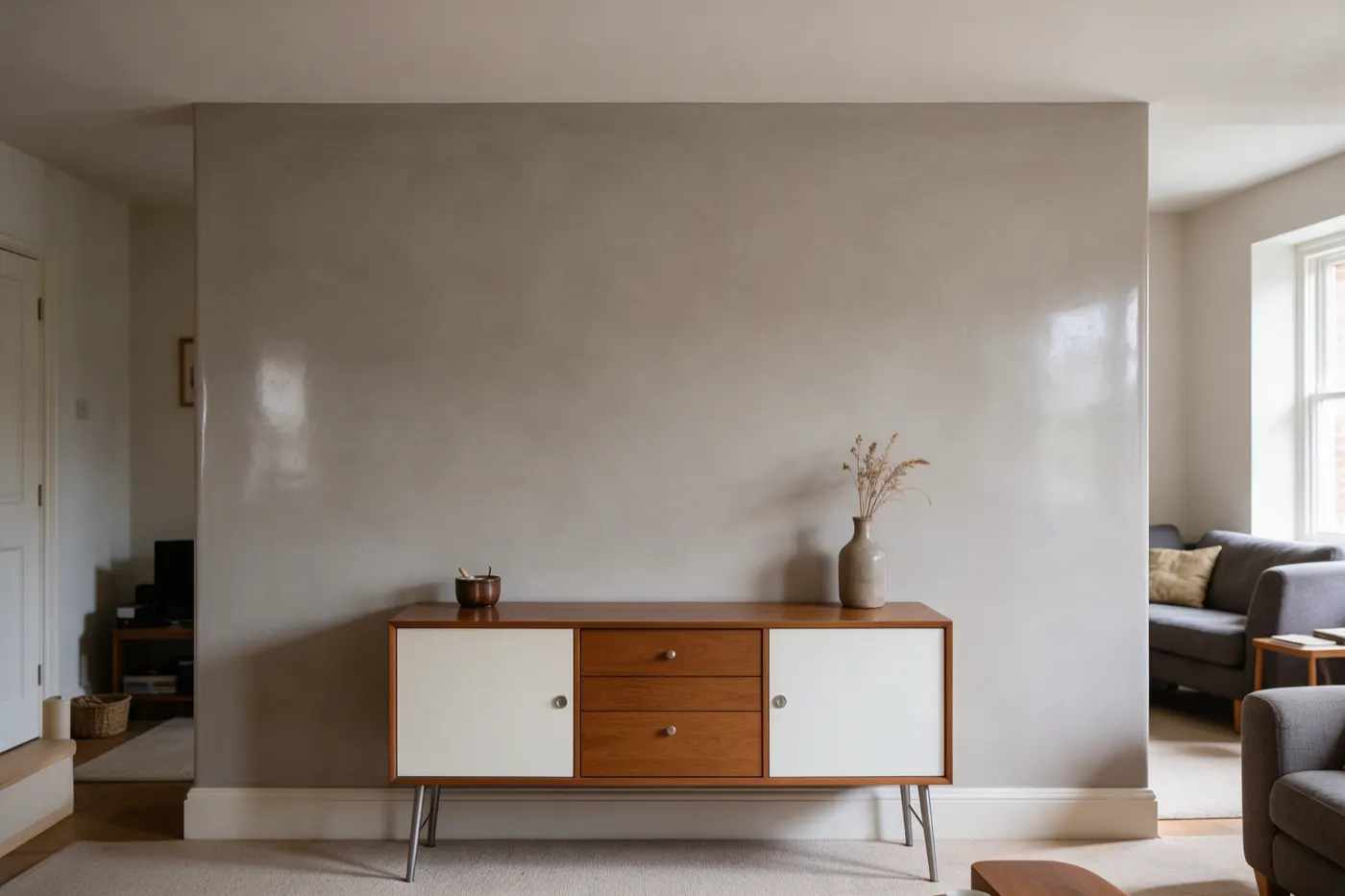
Venetian plaster is a premium, lime-based decorative finish with a smooth, marble-like sheen. What drives the price:
- Area: bigger walls cost more in total but often less per m², because small jobs carry minimum charges.
- Colour and finish: natural lime with a light pigment sits at the lower end; dark colours and custom mixes cost more.
- Coats: a smooth finish may need two or three coats, complex textures four or more.
- The wall: repairs, levelling or priming first add to the bill.
- Location: London is dearer.
Real lime or a faux finish?
One distinction matters when you compare quotes. Venetian plaster is lime-based, burnished to a sheen, breathable, and develops depth over time. Polished plaster is a broader term that also covers acrylic and resin products with a similar look. Those faux versions are usually cheaper and quicker to apply, but behave differently once they're on the wall.
Neither is wrong, but a cheap quote may be for a different product. I'd ask every applicator to name the material in writing.
How long it lasts, and cracking
With normal care, Venetian plaster can last for decades, because the lime surface hardens over time, and properly applied and cured it's unlikely to crack. When it does crack, the usual causes are poor preparation, an unsuitable surface underneath, or movement in the wall, which is why the preparation in the quote matters as much as the finish.
Bathrooms
In a bathroom the surface needs sealing against moisture, which adds an extra stage and pushes the price up, to about £2,000 to £4,000 for a room. For a wet room or shower enclosure, ask the applicator which product and sealer they'd use and what maintenance it needs.
Choosing an applicator
- Get at least three written quotes.
- Ask to see finished work, in photos or in person.
- Confirm the material: lime-based or an imitation.
- Check whether wall repairs and priming are included.
- Confirm they have public liability insurance.
Worth it?
I'd start with one feature wall, where the finish is seen and the cost is contained, and ask to see a sample board in your colour before committing. Microcement is the other seamless option, though it costs more than many alternatives. If you only want smooth walls to paint, ordinary plastering is a fraction of the cost.
Get polished plaster quotes
Polished plaster is priced per m², by the finish and colour.
Free, no obligation. We're paid by MyJobQuote when a tradesperson buys your job, never by you.
Frequently asked questions
How much does polished plaster cost per m²?
About £90 to £150 per m² supplied and applied, on our estimates; darker colours cost more.
How much is Venetian plaster for a feature wall?
About £900 to £1,800 for a 10 to 12m² wall, on our estimates.
Can you use polished plaster in a bathroom?
Yes, with a sealed finish, which adds a stage: about £2,000 to £4,000 for a bathroom on our estimates.
How long does polished plaster last?
With normal care, Venetian plaster can last for decades, because the lime surface hardens over time.
Is polished plaster more expensive than tiling?
It's often similar to mid-range tiling once labour is included, on our estimates, and it gives a seamless finish with no grout lines.
How long does polished plaster take?
Most jobs take one to two days, depending on the area and the number of coats.
How we priced thisHow our estimates are made
Rules come from the legislation and official guidance, read at source. Prices are our estimates: we check them against trade price data, retailer shelf prices and specialists' price lists, then build them up from their parts so the totals add up. This page relies on our own estimates and the trade price guides we compare against, which we don’t list. Where sources disagreed, we've said so. More on our method.