The Short Answer
On our estimates, taking out a ground-floor chimney breast costs £2,100 to £3,900, including supporting what's left above it. Taking the stack down below the roof and tiling over is £1,300 to £3,000 with scaffold, and removing the whole chimney from floor to roof is £4,500 to £8,000. A single breast is about two days on site; the whole chimney a week or more.
Removing a breast always needs building regulations approval and a structural engineer's design, and if the chimney is on a wall you share with next door, a party structure notice at least 2 months before work starts. Taking off only the stack above the roofline doesn't need a building regulations application, which is why it's the cheap fix for a leaking chimney you never use.
Chimney removal cost and permissions
What you take out decides both the price and the paperwork. Pick yours to see both.
Before work starts you'll need
- A structural engineer's design for whatever holds up the masonry above (a steel beam or brackets).
- Building regulations approval: it's a structural alteration.
Estimated total
£2,280 to £4,150
| Ground-floor breast: removal, support and waste | £2,100 to £3,900 |
| Making good: plaster, floor, skirting (1 room) | £180 to £250 |
Chimney removal prices
| What's removed | Typical cost | On site |
|---|---|---|
| Ground-floor breast; upstairs breast and stack stay, supported | £2,100 to £3,900 | about two days |
| Breasts on both floors; stack stays, supported | £3,200 to £5,500 | four or five days |
| Stack only, taken down below the roof and tiled over | £1,300 to £3,000 | |
| Everything, floor to roof | £4,500 to £8,000 | a week or more |
| Making good each room (plaster, floor, skirting) | £180 to £250 |
| Also budget for | Typical cost |
|---|---|
| Structural engineer's design and calculations | £300 to £500 |
| Building control (breast removal) | From about £240; council fees vary |
| Chimney scaffold, a week | £600 to £980 |
| Skip, a week (if waste isn't in the price) | £230 to £350 |
| Party wall surveyor | Only if your neighbour doesn't consent |
| Decorating | Not included anywhere above |
What holds up the chimney above?
A chimney breast is part of the structure: it carries the breast above it and the stack. Take out the ground-floor breast and leave the rest, and something has to carry it. LABC, the body for council building control, says that may be a fire-protected steel beam or steel "gallows" brackets, and your structural engineer decides which.
Gallows brackets are triangular steel frames bolted to the wall with a lintel or plate across them. Waltham Forest Council's building control guidance note lists when they won't do:
- your neighbour has already taken out their breasts on the other side of the wall;
- the brickwork of the wall is in poor condition;
- there's more chimney above the roof than below it (it could overturn), or simply too much masonry to carry;
- the chimney isn't bonded into the wall, in which case it has to be propped until the supports are in.
A chimney on a side wall can also be holding that wall up. If it buttresses a wall longer than 9 metres on a two-storey house (12 metres single storey) with no other cross wall, LABC says an engineer must check the wall's stability, and the guidance note suggests restraint straps tying the wall to the floors and roof.
Taking down just the stack
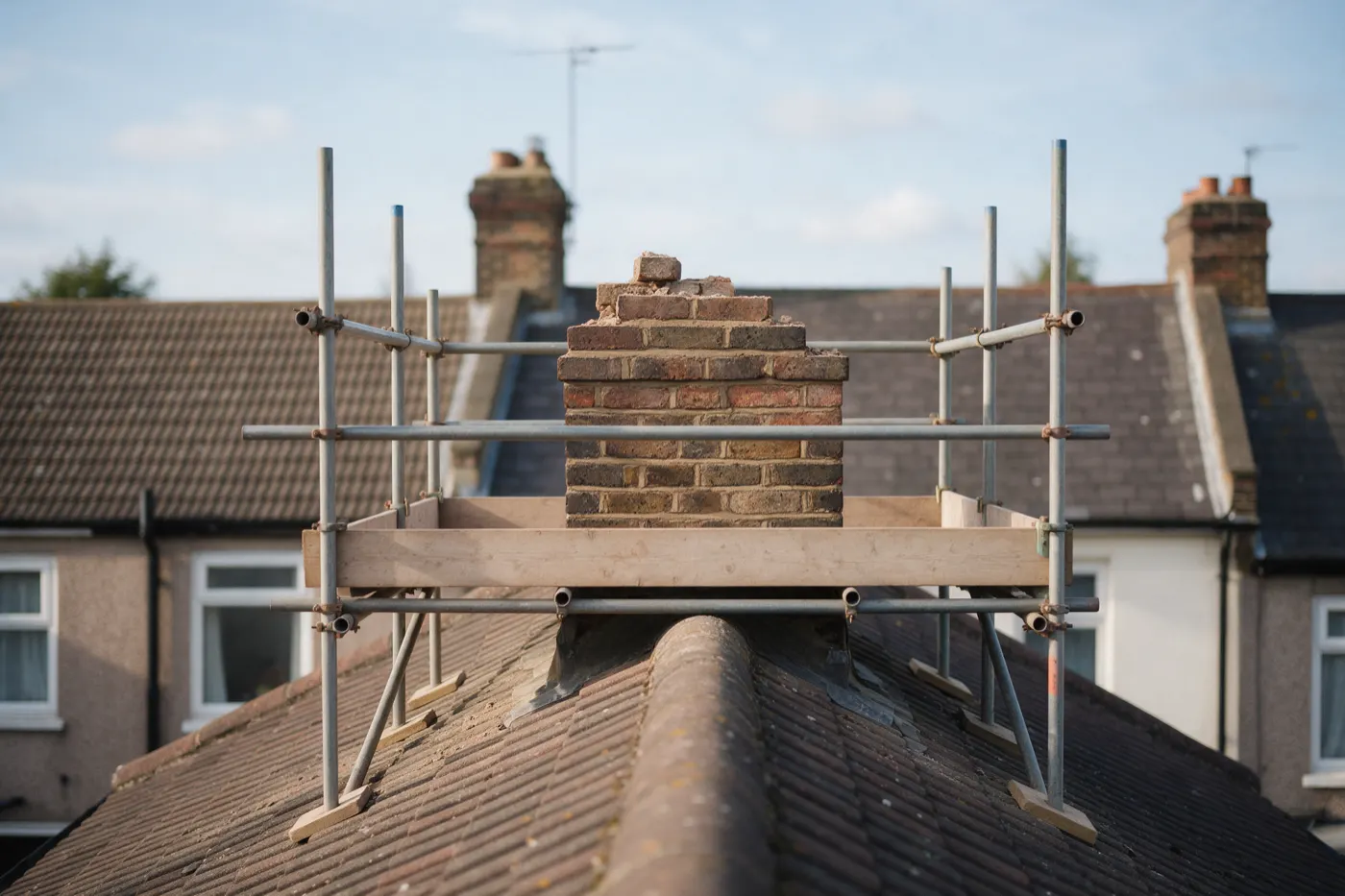
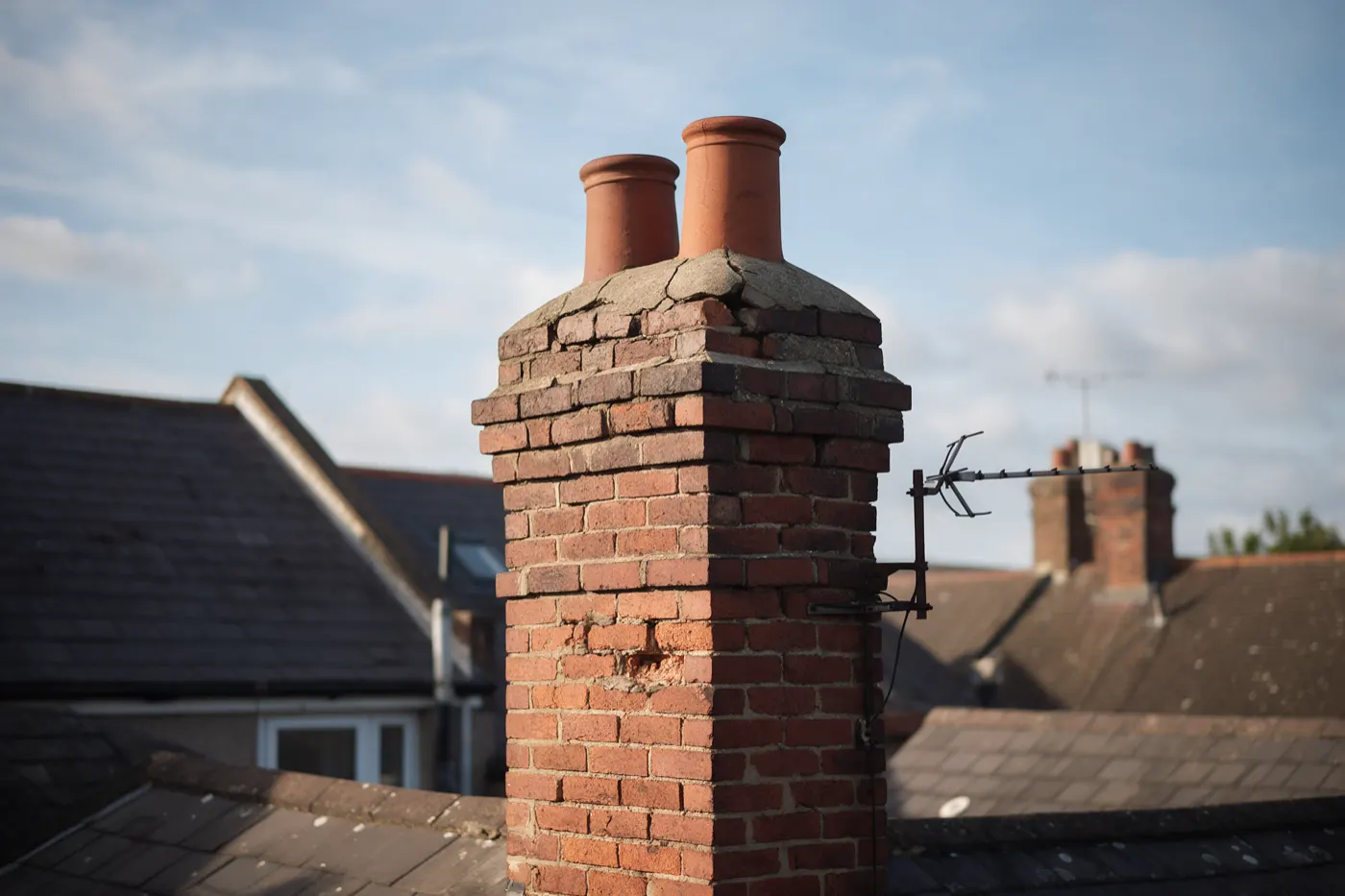
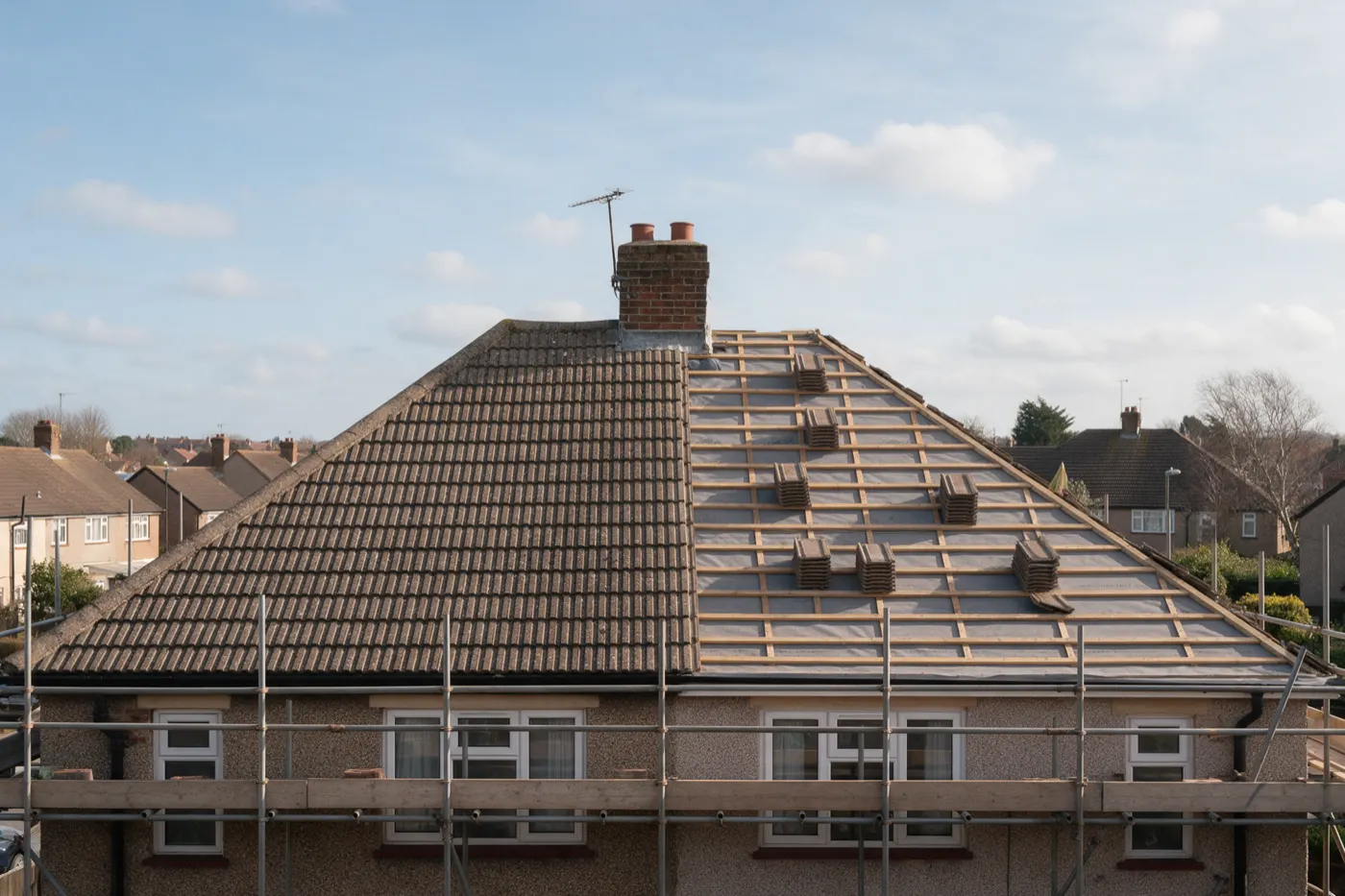
If the stack leaks or is crumbling and you never light a fire, taking it down below the roofline and tiling over is often cheaper than rebuilding it (see chimney repair costs). LABC says you don't need a building regulations application to remove the stack above the roofline only. You do if you're removing the stack all the way down through the house, because it may be supporting walls, floors or the roof.
The breasts you keep become disused flues. Historic England says a disused flue still needs some ventilation to stay dry, so ask for a vent in each breast that stays. If the stack is shared with next door, LABC says a shared stack has to be taken down as a whole, so you'll need their agreement, and any flue they still use has to be tested by a competent person afterwards.
Builders and roofers both take on chimney work. Whoever you use, LABC's advice is to pick someone experienced: done badly, it can leave you with ventilation and damp problems or worse.
Shared chimneys and the Party Wall Act
If your chimney is on the party wall, the Party Wall Act gives you a specific right to cut away a projecting chimney breast from it, but you must serve a party structure notice at least 2 months before work starts. If your neighbour doesn't consent in writing within 14 days, the Act treats it as a dispute: either you agree on one surveyor, or you each appoint one and they pick a third. The cost of the work itself is yours.
Talk to your neighbour before the notice goes in. It's also how you find out whether they've already removed their breasts, which decides whether brackets can work.
Permissions: what you need and when
| Permission | When |
|---|---|
| Building regulations approval | Removing any chimney breast, or the stack all the way down. Not for the stack above the roofline only |
| Party structure notice | Chimney on a party wall: at least 2 months before work |
| Planning permission | Not for an internal breast. A stack may come under permitted development, but the rules don't specifically mention removal: in a conservation area ask the council, or get a lawful development certificate for certainty |
| Listed building consent | Any listed building, before anything is touched |
| Bat advice | Bats and their roosts are protected even when they're not there. If they could be using the chimney or roof, get advice before work starts |
Getting building regulations approval
Your structural engineer draws up the design and calculations, and they go to building control before work starts. LABC suggests a full plans application rather than a building notice, because the calculations have to be approved first. I'd do that: you find out before the builder starts whether the design passes, not halfway through.
Don't skip it: Citizens Advice warns that work done without the approval it needs can mean being made to put it right and problems when you sell.
Is it worth removing a chimney?
My view: removing a leaking stack you don't use is usually worth it, because on our estimates it costs less than rebuilding it and ends the repair bills. Taking out breasts is harder to justify on cost alone. It's structural, involves an engineer, building control and often your neighbour, and LABC warns it can cause serious structural damage if done badly. Do it when the space genuinely changes how you use a small room, not just for looks.
Get chimney removal quotes
Removing a chimney is structural work. These answers tell builders what's coming out and what has to hold up what's left.
Free, no obligation. We're paid by MyJobQuote when a tradesperson buys your job, never by you.
Frequently asked questions
How much does it cost to remove a chimney breast?
On our estimates, £2,100 to £3,900 for a ground-floor breast with the rest supported, or £3,200 to £5,500 for both floors with the stack kept. Add the engineer (£300 to £500), building control and decorating.
How much does it cost to remove a chimney stack?
£1,300 to £3,000 to take it down below the roof and tile over, including scaffold, on our estimates.
Is removing a chimney a good idea?
Removing an unused, leaking stack usually is: it ends the repairs. Removing breasts is structural work with an engineer, building control and often a party wall notice, so it's worth it when the space really matters.
Is it hard to get rid of a chimney?
Taking the stack down above the roof needs no building regulations application, but it still wants someone experienced. Breasts are harder: whatever stays above has to be supported to an engineer's design, and building control must approve it.
Will a roofer remove a chimney?
Roofers take on chimney work as well as builders. For breasts inside the house, whoever does it works to a structural engineer's design.
Do I need permission to remove my chimney?
For a breast, building regulations approval, and a party structure notice at least 2 months ahead if it's on a party wall. Not planning permission for an internal breast. For the stack above the roofline only, no building regulations application; check with the council if you're in a conservation area, and you need listed building consent for a listed building.
Do I need a party wall agreement to remove a chimney breast?
If it's on a party wall, yes: serve a party structure notice at least 2 months before work. If your neighbour doesn't consent within 14 days, surveyors settle it.
How long does chimney removal take?
On site, about two days for one breast, four or five days for both floors, a week or more for the whole chimney. Allow for the design, approval and any party wall notice before that.
How we priced thisView sources (13, 10 official)
Rules come from the legislation and official guidance, read at source. Prices are our estimates: we check them against trade price data, retailer shelf prices and specialists' price lists, then build them up from their parts so the totals add up. Below are the sources behind the page; the trade price guides we only compare against aren’t listed. Where sources disagreed, we've said so. More on our method.
- OfficialWhat are the issues around removing a chimney stack or chimney breast?, LABC Front Door. Checked 15 Oct 2026.
- OfficialDo I need permission to remove chimney breasts?, Planning Portal. Checked 15 Oct 2026.
- OfficialDo I need permission to remove a chimney stack on a property in a conservation area?, Planning Portal. Checked 15 Oct 2026.
- OfficialBuilding Control Guidance Note 11: chimney breast removal (March 2008), London Borough of Waltham Forest. Checked 15 Oct 2026.
- OfficialParty Wall etc. Act 1996, sections 2 and 3, legislation.gov.uk. Checked 15 Oct 2026.
- OfficialParty Wall etc. Act 1996, sections 5, 10 and 11 (disputes, surveyors, expenses), legislation.gov.uk. Checked 15 Oct 2026.
- OfficialOpen fires, chimneys and flues (7 March 2025), Historic England. Checked 15 Oct 2026.
- OfficialBats: advice for making planning decisions (standing advice), Natural England. Checked 15 Oct 2026.
- OfficialIntroduction to asbestos safety; Non-licensed work with asbestos, Health and Safety Executive. Checked 15 Oct 2026.
- OfficialBefore you get work done on your home (England), Citizens Advice. Checked 15 Oct 2026.
- Trade guideChimney removal cost in the UK, Checkatrade. Checked 15 Oct 2026.
- IndustryChimney removal cost guide: what homeowners should know (21 November 2025), Federation of Master Builders. Checked 15 Oct 2026.
- Trade guideScaffolding hire costs in the UK, Checkatrade. Checked 15 Oct 2026.