The Short Answer
On our estimates, knocking through a load-bearing wall for a 2m opening costs about £2,800 to £5,000 all in, including VAT: £1,850 to £2,500 for the propping, steel beam and removal, plus £950 to £2,500 for the structural engineer, building control and making good. A full open-plan knock-through of about 4m is £4,200 to £7,500. The building work takes one and a half to two days for a 2m opening.
A wall that isn't load-bearing is about £800 to £2,000 with making good. Don't guess which yours is: a structural engineer or surveyor can tell you, and design the beam if it is.
Cost to knock through a wall
A load-bearing wall needs a beam designed by an engineer and building regulations approval. Pick yours.
Estimated total
£4,190 to £7,540
| Propping, removing the wall, fitting the steel | £3,240 to £5,040 |
| Structural engineer's calculations | £250 to £500 |
| Building control | £200 to £500 |
| Making good: plaster, floor patch, decorating | £500 to £1,500 |
Prices by opening
| Opening | Wall and steel | All in |
|---|---|---|
| Doorway, about 1m | £1,300 to £1,800 | £2,250 to £4,300 |
| About 2m | £1,850 to £2,500 | £2,800 to £5,000 |
| Open plan, about 4m | £3,250 to £5,000 | £4,200 to £7,500 |
| Non-load-bearing wall | £800 to £2,000 | £1,300 to £3,500 |
Builders' prices for the wall and steel usually include the beam, labour, the engineer's calculations and taking the rubble away. They usually don't include moving electrics, plumbing or gas in the wall, plastering and decorating, or repairing the floor where the wall stood, so ask. Allow one to one and a half days for a doorway and two to three days for a 4m opening.
Is it load-bearing?
The Planning Portal says an internal wall is most commonly load-bearing when it supports:
- part of the roof, including ceiling joists in the loft;
- a wall directly above it;
- floor joists built into it or sitting on top of it.
There are less obvious cases too, such as a beam put in under a removed chimney breast that bears on the wall. A structural engineer or surveyor can tell you for certain and design the beam.
How it's done
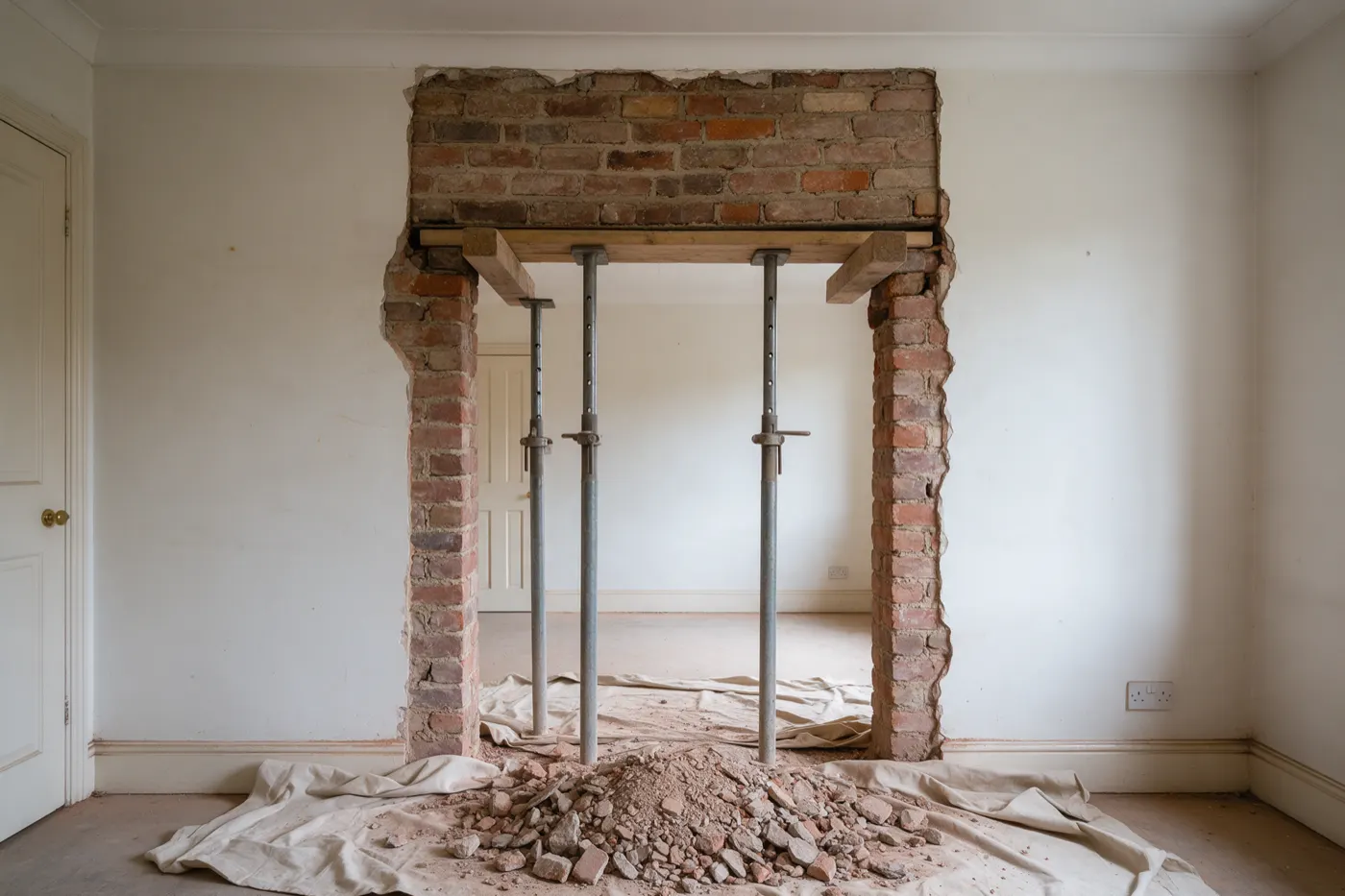
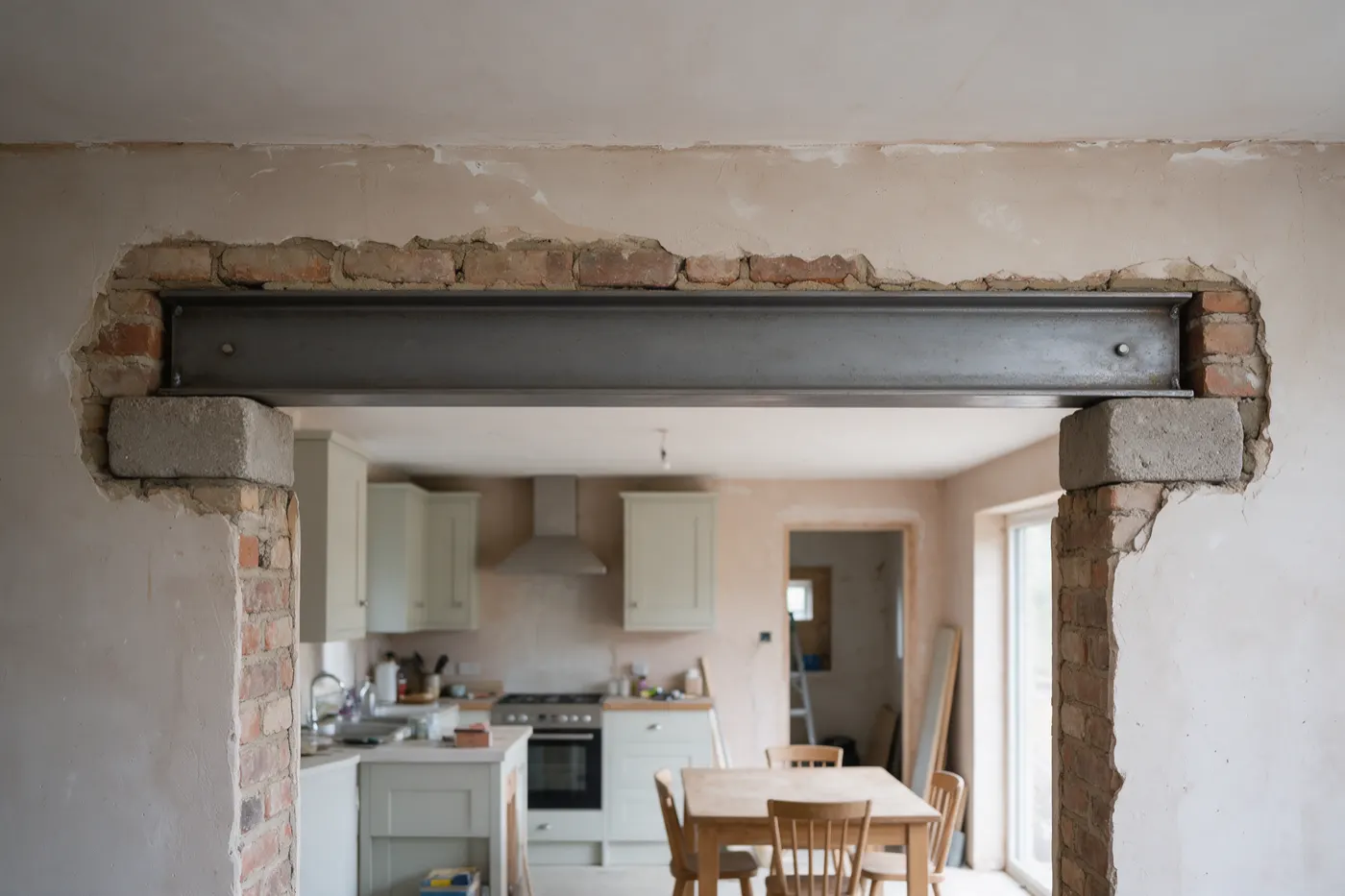
- The engineer designs the beam to carry what the wall carried, sitting on supports that take the load down to the foundations.
- The builder props the floor above with steel props and "strongboys".
- The wall comes out and the beam goes in, normally with at least 150mm of bearing on each side. The wall under each end may need strengthening with concrete padstones to stop it crushing.
- A steel beam is normally fire protected to 30 minutes, most commonly with plasterboard, then plastered.
Building regulations and fire safety
The Planning Portal says building regulations will normally apply to removing an internal wall or forming an opening in one, and a load-bearing wall certainly needs approval. The Royal Borough of Windsor and Maidenhead's 2026 charge for structural alterations under £5,000 was £495 including VAT.
Fire is the part people miss. A wall between a room and the stairs helps protect your escape route. In a two-storey house, taking it out can normally be made up for with mains-powered, interlinked smoke alarms and escape windows from the rooms off the stairs. In a house of three storeys or more, including one with a loft conversion, that may not be enough, so talk to building control before you plan an open-plan hallway.
You don't need planning permission to remove an internal wall, but a listed building needs listed building consent for significant work inside or out. If the beam bears on a wall you share with a neighbour, a party wall notice is needed at least 2 months before. For the beam alone, see RSJ installation.
Other prices you may see
Get knocking through a wall quotes
Builders need to know whether the wall is load-bearing and how wide the opening will be.
Free, no obligation. We're paid by MyJobQuote when a tradesperson buys your job, never by you.
Frequently asked questions
How much does it cost to knock a wall down and put in an RSJ?
On our estimates, about £2,800 to £5,000 for a 2m opening with the steel, engineer, building control and making good, including VAT. A 4m open-plan opening is £4,200 to £7,500.
How much does it cost to knock down a wall between two rooms?
About £1,300 to £3,500 with making good if it isn't load-bearing, or £2,800 to £5,000 for a 2m opening in a load-bearing wall, on our estimates.
Do I need building regs to knock down a load-bearing wall?
Yes. It's a structural alteration, and the Planning Portal says building regulations normally apply to removing any internal wall or forming an opening. Check fire safety too if the wall is next to the stairs.
What happens if you knock down a load-bearing wall without support?
The roof, floor or wall it was carrying loses its support. That's why the floor above is propped before the wall comes out, and why the beam is designed by an engineer.
Do I need planning permission to knock through?
No, internal walls aren't a planning matter, unless the house is listed, in which case listed building consent is needed for significant work.
How we priced thisView sources (9, 6 official)
Rules come from the legislation and official guidance, read at source. Prices are our estimates: we check them against trade price data, retailer shelf prices and specialists' price lists, then build them up from their parts so the totals add up. Below are the sources behind the page; the trade price guides we only compare against aren’t listed. Where sources disagreed, we've said so. More on our method.
- OfficialInternal walls: building regulations, load bearing walls, Planning Portal. Checked 15 Oct 2026.
- OfficialWhat building regulations apply to internal walls?, Planning Portal. Checked 15 Oct 2026.
- OfficialInternal walls: building regulations, fire safety, Planning Portal. Checked 15 Oct 2026.
- OfficialInternal walls: planning permission, Planning Portal. Checked 15 Oct 2026.
- OfficialBuilding control charges: domestic alterations 2026 to 2027, Royal Borough of Windsor and Maidenhead. Checked 15 Oct 2026.
- OfficialParty Wall etc. Act 1996, sections 2 and 3, legislation.gov.uk. Checked 15 Oct 2026.
- Trade guideLoad-bearing wall removal cost breakdown, Checkatrade. Checked 15 Oct 2026.
- Trade guideRSJ cost breakdown, Checkatrade. Checked 15 Oct 2026.
- Trade guideWhat does demolition cost?, Checkatrade. Checked 15 Oct 2026.