The Short Answer
On our estimates, a French drain costs about £120 to £250 per metre installed: a sloped trench with a drain pipe and gravel. A 15m run is £1,800 to £3,750; most installers have a minimum of around £1,000 to £1,500.
A French drain moves water; it doesn't make it disappear. It has to fall to somewhere that can take it, usually a soakaway (£900 to £1,600), a ditch or a drain. Without an outlet, it just fills up.
French drain prices
| Length | Installed |
|---|---|
| 5m | £1,000 to £1,500 |
| 10m | £1,200 to £2,500 |
| 15m | £1,800 to £3,750 |
| 25m | £3,000 to £6,300 |
How it works
A French drain is a sloped trench filled with gravel around a drain pipe, guiding water away from where it collects. A shallow drain catches surface water across a garden or lawn; a deep one intercepts groundwater before it reaches the surface and costs more to dig.
If it runs to a soakaway, Approved Document H says the soakaway shouldn't be within 5m of a building or road, and won't work where the water table reaches its base.
How a French drain is built
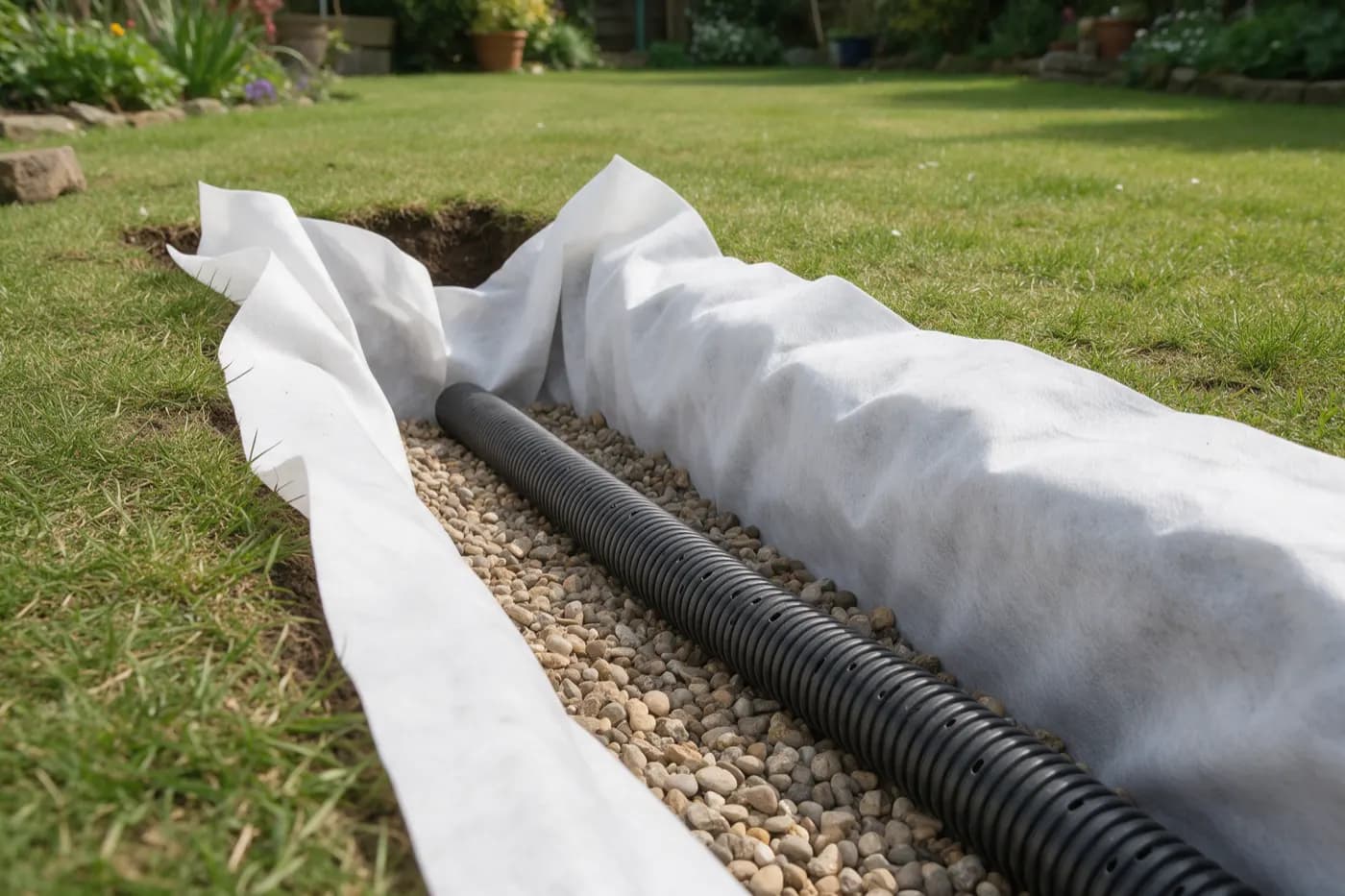
Toolstation's step-by-step guide gives the usual specification, which is a good check on any quote:
- A trench 45cm to 60cm deep and about 30cm wide, following the slope towards an outlet such as a soakaway, with a fall of at least 1cm per metre.
- The trench lined with landscape fabric, which lets water through but keeps soil and silt out.
- About 5cm of coarse 20mm to 40mm gravel, lightly compacted.
- Perforated pipe laid on top with the holes facing down, joined with proper couplings and keeping the same fall.
- More gravel to within 10cm to 15cm of the surface, the fabric folded over with at least 15cm of overlap, then sand or fine aggregate, topsoil and turf.
Test it by pouring buckets of water in at the top end: it should drain within a few minutes.
Before anyone digs
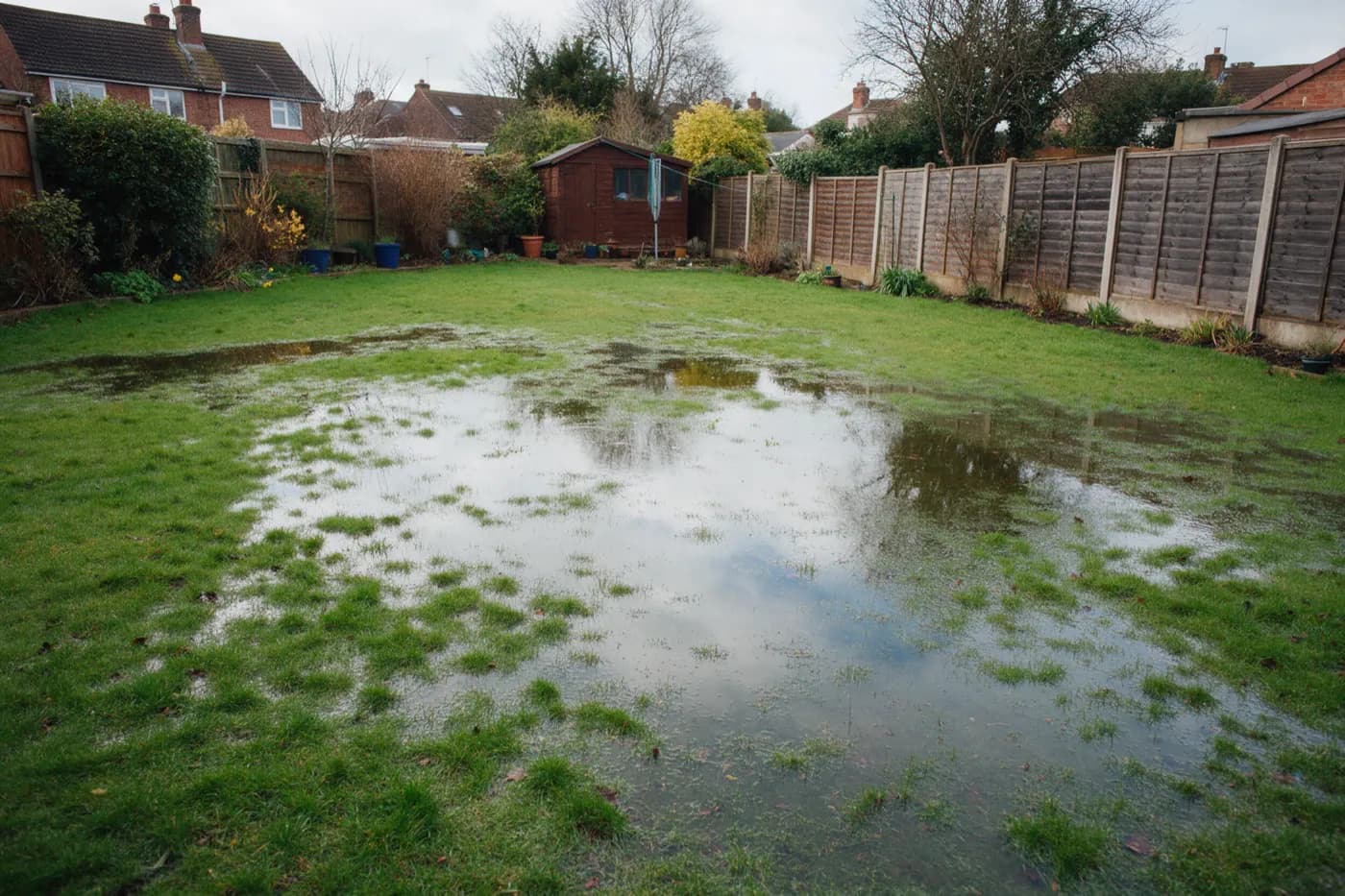
- Find the problem: watch where water collects during and after rain, and dig a small test hole to see your soil. Clay soil holds water and benefits most from a French drain.
- Find the cause: run-off from a roof or slope may need a different fix from rising groundwater, and tree roots nearby can get in the way.
- Check for services: have underground cables and pipes located before digging.
- Check the outlet: Toolstation's guide says connecting to the mains drainage system typically needs building control approval. Most garden French drains don't need planning permission.
Other prices you may see
Get french drain quotes
French drains are priced per metre, plus where the water goes at the end.
Free, no obligation. We're paid by MyJobQuote when a tradesperson buys your job, never by you.
Frequently asked questions
How much would it cost to put a French drain in?
On our estimates, about £120 to £250 per metre installed, with a minimum job of around £1,000 to £1,500.
Are French drains worth the money?
Where water collects because it can't drain away and there's an outlet to take it, I think so. Where the problem is compacted soil, aerating is far cheaper.
Can I do a French drain myself?
Yes. Toolstation's guide says it needs no special skills, just hard digging, and takes one to two days for most DIY jobs. The fall and having somewhere for the water to go matter most.
How deep should a French drain be?
About 45cm to 60cm deep and 30cm wide for a garden, falling at least 1cm per metre towards the outlet.
What are the disadvantages of a French drain?
It needs an outlet, it's a lot of digging, and a deep drain costs more. A soakaway at the end has to be well away from buildings and roads.
How we priced thisView sources (5, 1 official)
Rules come from the legislation and official guidance, read at source. Prices are our estimates: we check them against trade price data, retailer shelf prices and specialists' price lists, then build them up from their parts so the totals add up. Below are the sources behind the page; the trade price guides we only compare against aren’t listed. Where sources disagreed, we've said so. More on our method.
- OfficialApproved Document H: Drainage and waste disposal (2015 edition), GOV.UK. Checked 15 Oct 2026.
- IndustryWaterlogged lawns: solutions, Royal Horticultural Society. Checked 16 Oct 2026.
- IndustryHow to install a French drain, Toolstation. Checked 16 Oct 2026.
- Trade guideGarden drainage system cost, Checkatrade. Checked 15 Oct 2026.
- Trade guideFrench drains cost, Checkatrade. Checked 15 Oct 2026.