The Short Answer
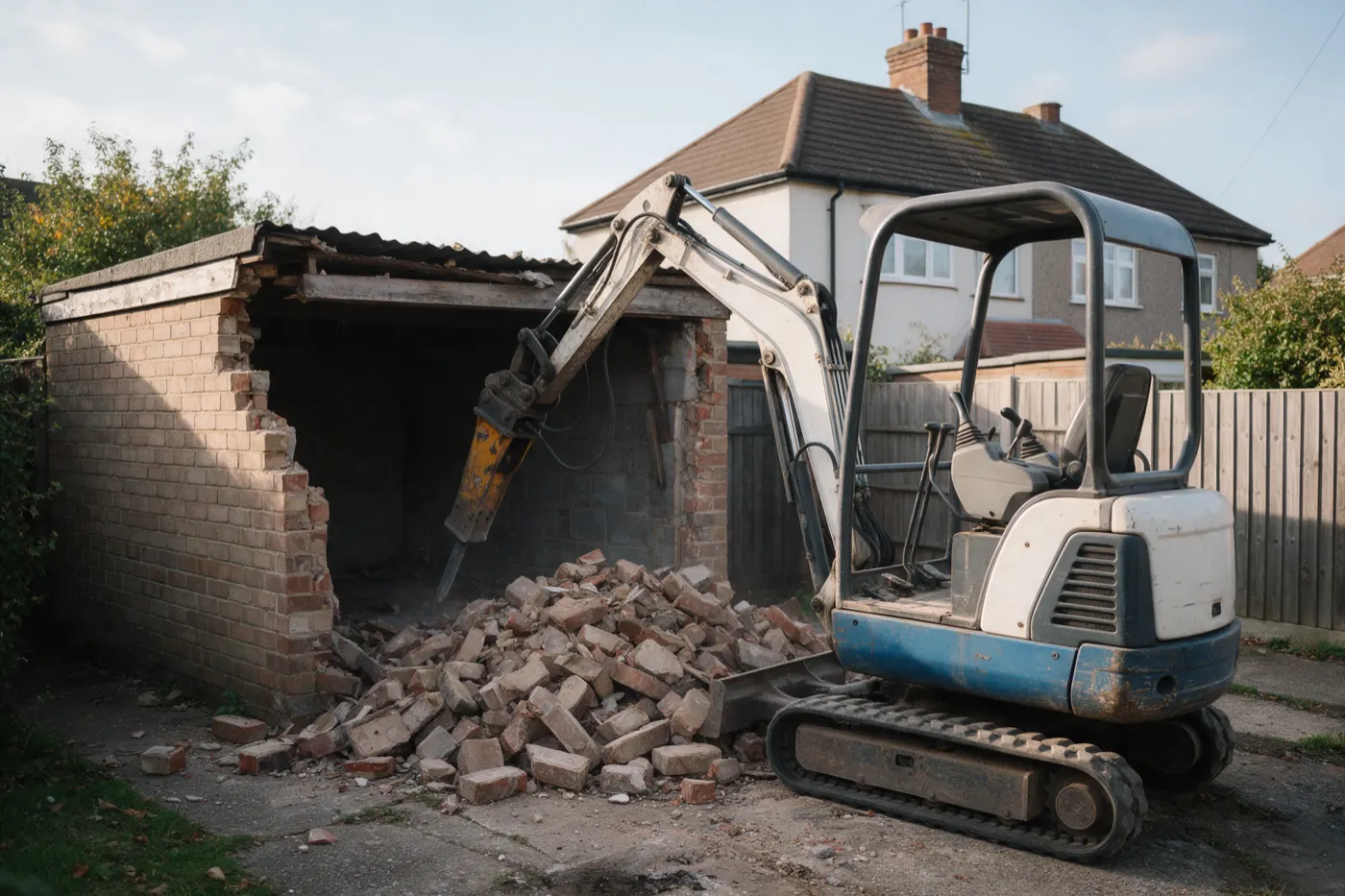
On our estimates, groundworks for a typical single-storey rear extension (about 24m of foundation trench) cost £4,500 to £6,500: digging out, concrete, blockwork up to the damp-proof course and taking the spoil away.
The ground decides the price. Clay near trees, backfilled ground or a drain in the way can mean deeper trenches, or piles or a raft on poor ground. I'd expect a builder to price foundations as a provisional sum until they've dug.
Groundwork prices
| Job | Typical cost |
|---|---|
| Strip foundations to DPC, about 24m of trench | £4,500 to £6,000 |
| Trench fill foundations to DPC, about 24m | £5,000 to £6,500 |
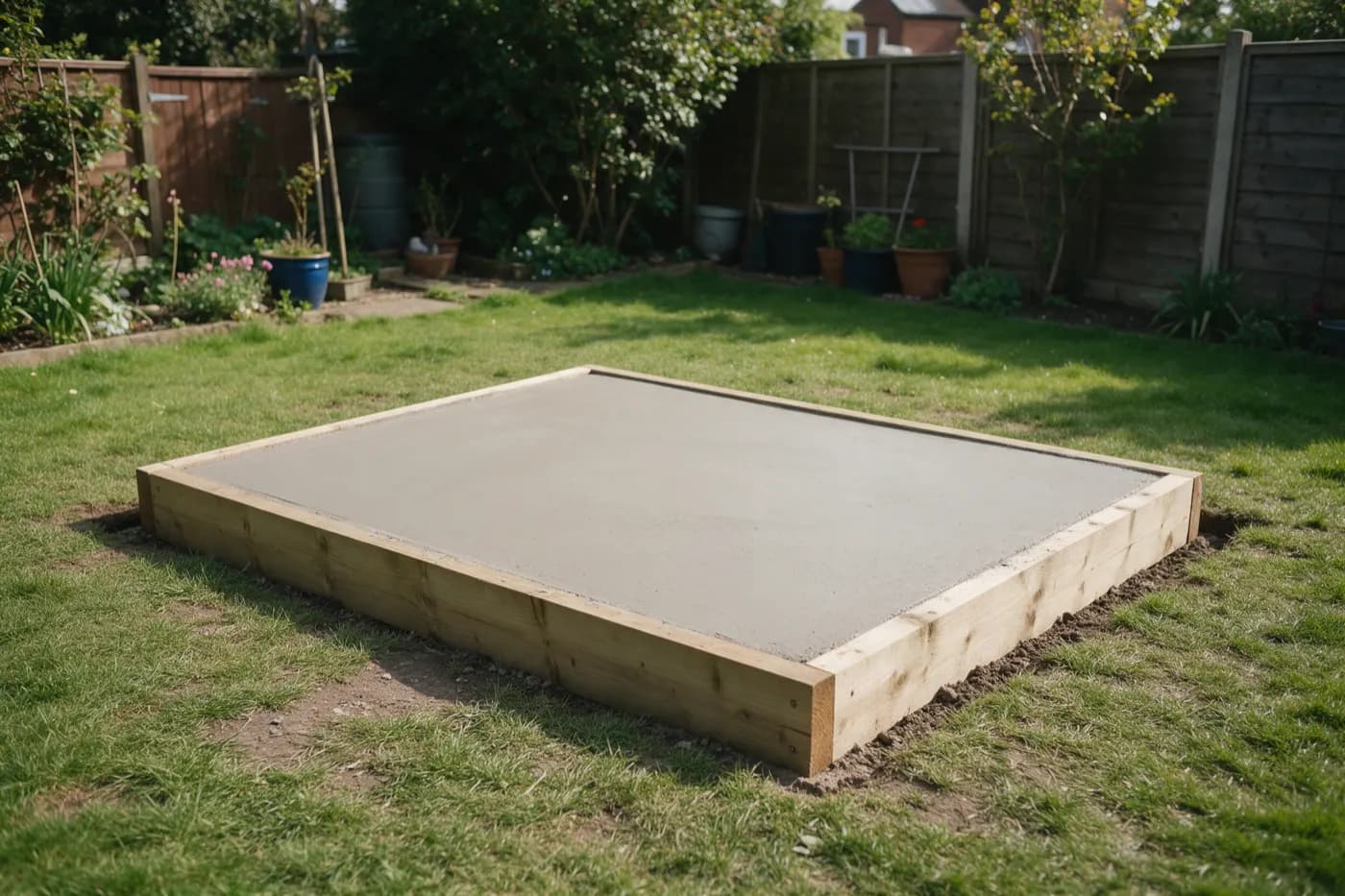
| Concrete slab or base, per m² | £60 to £80 |
| Skip, per week (several for an extension) | £230 to £350 |
Ask what each quote includes: digging out, concrete, blockwork to the damp-proof course, taking the waste away, and allowing for building control's inspections. Drainage and the floor slab are sometimes in and sometimes not.
What decides how deep the foundations go
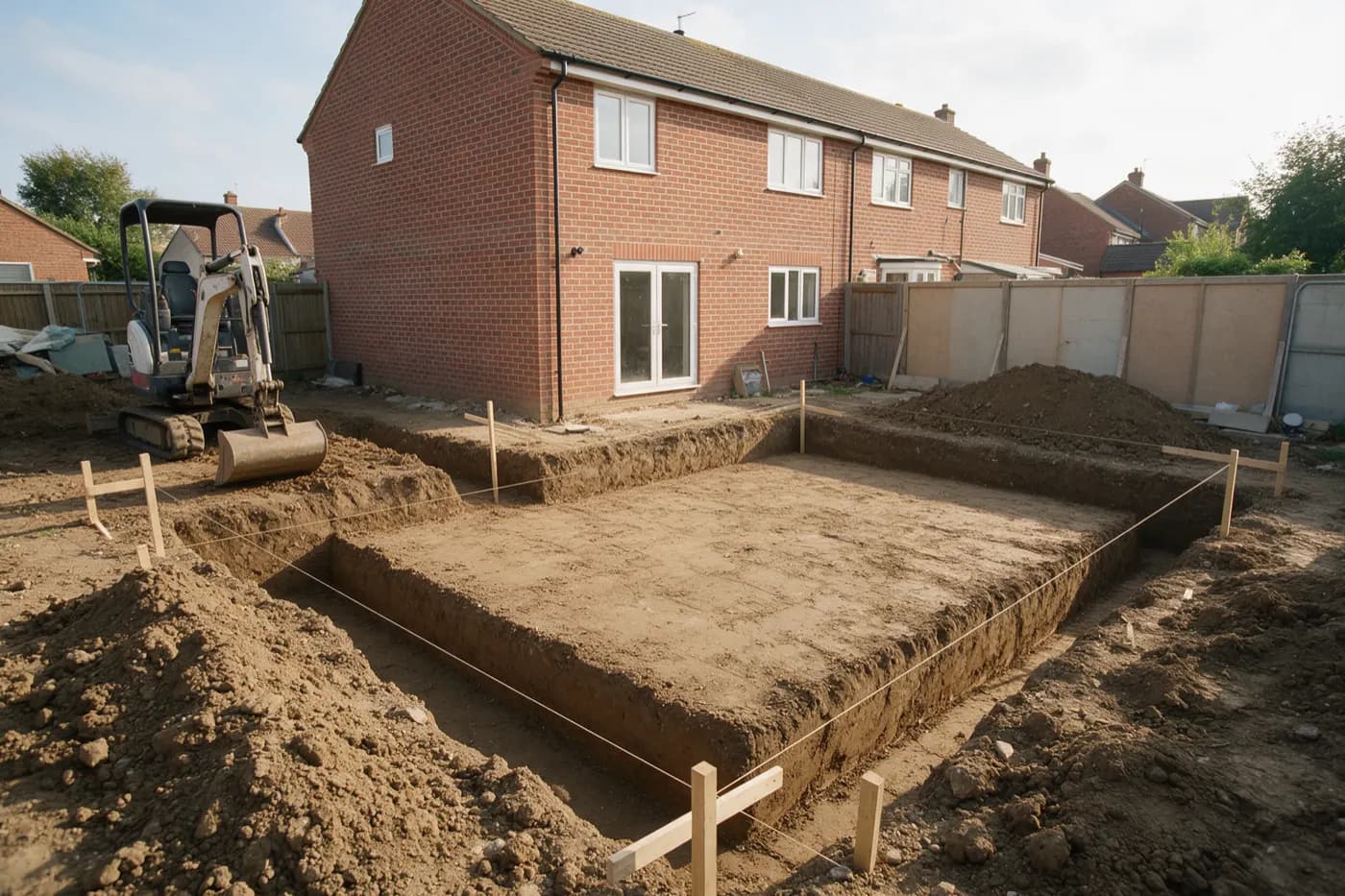
The Planning Portal lists what the design has to allow for:
- Soil: it has to carry the load. Clay swells and shrinks with moisture, mainly down to about 0.75m, so foundations go below that.
- Trees: in clay, trees can mean foundations significantly deeper than you'd expect. Felling a big tree can make clay swell, too.
- Next door's foundations: dig at least as deep as the neighbouring building's footing, and in short sections alongside it.
- Drains: a foundation's load spreads out at about 45 degrees, so it should go at least as deep as the bottom of a nearby drain or sewer.
- Undisturbed ground: concrete only goes onto ground that hasn't been dug or filled before. On old landfill, piles or a raft foundation may be needed, designed by an engineer.
Concrete is either poured almost to the top of the trench (trench fill or deep fill) or kept to the minimum thickness with blockwork built up from it (strip or shallow fill). Two storeys need more foundation than one.
Inspections and party walls
You must give building control notice at least 2 days before starting work. They can then tell you which stages they want to know about so they can inspect them, and how long the work must stay uncovered. Ask whether that includes the open trenches, and don't let anyone pour concrete before the inspector has been if it does.
Digging within 3m of a neighbour's building and deeper than its foundations needs a party wall notice at least 1 month before you start. For foundations under an existing house, see underpinning; for a base for a shed or garden room, concrete bases.
Get groundworks quotes
Groundworkers price from the area, depth and access. Tell them what the groundwork is for.
Free, no obligation. We're paid by MyJobQuote when a tradesperson buys your job, never by you.
Frequently asked questions
How much do groundworks typically cost in the UK?
For a typical rear extension with around 24m of trench, about £4,500 to £6,500 up to the damp-proof course, on our estimates.
What is included in groundworks?
Digging out, removing spoil, concrete foundations and blockwork to the damp-proof course, and often drainage and the floor slab. Check what each quote includes.
How deep do you dig foundations for a house extension?
Deep enough to reach firm, undisturbed ground. On clay that means below about 0.75m, where moisture changes move the soil, and deeper near trees; also at least as deep as next door's foundations and any nearby drain. Building control or an engineer confirms it on site.
Do foundations need to be inspected?
Building control decide which stages they'll inspect after you give notice, at least 2 days before starting. Ask whether that includes the trenches before concrete goes in.
What makes foundations more expensive?
Clay soil near trees, backfilled or made-up ground, drains in the way, and poor ground that needs piles or a raft.
How we priced thisView sources (3, 3 official)
Rules come from the legislation and official guidance, read at source. Prices are our estimates: we check them against trade price data, retailer shelf prices and specialists' price lists, then build them up from their parts so the totals add up. Below are the sources behind the page; the trade price guides we only compare against aren’t listed. Where sources disagreed, we've said so. More on our method.
- OfficialExtensions: building regulations, foundations, Planning Portal. Checked 15 Oct 2026.
- OfficialThe Building Regulations 2010, regulation 16: notices of start, stages and completion, legislation.gov.uk. Checked 15 Oct 2026.
- OfficialParty Wall etc. Act 1996, sections 2 and 3, legislation.gov.uk. Checked 15 Oct 2026.