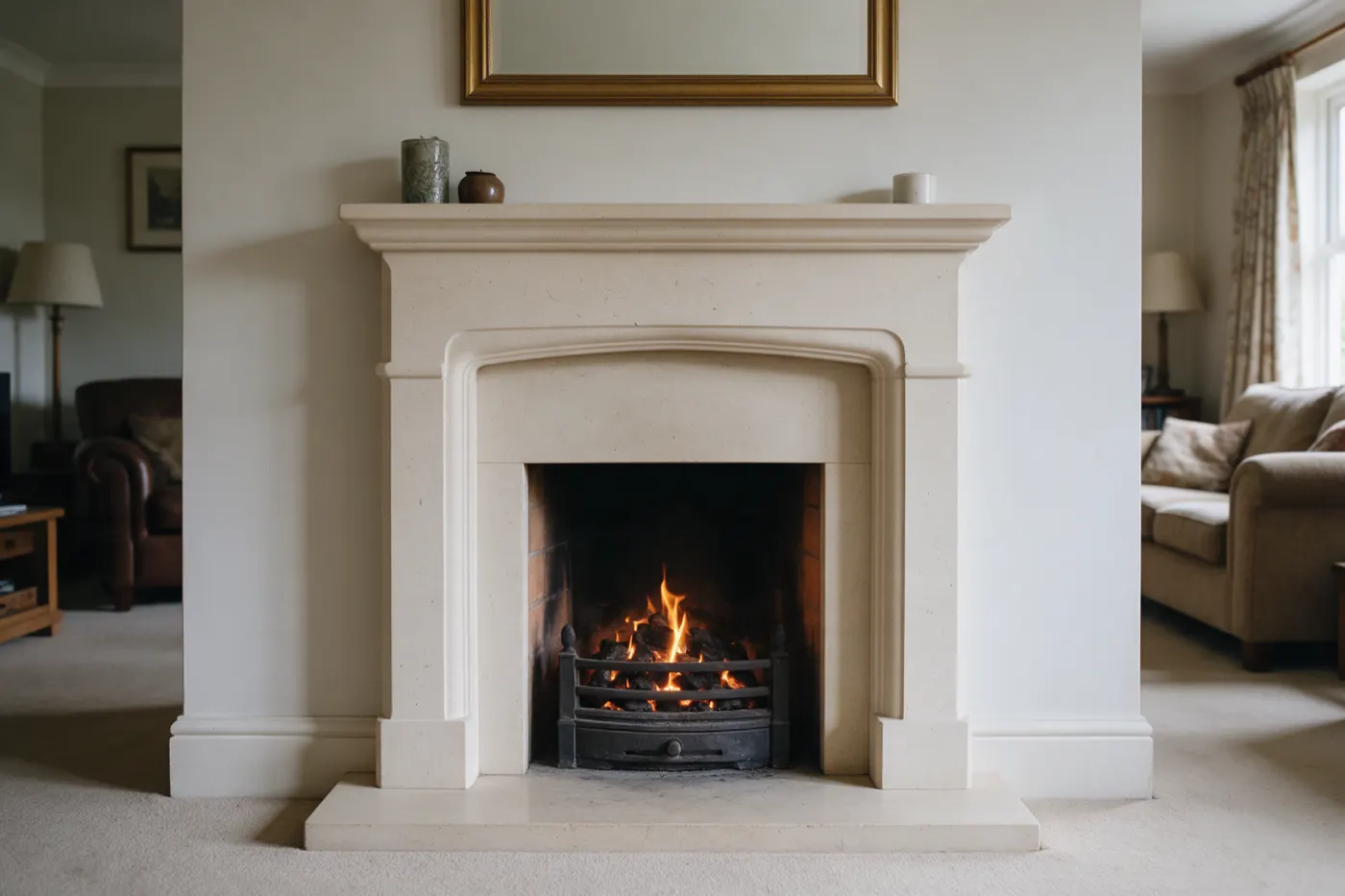
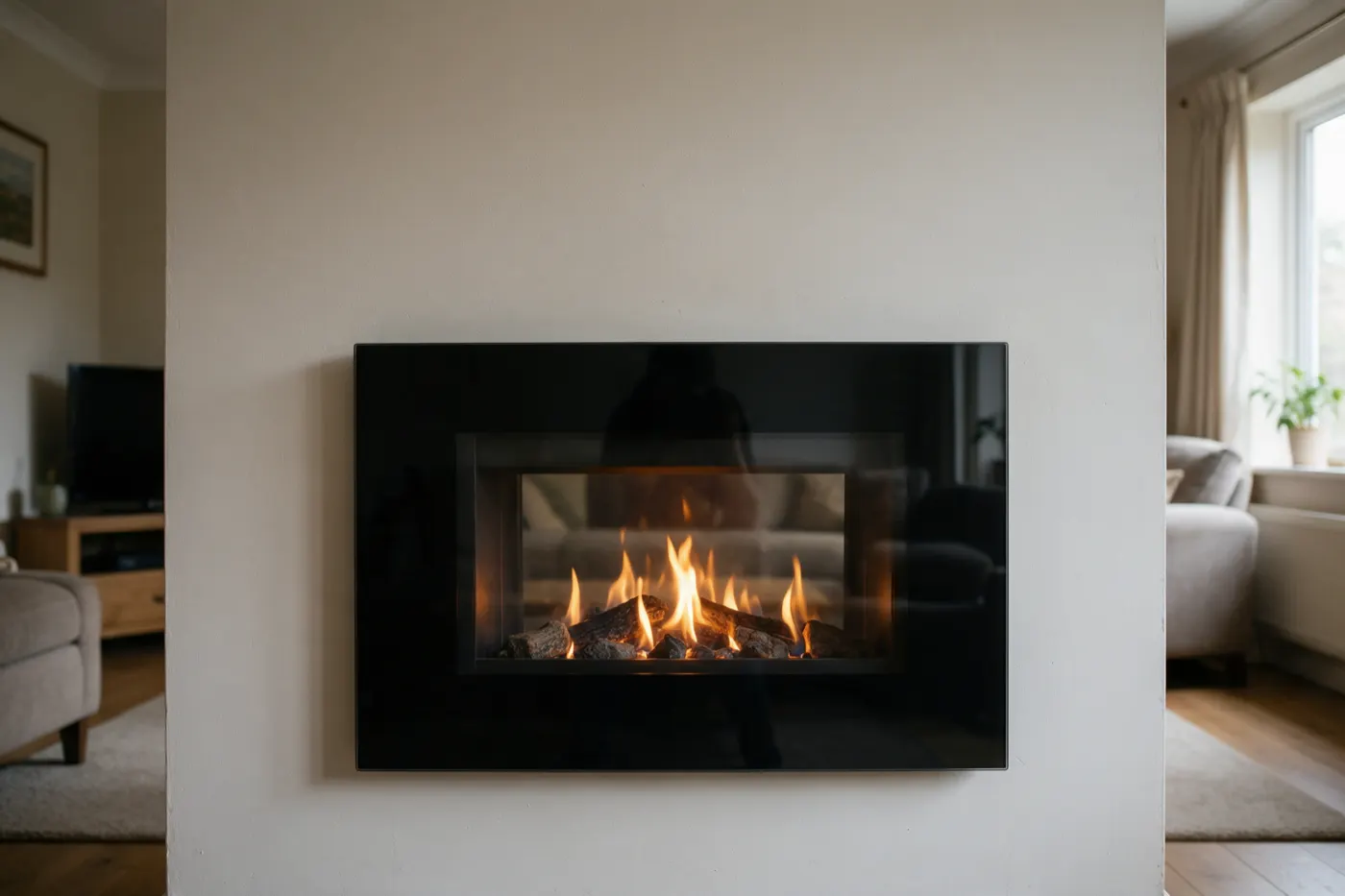
The Short Answer
On our estimates, a wood burning stove costs about £2,000 to £4,500 supplied and fitted into an existing chimney that needs a new liner. Into a chimney that's already lined it's £1,400 to £3,000; with no chimney at all, a twin-wall flue through the wall or roof takes it to £2,500 to £6,000. Fitting takes one to two days.
The flue drives the price more than the stove. The job has to be signed off under building regulations, and there's a carbon monoxide alarm to fit and rules on what you can burn.
Log burner cost calculator
A wood burning stove, supplied and fitted, priced by the flue it needs.
Estimated total
£2,060 to £4,590
| Stove, flue and installation (chimney needs a liner) | £2,000 to £4,500 |
| Chimney sweep | £60 to £90 |
Log burner prices
| Job | Fitted cost, stove included |
|---|---|
| Chimney already lined (sound, swept, recent liner) | £1,400 to £3,000 |
| Chimney needs a liner (older or unlined chimney) | £2,000 to £4,500 |
| No chimney (twin-wall flue through wall or roof) | £2,500 to £6,000 |
| The stove on its own | £500 to £1,500 |
| New or extended hearth (our allowance) | £200 to £600 |
| Chimney sweep | £60 to £85 |
Chimney, liner or twin-wall flue
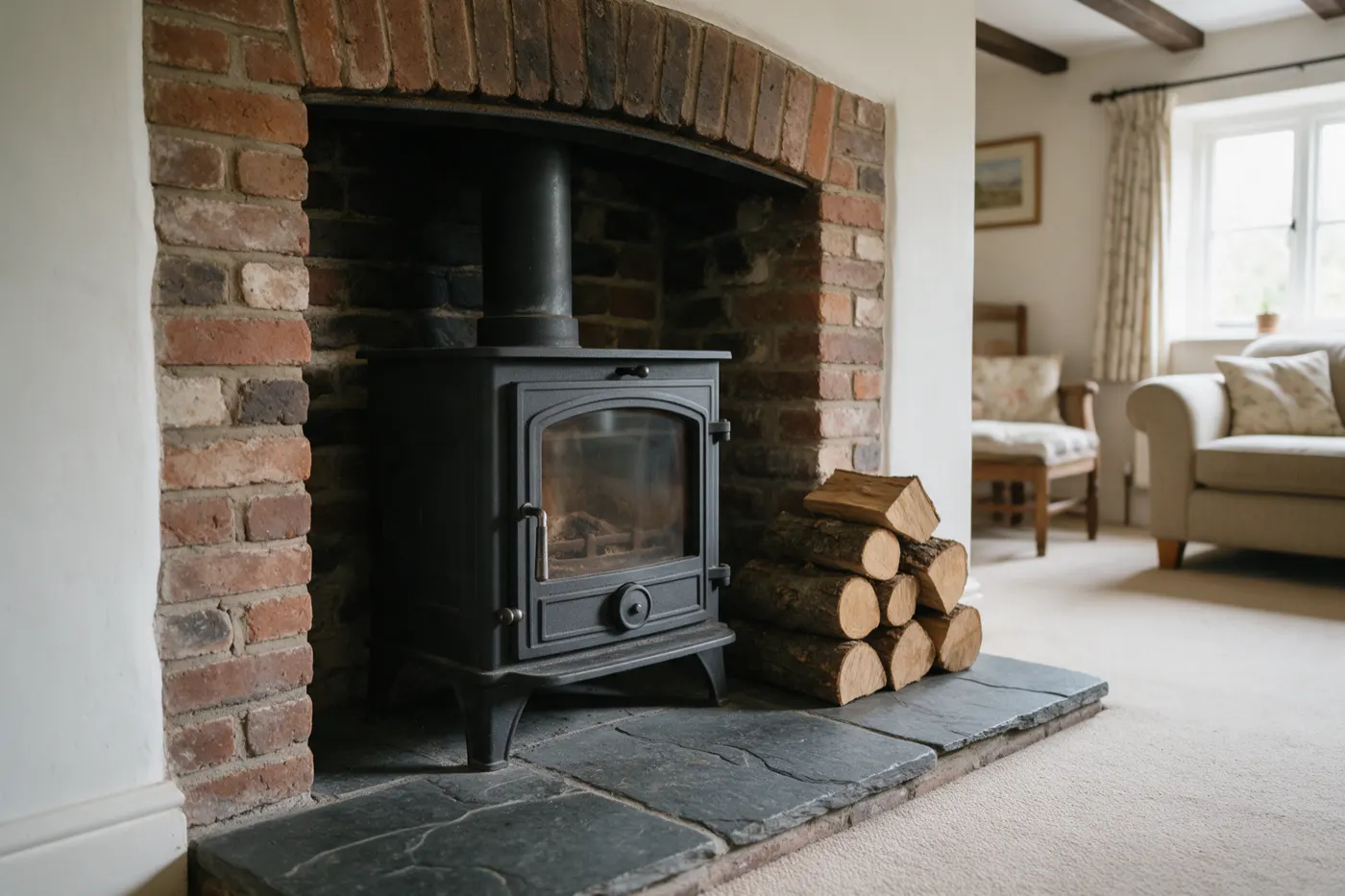
HETAS, the competent person scheme for solid fuel installers, says most homes can have a stove. Where there's a chimney, factory-made relining systems are available; where there isn't, a system (twin-wall) chimney can run inside or outside the house. Rebuilding a masonry chimney is a builder's job and may need planning permission and building regulations approval.
A new flue is permitted development on a house unless it would stand 1m or more above the highest part of the roof, or, in a conservation area or other protected land, it's on a wall or roof slope facing a road that forms the front or side of the house.
I'd have the chimney swept and checked before you choose a stove: what it needs decides most of the price.
The rules
- Sign-off: notifying a solid fuel installation is a legal requirement in England and Wales. A HETAS registered installer (or one in the other schemes: APHC, BESCA, Certsure, HETAS, NAPIT or OFTEC) notifies the council for you; if you fit it yourself, or use an unregistered installer, you apply to building control before work starts.
- Carbon monoxide alarm: Approved Document J asks for one in the room with any new or replacement solid fuel appliance, battery-powered for its whole life or hard-wired, not plug-in.
- Ecodesign: all stoves sold in the UK since 1 January 2022 must meet Ecodesign standards.
- Ready to Burn: since 1 May 2021, wood sold in England in volumes under 2m³ must be certified as having 20% moisture or less.
- No house coal: the sale of traditional house coal has been banned in England since 1 May 2022.
Smoke control areas
Your council can tell you if you're in a smoke control area. There, you can only burn wood in an exempt (Defra-approved) appliance, and the chimney mustn't give off smoke. GOV.UK says the penalty for a chimney releasing smoke can be up to £300, and buying unauthorised fuel for a non-approved appliance can bring a fine of up to £1,000. If you're in one, buy an exempt stove.
Thatched roofs
Historic England's advice is blunt: wood-burning and multi-fuel stoves should not be used in thatched buildings, because research found they're more likely to start thatch fires than open fires. If you do have one, it says to sweep often (as much as four times a year if you burn wood daily through the heating season), fit a bird guard, and follow the stove's instructions and your insurer's conditions. See thatched roof costs.
Sweeping
HETAS says its approved sweeps charge £60 to £85 for a standard sweep of a lined flue, and that wood and multi-fuel stoves usually cost the same. Book one before the stove goes in and regularly afterwards; for a chimney that needs more than a sweep, see chimney repair costs.
Get log burner installation quotes
Stoves are priced by the flue: a sound chimney, a chimney needing a liner, or a new flue.
Free, no obligation. We're paid by MyJobQuote when a tradesperson buys your job, never by you.
Frequently asked questions
How much does it cost to install a log burner?
On our estimates, about £2,000 to £4,500 with a new flue liner, £1,400 to £3,000 into a chimney that's already lined, and £2,500 to £6,000 with a twin-wall flue where there's no chimney. The stove is included.
Do I need permission to install a log burner?
It needs building regulations sign-off: a HETAS registered installer notifies the council for you. Planning permission isn't usually needed for the flue on a house, unless it rises 1m or more above the roof or, in a conservation area or other protected area, it's on a wall or roof slope facing a road.
Can I install a log burner myself?
You can, but HETAS says you must apply to building control before you start, because only a registered installer can self-certify their own work.
Can I use a log burner in a smoke control area?
Only an exempt (Defra-approved) appliance, burning authorised fuel without visible smoke. Check with your council whether you're in one.
Do I need a carbon monoxide alarm with a log burner?
Yes, in the room with the stove, under building regulations for any new or replacement solid fuel appliance.
How often should a chimney be swept?
Regularly, and before a new stove is fitted. Historic England suggests up to four times a year for a stove burning wood daily under a thatched roof.
How we priced thisView sources (8, 5 official)
Rules come from the legislation and official guidance, read at source. Prices are our estimates: we check them against trade price data, retailer shelf prices and specialists' price lists, then build them up from their parts so the totals add up. Below are the sources behind the page; the trade price guides we only compare against aren’t listed. Where sources disagreed, we've said so. More on our method.
- Industry6 log burner rules, HETAS. Checked 16 Oct 2026.
- IndustryConsumer FAQs, HETAS. Checked 16 Oct 2026.
- IndustryHow much does a chimney sweep cost? (updated May 2026), HETAS. Checked 16 Oct 2026.
- OfficialApproved Document J: Combustion appliances and fuel storage systems (2010 edition incorporating 2010, 2013 and 2022 amendments), GOV.UK. Checked 16 Oct 2026.
- OfficialSmoke control areas: the rules, GOV.UK. Checked 15 Oct 2026.
- OfficialThe Town and Country Planning (General Permitted Development) (England) Order 2015, Schedule 2 Part 1, legislation.gov.uk. Checked 16 Oct 2026.
- OfficialThe Building Regulations 2010, Schedule 3: self-certification schemes (para 16, roof coverings), legislation.gov.uk. Checked 15 Oct 2026.
- OfficialReducing the risk of fires in thatched properties with wood-burning stoves, Historic England. Checked 15 Oct 2026.