The Short Answer
On our estimates, an injected damp proof course costs about £60 to £200 per metre, or £1,000 to £2,000 for one wall once the damaged plaster is replaced. Doing the walls of a three-bed terrace can run to £2,000 to £4,000 before plastering and labour.
The bigger saving is not needing it at all. Plenty of damp comes from condensation, leaking gutters or soil piled against a wall, and a new DPC won't fix any of those. Find the cause first.
Damp proofing prices
| Item | Typical cost |
|---|---|
| Damp survey | £100 to £600 |
| Injected DPC, per metre | £60 to £200 |
| One wall, injected DPC and replastering | £1,000 to £2,000 |
| Three-bed terrace, DPC only (no plaster or labour) | £2,000 to £4,000 |
| Injection to external walls | £1,000 to £3,000 |
| Retrofitting a physical DPC | £2,500 to £7,500 |
| Cellar tanking, per m² | £100 to £200 |
The Federation of Master Builders (FMB) puts a remedial DPC along a 5m wall, including replastering, at from about £1,200, and stresses that's a guide rather than a fixed price.
Find the cause before you pay for a cure
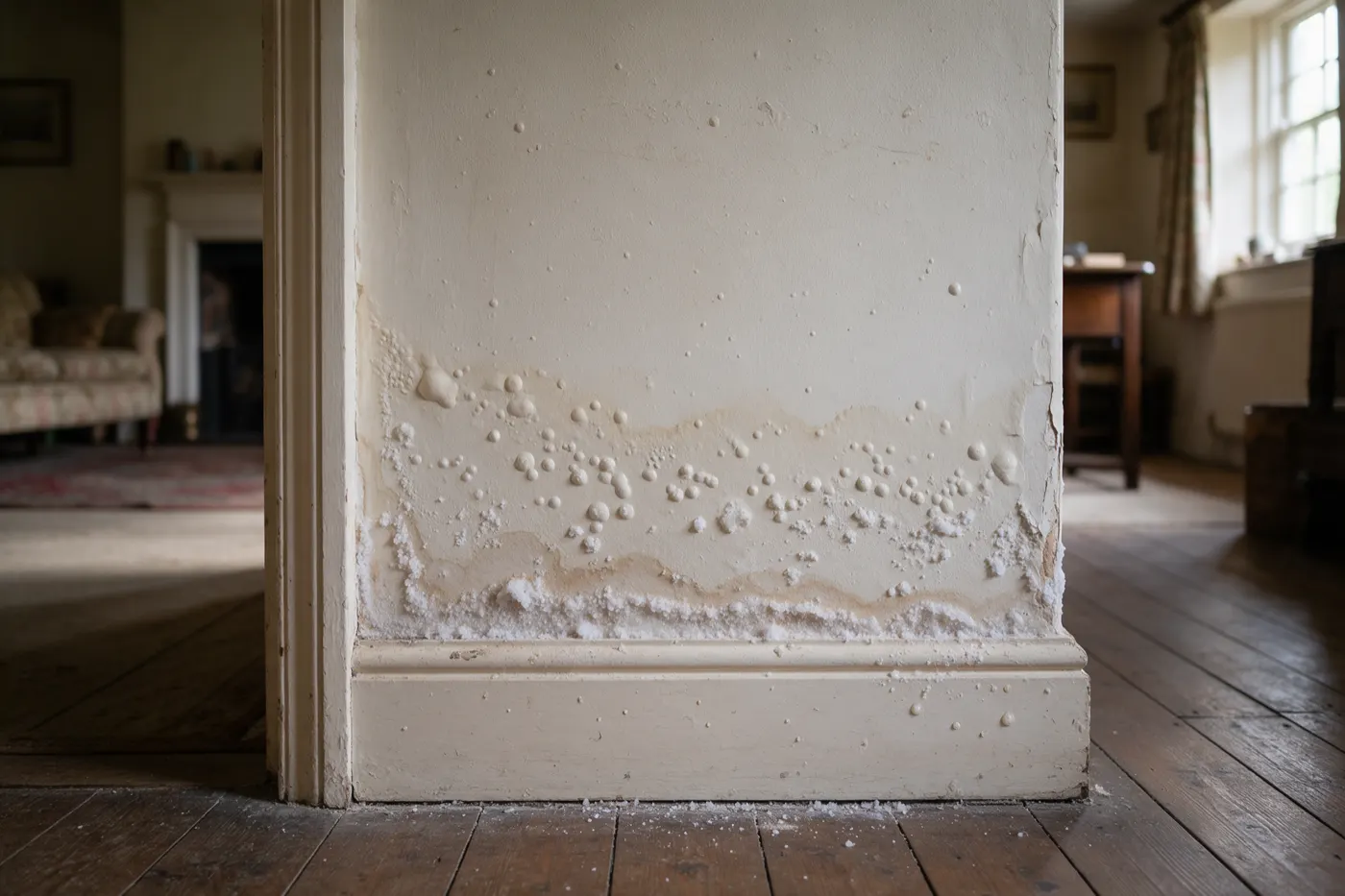
The FMB is clear that damp has several causes and not all of them need a new DPC. The common ones it lists:
- Condensation.
- Poor ventilation.
- Leaking gutters and downpipes soaking the wall.
- Bridging, where the ground outside, a path or a flowerbed is at or above the DPC, so water gets round it.
In older houses built with lime, the FMB adds, damp isn't always a sign that a DPC is needed: later repairs or modern finishes can trap moisture in the wall. It suggests an independent damp survey for a second opinion before you commit to treatment. I'd ask any surveyor whether they also sell the treatment.
I'd clear the gutters, lower any soil or path sitting against the wall and improve the ventilation first, then see what's left. See guttering and roof ventilation.
What a remedial DPC involves
A damp proof course is a barrier near the base of a wall that stops moisture rising through it. New houses get a physical one (plastic, bitumen or slate) when they're built. A remedial DPC in an existing house is usually a damp-proofing cream or fluid injected into holes drilled along a mortar line, according to the FMB.
The injection is only half the job. The plaster that's been damaged or contaminated with salts comes off the inside and is replaced.
What the quote should include
The FMB warns that a low headline price can leave out the work that finishes the job. Check whether the quote includes:
- removing and replacing the damaged plaster;
- redecorating afterwards;
- ventilation improvements;
- any repairs, and dealing with bridging outside.
I'd also ask what guarantee comes with the work, and who stands behind it.
Can rising damp be fixed for good?
Usually, if the cause is dealt with. The Property Care Association says that where a damp course is being bridged, by raised soil or paths, render over it or debris in the cavity, removing the bridge should be enough. Where the damp course itself has failed, it recommends a survey by a qualified specialist (it names the CSTDB qualification).
Expect two stages. Controlling the moisture is the first; the second is the salts that rising water leaves in the wall and plaster, which can keep a wall looking damp after the source has stopped. That's why the contaminated plaster is usually hacked off and replaced with a salt-resistant plaster. Skirtings and floor timbers may need repairs too. Ask for a long-term guarantee, and ideally an insurance-backed one: PCA members can offer one that honours the guarantee if the contractor stops trading.
Selling a house with damp, and doing it yourself
It isn't illegal to sell a house with damp. On the Law Society's property information form (TA6) you answer truthfully and as accurately as you can from your own knowledge; buyers can rely on what you say, and misleading answers can lead to a compensation claim after completion. Hand over any damp-proofing guarantee and receipts, and check with the company whether the guarantee transfers.
The causes are often things you can fix yourself: clear gutters and downpipes, lower soil or paths that sit above the damp course, and improve ventilation for condensation. I'd leave the diagnosis of a failed damp course, and any injection or replastering, to a qualified surveyor and contractor.
Cellars and basements
Cellar tanking is priced per m², as in the table above, rather than by the metre like a DPC. For waterproofing systems and turning a cellar into living space, see basement conversion.
Damp and rot
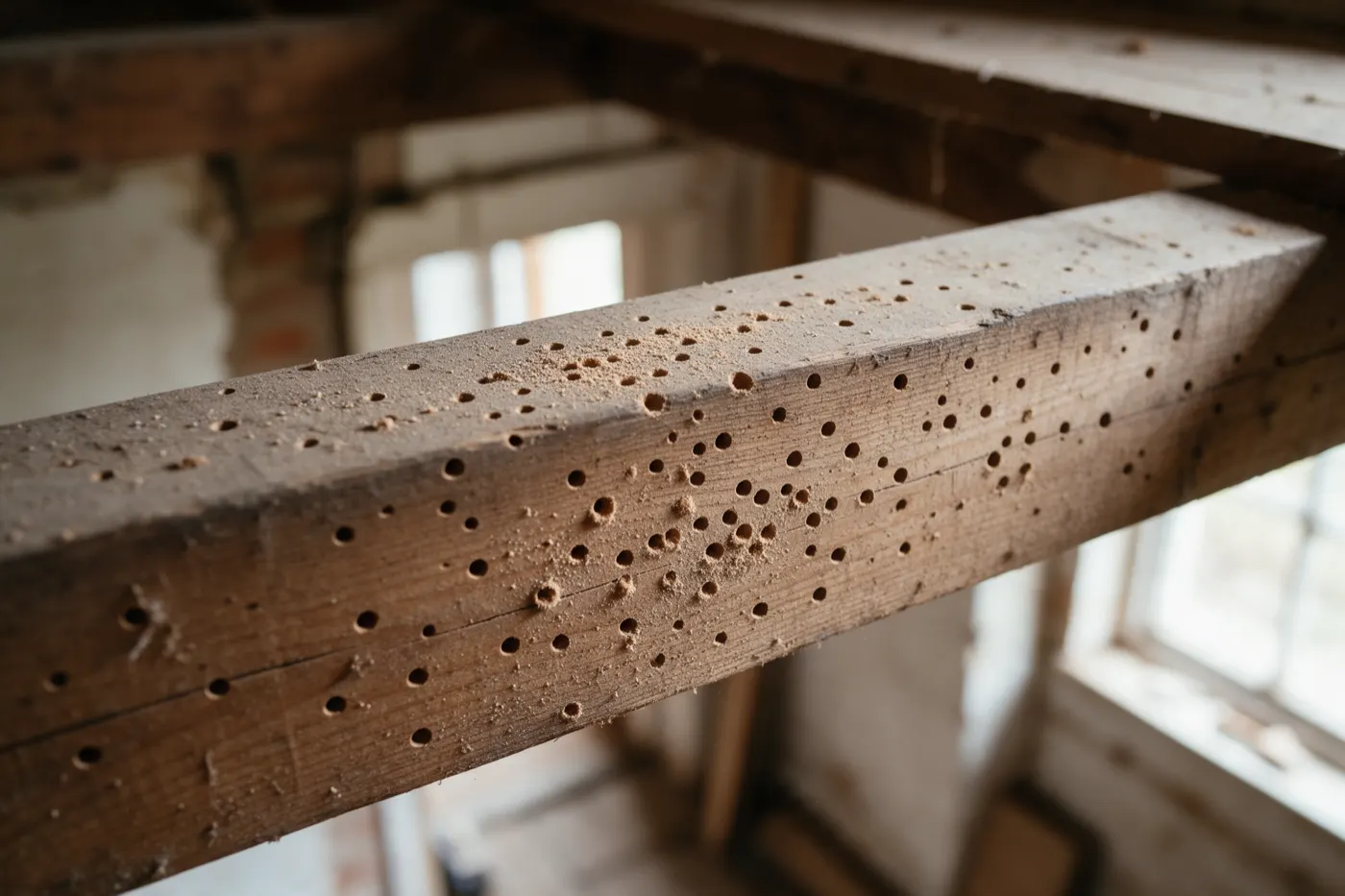
Woodworm is more common in damp areas, and dry rot depends entirely on moisture, so a damp problem left alone can become a timber problem. See woodworm and dry rot treatment.
Get damp proofing quotes
A good damp specialist finds the cause first, so describe what you're seeing.
Free, no obligation. We're paid by MyJobQuote when a tradesperson buys your job, never by you.
Frequently asked questions
Can rising damp be permanently fixed?
Usually, once the cause is dealt with. Removing anything bridging the damp course may be enough; a failed damp course needs a specialist survey. Salts left in the plaster can keep a wall looking damp, so contaminated plaster is normally replaced.
Is it illegal to sell a property with damp?
No. You must answer the property information form truthfully, as buyers can rely on it, and pass on any damp-proofing guarantee and paperwork.
Can I damp proof my house myself?
You can fix many causes yourself: gutters, downpipes, soil or paths above the damp course, and ventilation. I'd leave diagnosing a failed damp course and the treatment to a qualified surveyor and contractor.
How much should damp proofing cost?
On our estimates, about £60 to £200 per metre for an injected DPC, or £1,000 to £2,000 for a wall including replastering.
Do I need a new damp proof course?
Not always. Condensation, poor ventilation, leaking gutters and bridging all cause damp without a failed DPC. Get the cause diagnosed first.
What is bridging?
When ground, a path or a flowerbed outside sits at or above the DPC, letting water get round it into the wall.
How much is a damp survey?
About £100 to £600 on our estimates. An independent survey gives a second opinion before you commit to treatment.
How we priced thisView sources (5)
Rules come from the legislation and official guidance, read at source. Prices are our estimates: we check them against trade price data, retailer shelf prices and specialists' price lists, then build them up from their parts so the totals add up. Below are the sources behind the page; the trade price guides we only compare against aren’t listed. Where sources disagreed, we've said so. More on our method.
- IndustryRising damp: what you can do, and treatment, Property Care Association. Checked 16 Oct 2026.
- IndustryProperty repair guarantees (insurance-backed guarantees), Property Care Association. Checked 16 Oct 2026.
- IndustryTA6 (6th edition) (2025): explanatory notes for sellers and buyers, The Law Society. Checked 16 Oct 2026.
- IndustryDamp proof course (DPC) cost UK: what should homeowners budget for? (20 May 2026), Federation of Master Builders. Checked 16 Oct 2026.
- IndustryDry rot and its treatment in historic buildings (Carey and Grant), Building Conservation. Checked 16 Oct 2026.