The Short Answer
On our estimates, renovating a typical three-bed house with a rewire, new heating, a new kitchen and bathroom, re-skimmed walls and decoration throughout costs about £36,900 to £73,800 including VAT. A full refurbishment that also replaces the windows, doors and skirting and the plaster, and treats damp, is £59,200 to £114,100.
Keep 10 to 15% back for what you find once walls come open, and do the work in the right order: structure and services first, finishes last. If the house has been empty for 2 years or more, the builder can charge 5% VAT instead of 20%, which can save thousands.
House renovation cost calculator
Tick what a typical three-bed needs. Our estimates, including VAT; kitchen, bathroom and windows use the prices from their own guides on this site.
Estimated total
£36,900 to £73,800
| Full rewire | £4,800 to £10,200 |
| New heating system | £3,600 to £10,200 |
| Re-skim walls and ceilings | £6,000 to £15,000 |
| New kitchen (medium) | £10,000 to £20,000 |
| New bathroom (standard) | £6,500 to £10,000 |
| Decorating throughout | £6,000 to £8,400 |
Renovation cost breakdown
| Job | Typical cost (3-bed) |
|---|---|
| Full rewire | £4,800 to £10,200 |
| New heating system | £3,600 to £10,200 |
| Re-skim walls and ceilings | £6,000 to £15,000 |
| Hack off and replaster throughout (instead of re-skim) | £19,200 to £38,400 |
| New kitchen (medium) | £10,000 to £20,000 |
| New bathroom (standard) | £6,500 to £10,000 |
| New uPVC windows (9) | £4,050 to £8,100 |
| Internal doors and skirting | £2,650 to £4,550 |
| Damp treatment | £2,400 to £4,200 |
| Decorating throughout | £6,000 to £8,400 |
| New gas supply (if none) | £600 to £3,000 |
The order of works
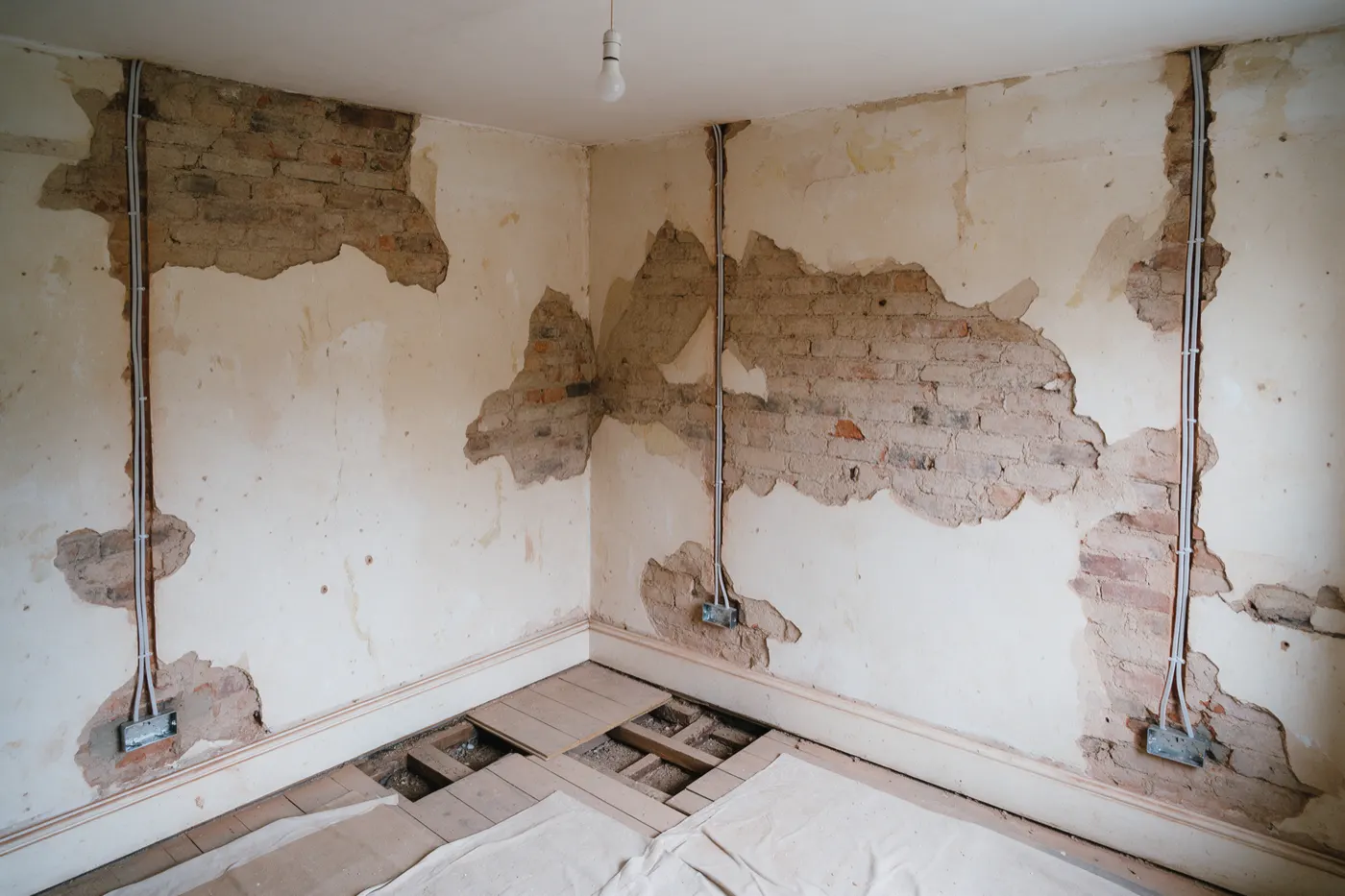
The FMB's suggested order:
- Structural repairs and weatherproofing.
- Drainage, plumbing, heating and electrics.
- Insulation and ventilation.
- Kitchens and bathrooms.
- Plastering, flooring and decorating.
- The outside and anything that can wait.
It says doing a big renovation all at once is often cheaper, with less repeated labour and trades working in sequence, but phasing works if the budget is tight or you're living there. On our estimates, a new heating system takes one to two weeks and a full rewire 6 to 15 days. If the house was built before 2000, have it checked for asbestos before anything is stripped out.
5% VAT on empty homes
HMRC's VAT Notice 708 lets a builder charge the reduced 5% rate for renovating or altering a home that hasn't been lived in during the 2 years immediately before work starts. It covers their work and the building materials they install, but not installing things that aren't building materials, such as carpets or fitted bedroom furniture, which stay at 20%.
The builder may have to prove the home was empty. HMRC accepts electoral roll and council tax records, utility companies' records, or a letter from the council's empty property officer, which is enough on its own. Agree the rate before work starts. Converting a house into flats, or changing the number of homes in a building, can also qualify.
Prices that don't add up
Get house renovation quotes
Renovations are a list of jobs. Tick what's needed and builders can price the whole lot.
Free, no obligation. We're paid by MyJobQuote when a tradesperson buys your job, never by you.
Frequently asked questions
How much does it cost to renovate a house?
On our estimates, about £36,900 to £73,800 for a three-bed with a rewire, new heating, kitchen, bathroom, re-skim and decoration, including VAT. A full refurbishment is £59,200 to £114,100.
Can you renovate a house for 20k in the UK?
Not all of it. On our estimates the essentials for a three-bed (rewire, heating, kitchen, bathroom, re-skim, decorating) start at about £36,900, so £20,000 covers some of the list, such as a kitchen or a rewire and heating, not the whole house.
Is 50k enough to renovate a house in the UK?
Often, for the essentials: on our estimates they cost £36,900 to £73,800 for a three-bed. £50,000 won't usually stretch to a full refurbishment at £59,200 to £114,100, and you'll want 10 to 15% of it held back as contingency.
What is the most expensive part of a house to renovate?
On our estimates the biggest single lines are hacking off and replastering throughout (£19,200 to £38,400) and a new kitchen (£10,000 to £20,000). Structural work and extensions cost more again.
What order should you renovate a house in?
The Federation of Master Builders suggests structural repairs and weatherproofing first, then drainage, plumbing, heating and electrics, insulation and ventilation, kitchens and bathrooms, then plastering, flooring and decorating.
Can I get reduced VAT on a renovation?
Yes, 5% if the home hasn't been lived in during the 2 years before work starts. The builder charges it and may need proof, such as council tax records or a letter from the council's empty property officer.
Is house refurbishment the same as renovation?
Yes, the terms are used interchangeably. Either way, price it room by room and trade by trade.
How we priced thisView sources (6, 2 official)
Rules come from the legislation and official guidance, read at source. Prices are our estimates: we check them against trade price data, retailer shelf prices and specialists' price lists, then build them up from their parts so the totals add up. Below are the sources behind the page; the trade price guides we only compare against aren’t listed. Where sources disagreed, we've said so. More on our method.
- OfficialBuildings and construction (VAT Notice 708), HM Revenue & Customs. Checked 15 Oct 2026.
- OfficialIntroduction to asbestos safety; Non-licensed work with asbestos, Health and Safety Executive. Checked 15 Oct 2026.
- IndustryHow much does a house renovation cost? (5 June 2026), Federation of Master Builders. Checked 15 Oct 2026.
- Trade guideHouse renovation cost breakdown, Checkatrade. Checked 15 Oct 2026.
- Trade guideHouse extension cost breakdown, Checkatrade. Checked 15 Oct 2026.
- Trade guideNew windows cost guide and calculator, Checkatrade. Checked 15 Oct 2026.