The Short Answer
By our estimate a wet room costs £5,500 to £8,500 for a small room and £7,500 to £12,000 for a typical bathroom, fitted: roughly £1,300 to £2,300 per m². Expect it to take about a week.
The tiles are the easy part. The work is in the floor: forming a fall to the drain, and waterproofing (tanking) the whole floor and the shower walls before anything is tiled. If the wet room is for a disabled person, it can be zero-rated for VAT.
Wet room cost estimator
A wet room is priced by area, but the floor underneath decides how much work it takes to get the falls and drain in.
Estimated total
£5,800 to £11,000
| Wet room, 4m² (strip-out, tanking, falls, drain, tiling, suite) | £5,200 to £9,200 |
| Timber floor: new sub-floor, wet room former, noggins | £600 to £1,800 |
Wet room prices
| Item | Our estimate |
|---|---|
| Small (en suite or cloakroom) | £5,500 to £8,500 |
| Typical bathroom | £7,500 to £12,000 |
| Large bathroom | £10,000 to £16,000 |
| Per square metre, all in | £1,300 to £2,300 |
| Timber floor: sub-floor, former and strengthening | £600 to £1,800 |
| Concrete floor: breaking out for the drain and fall | £900 to £2,500 |
| Linear drain instead of a round one | £250 to £700 |
When we checked in October 2026, EA Mobility, a specialist accessible-bathroom installer, priced an accessible wet room at £2,000 to £3,500 more than a walk-in shower at the same finish, because the whole floor is formed to fall and tanked rather than just a shower area.
How the floor is built
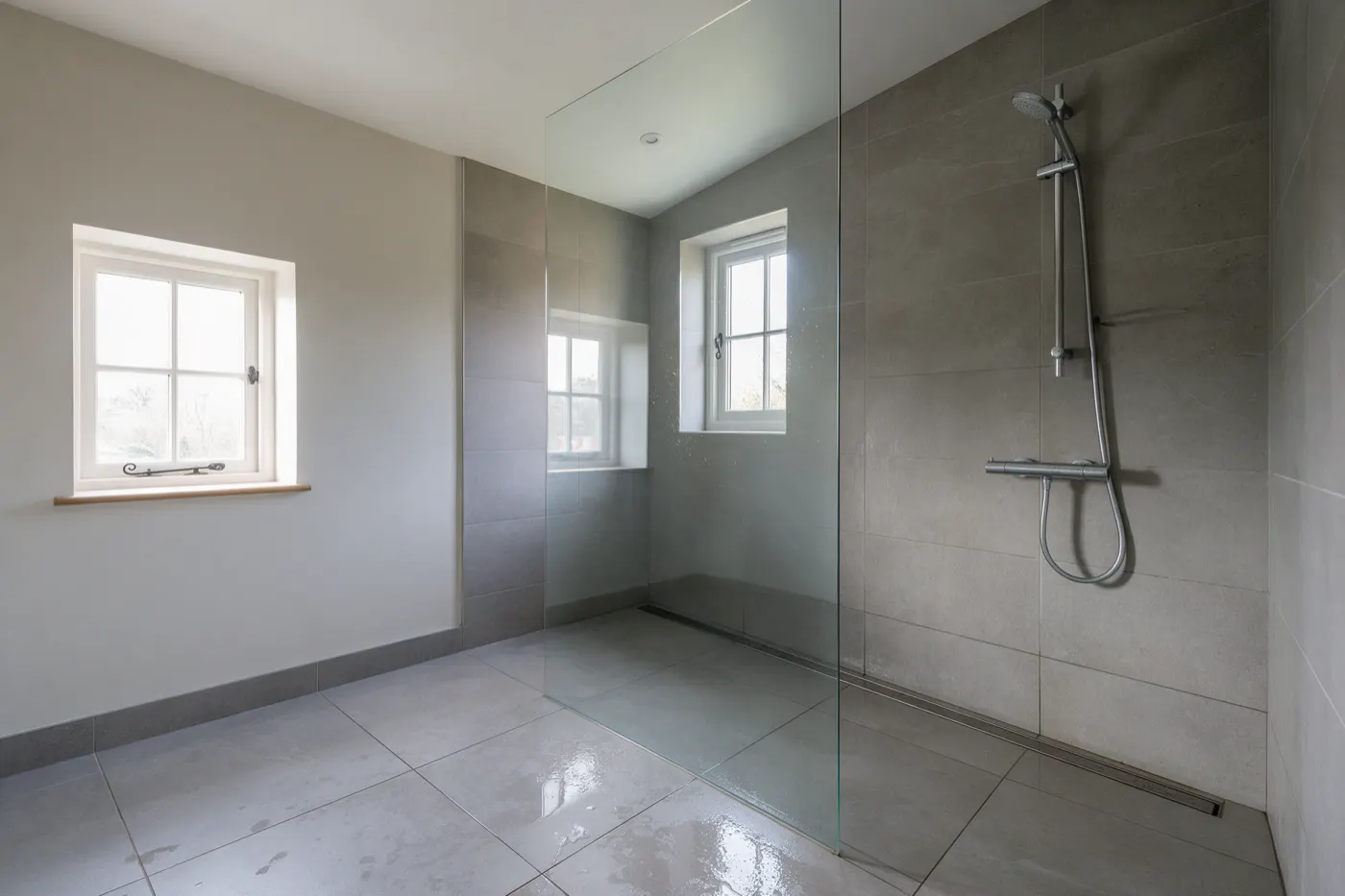
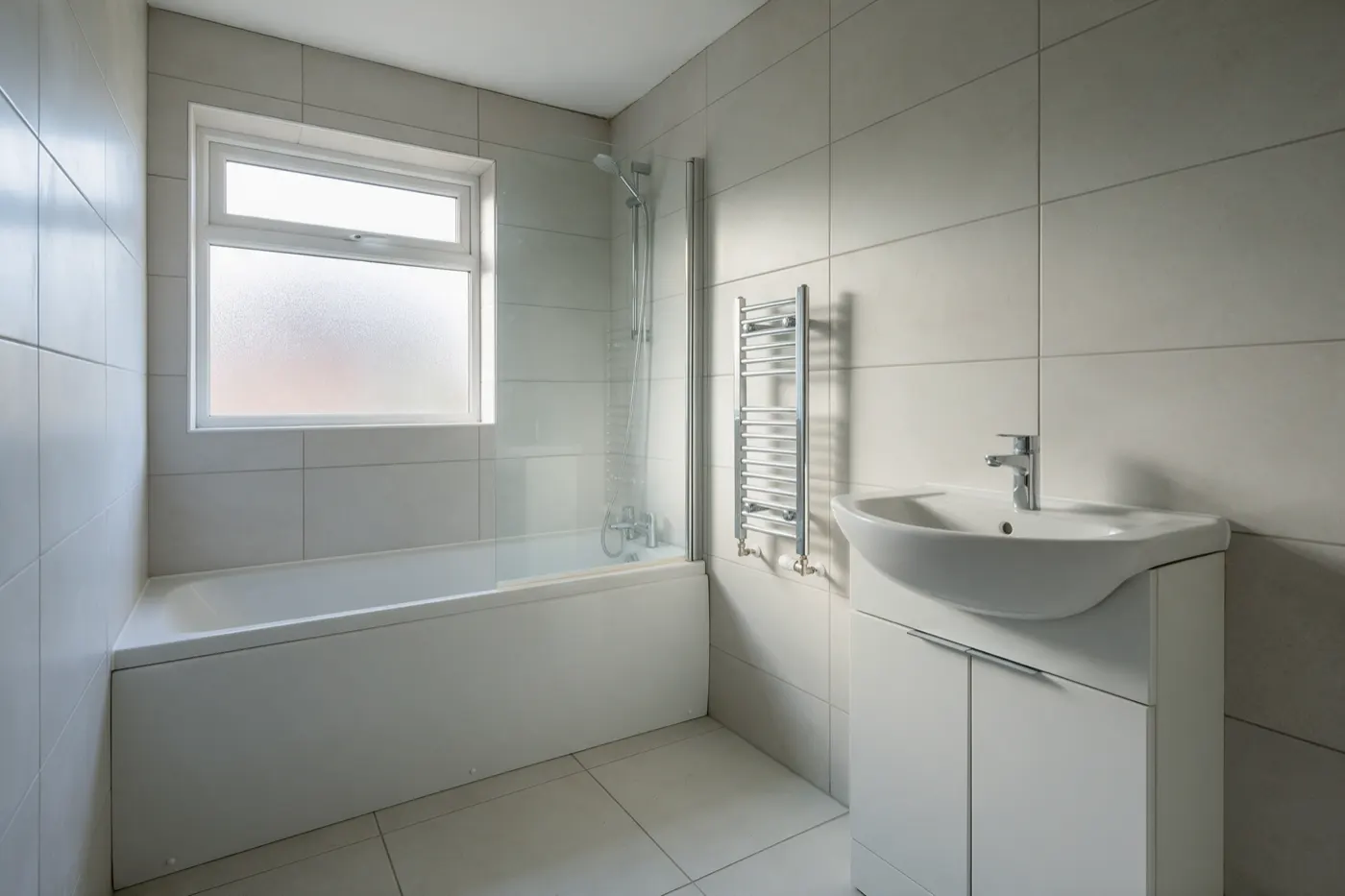
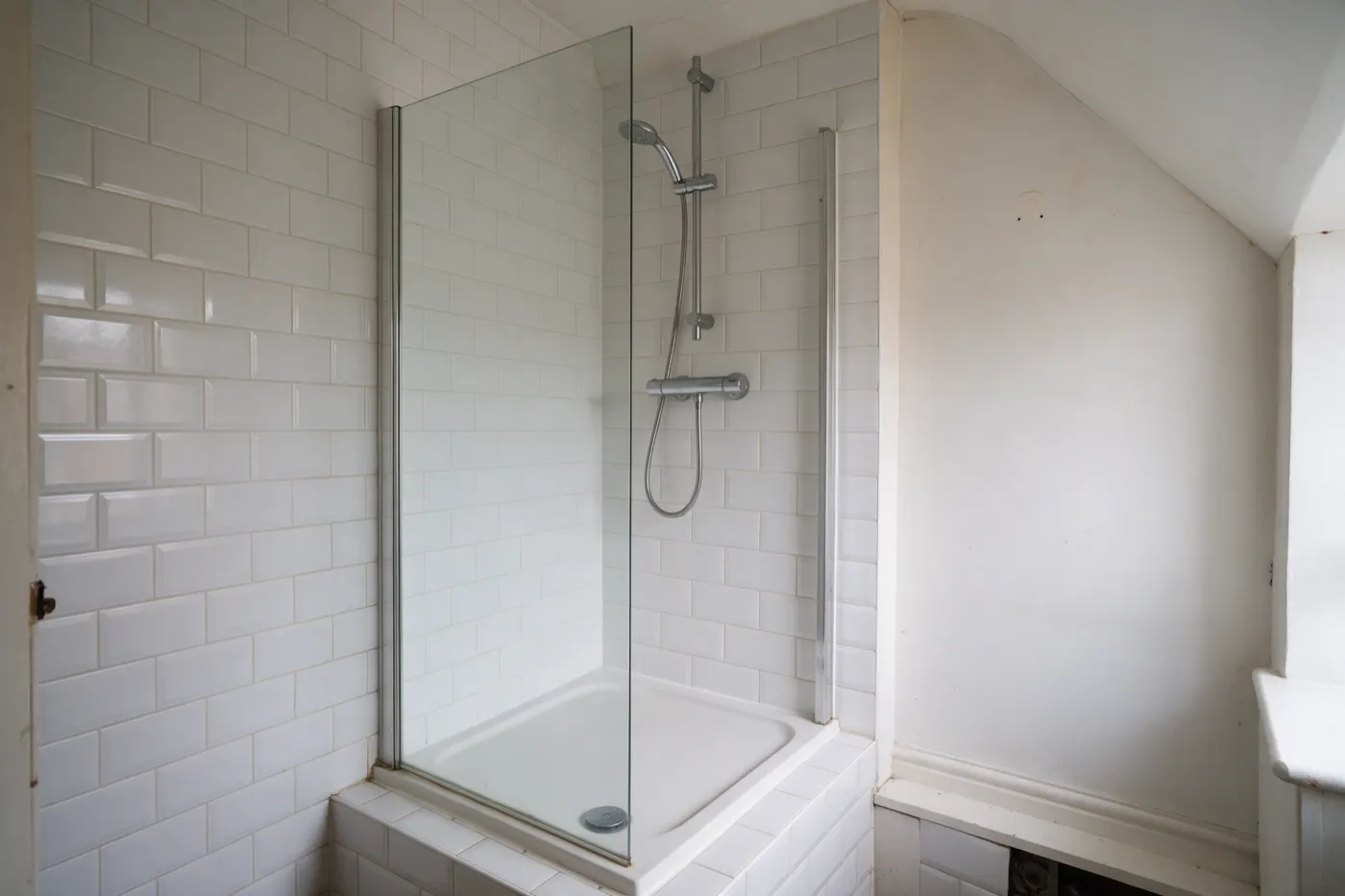
A wet room has no shower tray: the floor slopes to a drain. Most use a pre-formed sloping board (a "former") set level with the rest of the floor. Impey's installation guide for its EasyFit former shows what's involved:
- It can go on timber, concrete or floating floors. On timber it can sit straight on joists at 400mm centres; wider spacing needs 18mm plywood underneath, with noggins and trimmers to support the edges.
- It has to be perfectly level and flush with the surrounding floor, packed up with board where needed.
- Its fall is 15mm (1 in 40), which Impey says handles 20 litres a minute; it recommends showers of no more than 32 litres a minute.
- If a joist is in the way of the drain, the drain position on this model rotates to miss it.
- Drains are cleaned from the top by lifting the grate.
On a timber floor, the Planning Portal warns that changing a room's use can load the floor more heavily; a structural engineer or surveyor can say whether it needs strengthening.
Tanking
The whole floor and the shower walls are waterproofed before tiling. Impey's guide says a waterproof tanking membrane must be applied under a tiled floor on its former, and that incorrect installation invalidates its guarantee. I'd choose an installer on how they tank, not on their tile samples: ask which system they use and whether they follow its maker's method.
Electrics and ventilation
In England, where there's no shower tray the electrical "special location" extends 1.2 metres horizontally from the shower head, from the floor up to 2.25 metres. Any addition or alteration to a circuit inside it is notifiable, and so is any new circuit (for electric underfloor heating, say).
A wet room in a room that wasn't a bathroom needs extract ventilation: an intermittent fan of at least 15 litres a second plus a background ventilator of at least 5,000mm², or continuous extract, or a single-room heat recovery unit, with the door undercut by about 10mm. With no window that opens, the fan should run on for at least 15 minutes. Converting an existing bathroom means keeping or replacing its fan (see our bathroom guide).
Wet rooms for disabled people
Adapting a bathroom into a wet room to suit a disabled person's condition is zero-rated for VAT, and a Disabled Facilities Grant of up to £30,000 in England can help with the cost. Our accessible bathroom guide has the grants in each nation and a checker.
Get wet room quotes
The floor is what makes or breaks a wet room price, so installers need to know what's under it.
Free, no obligation. We're paid by MyJobQuote when a tradesperson buys your job, never by you.
Frequently asked questions
How much does a wet room cost in the UK?
About £5,500 to £8,500 for a small wet room and £7,500 to £12,000 for a typical bathroom on our estimates, or roughly £1,300 to £2,300 per m².
How much does it cost to get a wet room fitted?
On our estimates £7,500 to £12,000 for a typical bathroom, with the floor the biggest variable: about £600 to £1,800 extra on timber joists and £900 to £2,500 on concrete.
Is a wet room cheaper than a shower room?
No. When we checked in October 2026, EA Mobility, a specialist accessible-bathroom installer, priced wet rooms £2,000 to £3,500 more than a walk-in shower at the same finish, because the whole floor is formed to fall and tanked.
What is the downside of a wet room?
Everything depends on the floor and the tanking being done properly, and on timber floors it can mean strengthening. It costs more than a walk-in shower.
Who is entitled to a wet room?
No one is automatically. A disabled person can apply to the council for a Disabled Facilities Grant after an assessment, and the work can be zero-rated for VAT.
Can you have a wet room upstairs?
Yes. Formers such as Impey's sit on timber joists; joists more than 400mm apart need plywood underneath, and the floor may need strengthening.
How we priced thisView sources (9, 5 official)
Rules come from the legislation and official guidance, read at source. Prices are our estimates: we check them against trade price data, retailer shelf prices and specialists' price lists, then build them up from their parts so the totals add up. Below are the sources behind the page; the trade price guides we only compare against aren’t listed. Where sources disagreed, we've said so. More on our method.
- IndustryHow much does a wet room cost? (20 May 2024), Victorian Plumbing. Checked 15 Oct 2026.
- IndustryDisability bathroom costs UK 2026, EA Mobility. Checked 15 Oct 2026.
- IndustryWetroom floor former EasyFit FAQs, Impey Showers. Checked 15 Oct 2026.
- IndustryEasyFit Dec installation guide (issue 5, March 2025), Impey Showers. Checked 15 Oct 2026.
- OfficialBuilding Regulations: suitability of existing floor structures, Planning Portal. Checked 15 Oct 2026.
- OfficialThe Building Regulations 2010, regulation 12(6A) and (9): notifiable electrical work and 'special location' (England), legislation.gov.uk. Checked 14 Oct 2026.
- OfficialApproved Document F: Ventilation, Volume 1 Dwellings (2021 edition; 2026 edition from 24 March 2027), GOV.UK. Checked 14 Oct 2026.
- OfficialReliefs from VAT for disabled and older people (VAT Notice 701/7), HM Revenue & Customs. Checked 14 Oct 2026.
- OfficialDisabled Facilities Grants, GOV.UK. Checked 16 Oct 2026.