The Short Answer
On our estimates, an orangery costs about £1,000 to £2,400 per m² supplied and built in uPVC, £1,900 to £3,000 in aluminium and £2,400 to £3,600 in hardwood, including VAT. A 16m² aluminium orangery is about £30,400 to £48,000.
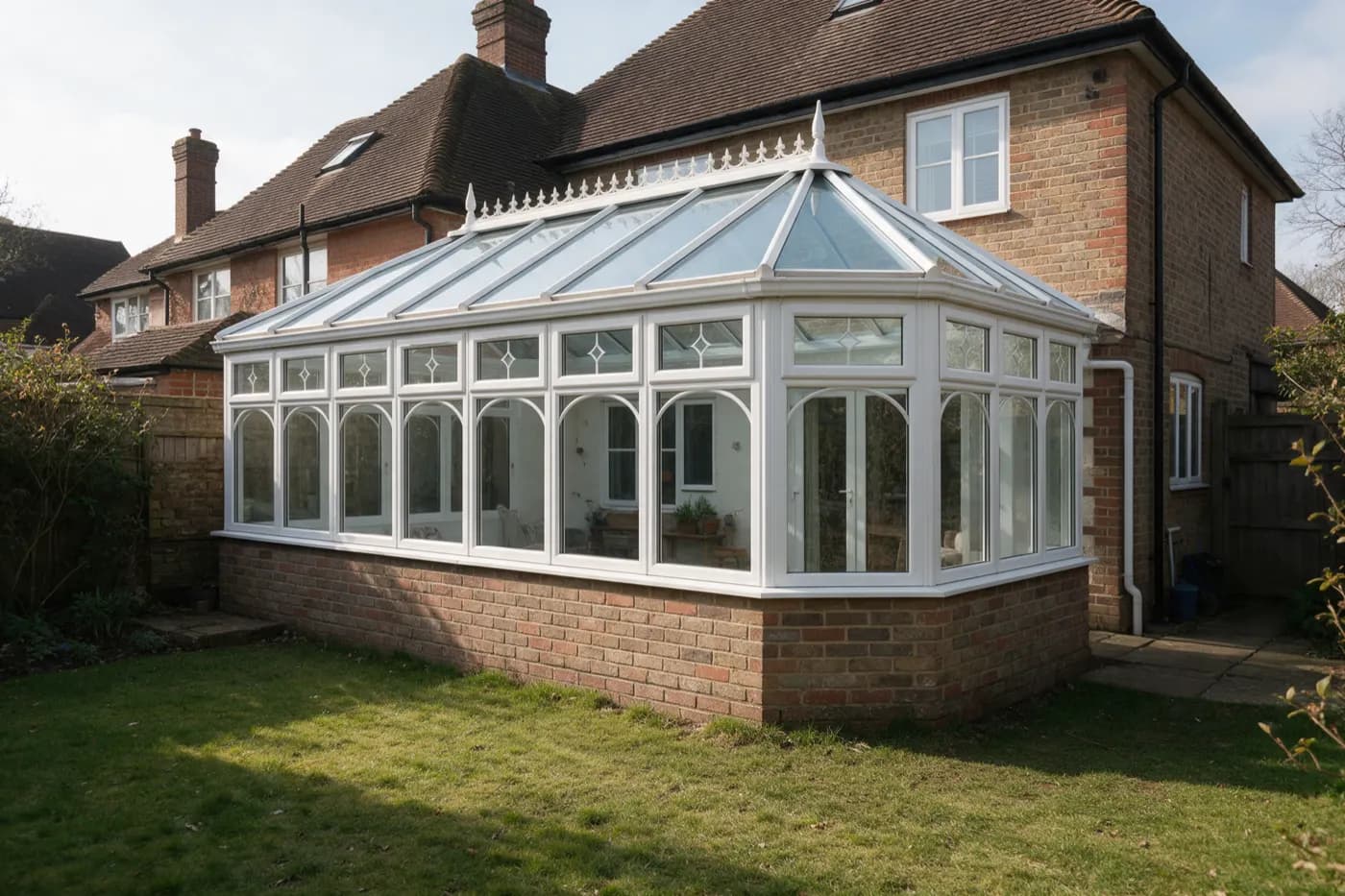
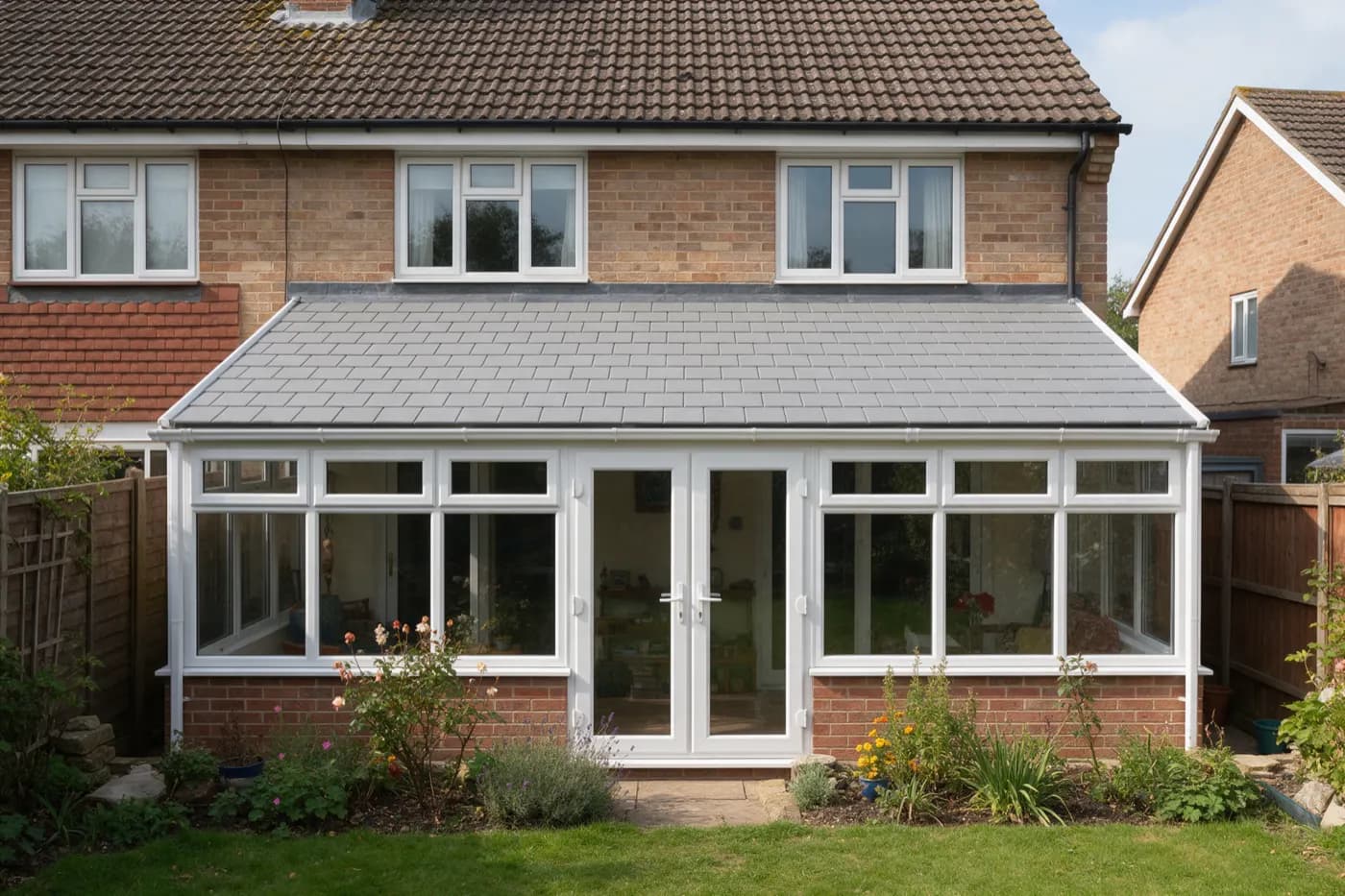
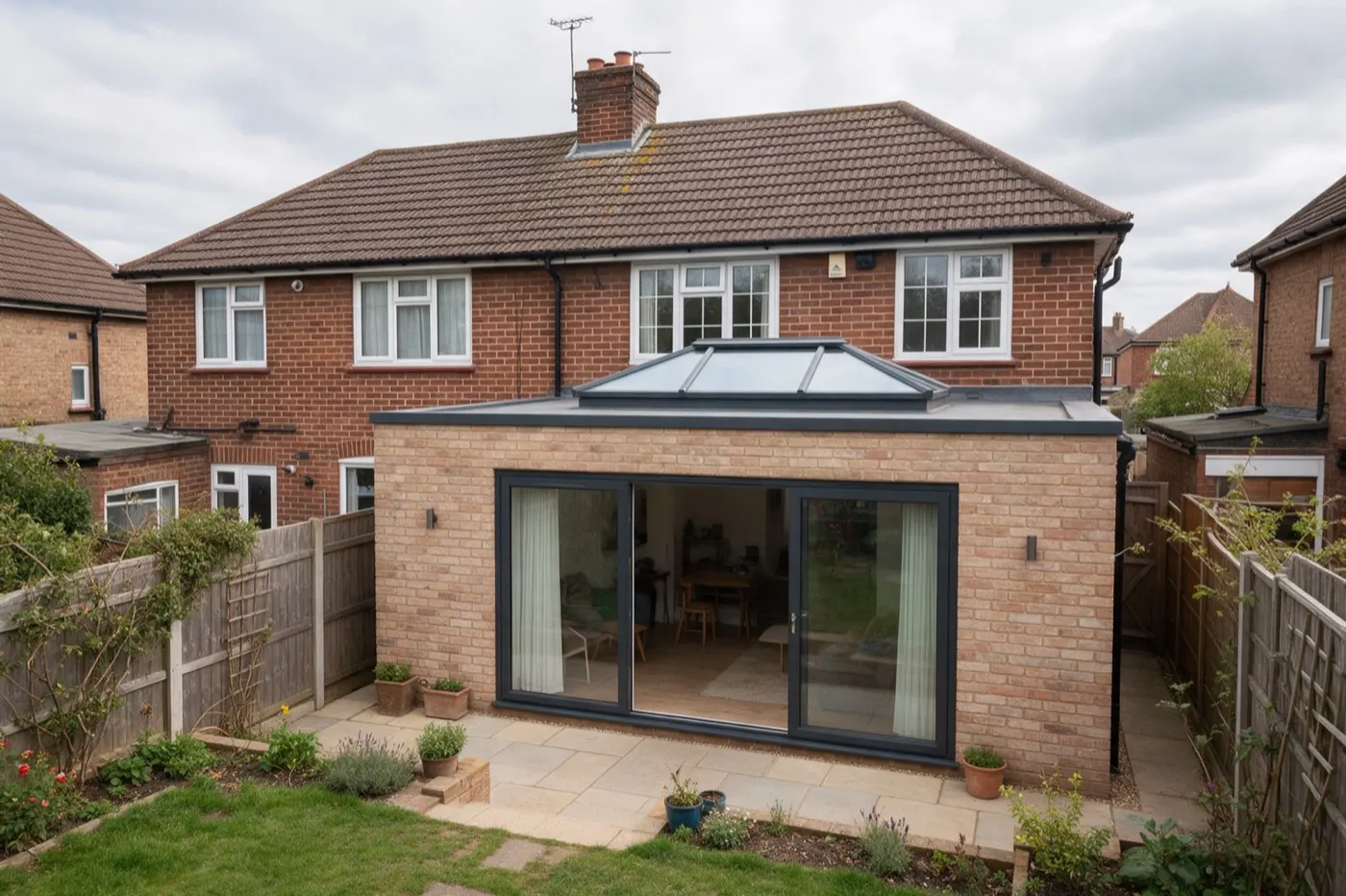
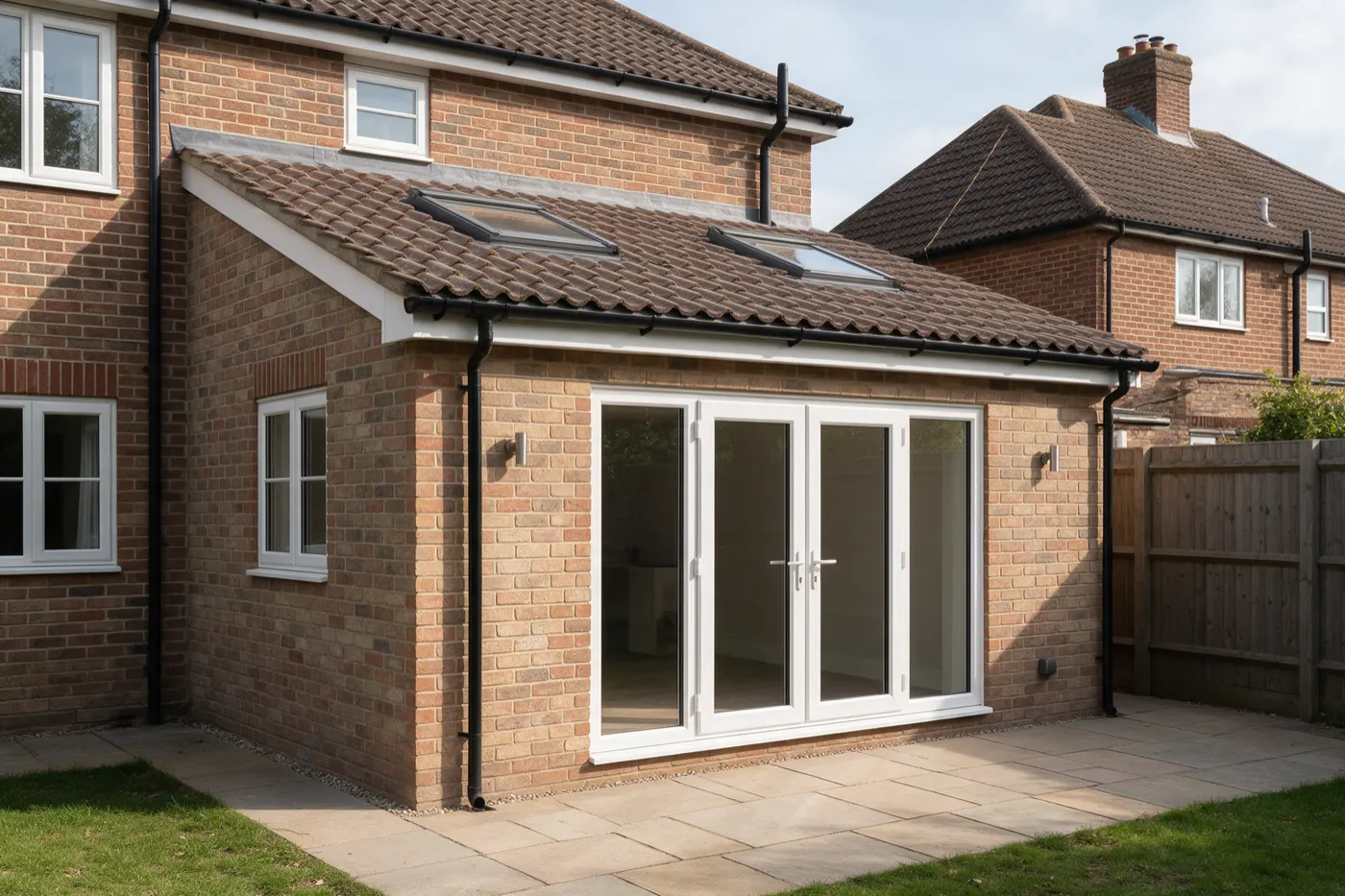
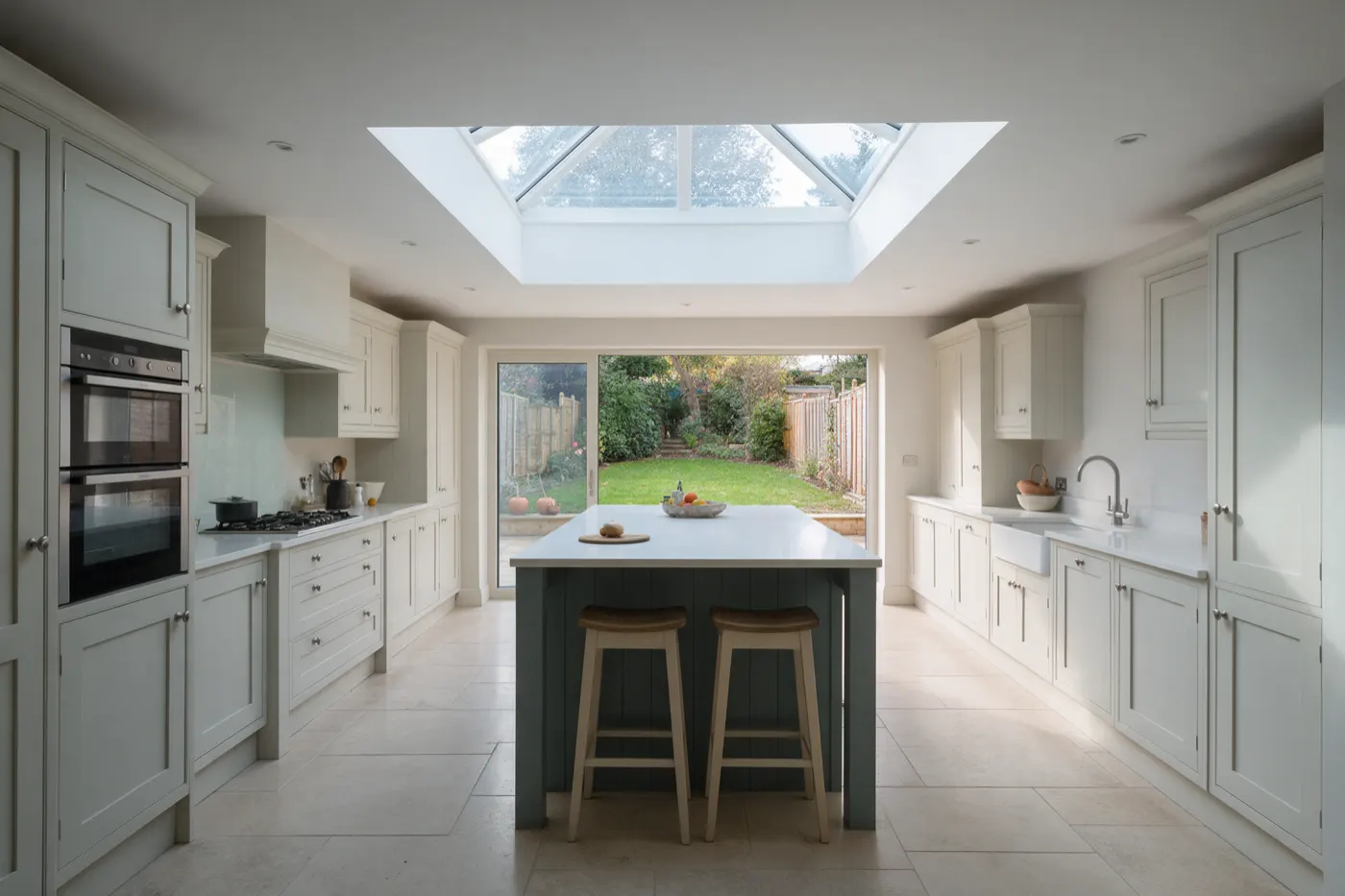
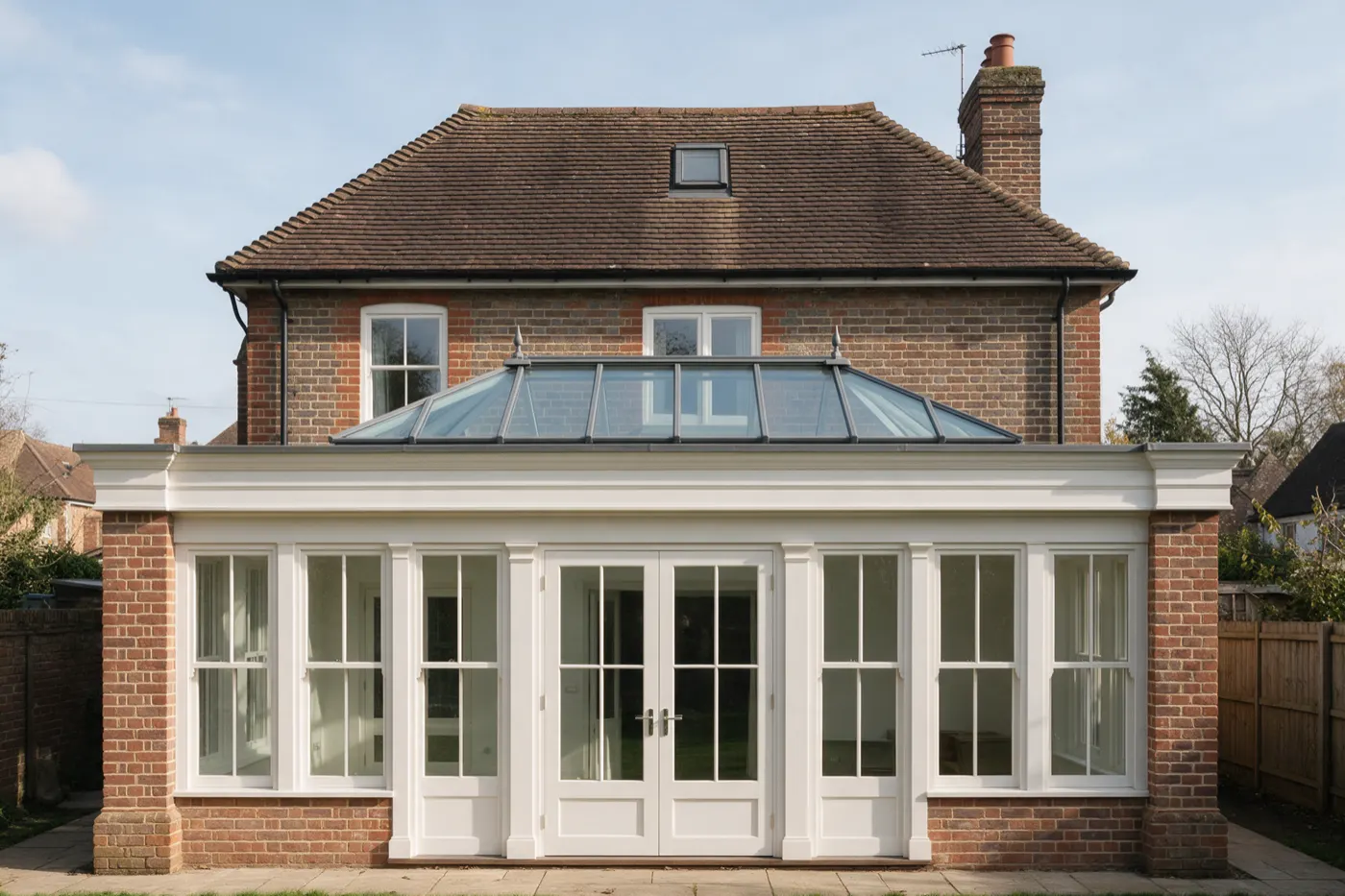
That's close to the price of a single-storey extension (£2,400 to £3,200 per m²), and Which? describes an orangery as halfway between a conservatory and an extension: more brickwork, a more solid roof, often a glass lantern. If it will be open to the house or heated from it, it's treated as an extension for building regulations anyway.
Orangery prices
| Frame | Per m², built | 16m² | 20m² |
|---|---|---|---|
| uPVC | £1,000 to £2,400 | £16,000 to £38,400 | £20,000 to £48,000 |
| Aluminium | £1,900 to £3,000 | £30,400 to £48,000 | £38,000 to £60,000 |
| Hardwood | £2,400 to £3,600 | £38,400 to £57,600 | £48,000 to £72,000 |
Orangery, conservatory or extension?
| Conservatory | Orangery | Extension | |
|---|---|---|---|
| Structure | Mostly glass | More substantial, usually some brickwork at the base | Mostly brick or block |
| Roof | Glass or polycarbonate | A more solid roof, often with a glass lantern | Solid, with rooflights if wanted |
| Link to the house | Usually through a door | Often open to the house, sometimes no dividing door | Open to the house |
| Typical 16m², on our estimates | £13,100 to £21,600 | £30,400 to £48,000 | £38,400 to £51,200 |
Which? suggests that if you'll mainly use the room on warm summer days, a basic conservatory reached through an existing door may be all you need. For a room you'll live in all year, I'd compare an orangery with an extension.
Planning and building regulations
For planning, an orangery is an extension: the permitted development limits on our house extension page apply.
For building regulations, it can only be exempt like a conservatory if it's at ground level, under 30m², separated from the house by an external door or wall and not heated from the house's system. Which? notes orangeries are often built open to the house, sometimes with no dividing door, and that makes them extensions: insulation to extension standards and the 25% glazing limit, so the energy calculation needs doing early. Ask your building control body whether your design counts as a conservatory before you order.
A sum that doesn't add up
Get orangery quotes
Orangeries sit between a conservatory and an extension. Tell installers what you have in mind.
Free, no obligation. We're paid by MyJobQuote when a tradesperson buys your job, never by you.
Frequently asked questions
How much does an orangery cost?
On our estimates, about £1,000 to £2,400 per m² in uPVC, £1,900 to £3,000 in aluminium and £2,400 to £3,600 in hardwood, built, including VAT.
Is an orangery cheaper than an extension?
Sometimes, a little. On our estimates a uPVC orangery is £1,000 to £2,400 per m² against £2,400 to £3,200 for an extension, but aluminium and hardwood orangeries cost as much or more.
Do you need permission for an orangery?
It's treated as an extension, so not if it's within permitted development limits on a house in England.
Does an orangery need building regulations?
Yes, unless it qualifies as an exempt conservatory: ground level, under 30m², separated from the house and not heated from the house's system.
How long does an orangery last?
There's no reliable published lifespan for an orangery as a whole. For the glazing, the Energy Saving Trust says good, well-installed double glazing lasts 20 to 35 years, and a misted unit can be replaced on its own. I'd check the guarantees on the frames, the glass units and the roof lantern before you buy.
How we priced thisView sources (8, 3 official)
Rules come from the legislation and official guidance, read at source. Prices are our estimates: we check them against trade price data, retailer shelf prices and specialists' price lists, then build them up from their parts so the totals add up. Below are the sources behind the page; the trade price guides we only compare against aren’t listed. Where sources disagreed, we've said so. More on our method.
- IndustryTypes of conservatory: everything you need to know (31 March 2026), Which?. Checked 15 Oct 2026.
- OfficialThe Town and Country Planning (General Permitted Development) (England) Order 2015, Schedule 2 Part 1, legislation.gov.uk. Checked 16 Oct 2026.
- OfficialThe Building Regulations 2010, Schedule 2: exempt buildings and work (Classes 6 and 7), legislation.gov.uk. Checked 15 Oct 2026.
- OfficialApproved Document L: Conservation of fuel and power, Volume 1 Dwellings (2021 edition incorporating 2023 amendments), GOV.UK. Checked 16 Oct 2026.
- Trade guideHow much does an orangery cost?, Checkatrade. Checked 15 Oct 2026.
- Trade guideHow much does a conservatory cost?, Checkatrade. Checked 15 Oct 2026.
- Trade guideHouse extension cost breakdown, Checkatrade. Checked 15 Oct 2026.
- IndustryEnergy efficient windows and doors (updated 20 May 2026), Energy Saving Trust. Checked 15 Oct 2026.