The Short Answer
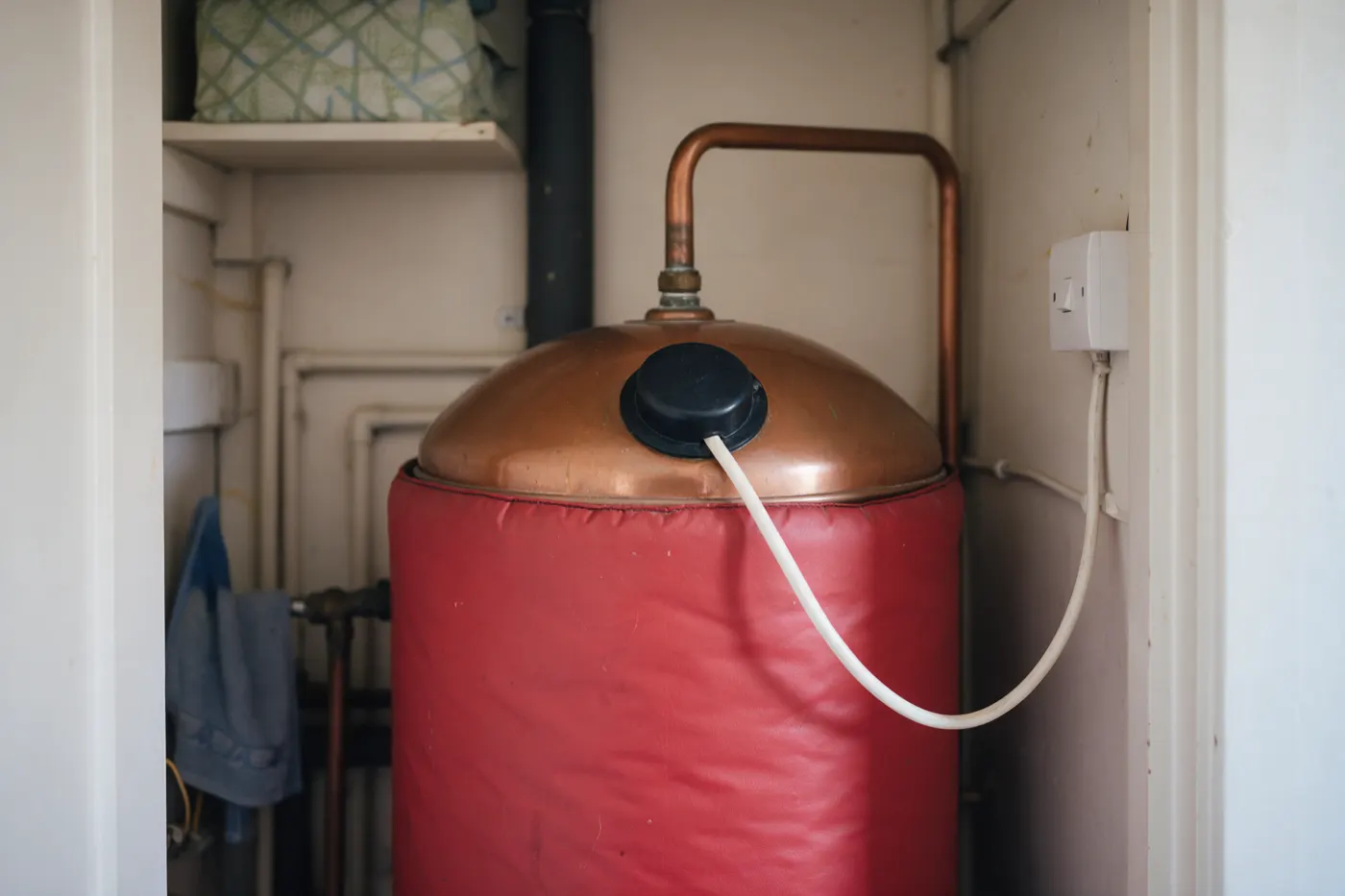
On our estimates, replacing an unvented hot water cylinder like for like costs about £1,100 to £2,650 supplied and fitted. A vented (tank-fed) cylinder is £720 to £1,450, and converting a tank-fed system to unvented is £1,800 to £4,200.
A like-for-like swap is typically one day's work; a full changeover takes two days or more. Unvented cylinders run at mains pressure and must be fitted by someone qualified for them.
Cylinder prices
| Job | Fitted cost |
|---|---|
| Vented (tank-fed) cylinder, like for like | £720 to £1,450 |
| Unvented cylinder, like for like | £1,100 to £2,650 |
| Converting a tank-fed system to unvented | £1,800 to £4,200 |
Vented or unvented?
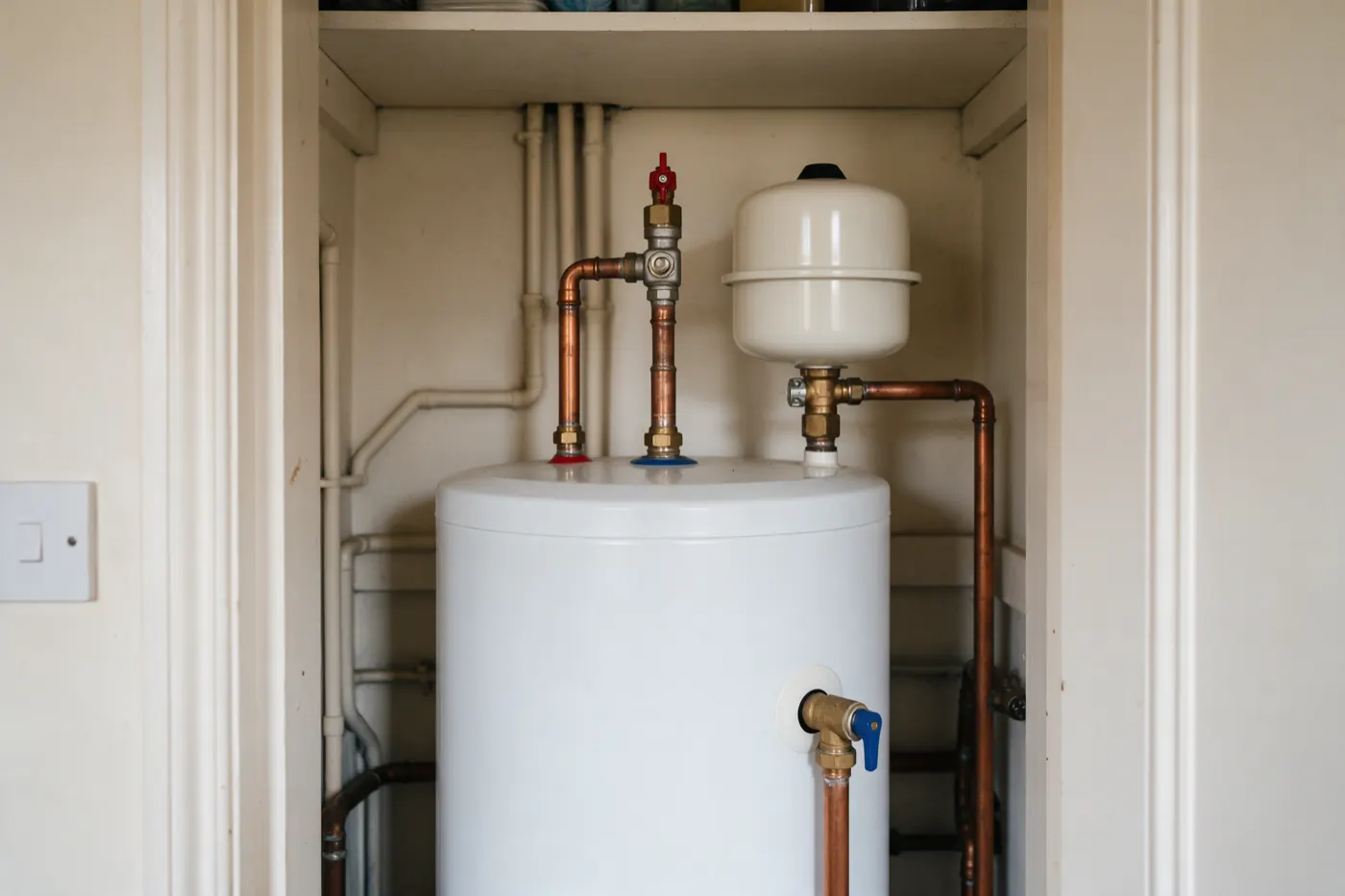
- Vented cylinders are fed from a cold water tank, usually in the loft, with a vent pipe running back over it.
- Unvented cylinders take water straight from the mains at mains pressure, with no loft tank.
Converting frees up the loft and gives mains-pressure hot water, but it costs more and brings stricter rules. If your boiler is near the end of its life too, I'd price both together: Worcester Bosch points to a system boiler with a cylinder for homes with more than one bathroom, and a combi for smaller homes that don't need a cylinder at all. See new boiler costs.
The rules for unvented cylinders
In England, Approved Document G sets out what an unvented system needs:
- at least 2 independent safety devices on top of the thermostat, such as a non-self-resetting energy cut-out and a temperature relief valve;
- a proprietary unit or package for domestic sizes, marked and labelled with a warning not to adjust it, and to switch off and call the installer if hot water flows from the discharge pipe;
- an installer with the right skills: for example, registered with a competent person scheme for this work, or holding a current skills card for unvented hot water systems.
That makes it not a DIY job. Ask to see the installer's unvented qualification, and keep the commissioning paperwork.
Warranty and servicing
Heatrae Sadia, which makes the Megaflo, is a good example of what a warranty asks for. Its standard warranty is 2 years; the Megaflo Eco carries a 30-year warranty on the inner tank in a home (other parts 2 years). The conditions include correct installation, an annual service by a competent person with the seals checked, no frost or limescale damage, and registering the cylinder within 30 days of fitting. I'd register it the day it goes in and book the service alongside the boiler's.
Get hot water cylinder quotes
Cylinders are priced by type and whether the system changes.
Free, no obligation. We're paid by MyJobQuote when a tradesperson buys your job, never by you.
Frequently asked questions
How much does it cost to replace an unvented cylinder?
On our estimates, about £1,100 to £2,650 supplied and fitted like for like, or £1,800 to £4,200 to convert from a tank-fed system.
How long does it take to fit a new hot water cylinder?
Typically one day for a like-for-like swap, and two days or more for a full changeover such as a combi to a system boiler and unvented cylinder.
How long do unvented cylinders last?
Warranties give a guide: Heatrae Sadia's Megaflo Eco has a 30-year warranty on the inner tank in a home, on condition it's serviced every year.
How often should an unvented cylinder be serviced?
Every year: makers such as Heatrae Sadia make an annual service by a competent person a condition of the warranty.
Can I fit an unvented cylinder myself?
No. Approved Document G expects an installer with the skills for unvented hot water, such as a competent person scheme registration or a skills card for this work.
How we priced thisView sources (4, 2 official)
Rules come from the legislation and official guidance, read at source. Prices are our estimates: we check them against trade price data, retailer shelf prices and specialists' price lists, then build them up from their parts so the totals add up. Below are the sources behind the page; the trade price guides we only compare against aren’t listed. Where sources disagreed, we've said so. More on our method.
- OfficialApproved Document G: Sanitation, hot water safety and water efficiency (2015, incorporating 2016 and 2024 amendments), GOV.UK. Checked 14 Oct 2026.
- OfficialThe Building Regulations 2010, Schedule 3: self-certification schemes (para 16, roof coverings), legislation.gov.uk. Checked 15 Oct 2026.
- IndustryProduct warranty, Heatrae Sadia. Checked 16 Oct 2026.
- IndustryBoilers explained, Worcester Bosch. Checked 15 Oct 2026.