
The Short Answer
Most sealed heating systems run at about 1 to 1.5 bar with the heating off; check the gauge on your boiler and its manual. If it's fallen below that, you can usually top it up yourself with the filling loop, and losing a little pressure a couple of times a year is normal.
If it keeps dropping, water is getting out somewhere: most often a leaking radiator valve or joint, sometimes the pressure relief valve (look for a wet pipe outside), sometimes the boiler itself. A plumber can fix a leaking joint; anything inside the boiler is a job for a Gas Safe registered engineer. Don't take the casing off.
Look for a leak before calling anyone out.
Check every radiator valve and visible joint, the skirting and ceilings for stains or flaking paint, and the pipe outside. If you still find nothing and it keeps dropping after you top it up, it's a job for a Gas Safe registered engineer.
Most sealed systems run at about 1 to 1.5 bar with the heating off, but your boiler's manual (or the marks on its gauge) is the one to follow. Anything inside the boiler casing is for a Gas Safe registered engineer only.
What the pressure should be
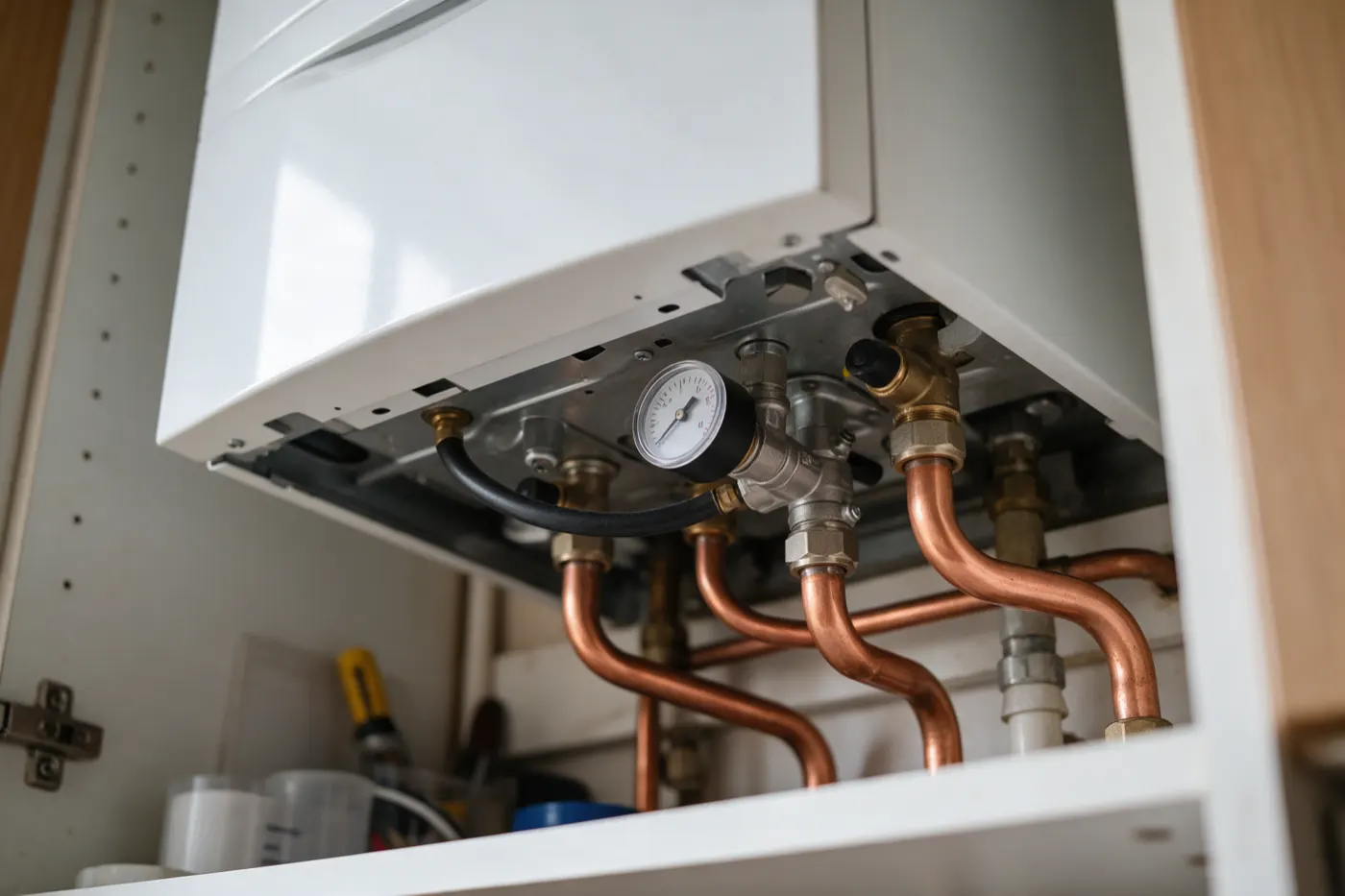
Modern combi and system boilers run on a sealed system. Instead of a water tank in the loft, an expansion vessel soaks up the rise in pressure as the water heats. The gauge on the front of the boiler (or near the hot water cylinder on some system and conventional boilers) shows the pressure in bar.
- As a guide, most sealed systems sit at about 1 to 1.5 bar with the heating off (Viessmann, British Gas).
- It rises a little when the heating is on. Vaillant, for example, gives an operating range of 0.7 to 2.5 bar for its boilers, and says below 1 bar means pressure has been lost.
- Many gauges mark the right range, and modern boilers often show an error code when pressure is low. Your boiler's manual is the one to follow.
Low pressure won't hurt you, British Gas points out, but it can stop the boiler giving you heating or hot water, and running low makes it less efficient. The opposite problem is covered by a safety device: every sealed system has a pressure relief valve that lets water out if the pressure gets too high.
Why it keeps dropping
The makers' own guidance points to the same handful of causes:
- You've bled a radiator. Letting air (and a little water) out lowers the pressure. Check the gauge every time you bleed one.
- A leak on the system. Most often at radiator valves and connections, especially where a radiator can move on its brackets. Pipes and fittings corrode or loosen over time, and pipework under floors can leak out of sight.
- The pressure relief valve. It discharges through a small pipe that usually runs from the boiler through an outside wall. If that pipe is wet or dripping, the valve may be faulty. A failed expansion vessel can damage it, Viessmann notes.
- The boiler itself. Parts inside can corrode or loosen and leak, usually as a drip from the underside, or a component can simply fail.
Finding a leak
Before you call anyone, walk round the house with a torch:
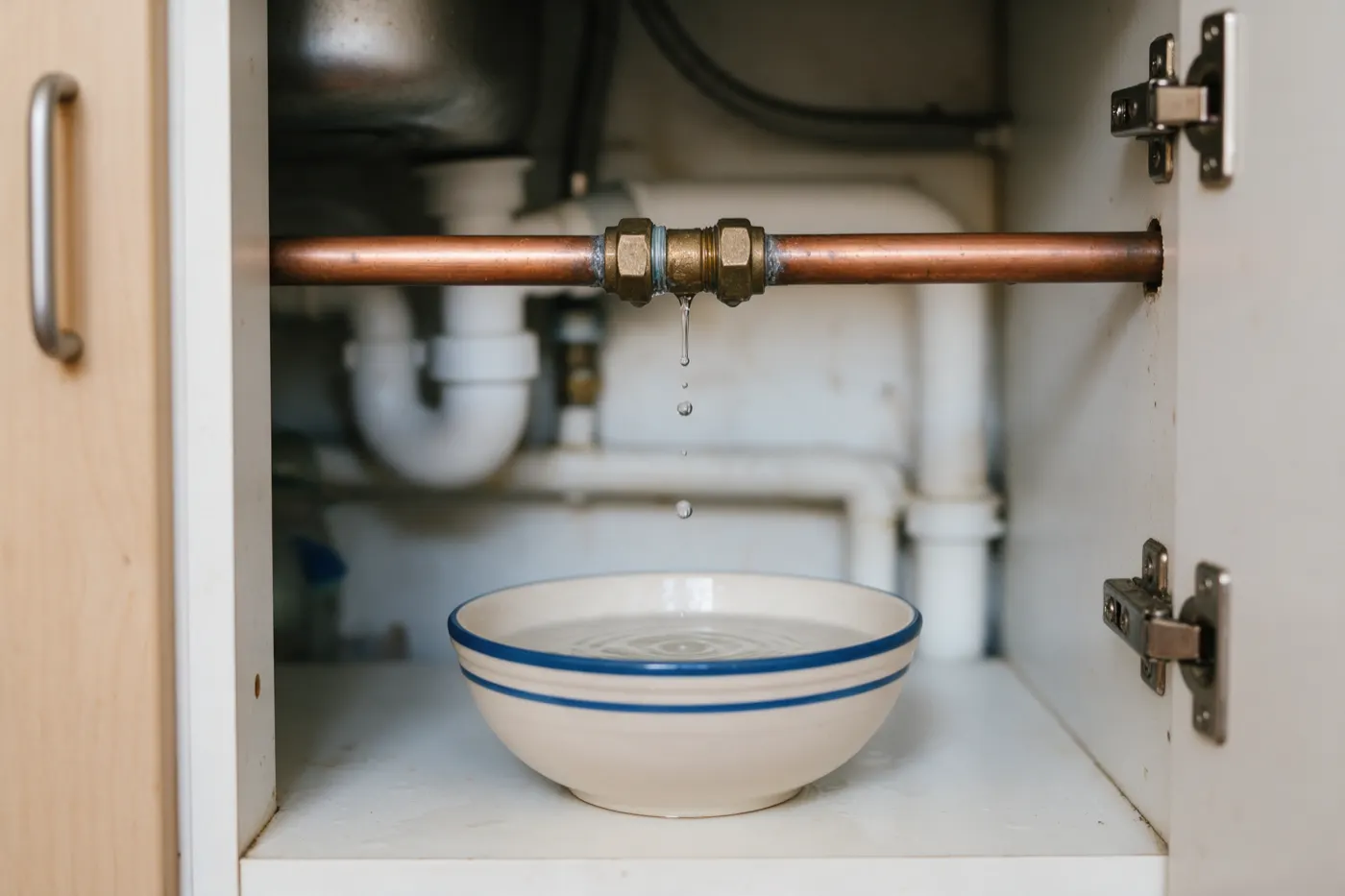
- Look at every radiator's valves and connections. Wipe them dry and put a tray or a piece of kitchen roll underneath, then come back to see if a regular drip appears. A wet pipe on its own can just be condensation.
- Look for the signs a slow leak leaves: flaking or bubbling paint on pipes or skirting boards, rust marks, skirting that has swollen or lifted, stains on the ceiling below.
- Check the pressure relief pipe where it comes out of the outside wall.
- Look under the boiler for drips, without opening it.
Found a leaking joint? Don't try to remake it unless you're trained, Vaillant advises. A plumber can fix it, and if the pressure then holds, that was the problem.
How to top up the pressure
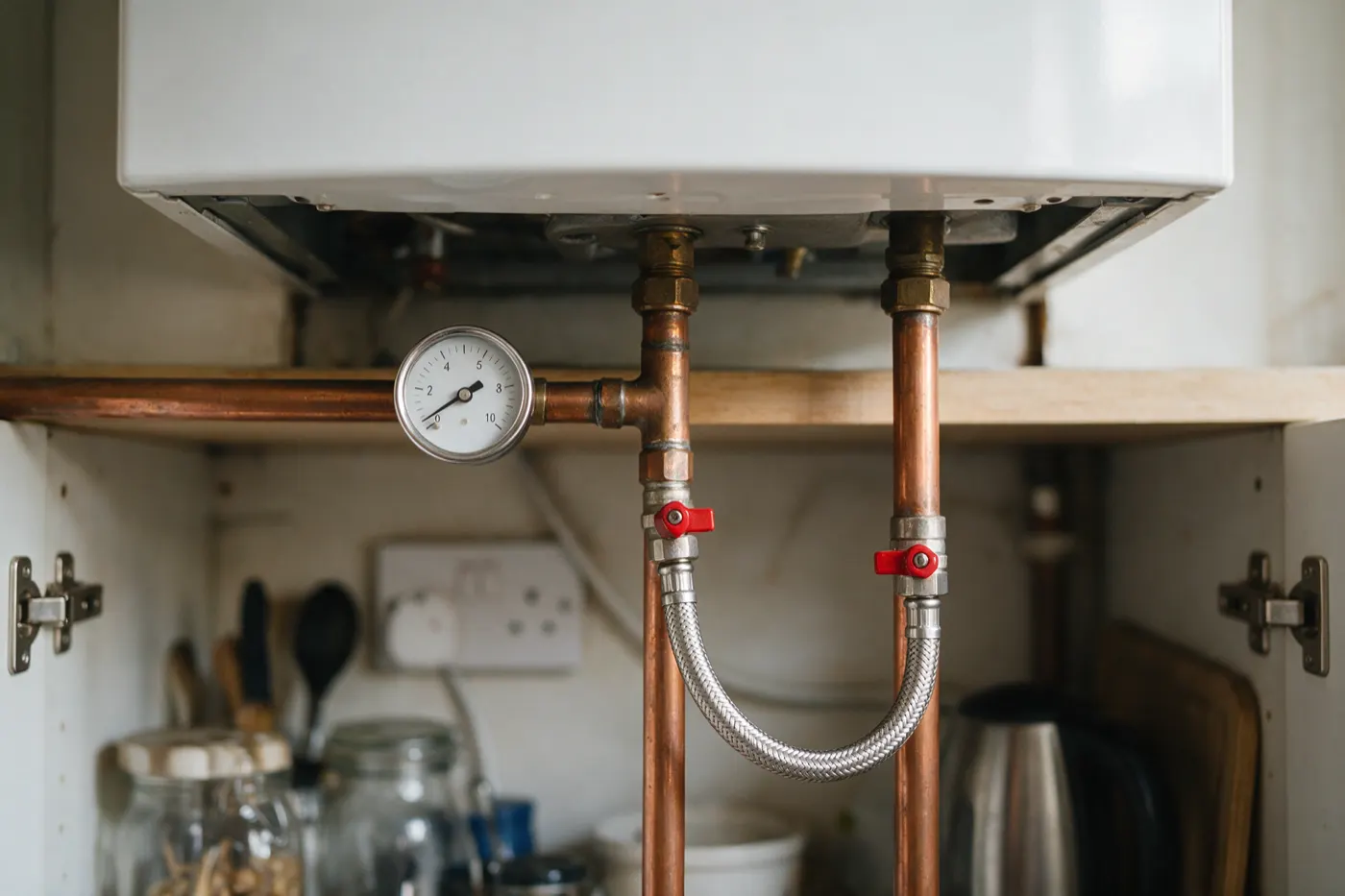
First check your boiler's manual says you can do it yourself (you can usually find it online if you've lost the paper copy). Then switch the boiler off and let it cool. Worcester Bosch describes three kinds of filling loop:
- External filling loop: a flexible braided hose with a valve at each end, one on the cold mains and one on the heating. If the hose isn't already attached, fit both ends, open the valves and you'll hear water flowing in. Watch the gauge, close both valves once it's up to the right pressure, then remove the hose (expect a few drips).
- Internal filling loop with a key: the key fits a port under the boiler. Turn it, watch the pressure rise, turn it back and remove it.
- Keyless filling loop: a lever under the boiler. Hold it until the pressure is up, then let go.
Keep your eye on the gauge the whole time: it's easy to overshoot, and you may need someone to help if you can't see the gauge from the valves. If you do overfill, bleed a radiator to bring it back down. Then switch the boiler back on (press reset if it needs it).
When to call someone, and who
Topping up is a stop-gap. If the pressure keeps falling after you've topped it up, something needs fixing, and the makers advise getting it looked at early to avoid more damage.
- A leaking radiator valve, joint or pipe: a plumber or heating engineer. See plumbing repair costs.
- The pressure relief valve, the expansion vessel or anything inside the boiler: a Gas Safe registered engineer. See boiler repair costs.
- Losing pressure on an old boiler that's had a run of faults: that's when it's worth pricing a new boiler alongside the repair.
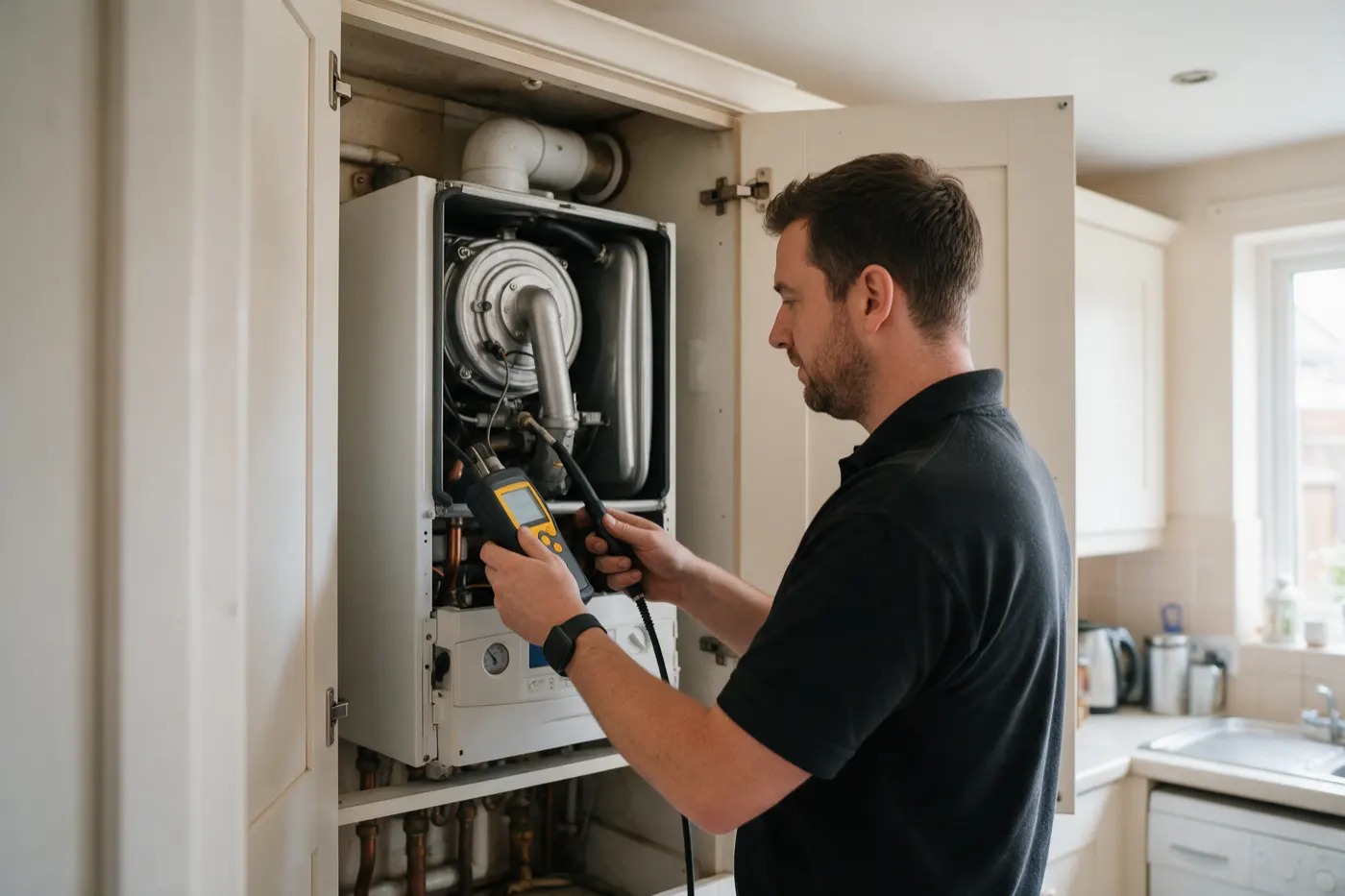
Work inside a gas boiler must be done by a Gas Safe registered engineer: it's the law, not advice. Ask for their Gas Safe ID card: the back lists the kinds of gas work they're qualified for. See checking a gas engineer.
If it's only a slow loss, we'd still mention it at your next boiler service, with your note of how often you've topped up.
What it costs
Prices, what moves them and who to hire, in our cost guides.
Free, no obligation. We're paid by MyJobQuote when a tradesperson buys your job, never by you.
Frequently asked questions
Can a boiler lose pressure without a leak?
Bleeding a radiator lowers the pressure, and that's expected. Otherwise water is getting out somewhere: a hidden leak in the pipework, the pressure relief valve discharging (often through a pipe to the outside), or a leak or faulty part inside the boiler. If you can't find a leak and it keeps dropping, call a Gas Safe registered engineer.
How do I fix my boiler that keeps losing pressure?
Top it up with the filling loop to about 1 to 1.5 bar with the heating off, following your boiler's manual, then find out why it's dropping: check radiator valves and joints for drips and the pressure relief pipe outside. A leaking joint needs a plumber; anything inside the boiler needs a Gas Safe registered engineer.
How often is it normal for a boiler to lose pressure?
British Gas says it might happen a couple of times a year. If you're topping up every few weeks or days, there's a leak or a fault to fix.
Will my boiler explode if the pressure is too low?
No. British Gas says low pressure won't harm you physically, though it can stop your heating and hot water and make the boiler less efficient. Too much pressure is handled by the pressure relief valve.
What should my boiler pressure be?
Most sealed systems run at about 1 to 1.5 bar with the heating off, a little higher when it's on. Check your boiler's manual and the marks on its gauge.
Can I top up the boiler pressure myself?
Usually, yes, if your boiler's manual says so. Switch the boiler off, open the filling loop, watch the gauge until it reaches the right pressure, then close it. Don't take the boiler casing off.
How we checked this6 sources · 1 officialView sourcesHide
Rules come from the legislation and official guidance, read at source, and are linked where the guide states them. Practical advice comes from makers', trade bodies' and official guidance; where sources disagreed, we've said so. Prices aren't in our guides: they're on the cost pages linked above, each with its own sources. More on our method.
- IndustryWhy is my boiler losing pressure?, Vaillant. Checked 19 Oct 2026.
- IndustryWhat should I do if my boiler loses pressure?, Viessmann. Checked 19 Oct 2026.
- IndustryWhat to do if your boiler loses pressure, Worcester Bosch. Checked 19 Oct 2026.
- IndustryThe heating system is constantly losing pressure: what should I do?, Worcester Bosch. Checked 19 Oct 2026.
- IndustryWhat pressure should my boiler be set at?, British Gas. Checked 19 Oct 2026.
- OfficialThe Gas Safety (Installation and Use) Regulations 1998, regulation 3, legislation.gov.uk. Checked 15 Oct 2026.