
The Short Answer
An Electrical Installation Condition Report (EICR) is the report an electrician gives you after inspecting and testing the fixed electrics in a building: the wiring, sockets, switches, lights, the consumer unit and anything wired in. It tells you whether the installation is satisfactory or unsatisfactory for continued use, and lists anything that needs fixing.
Landlords in England must have one at least every 5 years. For a home you own it's not a legal requirement, but Electrical Safety First recommends one at least every 10 years, and it's worth having before you buy: a standard survey doesn't check the electrics.
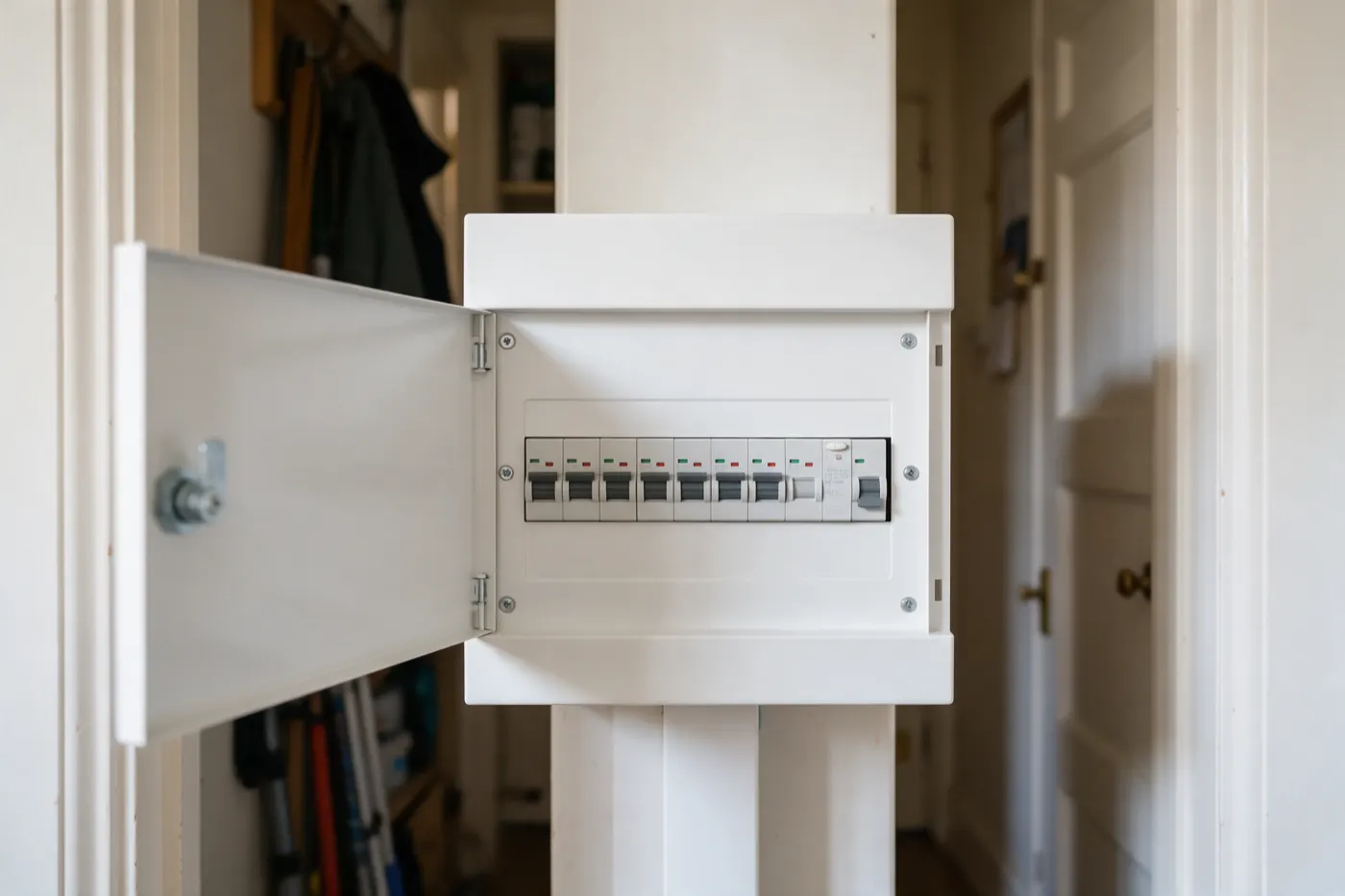
Find out first: look for a label in or on the consumer unit.
It often says when the installation was last inspected and tested, and when the next one is due. No label and no report usually means book one.
Electrical Safety First also recommends every 3 years for a caravan and every year for a swimming pool. In a rented home the recommendation is every 5 years or at each change of occupancy, whichever is sooner.
What an EICR is (and isn't)
You'll hear it called an electrical safety check, periodic inspection and testing, or fixed wire testing. They all mean the same thing: a registered electrician inspects your electrical installation, tests it with specialist equipment, and writes up what they find. The EICR is that write-up.
It covers the fixed installation: the cables in your walls, floors and ceilings, the consumer unit (fuse box), sockets, switches and light fittings, protective devices such as circuit breakers and RCDs, and anything wired in, such as an electric shower or extractor fan. Circuits for solar panels and battery storage are part of it too. It doesn't cover things you plug in: the kettle, the TV and the fridge are appliances, not the installation.
An EICR isn't a pass certificate. It's a condition report on wiring that already exists, and it records wear, damage, defects and anything that falls short of today's safety standard in a way that might cause danger. That's different from the certificate you get after new electrical work (more on that below).
What happens during an EICR
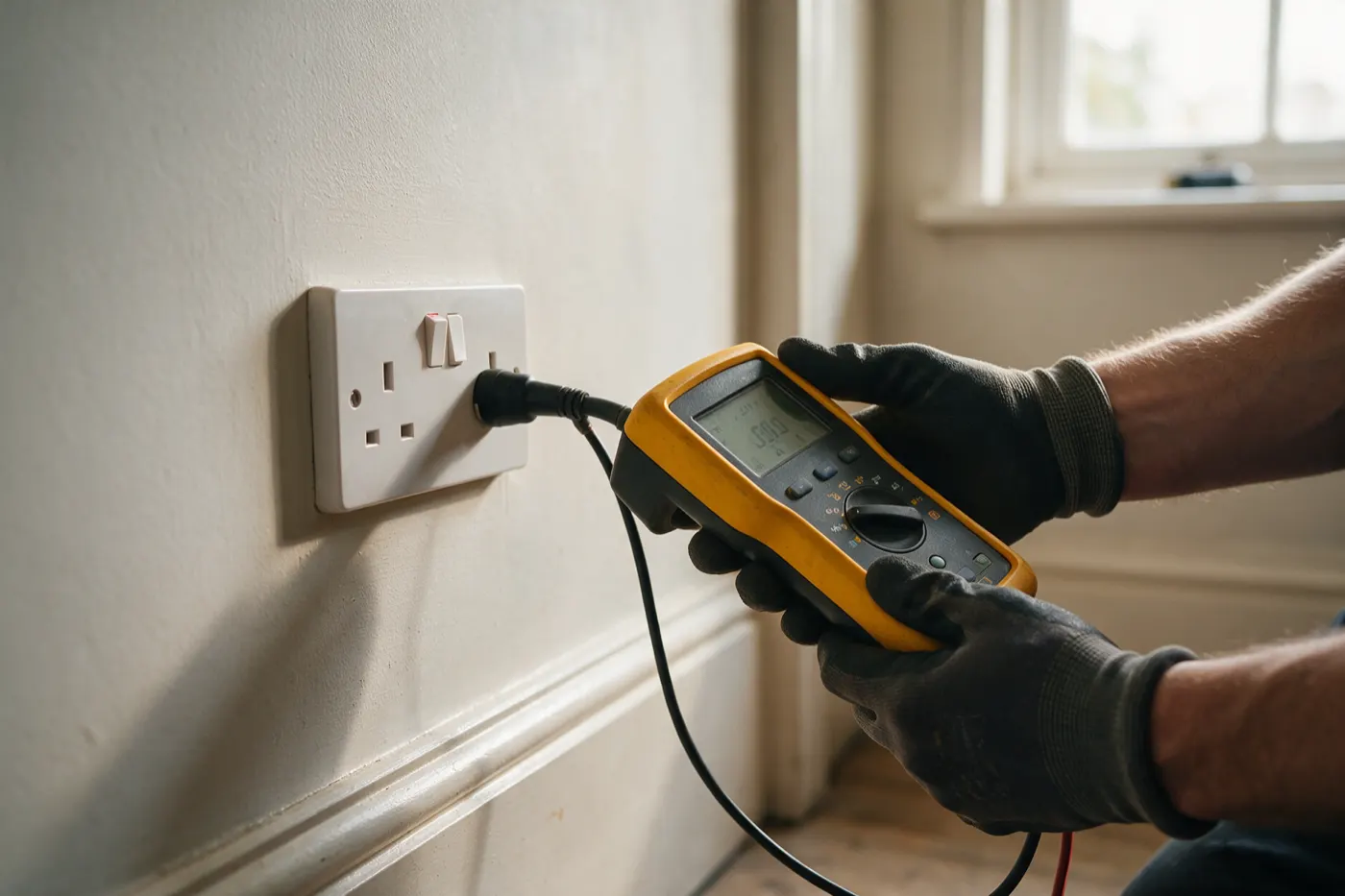
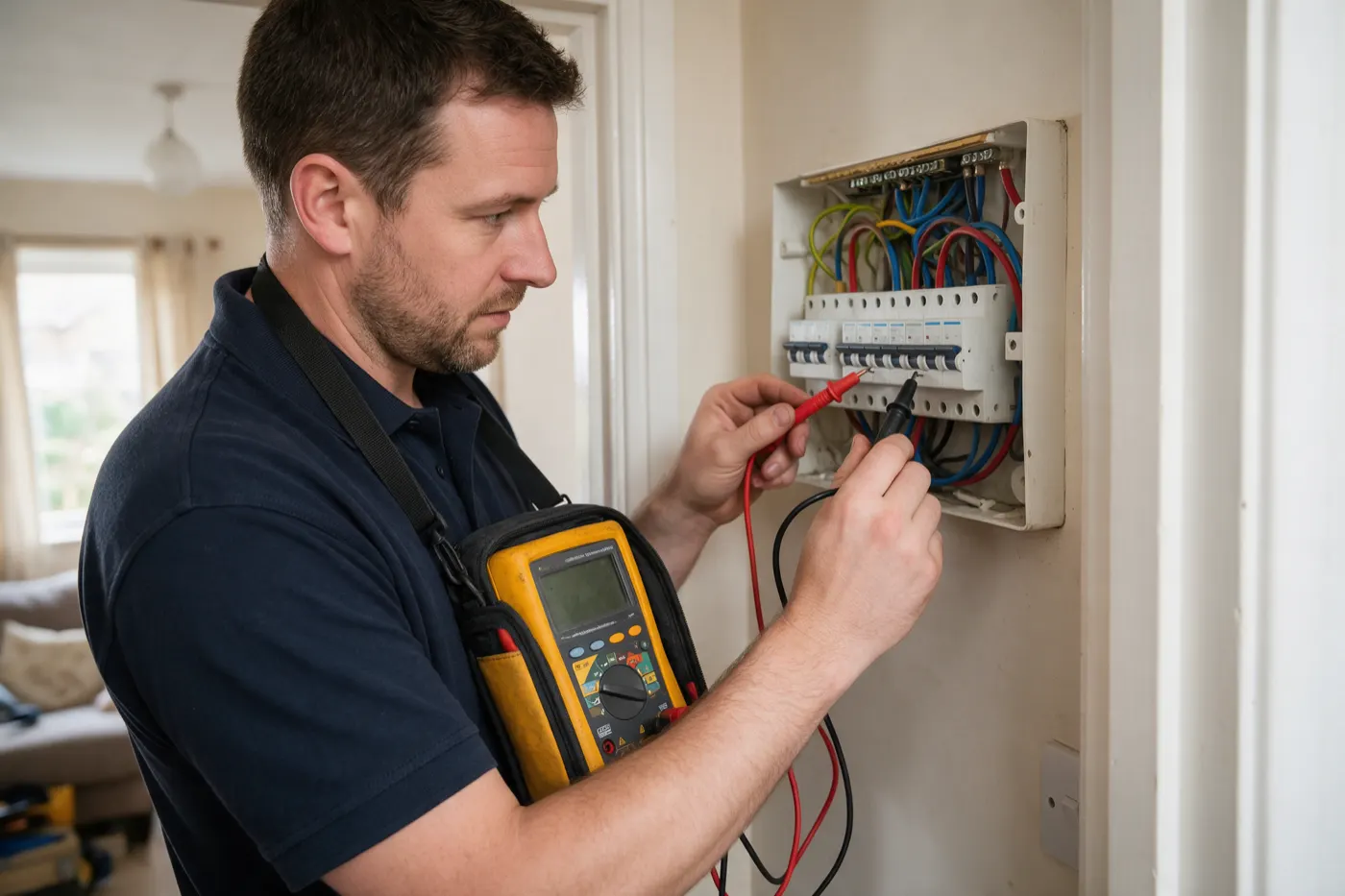
NICEIC describes four steps:
- A visual inspection, looking for cracked or worn sockets and switches, signs of overheating or burning, an outdated or damaged consumer unit, missing covers, circuits labelled wrongly, and DIY alterations that may not meet the regulations.
- Testing the circuits, with parts of the installation isolated (switched off) while each test runs: continuity (no unintended breaks in the wires), insulation resistance (the insulation isn't breaking down), polarity (live and neutral are connected the right way round), earth fault loop impedance (a fault will trip the circuit quickly), and RCD tests (the RCDs trip fast enough to prevent a shock).
- Recording the results, giving each problem found a code.
- Issuing the report, with every fault, its code and the recommended fix.
Because circuits are switched off while they're tested, expect the power to be off in parts of the house at times. It takes from a few hours in a small home to a full day or more in a large property; the electrician will give you an estimate for yours.
Put simply, the inspection is looking for four things that GOV.UK's guidance lists: circuits that are overloaded, shock risks and fire hazards, defective electrical work, and missing earthing or bonding (the two built-in protections against electric shock).
Reading the results
The report comes out one of two ways:
- Satisfactory: safe for continued use. There may still be C3 recommendations.
- Unsatisfactory: something coded C1 or C2 needs putting right. Anything marked FI (further investigation) needs investigating without delay.
In short: C1 means danger present (the electrician may make it safe before leaving), C2 means potentially dangerous, C3 means improvement recommended but not required, and FI means further investigation needed. There's a table of what each one means for you on our EICR cost page.
The report also sets the date for the next inspection, which can be sooner than the usual interval.
Who can do one
Not you, and not a handyman: an EICR needs specialist test equipment and should only be done by someone electrically competent, such as a registered electrician. Electricians registered with a certification body such as NICEIC are assessed regularly. For landlords the law asks for a "qualified person", and GOV.UK points to the Registered Competent Person Electrical register and Electrical Safety First's find-an-electrician service.
When you need one
- Landlords in England: before a tenancy starts and at least every 5 years, with a copy to each tenant and any remedial work done within 28 days. A newly built or completely rewired home should have an Electrical Installation Certificate instead, which covers the first 5 years. The full duties and fines are on our EICR cost page. Wales, Scotland and Northern Ireland have their own rules.
- Your own home: no law requires one, but Electrical Safety First recommends at least every 10 years.
- Buying a house: Electrical Safety First points out that a standard home survey doesn't cover electrical safety. Ask the seller for an EICR from the last 10 years and, if there isn't one, have one done before you agree a price. It also says electrics more than 50 years old should be checked and updated.
- Businesses: at least every 5 years is recommended. Caravans every 3 years, swimming pools every year.
Not sure when yours was last done? There's often a label in or next to the consumer unit with the date of the last inspection and when the next one is due.
EICR, EIC or minor works certificate?
Three documents get mixed up:
- EICR (condition report): a check of an existing installation, as above.
- Electrical Installation Certificate (EIC): issued after new installation work or a major alteration, such as a rewire, with the results of testing the new work.
- Minor Electrical Installation Works Certificate: for smaller pieces of work.
If you're having work done, you should get an EIC or minor works certificate for it. An EICR is what you get when nothing new has been installed and you want to know the condition of what's there.
What it costs
Prices, what moves them and who to hire, in our cost guides.
Free, no obligation. We're paid by MyJobQuote when a tradesperson buys your job, never by you.
Frequently asked questions
What does an EICR test involve?
A visual inspection of the sockets, switches, lights and consumer unit, then tests on each circuit with parts of the installation switched off: continuity, insulation resistance, polarity, earth fault loop impedance and RCD tests. Problems are given codes and written up in the report.
How often do you need an EICR?
Landlords in England must have one at least every 5 years. For a home you own, Electrical Safety First recommends at least every 10 years; for a business, every 5 years.
Can a normal electrician do an EICR?
It should be done by someone electrically competent to inspect and test, such as a registered electrician. Landlords can find one on the Registered Competent Person Electrical register.
Is an EICR the same as an electrical safety certificate?
That's what many people call it, but it's a condition report rather than a certificate. It says whether the installation is satisfactory or unsatisfactory and lists anything that needs fixing. Certificates (an EIC or minor works certificate) are issued for new work.
Do I need an EICR to sell my house?
No, owner-occupiers aren't required to have one. Buyers are advised to ask for one, because a standard survey doesn't cover the electrics, so a recent satisfactory report can help a sale.
Does an EICR include my appliances?
No. It covers the fixed installation (wiring, sockets, switches, lights, the consumer unit and anything wired in). Plug-in appliances are checked separately, by portable appliance testing (PAT).
How long does an EICR take?
From a few hours in a small home to a full day or more in a large property. Parts of the house will have the power off while circuits are tested.
How we checked this4 sources · 1 officialView sourcesHide
Rules come from the legislation and official guidance, read at source, and are linked where the guide states them. Practical advice comes from makers', trade bodies' and official guidance; where sources disagreed, we've said so. Prices aren't in our guides: they're on the cost pages linked above, each with its own sources. More on our method.
- IndustryElectrical Installation Condition Reports (EICRs), NICEIC. Checked 19 Oct 2026.
- OfficialElectrical safety standards in the private and social rented sectors: guidance, GOV.UK. Checked 19 Oct 2026.
- IndustryYour questions answered, Electrical Safety First. Checked 19 Oct 2026.
- IndustryHome buyers: consumer units and RCDs explained, Electrical Safety First. Checked 19 Oct 2026.