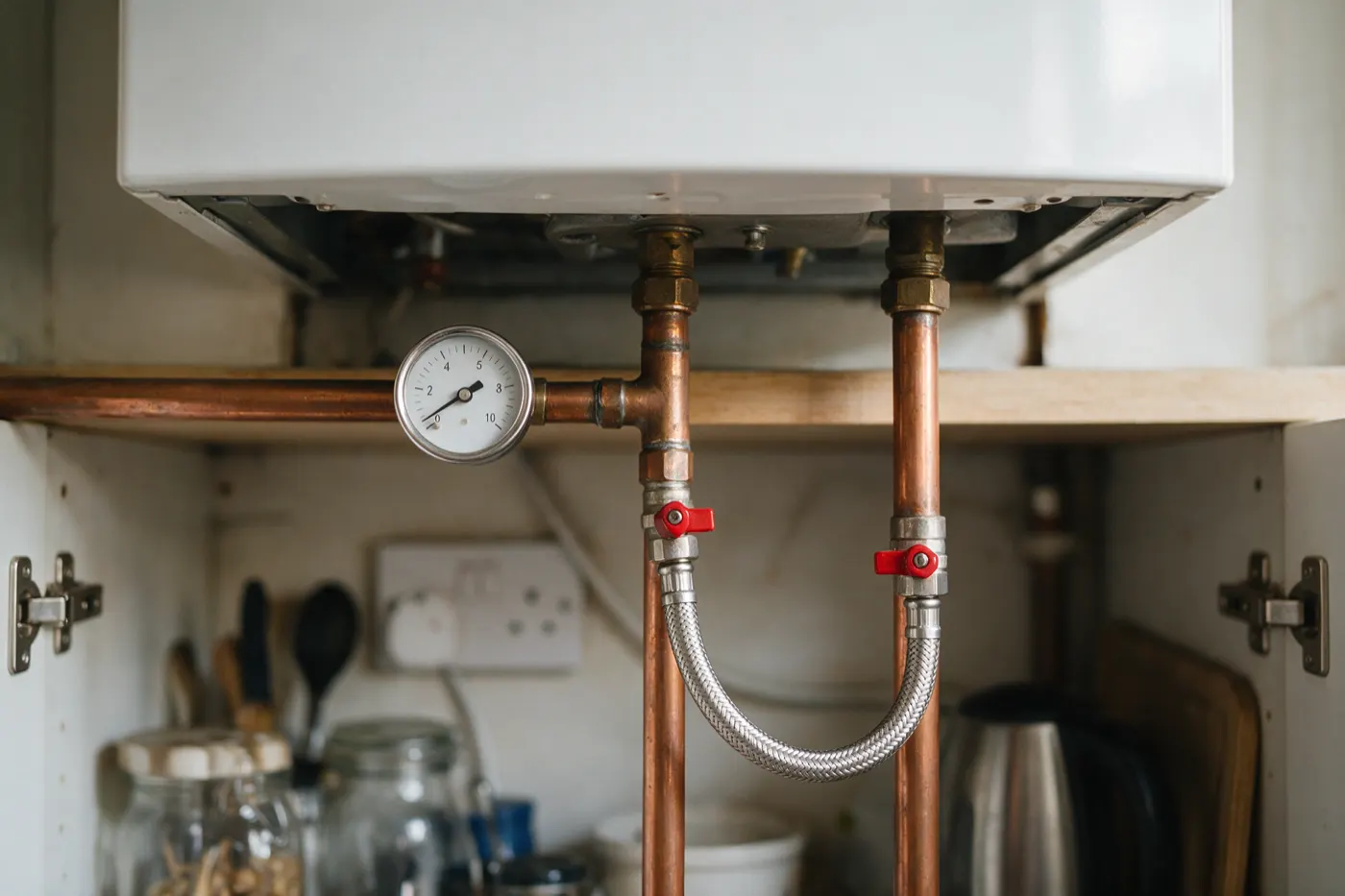
The Short Answer
A fault code is the boiler telling you why it has stopped, and it isn't always something to worry about. When the heating goes on for the first time in autumn, many of the codes you'll see come down to three things you can check yourself: the water pressure (about 1 to 1.5 bar), the gas supply (do your other gas appliances work, is there credit on the meter?) and, in cold weather, a frozen condensate pipe outside.
Sort what you can, then reset the boiler once, as its manual says. If the code comes back, or it's a fault with a part inside the boiler (a fan, sensor or circuit board), it's a job for a Gas Safe registered engineer. Don't take the casing off. If you smell gas, leave the property and call 0800 111 999.
Vaillant F.20: The safety thermal cut-out has operated.
Try first: Check the pressure is 1 to 1.5 bar, top it up if it's low and look for leaks. If that doesn't clear it: your installer, or a Gas Safe registered engineer.
Meanings from Vaillant's own fault code list. Codes can differ between models, so your boiler's manual is the one to follow. Smell gas? Leave the property and call 0800 111 999 (0800 002 001 in Northern Ireland).
The checks you can do first
Vaillant and Glow-worm both say a reset often clears a fault, and that you shouldn't open the boiler yourself. Before you press reset, it's worth ruling out the causes you can actually fix:
- Pressure. Look at the gauge on the front. Vaillant and Ideal both give 1 to 1.5 bar as the normal pressure. If it's below 1 bar, you can usually top it up through the filling loop, if your manual says you can.
- Gas. Check the hob or another gas appliance works, and that a pre-payment meter has credit. Ideal also suggests checking the yellow gas valve under the boiler is on (the handle in line with the pipe). If nothing on gas works, the problem is more likely the supply than the boiler, and Ideal says to contact a gas engineer.
- A frozen condensate pipe. In a cold snap, Vaillant and Glow-worm both list it as a reason the boiler won't light. More on that below.
Then reset it once. If the same code comes straight back, we'd stop there: pressing reset over and over won't fix a fault inside the boiler, and the code is what the engineer needs to know.
A frozen condensate pipe
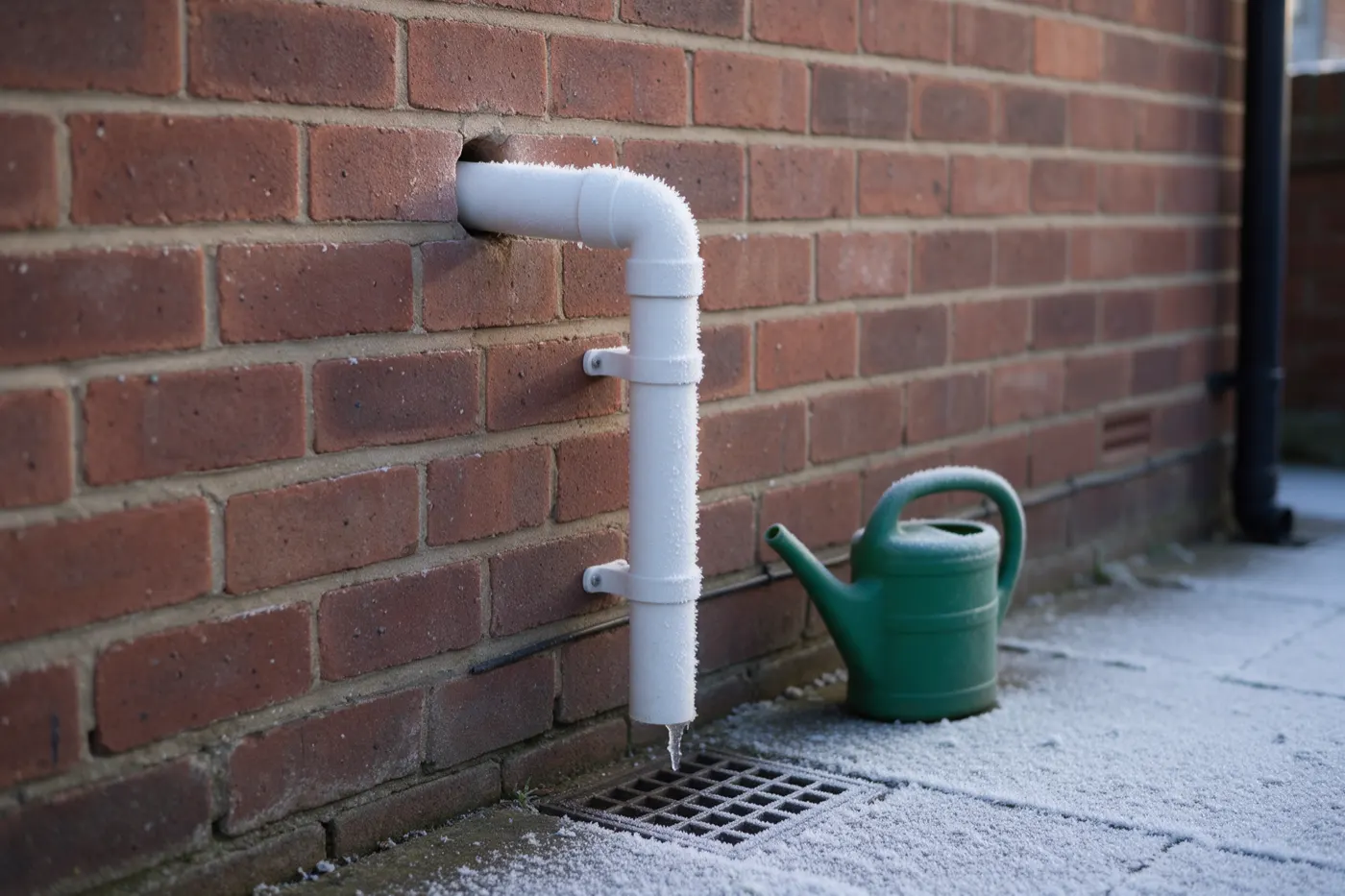
A condensing boiler makes water, which runs to a drain through the condensate pipe: usually a white pipe, like a washing machine waste, coming out of the wall near the boiler. If the outside part freezes, the water backs up and the boiler stops. On a Glow-worm it shows as F28 or F29, Glow-worm says, and you may hear a bubbling or gurgling noise from the boiler.
- Find the frozen bit. It's usually the most exposed part: the end of the pipe by the drain, or a bend.
- Pour warm water along it from a jug or watering can until the ice clears. Never boiling water, which can damage the pipe.
- Reset the boiler the way its manual says.
- Lag the outside run with pipe insulation from a DIY store so it doesn't happen again.
If you're in any doubt, Glow-worm's advice is to contact your installer.
Vaillant fault codes
Vaillant boilers show an F followed by a number. These are the ones people look up most, from Vaillant's own list, with what it says you can check and who fixes the rest. Vaillant splits them between your installer and an engineer; either way, it's someone Gas Safe registered.
| Code | What it means | What to do |
|---|---|---|
| F.20 | The safety thermal cut-out has operated. | Check the pressure is 1 to 1.5 bar, top it up if it's low and look for leaks. If that doesn't clear it: your installer, or a Gas Safe registered engineer. |
| F.22 | Low water pressure. | Below 1 bar, the maker says you can top it up through the filling loop to 1 to 1.5 bar if you're competent, at your own risk. If that doesn't clear it: a Gas Safe registered engineer. |
| F.23 | The temperature difference between the flow and return is too great (air, a sensor or the pump). | Your installer, or a Gas Safe registered engineer. |
| F.24 | The temperature is rising too quickly (air, low pressure or a sensor). | A Gas Safe registered engineer. |
| F.25 | The flue gas temperature is too high. | Your installer, or a Gas Safe registered engineer. |
| F.27 | A flame is detected while the burner is off (the gas valve or the circuit board). | A Gas Safe registered engineer. |
| F.28 | No flame was detected when the boiler tried to light. | Check your other gas appliances work and, on a pre-payment meter, that there's credit. In cold weather, check the condensate pipe outside for ice. If that doesn't clear it: a Gas Safe registered engineer. |
| F.29 | The flame went out and the boiler couldn't relight it. | Check your other gas appliances work and, on a pre-payment meter, that there's credit. In cold weather, check the condensate pipe outside for ice. If that doesn't clear it: a Gas Safe registered engineer. |
| F.32 | Fan fault. | A Gas Safe registered engineer. |
| F.54 | Gas supply fault. | Check your other gas appliances work and, on a pre-payment meter, that there's credit. In cold weather, check the condensate pipe outside for ice. If that doesn't clear it: a Gas Safe registered engineer. |
| F.57 | The burner isn't burning properly in comfort mode (the flue, a blocked condensate pipe, gas pressure or the circuit board). | Check your other gas appliances work and, on a pre-payment meter, that there's credit. In cold weather, check the condensate pipe outside for ice. If that doesn't clear it: a Gas Safe registered engineer. |
| F.62 | The flame took too long to go out (the gas valve, circuit board or ignition electrode). | A Gas Safe registered engineer. |
| F.70 | The boiler's device number is wrong or missing. | A Gas Safe registered engineer. |
| F.72 | A fault with the flow or return temperature sensors. | Your installer, or a Gas Safe registered engineer. |
| F.75 | The pressure doesn't rise as it should when the internal pump starts. | Below 1 bar, top up as for F.22. If that doesn't clear it: a Gas Safe registered engineer. |
| F.83 | Little or no temperature rise when the burner starts (low pressure, circulation or a sensor). | Your installer, or a Gas Safe registered engineer. |
The ones you'll see most in autumn are F.22 (low pressure) and F.28 (the boiler didn't light, very often gas supply or a frozen condensate pipe).
Glow-worm fault codes
Glow-worm boilers use many of the same F codes, and Glow-worm's list gives the same meaning and advice as Vaillant's for the ones they share. The one most people search for is F28: the boiler has failed to light.
| Code | What it means | What to do |
|---|---|---|
| F.20 | The safety thermal cut-out has operated. | Check the pressure is 1 to 1.5 bar, top it up if it's low and look for leaks. If that doesn't clear it: your installer, or a Gas Safe registered engineer. |
| F.22 | Low water pressure. | Below 1 bar, the maker says you can top it up through the filling loop to 1 to 1.5 bar if you're competent, at your own risk. If that doesn't clear it: a Gas Safe registered engineer. |
| F.23 | The temperature difference between the flow and return is too great (air, a sensor or the pump). | Your installer, or a Gas Safe registered engineer. |
| F.24 | The temperature is rising too quickly (air, low pressure or a sensor). | A Gas Safe registered engineer. |
| F.27 | A flame is detected while the burner is off (the gas valve or the circuit board). | A Gas Safe registered engineer. |
| F.28 | The boiler has failed to light (not enough gas, a blocked condensate pipe, the ignition electrode, circuit board or flue). | Check your other gas appliances work and, on a pre-payment meter, that there's credit. In cold weather, check the condensate pipe outside for ice. If that doesn't clear it: a Gas Safe registered engineer. |
| F.29 | The flame went out and the boiler couldn't relight it. | Check your other gas appliances work and, on a pre-payment meter, that there's credit. In cold weather, check the condensate pipe outside for ice. If that doesn't clear it: a Gas Safe registered engineer. |
| F.32 | Fan fault. | A Gas Safe registered engineer. |
| F.70 | The boiler's device number is wrong or missing. | A Gas Safe registered engineer. |
| F.72 | A fault with the flow or return temperature sensors. | Your installer, or a Gas Safe registered engineer. |
| F.75 | The pressure doesn't rise as it should when the internal pump starts. | Below 1 bar, top up as for F.22. If that doesn't clear it: a Gas Safe registered engineer. |
| F.83 | Little or no temperature rise when the burner starts (low pressure, circulation or a sensor). | Your installer, or a Gas Safe registered engineer. |
If the checks don't clear it, Glow-worm says not to try to solve it yourself, as opening the casing can be dangerous.
Ideal fault codes
On an Ideal, the code flashes as a letter and a number: F1 is F and 1, L2 is L and 2. These are the meanings on Ideal's fault code list.
| Code | What it means | What to do |
|---|---|---|
| F1 | Low water pressure. | Top it up to 1 to 1.5 bar, following your manual. If that doesn't clear it: a Gas Safe registered engineer. |
| F2 | Flame loss or ignition lockout. | Reset the boiler. Check your other gas appliances work and, on a pre-payment meter, that there's credit. Check the yellow gas valve under the boiler is on (handle in line with the pipe). If that doesn't clear it: the maker (quote the code) if it's under warranty, otherwise a Gas Safe registered engineer. |
| F3 | Fan fault. | Reset the boiler. If that doesn't clear it: the maker (quote the code) if it's under warranty, otherwise a Gas Safe registered engineer. |
| F4 | Flow thermistor (temperature sensor) fault. | Reset the boiler. If that doesn't clear it: the maker (quote the code) if it's under warranty, otherwise a Gas Safe registered engineer. |
| F5 | Return thermistor (temperature sensor) fault. | Reset the boiler. If that doesn't clear it: the maker (quote the code) if it's under warranty, otherwise a Gas Safe registered engineer. |
| F6 | Outside sensor fault. | Reset the boiler. If that doesn't clear it: the maker (quote the code) if it's under warranty, otherwise a Gas Safe registered engineer. |
| L1 | The flow temperature has overheated, or there's no water flow. | Make sure all the radiator valves are open and the pressure is 1 to 1.5 bar, then reset the boiler. If that doesn't clear it: the maker (quote the code) if it's under warranty, otherwise a Gas Safe registered engineer. |
| L2 | Flame loss or ignition lockout. | Reset the boiler. Check your other gas appliances work and, on a pre-payment meter, that there's credit. Check the yellow gas valve under the boiler is on (handle in line with the pipe). If that doesn't clear it: the maker (quote the code) if it's under warranty, otherwise a Gas Safe registered engineer. |
| L3 | No water flow. | Check the pressure is 1 to 1.5 bar and the yellow gas valve is on. Turn the boiler off, bleed the radiators, check the pressure again, turn it back on and reset it. If that doesn't clear it: the maker (quote the code) if it's under warranty, otherwise a Gas Safe registered engineer. |
| L6 | False flame lockout. | Reset the boiler. If that doesn't clear it: the maker (quote the code) if it's under warranty, otherwise a Gas Safe registered engineer. |
F1 is low pressure, topped up through the filling loop. For F2 or L2, Ideal adds one more clue: if the boiler gurgles while it tries to light, contact your installer, as it may be a blockage. For most codes, Ideal's advice is to reset the boiler once and, if that doesn't fix it, call Ideal quoting the code.
Baxi error codes
Baxi publishes its codes on a page for installers. These are the meanings it gives for models including the Main Eco Compact, 600 and 800, Duo-tec, Assure, Platinum and EcoBlue (its newer Combi 2 and System 2 boilers use different codes). Baxi lists the meanings only; the checks are the same general ones as above.
| Code | What it means | What to do |
|---|---|---|
| E110 | The boiler has overheated (probably a jammed pump or air in the system), or the safety thermostat has tripped. | A Gas Safe registered engineer. |
| E118 | Low water pressure (under 0.5 bar). | Top it up to 1 to 1.5 bar, following your manual. If that doesn't clear it: a Gas Safe registered engineer. |
| E125 | Water circulation fault. | A Gas Safe registered engineer. |
| E133 | Gas supply fault. | Check your other gas appliances work and, on a pre-payment meter, that there's credit. If that doesn't clear it: a Gas Safe registered engineer. |
Worcester Bosch symbols
Worcester Bosch boilers can show symbols on the display, and Worcester's own guide shows what each one means. One is worth knowing this time of year: siphon fill mode. After the boiler has been off, or hasn't been used for a day or so, it runs on a low flame for about 15 minutes to fill its condensate trap. That's a safety feature and perfectly normal. If it carries on for more than 30 minutes, Worcester asks you to ring them.
Some models also show a symbol, or the letters SE, when a service is due. That's a reminder, not a fault.
When to call someone, and who
If the checks haven't cleared it, write down the code and the boiler's make and model, so you can give them to the maker or the engineer.
- Still under warranty: we'd call the maker first, as Ideal suggests for its Logic boilers.
- Out of warranty: a Gas Safe registered engineer. See boiler repair costs.
- An old boiler with a run of faults: that's when it's worth pricing a new boiler alongside the repair.
Work inside a gas boiler must be done by a Gas Safe registered engineer: it's the law, not advice. Ask for their Gas Safe ID card: the back lists the kinds of gas work they're qualified for. See checking a gas engineer.
If the boiler's due a service anyway, we'd ask for both in one visit.
What it costs
Prices, what moves them and who to hire, in our cost guides.
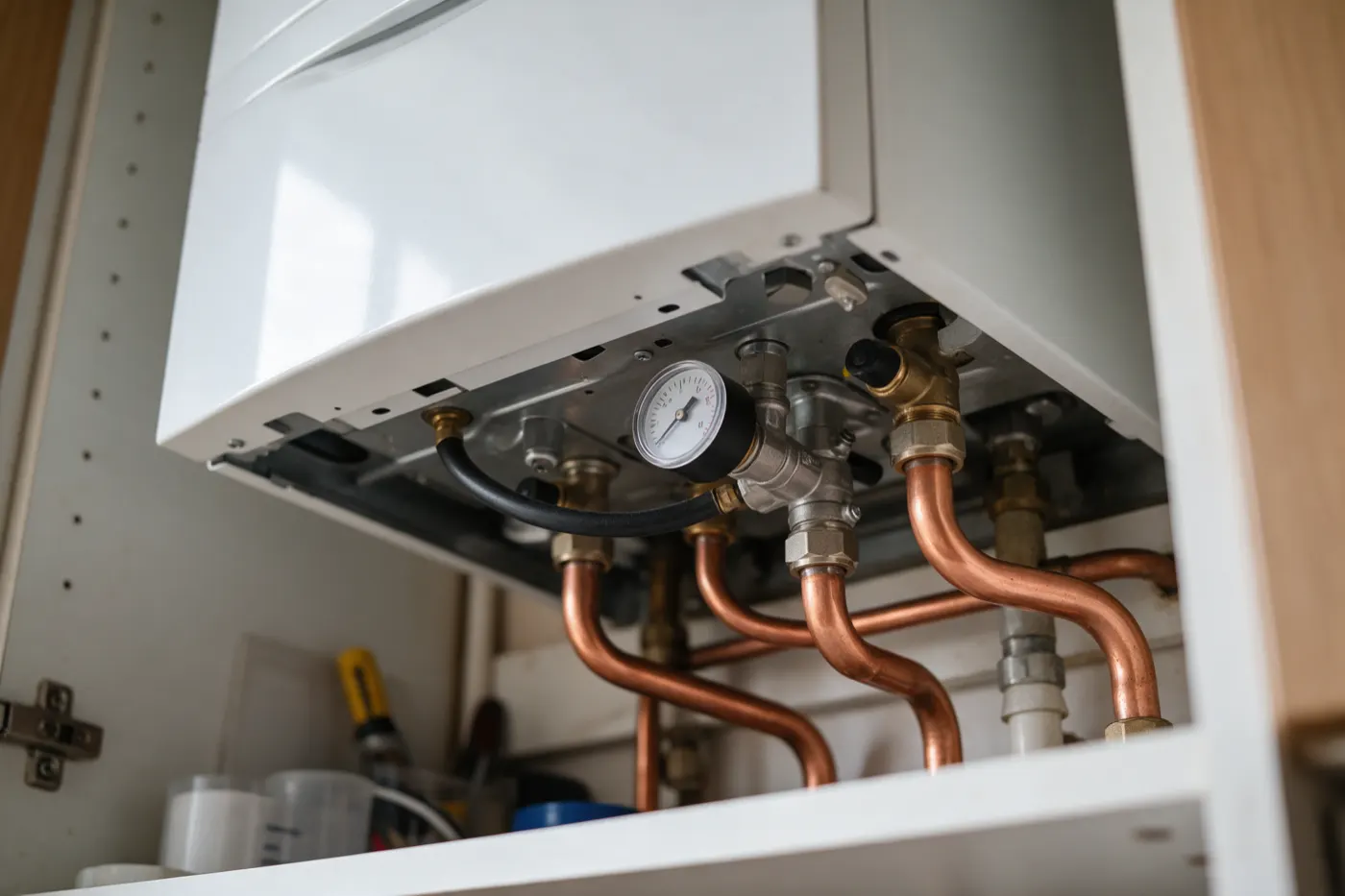
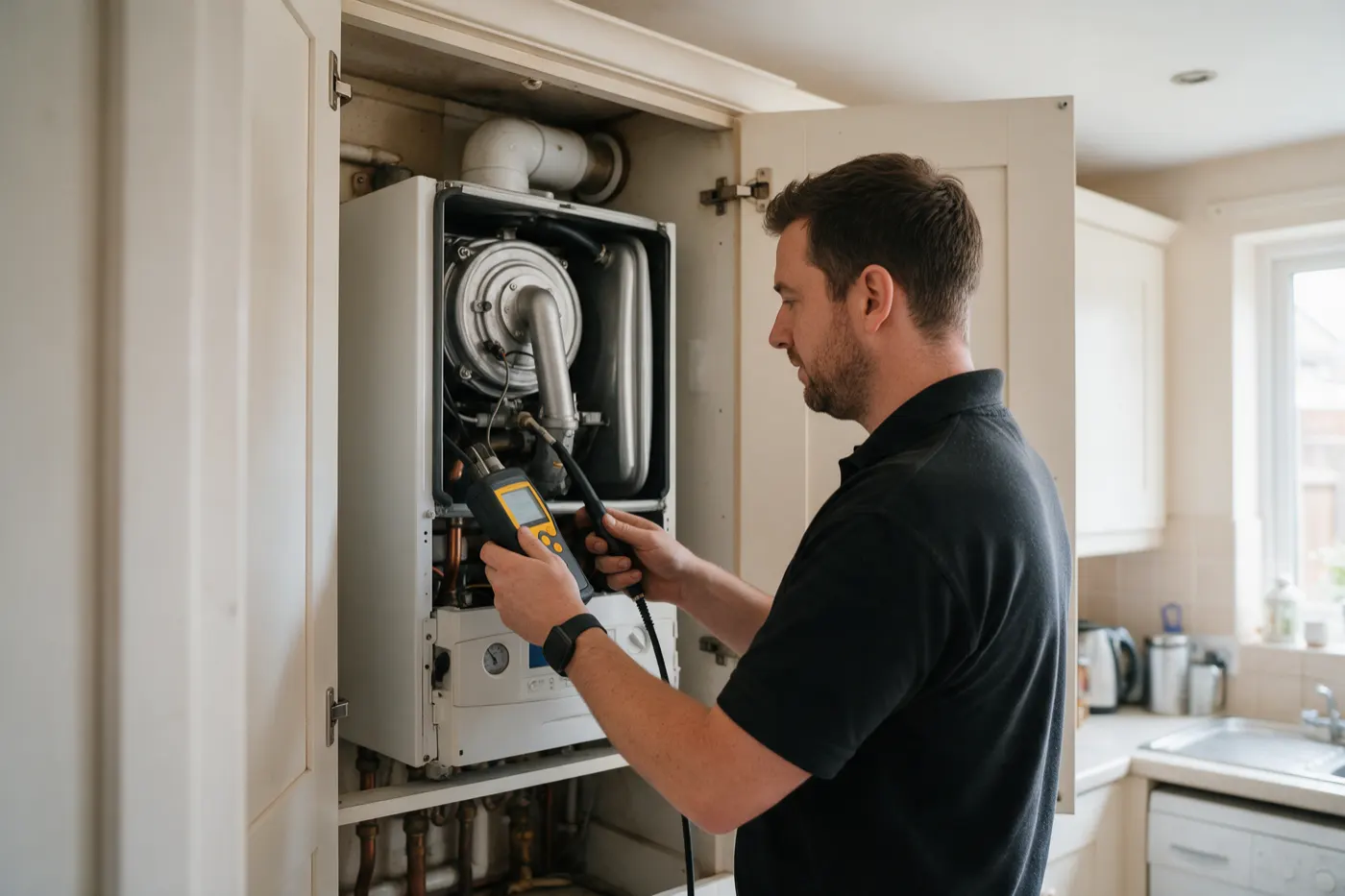
Free, no obligation.
Frequently asked questions
Should I turn my boiler off if it shows a fault code?
Not necessarily. Check the pressure, the gas supply and, in cold weather, the condensate pipe outside, then reset the boiler once as its manual says. If the code comes back, leave it for a Gas Safe registered engineer. If you smell gas, leave the property and call 0800 111 999.
Does F28 mean no gas?
It can. On Vaillant and Glow-worm boilers, F28 means the boiler didn't light, and the first things to check are that your other gas appliances work and a pre-payment meter has credit. In cold weather, a frozen condensate pipe is the other common cause. If those are fine, it needs an engineer.
How do I clear F28 on a Vaillant?
Fix the cause, then reset: check the gas supply and meter credit, thaw the condensate pipe with warm (not boiling) water if it's frozen, then press reset as your manual says. If F28 comes back, Vaillant says it's a job for an engineer.
How do I fix F1 on an Ideal boiler?
F1 is low water pressure. Top it up through the filling loop to 1 to 1.5 bar, following your manual. If it keeps coming back, the system is losing water somewhere and needs looking at.
How we checked this9 sources · 2 officialView sourcesHide
Rules come from the legislation and official guidance, read at source, and are linked where the guide states them. Practical advice comes from makers', trade bodies' and official guidance; where sources disagreed, we've said so. Prices aren't in our guides: they're on the cost pages linked above, each with its own sources. More on our method.
- IndustryBoiler fault codes list, Vaillant. Checked 21 Oct 2026.
- IndustryBoiler fault codes, Glow-worm. Checked 21 Oct 2026.
- IndustryFrozen condensate pipe, Glow-worm. Checked 21 Oct 2026.
- IndustryWhat does my fault code mean?, Ideal Heating. Checked 21 Oct 2026.
- IndustryLogic Combi troubleshooting guide, Ideal Heating. Checked 21 Oct 2026.
- IndustryBoiler error codes, Baxi. Checked 21 Oct 2026.
- IndustryWhat do the error symbols mean on my boiler?, Worcester Bosch. Checked 21 Oct 2026.
- OfficialWhat to do in a gas emergency, Gas Safe Register. Checked 15 Oct 2026.
- OfficialThe Gas Safety (Installation and Use) Regulations 1998, regulation 3, legislation.gov.uk. Checked 15 Oct 2026.