
The Short Answer
Bed bugs are small, flat, brownish insects, about 5mm long as adults, that hide close to where you sleep and bite at night. The signs to look for are bites on skin that's uncovered in bed, often in a line or a group, spots of blood on the sheets and tiny dark spots (their droppings) on the mattress, bed frame or furniture.
Bites alone don't prove it's bed bugs, so look for the bugs or their droppings too. If you find them, the NHS says to contact your council or a pest control service: they're very hard to get rid of yourself. Hot washing and tumble drying your bedding helps in the meantime, but won't clear them on its own.
What bed bugs look like
- Adults: dark yellow, red or brown, around 5mm long (NHS), or about the size of an apple seed, as the BPCA puts it. They're flat and oval, with six legs and no wings.
- Young ones: only about 1mm across, and pale or almost white at first. They darken as they grow, and look redder and fatter after they've fed (British Association of Dermatologists).
- They can't fly or jump. They crawl, at about the speed of an ant.
Other things get mistaken for them. Fleas are often greyer and flattened side to side, and usually bite round the ankles. Ticks are much bigger with eight legs, and mites also have eight legs (British Pest Control Association). If you catch something and aren't sure, keep it in a pot with a tight lid and show a pest controller.
The signs to check for
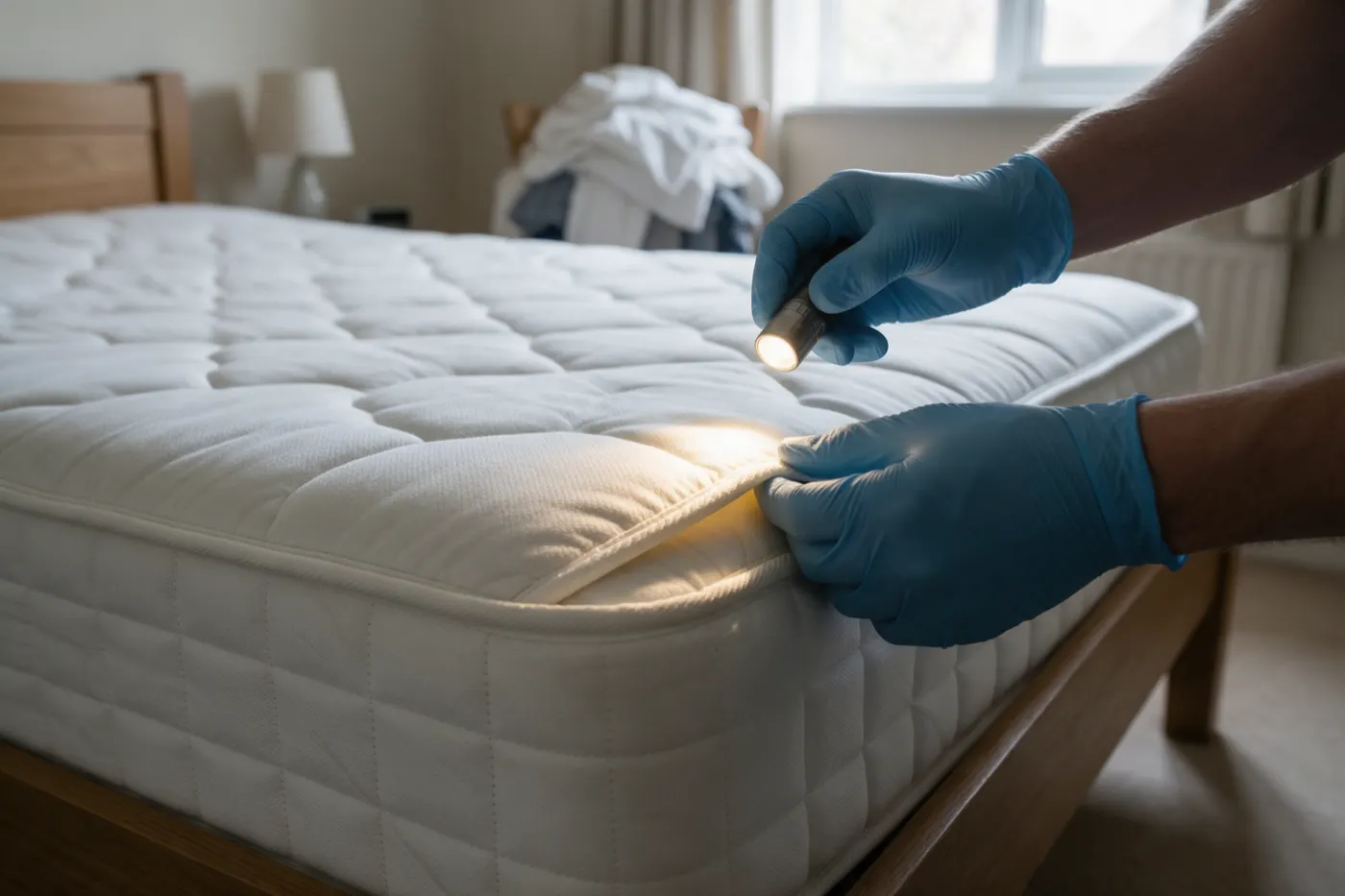
- Bites on skin that's uncovered while you sleep, like the face, neck and arms, often in a line or grouped together.
- Spots of blood on your bedding, from the bites or from a squashed bug.
- Small dark spots on bedding or furniture: their droppings. The BPCA describes them as about 1mm across, like an ink dot, often on the bed frame, upholstery or underside of the mattress.
- Light brown shed skins, tiny pale eggs and empty egg shells, small but visible.
- The bugs themselves, in and around the bed.
Check the seams of the mattress, the joints of the bed frame and headboard, and the gaps in nearby furniture, with a torch. Bites without any of the other signs don't necessarily mean bed bugs: other insects bite too.
Bed bug bites
The NHS describes bed bug bites as raised and itchy. On white skin they usually look red or pink; on black or brown skin they may look brown, red or purple and can be harder to see. Some people react more, with very itchy, painfully swollen bites, and a severe allergic reaction is possible but rare.
Reactions can take up to 10 days to appear, and some people don't react at all, which is one reason bed bugs can go unnoticed. The bites aren't contagious, and bed bugs haven't been shown to spread disease between people (BAD).
Bites usually clear up on their own in a week or so. The NHS suggests:
- a clean, cool, damp cloth on the area for the itching and swelling;
- keeping it clean, and not scratching, so it doesn't get infected;
- asking a pharmacist about a mild steroid cream such as hydrocortisone (children under 10 and pregnant women should ask a doctor first), or antihistamines if the itching stops you sleeping;
- seeing a GP if the bites are still very painful, swollen or itchy after that, or the pain or swelling is spreading.
Where they hide and how they get in
They hide close to where people sleep: in mattress seams, bed frames, sofas, furniture joints, clothing, behind pictures and under loose wallpaper. The BPCA adds skirting boards and even plug sockets.
Having bed bugs isn't a sign of a dirty home. They're found in the cleanest homes and hotels, because all they need is people to feed on. They usually arrive in luggage, bags and clothes, or in secondhand furniture. In flats and shared houses they can also move between homes, so if you live in one, we'd tell your landlord or building manager early.
When you stay away from home, keep your suitcase off the floor and off the bed, and check it before you bring it back in.
What you can do yourself
The NHS is clear that bed bugs are very difficult to get rid of yourself: they're hard to find and may be resistant to some insecticides. Contact your council or a pest control service. In England and Wales, GOV.UK says to contact your council to find out whether it treats bed bugs. While you wait, the NHS suggests you:
- wash bedding and clothing on a hot wash (60C) and tumble dry on a hot setting for at least 30 minutes;
- put things you can't wash in a plastic bag in the freezer for 2 to 3 weeks;
- clean and vacuum regularly, which helps you spot them early;
- clear clutter from around the bed;
- check secondhand furniture carefully before it comes indoors.
The dermatologists' leaflet adds a few things that help alongside a professional treatment:
- Keep sleeping in your bed. Moving to another room doesn't help: they follow you.
- Don't buy a new mattress yet. Until the infestation is dealt with, a new one just gets infested too. A sealed mattress cover traps any bugs inside, but has to stay on for at least a year.
- Vacuum with a HEPA filter and empty it into a tightly tied bin bag.
- Bought interceptor cups under each bed leg catch bugs climbing up. Homemade versions and sticky tape don't work well.
What a professional treatment involves
According to the BPCA, the trade body for pest controllers:
- A thorough survey first. Expect them to check the bed and inside bedside tables and drawers.
- Usually an insecticide that keeps working (a spray or powder on the floor surfaces), sometimes with a growth regulator that stops young ones developing. Heat treatment is the other main method.
- Don't wash or vacuum your carpets for at least 2 weeks afterwards, so the insecticide can kill bugs that hatch later.
Insecticides often don't kill the eggs, so more than one treatment is usually needed, with a check afterwards (BAD). Ask how many visits the price includes. BPCA members are audited to the British and European pest management standard, BS EN 16636. Prices for spray and heat treatments are on our bed bug treatment cost page, and other pests on pest control prices.
If a professional finds no sign of bed bugs but you still feel you're being bitten, the BPCA suggests seeing your GP.
What it costs
Prices, what moves them and who to hire, in our cost guides.
Free, no obligation.
Frequently asked questions
How do I know if I have bed bugs?
Look for bites on skin that's uncovered in bed (often in a line or group), spots of blood on the sheets, tiny dark spots of droppings on the mattress or bed frame, pale shed skins, and the bugs themselves in mattress seams and furniture joints. Bites on their own don't prove it.
Can bed bugs fly or jump?
No. They have no wings and can't jump; they crawl, which is why they travel in luggage, clothes and furniture.
Do bed bugs mean my house is dirty?
No. They're found in the cleanest homes and hotels, because all they need is people to feed on. Regular cleaning and vacuuming does help you spot them early.
What should I do if I see a bed bug?
Catch it in a pot with a tight lid if you can, and contact your council or a pest control service. Meanwhile wash bedding on a hot wash (60C) and tumble dry hot for at least 30 minutes, and keep sleeping in your own bed.
How long do bed bug bites last?
The NHS says they usually clear up on their own in a week or so. See a pharmacist if they're very itchy, and a GP if they're still painful or the swelling is spreading.
Can I get rid of bed bugs myself?
The NHS says it's very difficult: they're hard to find and may be resistant to some insecticides. Washing, freezing and vacuuming help, but are unlikely to clear them completely. A professional treatment is usually needed, often more than one visit.
How we checked this4 sources · 2 officialView sourcesHide
Rules come from the legislation and official guidance, read at source, and are linked where the guide states them. Practical advice comes from makers', trade bodies' and official guidance; where sources disagreed, we've said so. Prices aren't in our guides: they're on the cost pages linked above, each with its own sources. More on our method.
- OfficialBedbugs (reviewed 1 May 2026), NHS. Checked 21 Oct 2026.
- IndustryBedbugs and managing bedbug infestations (patient leaflet, November 2022), British Association of Dermatologists. Checked 21 Oct 2026.
- IndustryPest advice for controlling bed bugs, British Pest Control Association. Checked 21 Oct 2026.
- OfficialReport a pest problem, GOV.UK. Checked 21 Oct 2026.