
The Short Answer
Aerating (or spiking) means making holes in the lawn so air and water can get down to the roots. It helps a lawn that's compacted, puddles after rain or struggles in dry spells. The RHS says the best time is September and October, while the ground is mild and damp.
On a small lawn, a garden fork does the job: push it in as deep as it goes, every 10 to 15cm. For a big lawn, or heavy clay, hire a powered or hollow-tine aerator. Most lawns only need it every 2 to 3 years.
What aerating does
Soil gets packed down over time, especially where people walk and play. Aerating opens it up again, so air and water can move among the grass roots. The RHS says that helps a lawn cope with both drought and waterlogging. It's a different job from scarifying, which rakes out the dead grass and moss on the surface: a lawn can need one, both or neither.
Signs your lawn needs aerating
According to the RHS, a compacted lawn usually shows it:
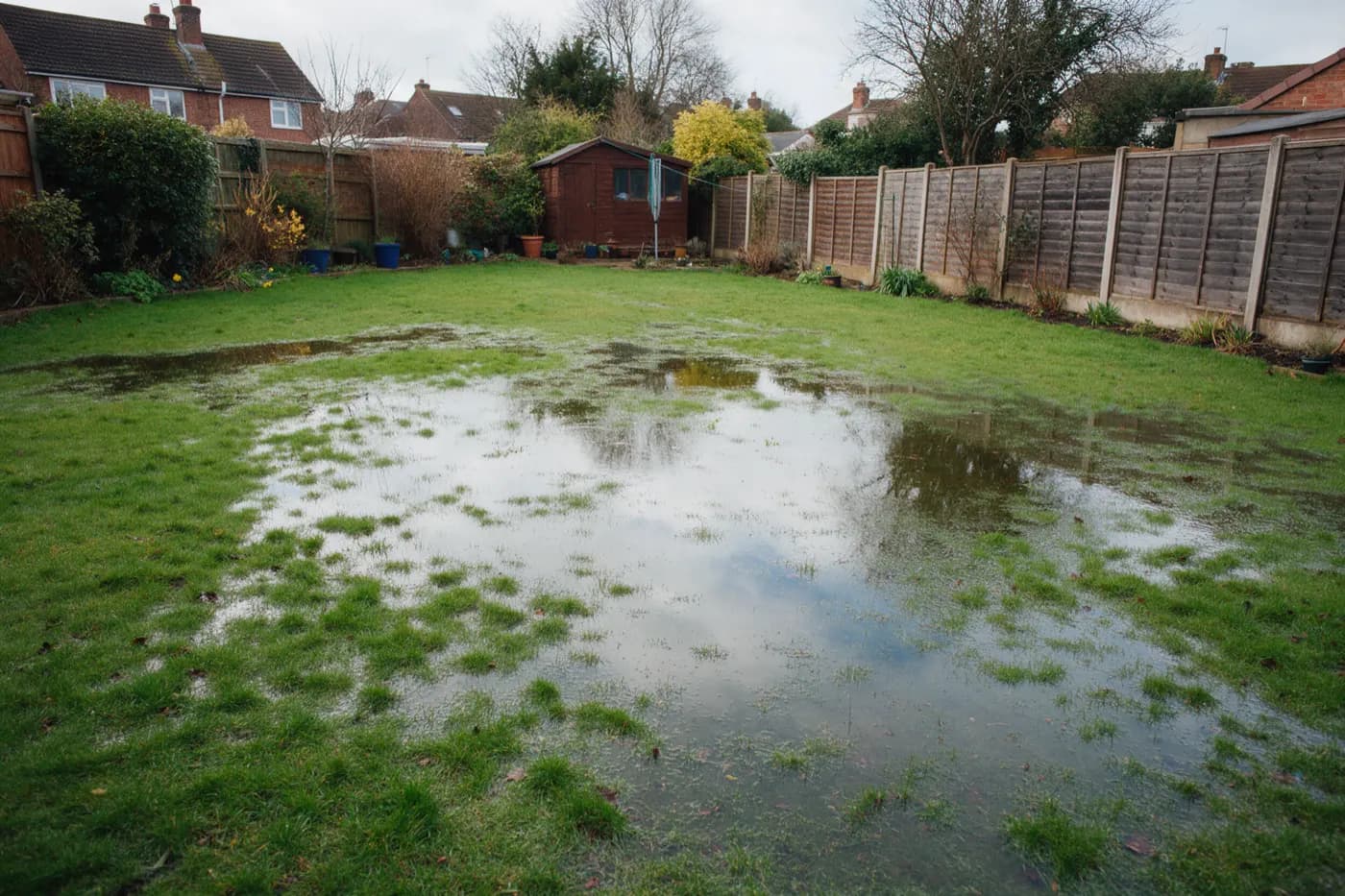
- it's squelchy underfoot, or puddles every time it rains;
- there's a sticky, muddy layer just below the surface;
- the finer grasses die out, leaving bare patches;
- moss, algae or lichens take over.
The usual causes are heavy machinery (especially after building work), regular walking or play, heavy clay soil, and a lawn that wasn't prepared properly when it was made.
When to aerate
The RHS puts aerating among the autumn lawn jobs, best done in September and October: early autumn is mild and damp, and the grass recovers before winter. For a lawn that waterlogs, it says late autumn and winter are the times to act.
Don't aerate while there's water standing on the lawn. Wait for it to drain (or sweep it off a small area first), and keep off a waterlogged lawn in the meantime, because walking on it makes the compaction worse.
How to aerate a lawn
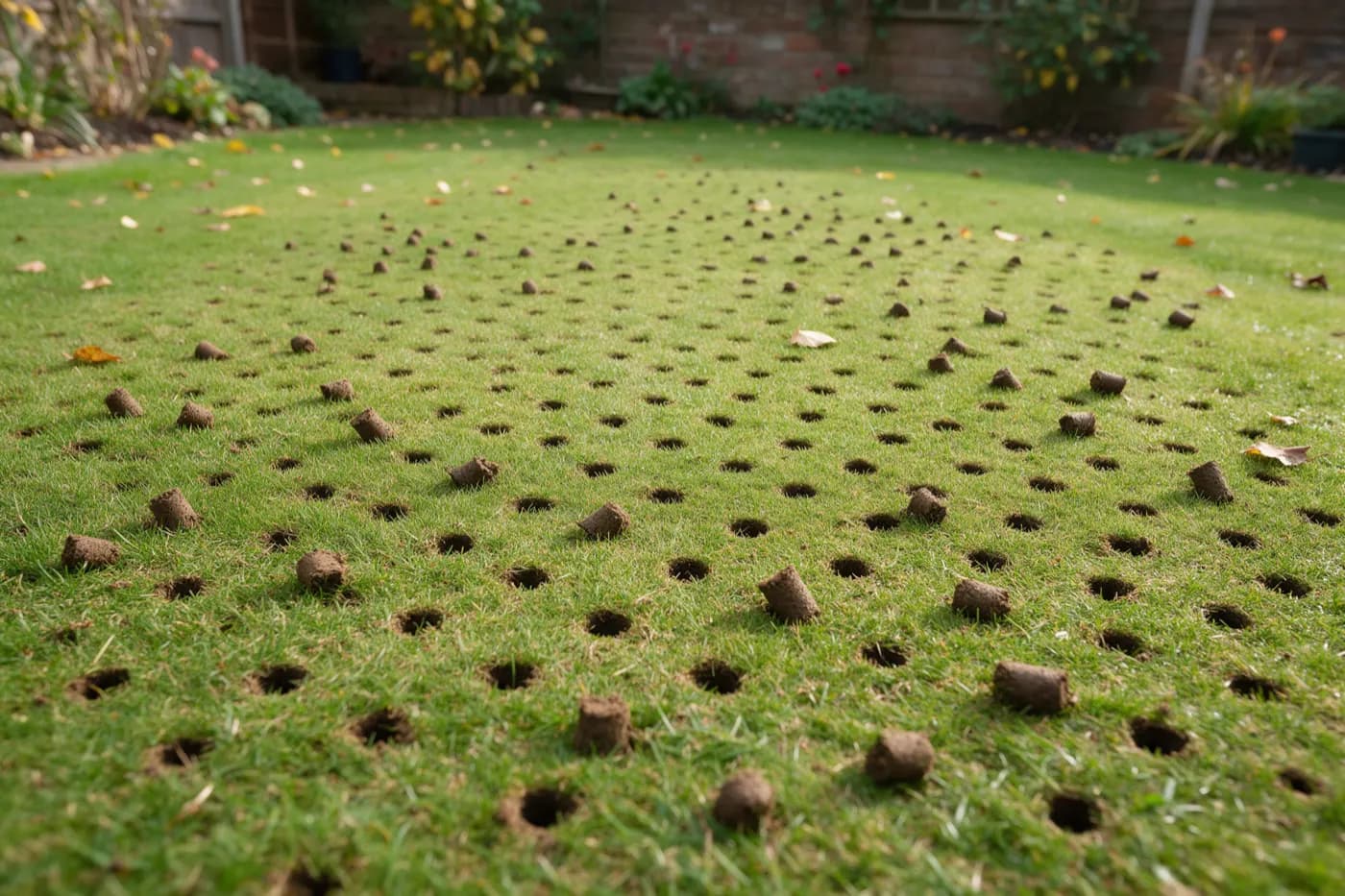
With a garden fork (fine for a small lawn, and free):
- Push the fork straight down as deep as it will go, ideally the full length of the tines.
- Rock it back and forth to open the holes up, then pull it out.
- Move along and repeat, leaving 10 to 15cm between each set of holes.
It's hard work, so on a bigger lawn the RHS suggests doing the worn and compacted areas, or a different part each autumn. The holes should ideally be 10 to 15cm deep.
With a hollow-tine aerator:
- Hollow tines pull out little plugs of soil, leaving wider holes.
- The RHS says that's better on clay or waterlogged soil, where it does more to relieve compaction.
- Sweep the plugs up afterwards.
With a powered aerator: for a large lawn, the RHS suggests hiring or buying one. If you'd rather not do it yourself, it's the kind of job a gardener can do; see what a gardener costs.
After aerating
The RHS's next step is a top dressing: a free-draining mix (or simply horticultural sand) brushed or raked into the holes to fill them. On heavy soil it improves the soil's texture and drainage, and it's the usual step after hollow-tine aerating. How to mix and spread it is a job of its own.
How often to aerate
- Most lawns: every 2 to 3 years (RHS).
- Hollow-tine aerating on clay or waterlogged soil: every 3 to 4 years.
- A lawn prone to waterlogging: every few years in autumn, so you aren't doing emergency work after a wet winter.
What it costs
Prices, what moves them and who to hire, in our cost guides.


Free, no obligation.
Frequently asked questions
When should you aerate a lawn?
The RHS says September and October is best, while the ground is mild and damp. Wait until any standing water has drained first.
Does aerating a lawn actually work?
On a compacted lawn, yes: it lets air and water get down to the roots, which the RHS says helps the lawn cope with drought and waterlogging.
Is it better to aerate or scarify?
They do different jobs. Aerating relieves compaction under the surface; scarifying rakes out dead grass and moss on top. If water sits on the lawn, aerate; if you can't see the soil between the blades of grass, it needs scarifying.
Can I aerate my lawn with a fork?
Yes. Push it in as deep as it goes, rock it to open the holes, and repeat every 10 to 15cm. For a big lawn, a hired powered aerator saves a lot of effort.
How often should you aerate a lawn?
Every 2 to 3 years for most lawns, and every 3 to 4 years for hollow-tine aerating on clay or waterlogged soil, according to the RHS.
How we checked this2 sourcesView sourcesHide
Rules come from the legislation and official guidance, read at source, and are linked where the guide states them. Practical advice comes from makers', trade bodies' and official guidance; where sources disagreed, we've said so. Prices aren't in our guides: they're on the cost pages linked above, each with its own sources. More on our method.
- IndustryLawn care in autumn, Royal Horticultural Society. Checked 21 Oct 2026.
- IndustryWaterlogged lawns: solutions, Royal Horticultural Society. Checked 21 Oct 2026.