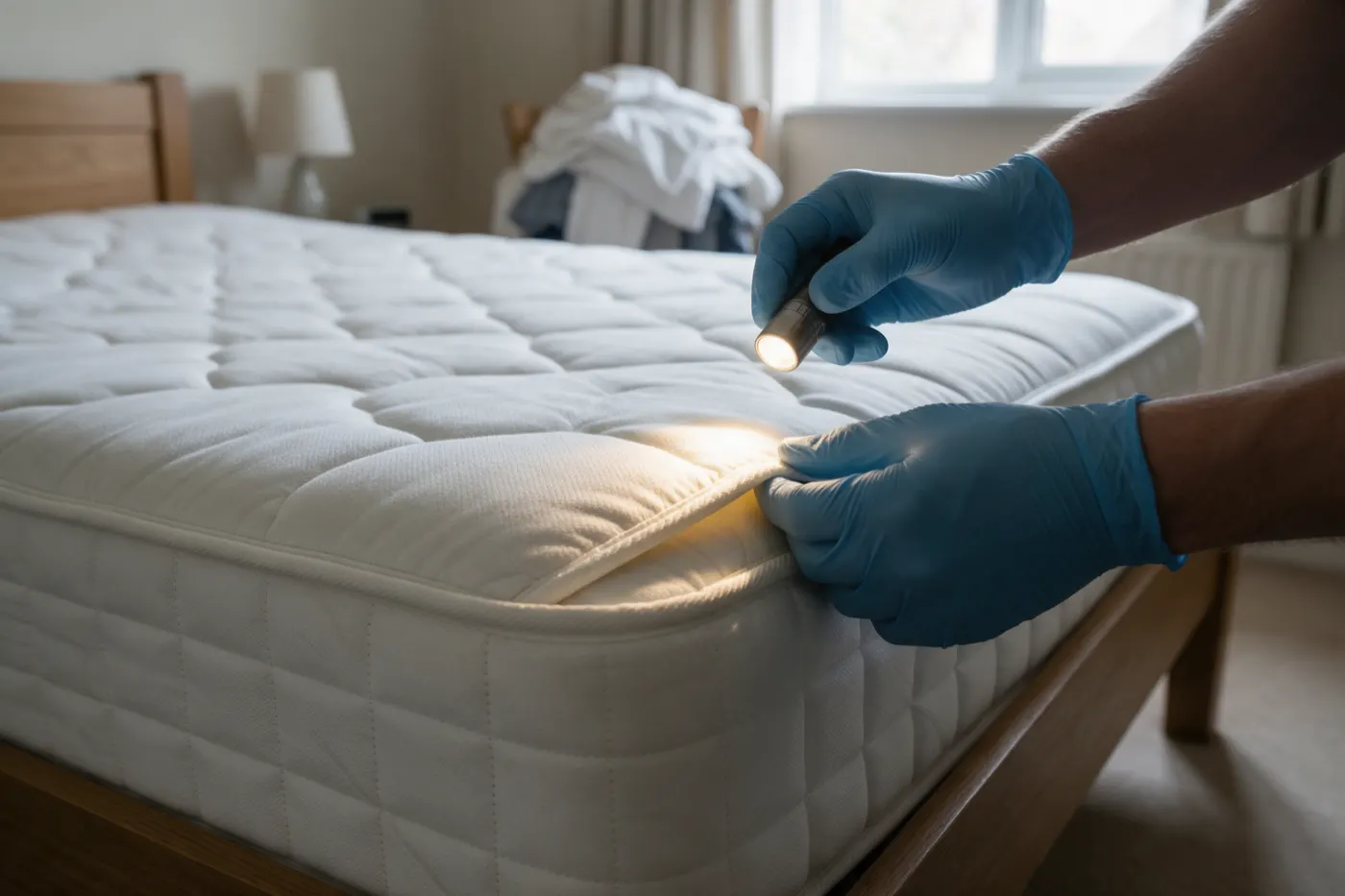
The Short Answer
Black mould grows where moisture builds up, usually on cold walls, in corners, behind furniture and in kitchens and bathrooms. Most of the time the cause is condensation, the most common form of damp; less often it's water getting in from a leak, outside or below.
- Clean it off with a mould and mildew cleaner, wearing gloves and a mask, wiping it while it's wet.
- Find the moisture and deal with it: ventilation, heating, or the leak or damp behind it.
- Only then redecorate, with an anti-mould paint if you like. Paint on its own doesn't kill mould.
Mould affects health, mainly the airways and lungs, so deal with it promptly. Large areas are a job for a professional.
What causes it
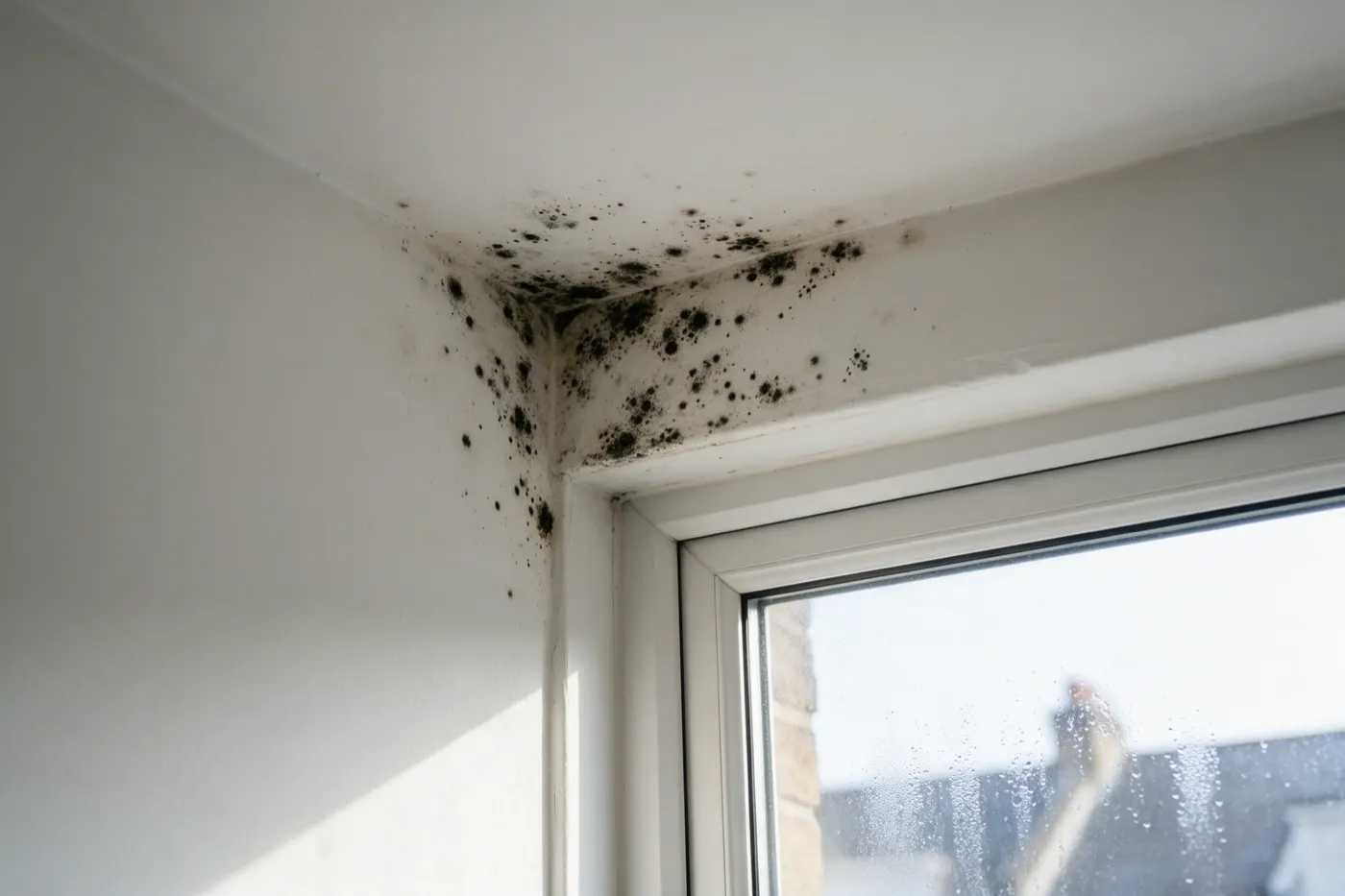
Mould is a fungus that grows in moist places. The government's damp and mould guidance sorts damp into four kinds:
- Condensation: moisture from inside the home cools and settles on colder surfaces, such as window frames, corners and low points on walls behind sofas or wardrobes. It's the most common form of damp.
- Penetrating damp: water getting in from outside through defects in walls, roofs, windows or floors.
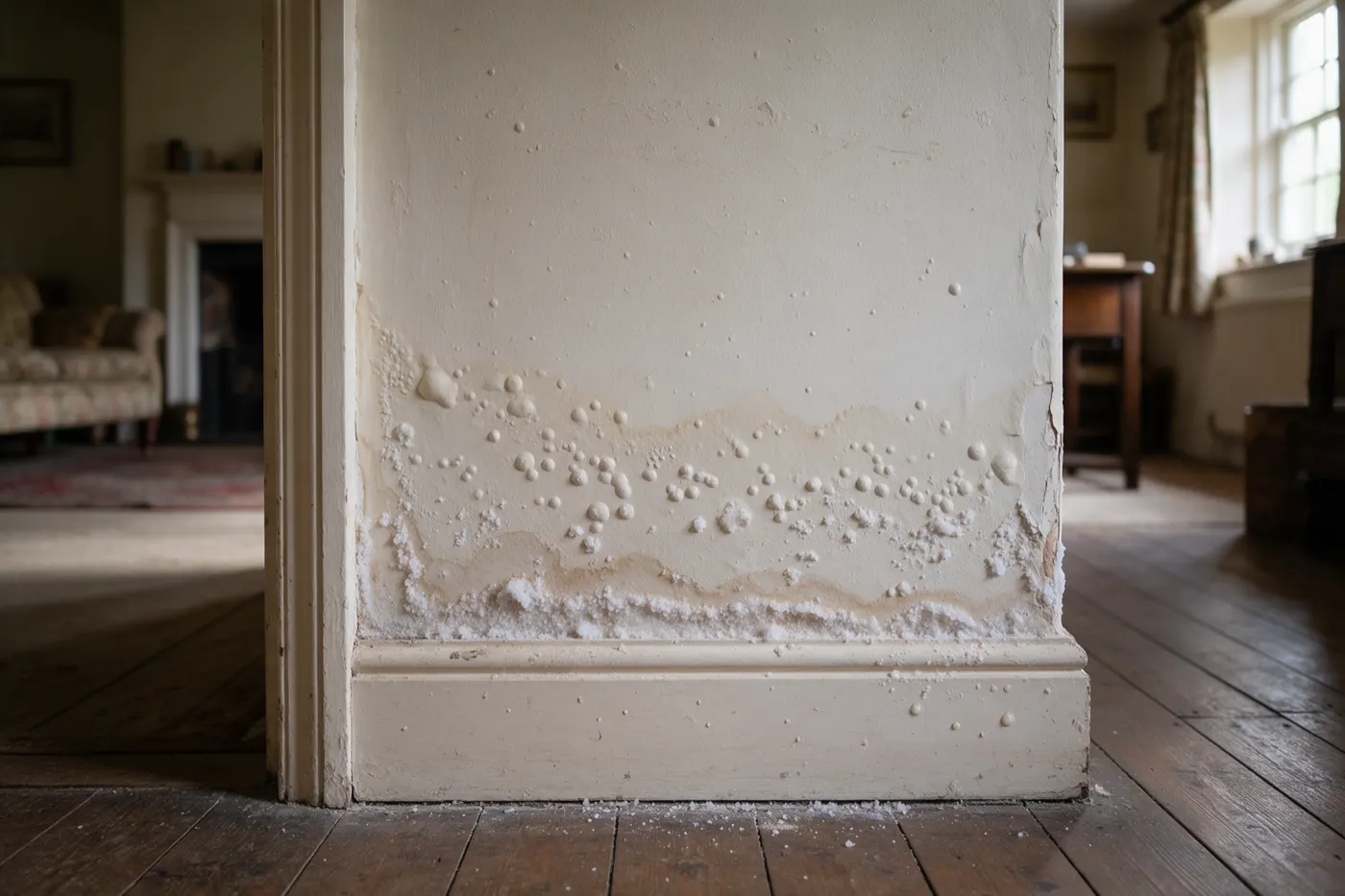
- Rising damp: moisture from the ground rising through walls and floors, usually in older homes and often from a faulty damp proof course. The guidance says it's often misdiagnosed.
- Traumatic damp: leaks from pipes, overflowing baths or sinks, burst pipes or flooding.
The moisture behind condensation comes from everyday life: a typical household produces up to 100 litres a week from cooking, kettles, showers and even breathing, and if ventilation doesn't remove it, it builds up on surfaces. That's why mould turns up in the colder parts of a home, such as exposed corners or a gap in the insulation, and where air can't move, such as behind furniture.
Which have you got? A quick check:
- Black spots in corners, on ceilings and round windows: condensation.
- Irregular damp patches that get worse in heavy rain: penetrating damp.
- A tidemark along the bottom of a wall: a sign of rising damp.
- A patch near pipes, a bath or a sink: look for a leak.
If there's no leak and no sign of rising damp, it's almost certainly condensation, which the steps further down are about. More than one cause can be at work at once.
Is black mould dangerous?
It can be. The government guidance, written with the UK Health Security Agency, says damp and mould mainly affect the airways and lungs, but can also affect the eyes and skin. The effects it lists include coughing, wheezing and shortness of breath, a higher risk of airway infections, and asthma and allergies starting or getting worse. In the most severe cases the respiratory effects can kill: two-year-old Awaab Ishak died in 2020 from a severe respiratory condition caused by prolonged exposure to mould at home.
The guidance says everyone is affected, but some people are at greater risk, including:
- people with asthma, allergies, COPD or other lung or heart conditions;
- people with a weakened immune system, for example during chemotherapy or after a transplant;
- children, older people, and pregnant women;
- people with a mental health condition, or who are housebound or bedbound.
If you're worried about symptoms, talk to a healthcare professional, as the guidance advises.
How to clean it off safely
- Take a photo first and, if you can, draw round the patch. It helps track down where the moisture is coming from.
- Protect yourself: gloves, a mask and goggles, and anything else the product label asks for. Never touch mould with bare hands.
- Ventilate the room and close the doors to the rest of the house, so the spores don't spread. Open the window or run the extractor fan.
- Use a mould and mildew cleaner or another product made to kill mould, following its instructions, with a disposable cloth you throw away afterwards.
- Wipe it while it's wet, not dry, so you don't send spores into the air.
- Let the surface dry completely, then wash or bag up the cloths and anything else that touched it.
Soft materials such as carpets, soft furnishings and ceiling tiles may have to be thrown away once they're mouldy, because it can be hard or impossible to get it all out.
Cleaning is fine for small patches. The government guidance says larger areas should only be tackled by qualified professionals, and that disturbing hidden mould, such as by pulling up carpet or stripping wallpaper, can release a lot of spores. A musty smell with no visible mould can mean it's growing behind a surface.
Can you paint over black mould?
Not straight over it. Standard paint won't kill mould spores, so they keep growing underneath, and even anti-mould paint won't kill existing mould: it's made to stop new mould on a clean surface. The order of work:
- Clean the mould off with a mould remover.
- Apply a fungicidal mould treatment and let it dry.
- Fill and sand any damage, and use a stain block if the mould has left marks.
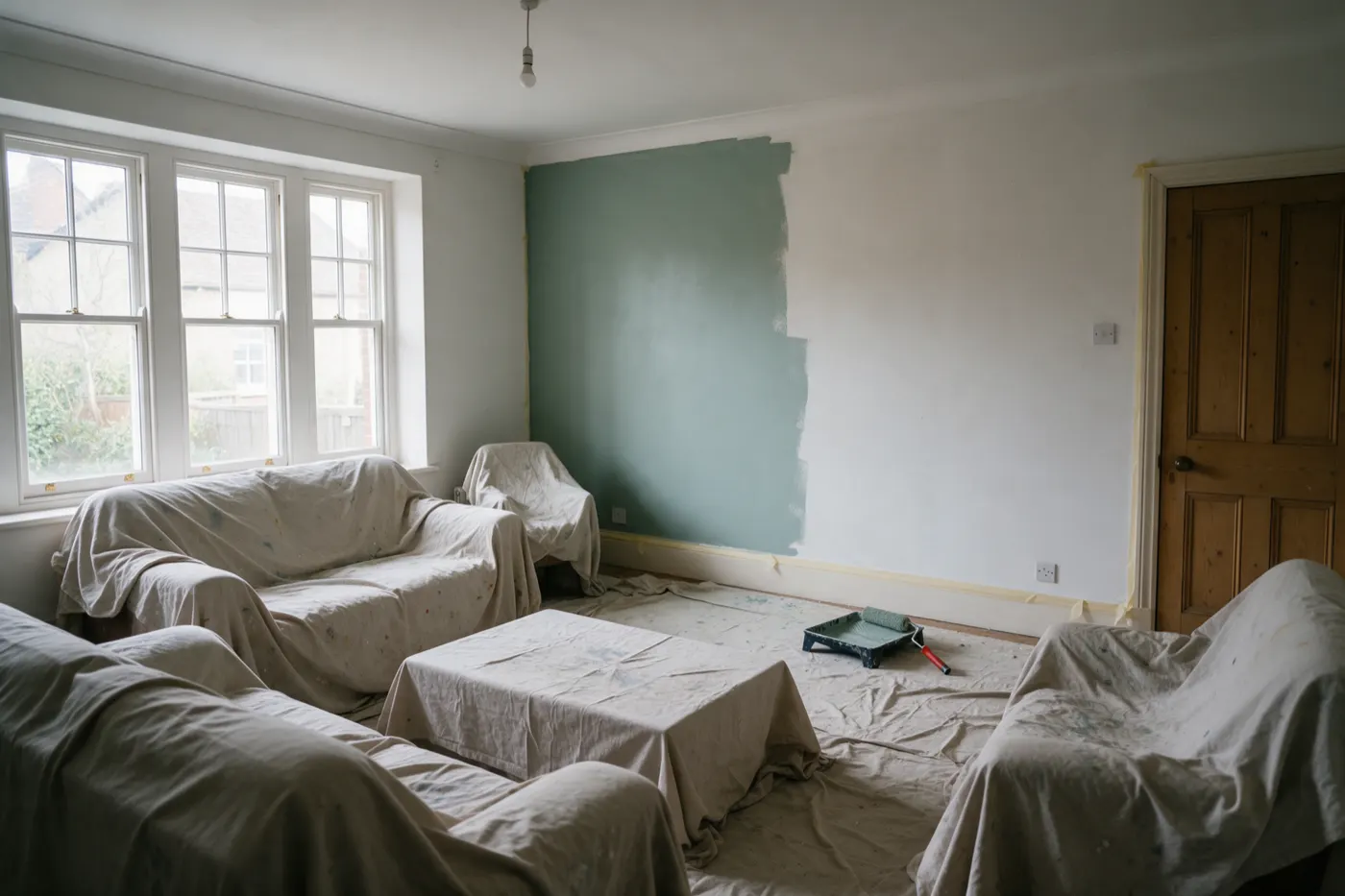
- Paint with a mould-resistant paint, then your final colour if needed.
The wall has to be completely dry first: that can take a few days after surface mould, or several weeks after damp, typically 4 to 6 weeks after damp proofing. Painting too soon traps the moisture and the paint blisters or peels.
And does anti-mould paint work? It can help, but only as part of the full treatment, and it won't fix an active mould problem on its own. If the moisture is still there, the mould comes back, often within weeks. If you're paying someone to redecorate, see painter and decorator costs; for blown or crumbling plaster, plastering costs.
Black mould in the bathroom
Bathrooms and kitchens tend to have more moisture, so they're prone to mould without good ventilation. The extractor fan needs to be working and powerful enough to clear the steam from showers and baths; a fan with a humidity sensor, or one wired to the light with an "overrun" that keeps running after the light goes off, does that without anyone remembering to switch it on.
Mould on the silicone round the bath or shower is a sealant problem as much as a cleaning one. Once sealant starts to lift or go mouldy it's time to replace it, because otherwise moisture seeps into the walls. Clean all the mould off before you reseal.
Stopping it coming back
Cleaning mould off doesn't stop it coming back. The fix is less moisture, more ventilation and warmer walls.
- Use the extractor fans in the kitchen and bathroom, and close the doors of those rooms while you cook or shower.
- Cover pans when cooking and dry washing outside or in a tumble dryer where you can.
- Open windows regularly and keep trickle vents open.
- Leave a gap between furniture and outside walls.
- Wipe condensation off windows and sills each morning.
Homes that are poorly insulated or heated are more prone to condensation on the inside of outside walls, and insulating has to go hand in hand with enough ventilation.
If you've done all that and it keeps coming back, or it's a damp patch rather than spots of mould, look for the water getting in. Things to check include damaged or blocked gutters and downpipes, cracked render, missing or broken roofing, broken window seals and a bridged damp proof course outside; peeling wallpaper, stained or crumbling plaster and broken extractor fans inside. A damp surveyor can find the cause: see damp proofing costs, which also explains why a new damp proof course often isn't the answer.
If you rent
Tell your landlord in writing and keep a record. For private tenants in England, Shelter says your landlord must try to find out what's causing the problem, using a damp surveyor if they can't, and you don't have to pay for that. They must fix the causes of damp such as leaking pipes, poor ventilation, broken heating, leaking roofs and faulty guttering, and should check at least 6 weeks after the repair that the mould hasn't come back.
Shelter also says a landlord shouldn't tell you to paint over mould that keeps coming back, blame condensation without checking, or tell you to stop cooking or showering. If they don't act and it's serious, you can ask your council for an environmental health inspection; the council can order the landlord to fix it.
Social housing in England has its own rule. Awaab's Law has applied to social landlords since 27 October 2025: they have to deal with damp and mould that poses a significant risk of harm within fixed timeframes.
What it costs
Prices, what moves them and who to hire, in our cost guides.
Free, no obligation.
Frequently asked questions
What causes black mould on walls?
Moisture that can't escape. Usually it's condensation, from cooking, showers, drying washing and breathing, settling on cold walls. It can also be penetrating damp from outside, rising damp from the ground, or a leak.
Is black mould on walls dangerous?
It can be. Government guidance says damp and mould mainly affect the airways and lungs, causing coughs, wheezing and breathlessness and making asthma and allergies worse. Children, older people, pregnant women and anyone with a lung condition or weakened immune system are most at risk.
What's the best way to get rid of black mould on walls?
Wear gloves, a mask and goggles, ventilate the room and close the door to the rest of the house, then wipe the mould off with a mould and mildew cleaner and a disposable cloth while it's wet. Then deal with the moisture causing it, or it will come back.
Can I use bleach on black mould?
Government guidance says to use mould and mildew products in preference to bleach. Never mix bleach with anything else, such as vinegar: the UK Health Security Agency warns it can release gases.
Can I paint over black mould?
Not straight over it. Clean it off, treat it with a fungicidal mould treatment, let the wall dry completely, then use a mould-resistant paint. Standard paint won't kill the spores, and anti-mould paint won't kill existing mould.
Does having the heating on stop mould?
It helps: homes that are poorly heated and insulated are more prone to condensation on outside walls. But heat alone won't fix it without ventilation and less moisture in the air.
Is my landlord responsible for black mould?
Usually, if it's caused by the building, such as leaks, poor ventilation or broken heating. Shelter says they must find the cause and fix it, and shouldn't simply blame condensation or tell you to paint over it. Social landlords in England also have to meet Awaab's Law timeframes.
How we checked this7 sources · 3 officialView sourcesHide
Rules come from the legislation and official guidance, read at source, and are linked where the guide states them. Practical advice comes from makers', trade bodies' and official guidance; where sources disagreed, we've said so. Prices aren't in our guides: they're on the cost pages linked above, each with its own sources. More on our method.
- OfficialUnderstanding and addressing the health risks of damp and mould in the home (updated 1 April 2026), GOV.UK (MHCLG, DHSC and UKHSA). Checked 24 Oct 2026.
- IndustryHow to get rid of damp, Energy Saving Trust. Checked 23 Oct 2026.
- IndustryHow to paint over mould and damp, Dulux Decorator Centre. Checked 24 Oct 2026.
- IndustryHow to seal a bath, Unibond. Checked 15 Oct 2026.
- OfficialSodium hypochlorite: general information, UK Health Security Agency. Checked 24 Oct 2026.
- IndustryDamp and mould in private rented homes (updated 1 May 2026), Shelter England. Checked 24 Oct 2026.
- OfficialAwaab's Law: guidance for social landlords, timeframes for repairs (updated 16 July 2026), GOV.UK (MHCLG). Checked 24 Oct 2026.