The Short Answer
A mist coat is a first coat of matt emulsion thinned with water, painted onto new plaster before your normal coats. Bare plaster is very porous, and ordinary paint put straight onto it doesn't grip properly, so it can crack, flake or peel. A thin coat soaks in and seals the surface, and the paint on top then sticks.
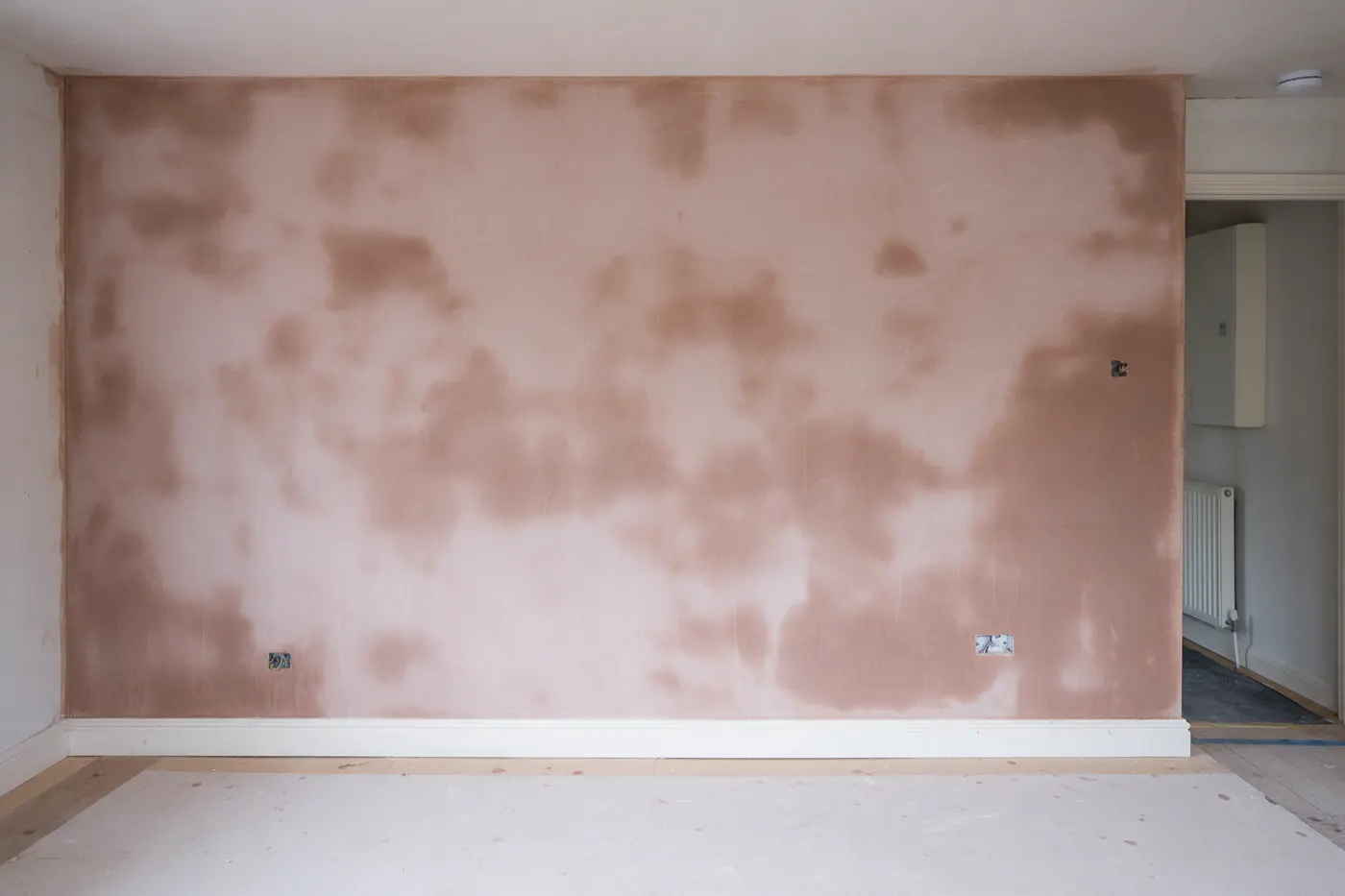
- Wait until the plaster is dry: an even pale pink with no dark patches.
- Thin a plain matt emulsion. Use the ratio on the tin if it gives one; if not, we'd start at about 3 parts paint to 1 part water.
- Brush the edges, roll the rest, leave it 24 hours, then paint as normal.
Don't seal new plaster with PVA before painting. It makes the paint more likely to peel, not less.
Do you need one?
- New plaster or a fresh skim coat: yes. This is exactly what a mist coat is for.
- A patch of new plaster on a painted wall: yes, on the patch. Seal the bare plaster before it gets the same paint as the rest of the wall.
- Walls that are already painted: no. The old paint has already sealed the plaster.
- If you're using a plaster sealer instead: no. A specialist sealer or primer made for new plaster does the same job.
When the plaster is ready
Painting too soon is the classic mistake. Paint on damp plaster won't bond properly, and it can crack, peel or even let mould grow. Go by the plaster rather than the calendar:
- The colour: an even pale pink all over. Dark brown or patchy areas mean it's still wet.
- The feel: dry plaster feels cold, solid and slightly chalky, not damp.
- The time: plasterers usually allow 3 days to a week, but complete drying can take up to 4 weeks, and lime plaster up to a month. It's slower from October to March.
- Speeding it up: keep the room ventilated and evenly warm, and run a dehumidifier if you have one.
For what a plasterer charges and how long the job takes, see plastering costs.
A typical timeline for one room
- The plasterer finishes. Leave the walls alone and keep the room aired.
- A few days to a week or more later, the walls are an even pale pink. Fill and lightly sand any marks.
- Mist coat day. One coat, edges then roller.
- 24 hours later, the first topcoat.
- Once that's dry, the second topcoat.
If you're booking a decorator, we'd leave at least a week after the plastering, longer for a thick coat or in winter, and check they'll mist coat first.
Which paint to use
A plain, cheap matt emulsion, usually white. Check the tin says it can be thinned with water. If your topcoat is a dark colour, you can thin that instead, so the first coat starts building the colour. Save any expensive or specialist paint for the topcoats.
How much water: the ratio
This is where advice gets confusing, because the well-known sources don't agree. Here's what four of them say:
| Source | Paint to water |
|---|---|
| Dulux | 10 parts paint to 1 part water |
| Crown | 6 parts paint to 4 parts water |
| Screwfix | 3 parts paint to 1 part water |
| Toolstation | 1 to 1 (half paint, half water) |
What we'd do: if your paint's tin gives a ratio for new plaster, use it, because it's for that paint. If not, start at about 3 parts paint to 1 part water, the middle of the range. What matters is that it's thin enough to soak in, which looks like the plaster drinking it up quickly and drying patchy. Exact measuring matters less than getting that.
How to apply a mist coat
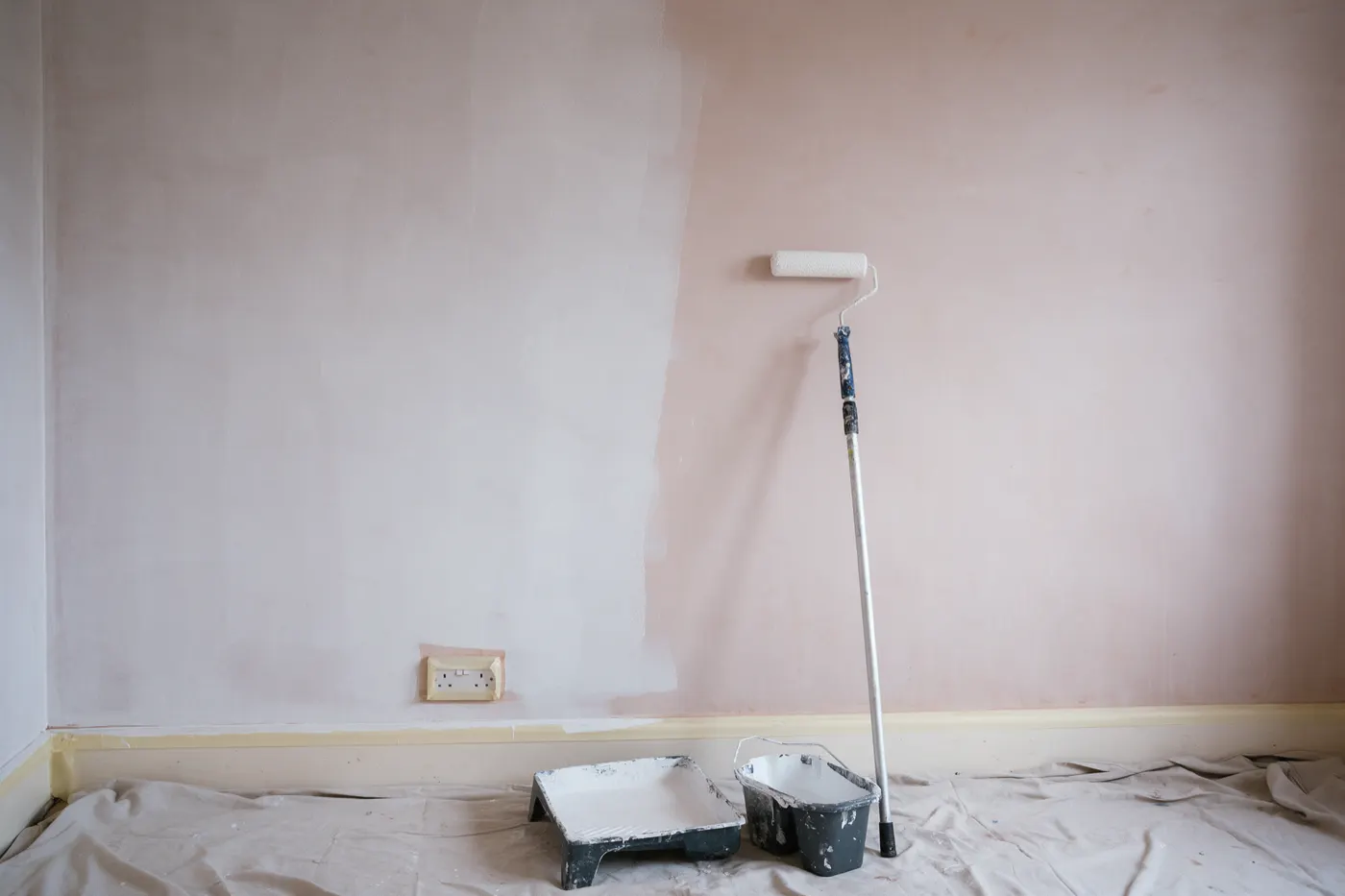
- Prepare the wall. Fill any trowel marks or dents, then sand lightly with fine paper (about 180 grit), just enough to key the surface. Vacuum or wipe off the dust.
- Protect the room. A mist coat is runny, so put dust sheets down and cover the furniture.
- Mix it well in a clean bucket or scuttle. A paddle mixer on a drill makes it quick.
- Brush the edges first: round the ceiling, corners, coving and sockets.
- Roll the main areas with plenty of paint on the roller, in one pass. Don't keep going back over it, and roll out any drips before they dry.
- Leave it 24 hours before the topcoat.
Don't worry if it soaks in fast or looks patchy when dry: that's the coat doing its job. At a properly thinned mix, one mist coat is usually enough.
The mistakes that make paint peel
- Painting before the plaster is dry. The classic one, and it shows up later as cracking and peeling.
- Skipping the mist coat and putting full-strength paint on bare plaster.
- Sealing with PVA (see below).
- Thick coats. Thick patches dry unevenly and can crack, on the mist coat or the topcoats.
- Skipping the filling and sanding. Trowel marks and dust show through the paint.
Why not PVA?
People often ask about sealing new plaster with watered-down PVA glue, but Screwfix is blunt: never use it before painting. Paint needs to sink into the plaster to bond, and PVA leaves it stuck to a layer of glue instead. Water-based emulsion can soften the PVA, so the paint bubbles or peels, and PVA seals in moisture the new plaster still needs to lose.
If you're paying someone
A mist coat is an extra coat and an extra day, so check a decorator's quote includes it, and that they'll wait until the plaster is properly dry rather than painting the day after the plasterer leaves. See what a decorator charges.
What it costs
Prices, what moves them and who to hire, in our cost guides.
Free, no obligation.
Frequently asked questions
What is a mist coat?
A first coat of matt emulsion thinned with water, painted onto new plaster. It soaks in and seals the plaster, so the normal coats of paint stick instead of peeling.
What is the ratio for a mist coat?
Use your paint's tin if it gives one. If not, about 3 parts paint to 1 part water is a good start. Published advice ranges from 10 parts paint to 1 part water (Dulux) to half and half (Toolstation).
How long after plastering can I paint?
When the plaster is an even pale pink with no dark patches. Plasterers usually allow 3 days to a week, but full drying can take up to 4 weeks, and longer in winter.
How long after a mist coat can I paint?
Leave it 24 hours before the first topcoat.
Do I need a mist coat on a painted wall?
No. A mist coat is for bare new plaster. If only a patch has been replastered, mist coat the patch.
Should I seal new plaster with PVA before painting?
No. The paint ends up stuck to the glue rather than the wall, emulsion can soften the PVA so the paint bubbles or peels, and it seals in moisture.
How many mist coats do I need?
Usually one, at a properly thinned mix. It's normal for it to look patchy when it dries.
How we checked this6 sourcesView sourcesHide
Rules come from the legislation and official guidance, read at source, and are linked where the guide states them. Practical advice comes from makers', trade bodies' and official guidance; where sources disagreed, we've said so. Prices aren't in our guides: they're on the cost pages linked above, each with its own sources. More on our method.
- IndustryDr Dulux: How to paint new plaster, Dulux. Checked 26 Oct 2026.
- IndustryHow to paint new plaster (13 February 2025), Crown Paints. Checked 26 Oct 2026.
- IndustryHow long after plastering can you paint?, Screwfix. Checked 26 Oct 2026.
- IndustrySealing plaster before painting, Screwfix. Checked 26 Oct 2026.
- IndustryHow to apply a mist coat, Toolstation. Checked 26 Oct 2026.
- IndustryPainting new plaster, Zinsser UK. Checked 26 Oct 2026.