The Short Answer
To stop noise coming through a wall you need mass (heavy, dense layers), separation (a new layer that doesn't touch the old wall rigidly), absorption in the gap (mineral wool) and no gaps for air and sound to get through.
On an existing wall, that means one of two things: a new lining fixed on resilient bars, or a separate insulated stud wall built just in front of the old one. The second works better but takes more room. Egg boxes, foam, "soundproof" wallpaper and decorative acoustic panels don't block noise from next door.
How noise gets through a wall
Voices, TV and music are airborne sound, which Approved Document E describes as sound travelling through the air. It doesn't only come straight through the wall; it finds easier routes too. The building regulations guidance on sound describes two that matter here:
- Air paths: any direct or indirect air passage from one side of the wall to the other.
- Flanking transmission: sound travelling round the wall, through the floor, ceiling and side walls connected to it, instead of straight through (Approved Document E, glossary).
That second one is why soundproofing one wall doesn't always cure the problem: if the noise is also coming through the floor or ceiling, treating the wall alone only helps so much.
What actually blocks sound
iKoustic, a soundproofing supplier, sums up the principles as high mass, absorption and isolation (decoupling). In practice:
- Mass: heavy, dense boards such as acoustic plasterboard. iKoustic's explanation: sound hasn't got enough energy to pass through a high-mass material.
- Decoupling: fixing the new layer so it isn't rigidly connected to the old wall, so less vibration passes from one to the other.
- Absorption in the cavity: acoustic mineral wool between the old wall and the new layer, which stops the gap ringing like a drum.
- Sealing: closing the gaps. Sound Reduction Systems, for example, seals the edges of its boards where they meet the ceiling and side walls.
Two ways to soundproof an existing wall
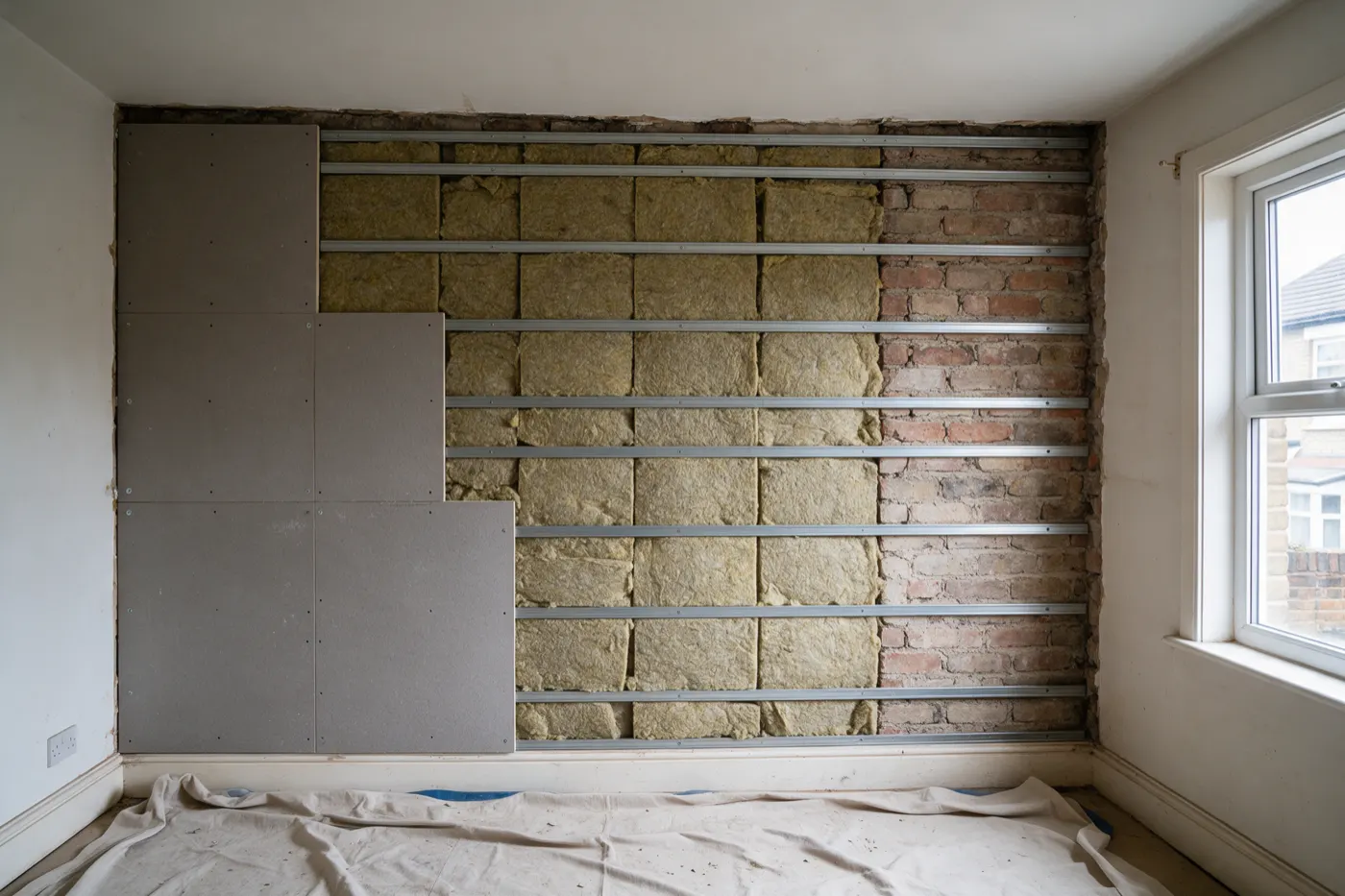
1. A lining on resilient bars. Resilient bars are thin metal channels fixed across the wall; the new boards are screwed to the bars, not the wall, with mineral wool in between. Sound Reduction Systems, a maker, says this kind of semi-independent lining improved a lightweight block party wall by about 9dB in its own on-site test.
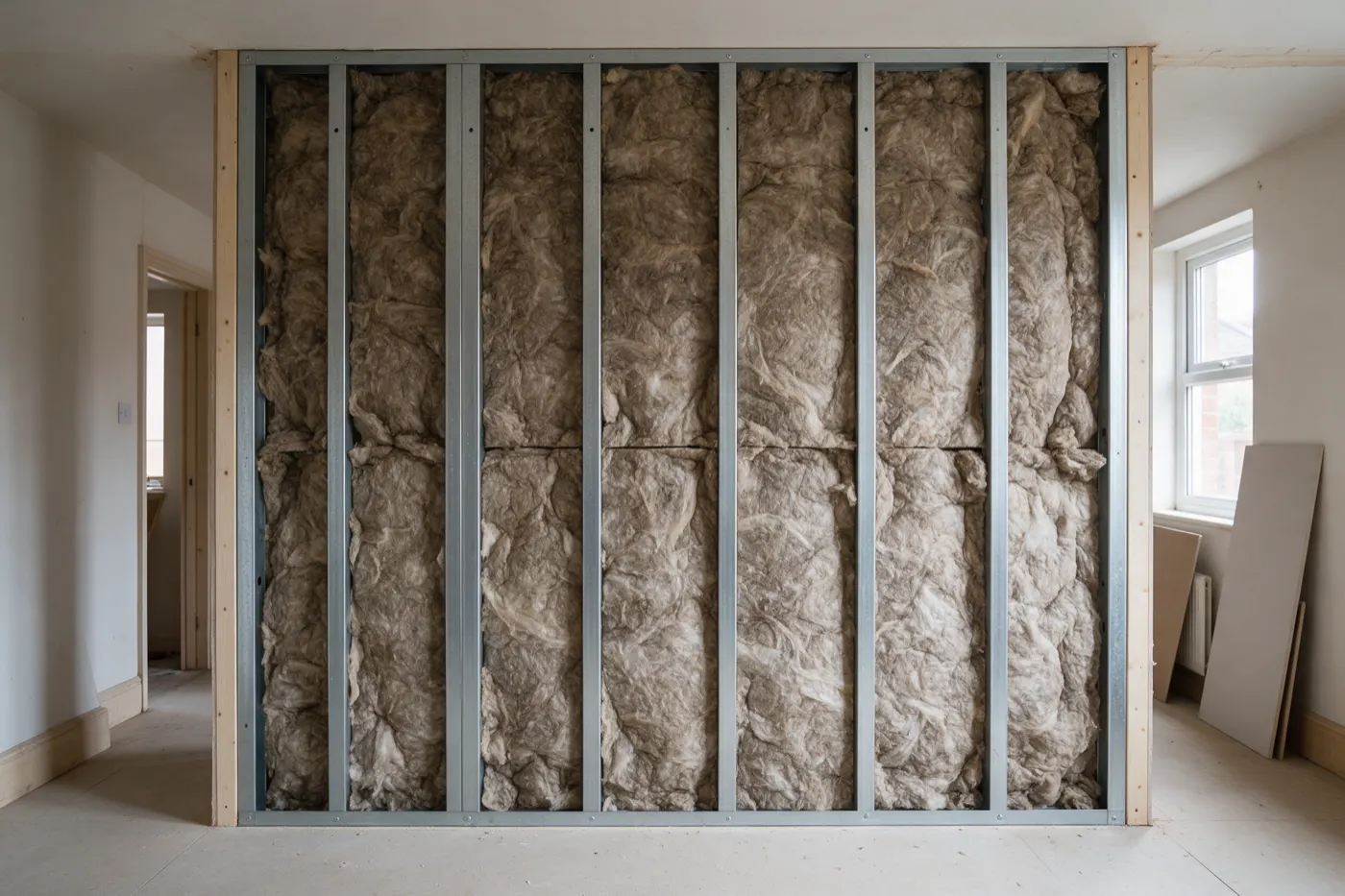
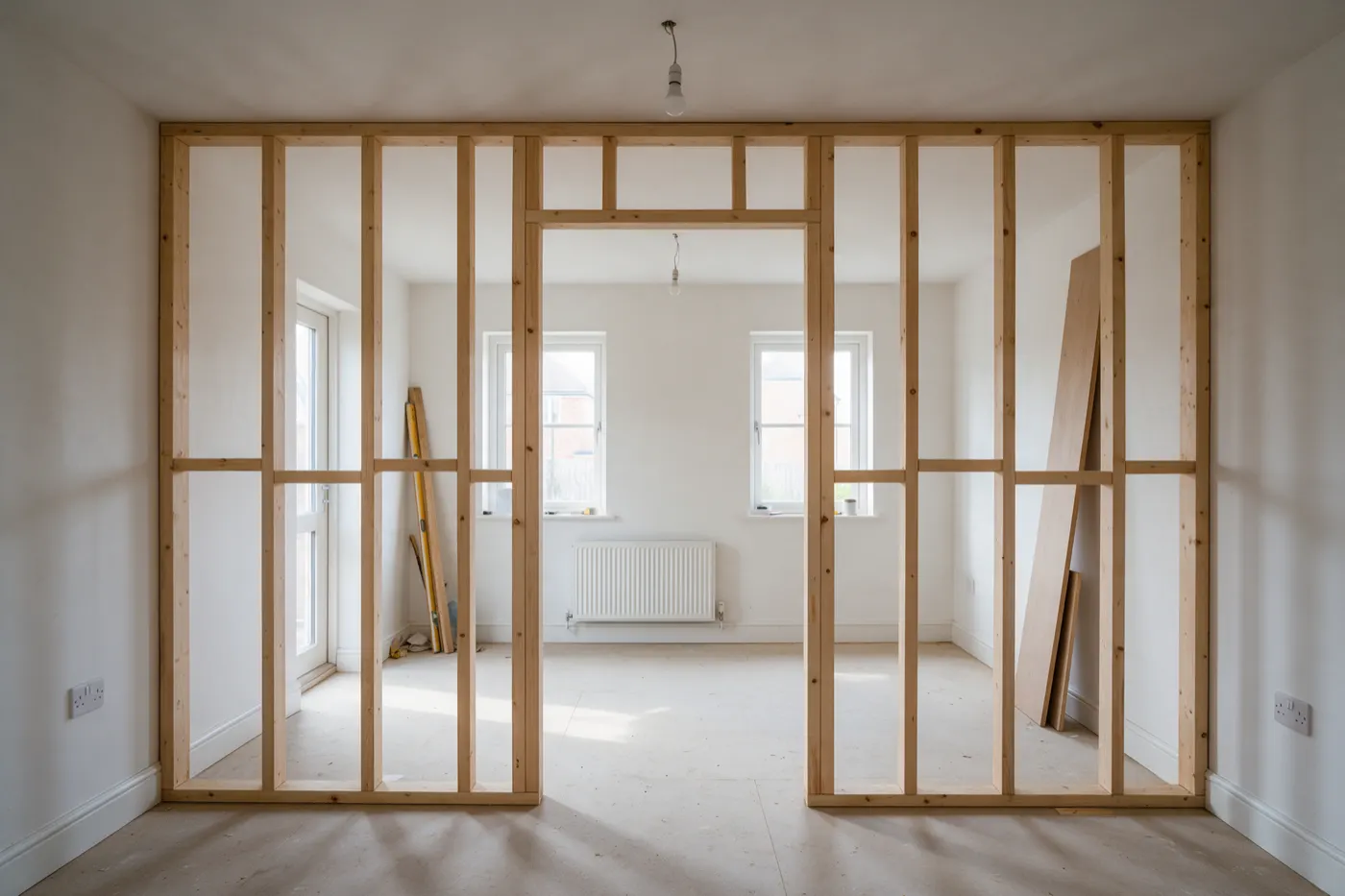
2. A new stud wall in front. A separate metal stud frame built just in front of the old wall, not touching it, filled with mineral wool and boarded with heavy acoustic board. The same maker puts its version at about 17dB better than an untreated masonry wall. It works better because the new wall is fully separate, but it takes more space off the room.
Both start by stripping the wall back, and a bare masonry wall is best sealed with a coat of render first. Then the boards are skimmed and decorated as normal, so expect to redecorate, and to move sockets and switches onto the new surface. Prices for each are on soundproofing costs; a new wall in front is the same kind of work as a stud wall.
Party walls and noisy neighbours
If the noise is from next door, the shared party wall is usually where to start, and it's where most of the improvement figures above come from. A party wall of basic brick or masonry, or a lightweight timber stud, can be improved significantly.
But soundproofing is the expensive answer to a neighbour problem. GOV.UK suggests talking to your neighbour first, then their landlord if they rent, then mediation. If the noise is a statutory nuisance, such as loud music, you can complain to your council, and it's worth getting the council's advice before spending on soundproofing. We'd try those first, and soundproof if the wall itself is the weakness: if you can hear normal conversation through it, no amount of talking will fix that.
What doesn't work
- Egg boxes: they have nowhere near enough mass to block noise, and aren't even good at absorbing it.
- "Soundproof" wallpaper: also too light to block noise from next door. For comparison, one 1.2m by 1.2m acoustic plasterboard weighs about 18kg.
- Acoustic panels and foam: these absorb sound, they don't block it. Approved Document E defines absorption as turning sound energy into heat in a porous material; iKoustic puts the difference simply: absorption makes a room sound clearer, with less echo, while soundproofing stops noise getting in or out. Panels can make a room nicer to be in, but won't stop the neighbours' TV.
Do you need permission?
The Planning Portal says internal alterations shouldn't need planning permission, though a listed building needs listed building consent for significant work inside or out (see soundproofing costs for the rules). If you're building a brand new wall, the Planning Portal says one that separates a bedroom or a room with a WC from another room needs improved sound insulation, and recommends advice from the maker or building control.
What it costs
Prices, what moves them and who to hire, in our cost guides.
Free, no obligation.
Frequently asked questions
What is the best way to soundproof a wall?
Add mass, decouple it and seal it: a new layer of heavy acoustic board on resilient bars, or a separate insulated stud wall just in front of the old one, with acoustic mineral wool in the gap and every gap sealed. The separate wall works better but takes more space.
Can you soundproof an existing wall?
Yes. A lining on resilient bars or a new stud wall in front both go over the existing wall. Sound Reduction Systems puts its own versions at about 9dB and 17dB better than the untreated wall.
How do I block noise from a shared wall with my neighbour?
Talk to your neighbour first, and if it's a statutory nuisance such as loud music, complain to the council (GOV.UK). If you can hear ordinary noise because the wall is thin, line the party wall on your side with resilient bars and acoustic board, or build an independent stud wall in front.
Do egg boxes work for soundproofing?
No. They don't have the mass to block sound, and aren't good at absorbing it either.
Do acoustic panels stop noise from neighbours?
No. Acoustic panels absorb sound inside a room, which cuts echo; they don't block sound coming through the wall. For that you need mass, separation and sealing.
Why can I still hear noise after soundproofing a wall?
Often flanking: sound travelling round the wall through the floor, ceiling and side walls. Or a bridge in the work, such as a screw that's too long touching the stud behind, or pipes and cables bridging the gap.
How we checked this7 sources · 4 officialView sourcesHide
Rules come from the legislation and official guidance, read at source, and are linked where the guide states them. Practical advice comes from makers', trade bodies' and official guidance; where sources disagreed, we've said so. Prices aren't in our guides: they're on the cost pages linked above, each with its own sources. More on our method.
- OfficialApproved Document E: Resistance to the passage of sound, Department for Levelling Up, Housing and Communities. Checked 16 Oct 2026.
- IndustryCan eggboxes soundproof a room? Soundproofing myths, iKoustic. Checked 24 Oct 2026.
- IndustryHow to improve party wall sound insulation performance, Sound Reduction Systems. Checked 24 Oct 2026.
- IndustryWhy might the use of resilient bars fail to meet the claimed sound insulation benefit?, British Gypsum. Checked 24 Oct 2026.
- OfficialResolving neighbour disputes, GOV.UK. Checked 24 Oct 2026.
- OfficialInternal walls: building regulations, sound insulation, Planning Portal. Checked 24 Oct 2026.
- OfficialInternal walls: planning permission, Planning Portal. Checked 24 Oct 2026.