The Short Answer
Low water pressure is either a problem in the supply to your street, or something in your own pipes. A few quick checks tell you which:
- Ask a neighbour. If they're low too, it's probably the supply: check your water company's website for works or bursts in your area.
- Check your stop tap is fully open and look for leaks.
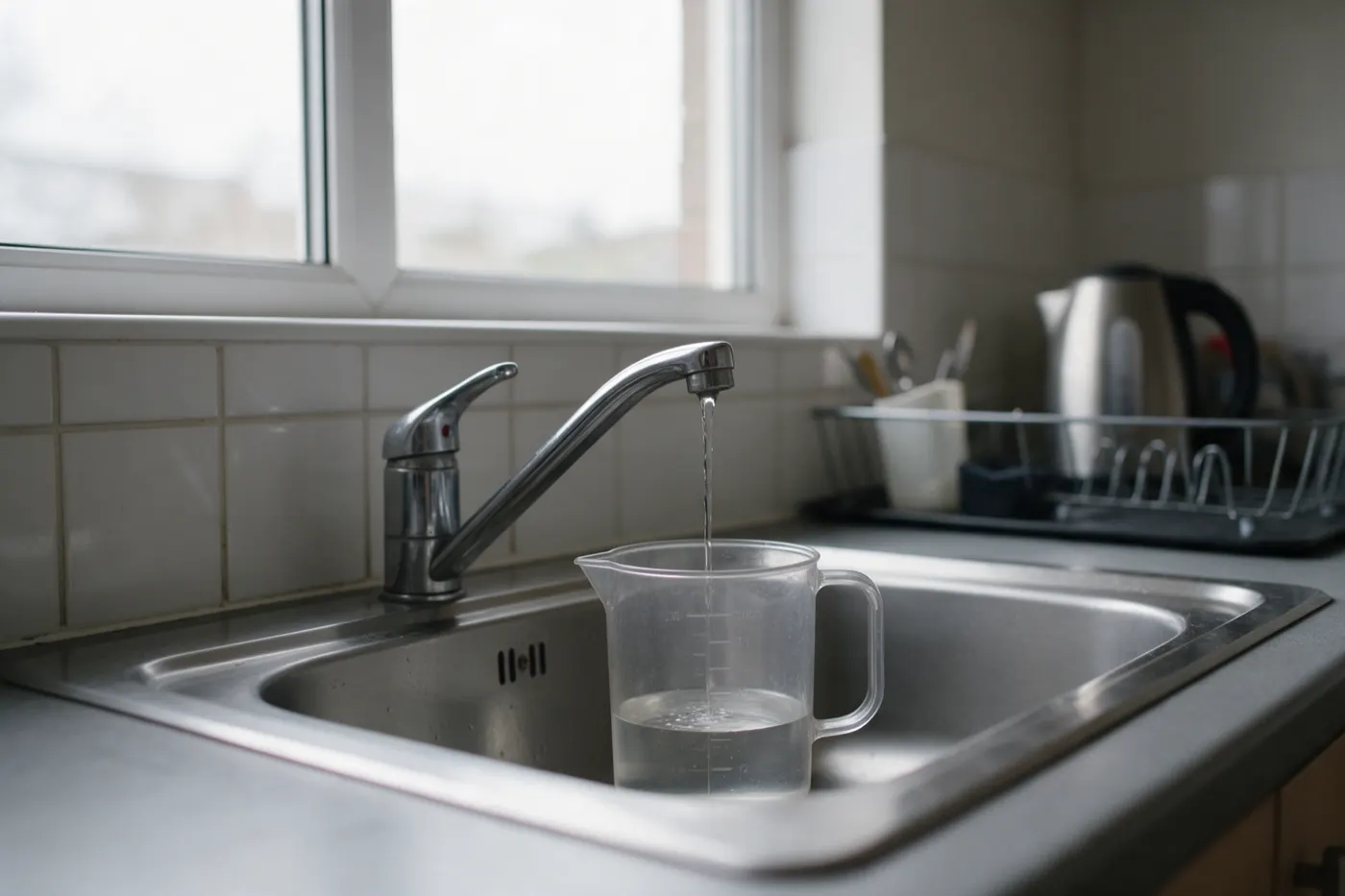
- Time a jug. If your cold kitchen tap fills a 1-litre jug in under 7 seconds, the flow is fine.
The water company is responsible for its mains and the pipe up to your property boundary. From there, the supply pipe and the plumbing inside are yours. If you can't find a cause, call your water company: they can test the pressure and tell you whose side the problem is on.
Is your pressure actually low?
Everyday signs your pressure is low:
- the shower drops to a dribble when someone flushes the toilet or turns on a tap;
- the bath takes a long time to fill (a standard bath should take about 5 minutes);
- the toilet cistern is slow to refill (about 1 minute 40 seconds is typical).
For a quick flow test, turn off every tap and appliance, then time how long your cold kitchen tap takes to fill a 1-litre jug. Under 7 seconds and your flow is fine.
Pressure also changes through the day. It can be lower when demand is high, such as mornings and early evenings, and in dry spells when people water their gardens. Where you live matters too: homes at the top of a hill can get lower pressure than homes at the bottom.
The checks to do first
- Ask a neighbour. If they have low pressure too, it could be a wider supply problem; if not, it's likely to be something inside your home.
- Check your water company's website for works, bursts or incidents near you. Many have a live map or a postcode checker.
- Check the stop tap. A partly closed internal stop tap is the first thing to rule out. Turn it off, counting the turns, and run a nearby tap until it stops. Then turn it back on by the same number of turns. Do this a few times.
- Check the other valves. Make sure any taps or valves controlling water to your hot water system or appliances are fully on.
- Compare taps. If the cold kitchen tap runs well but nothing else does, it's likely an internal plumbing problem, which needs a plumber.
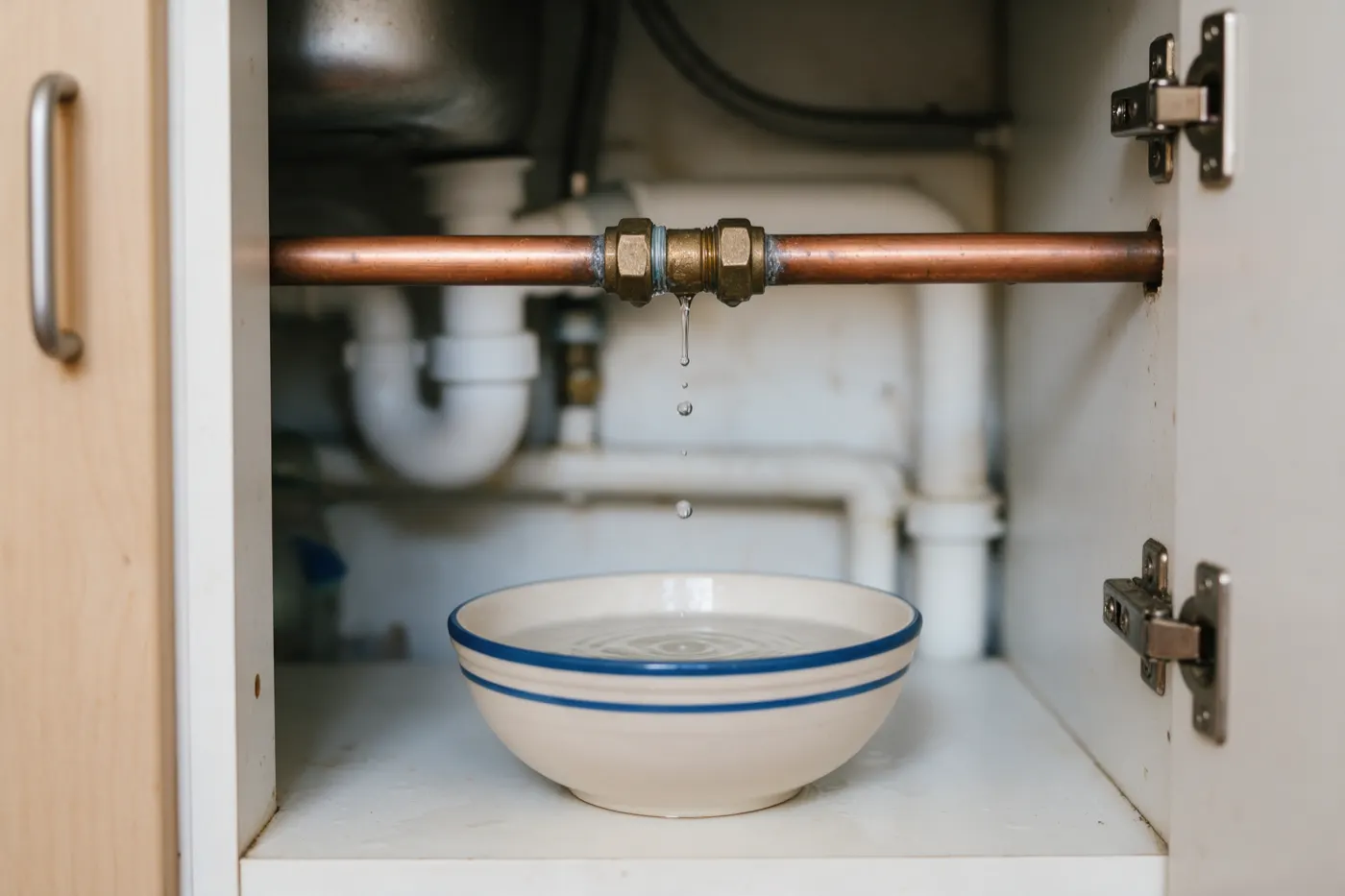
- Look for leaks. A sudden drop in pressure could mean a leak, so check under sinks, round the stop tap and anywhere the pipes run.
If the taps splutter after you've turned the water back on, that's usually trapped air. Run all the taps for a minute to clear it.
Whose problem is it: yours or the water company's?
Ofwat splits the pipes into three:
- Water mains: the company's.
- The communication pipe, from the main to your property boundary, where there's often a company stop tap: the company's.
- The supply pipe, from the boundary to the first stop tap or fitting inside: yours, including finding and fixing leaks. If it's shared with neighbours, it's the joint responsibility of everyone it serves.
Ofwat lists low pressure caused by inadequate pumping, mains that are too small, or leaks, failures and blocked pipes in the company's network as the company's problem. A shut valve, a leak on your supply pipe, or a supply shared with neighbours who are using water at the same time are other causes CCW lists.
If you can't find a cause in your home, call your water company. They can take pressure and flow measurements to find whether the problem is in their pipes or yours. Some companies offer help with repairs to your supply pipe, so ask. If you're not happy with the answer, the Consumer Council for Water (CCW) can advise.
What pressure the water company must provide
Ofwat's guaranteed standards scheme says water companies must maintain a minimum pressure of 7 metres static head in the communication pipe serving your home. CCW puts that at 0.7 bar, and explains that the Water Industry Act 1991 requires a supply at a pressure that reaches the upper floor of your house.
That minimum applies only up to the end of the company's pipe. CCW is clear that the company has no obligation to meet a pressure inside your private supply pipe or inside your home.
If only the hot water is weak
Weak hot water with good cold usually points to your hot water system rather than the supply. Which system you have changes what to expect:
- Combi boiler (no tanks): the boiler heats water straight from the mains, so you should get a forceful flow. If yours is weak, get the boiler checked.
- Gravity system (cold tank in the loft, hot cylinder in the airing cupboard): the pressure depends on how high the loft tank is above the tap or shower. Every metre of height gives 0.1 bar, so the higher the tank, the stronger the flow.
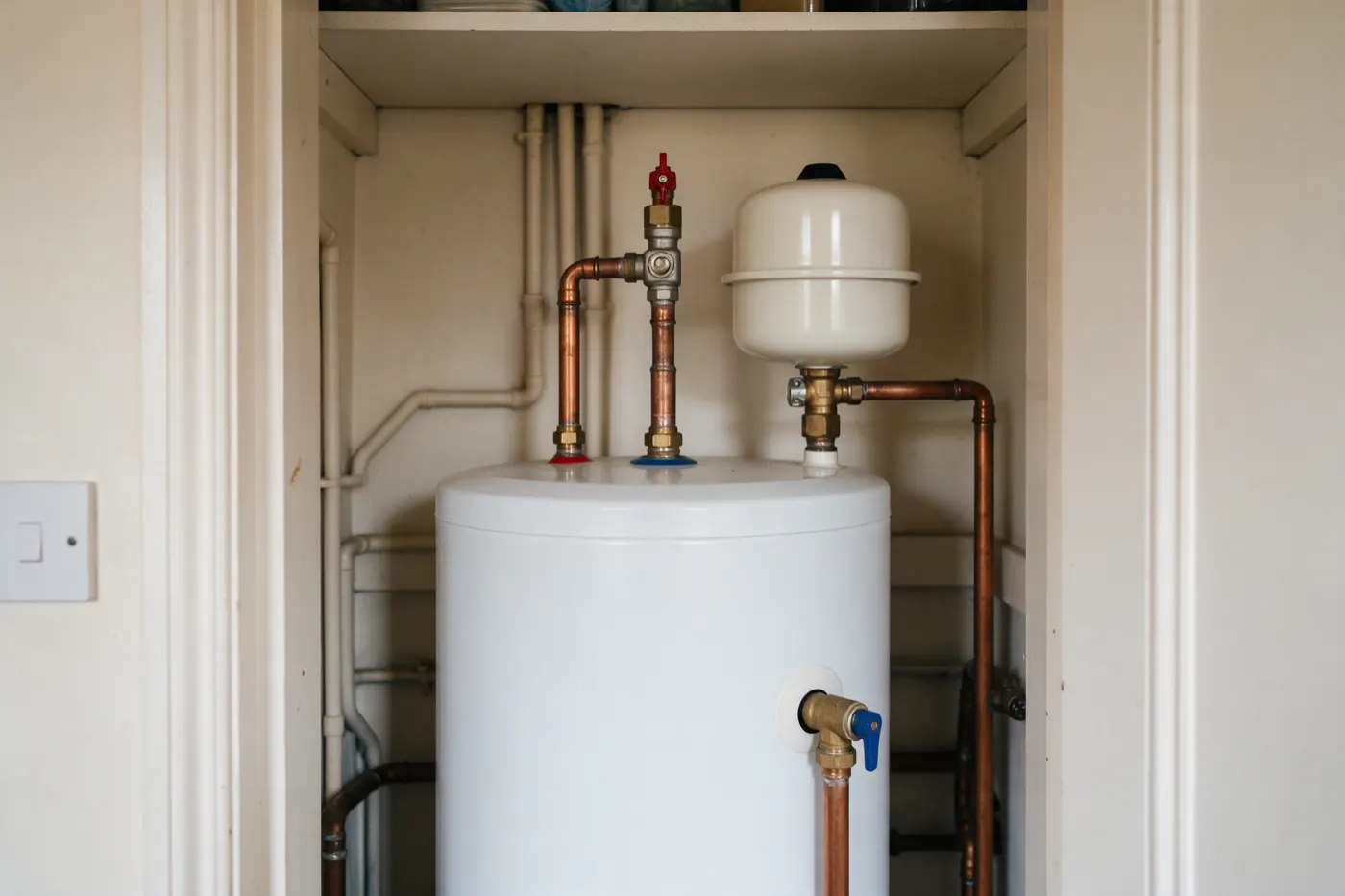
- Unvented cylinder (cylinder but no loft tank): hot water is stored at mains pressure, so the flow should be strong.
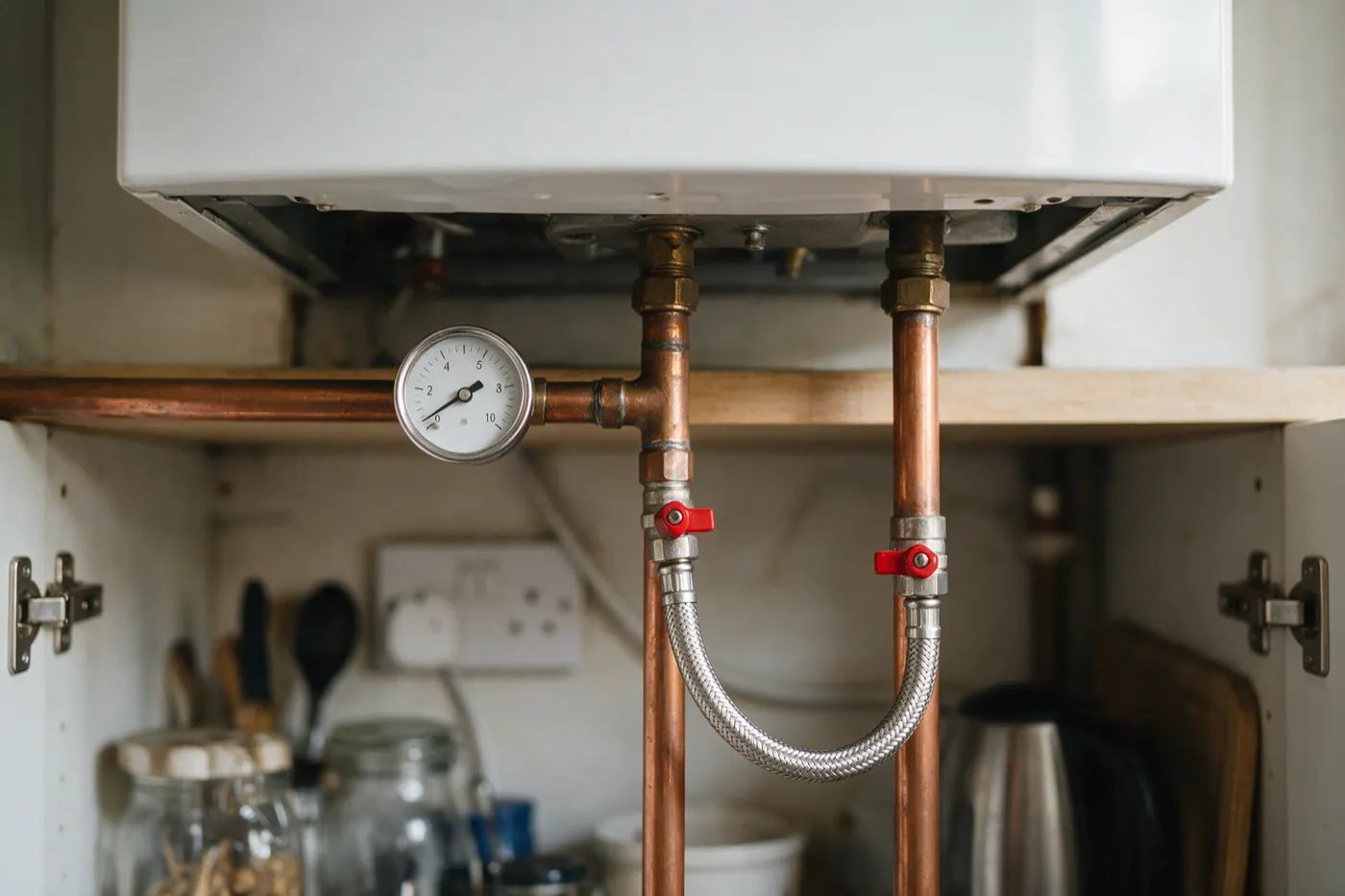
On any system, check that the valves feeding the hot water system are fully open, and that a thermostatic shower doesn't just need adjusting. Low water pressure is different from low boiler pressure, the gauge on the boiler for the heating, which is a separate problem.
How to increase water pressure
Start with the free fixes, then work up:
- Open the stop tap and valves fully, and clear trapped air.
- Repair a leaking supply pipe. The supply pipe is yours to repair, and some water companies help with the cost, so ask yours first.
- Change the hot water system. If you have a gravity system, switching to an unvented cylinder or a combi gives mains-pressure hot water, as long as the mains supply is good enough.
- Add a pump or booster. These can help, but they come with rules (below).
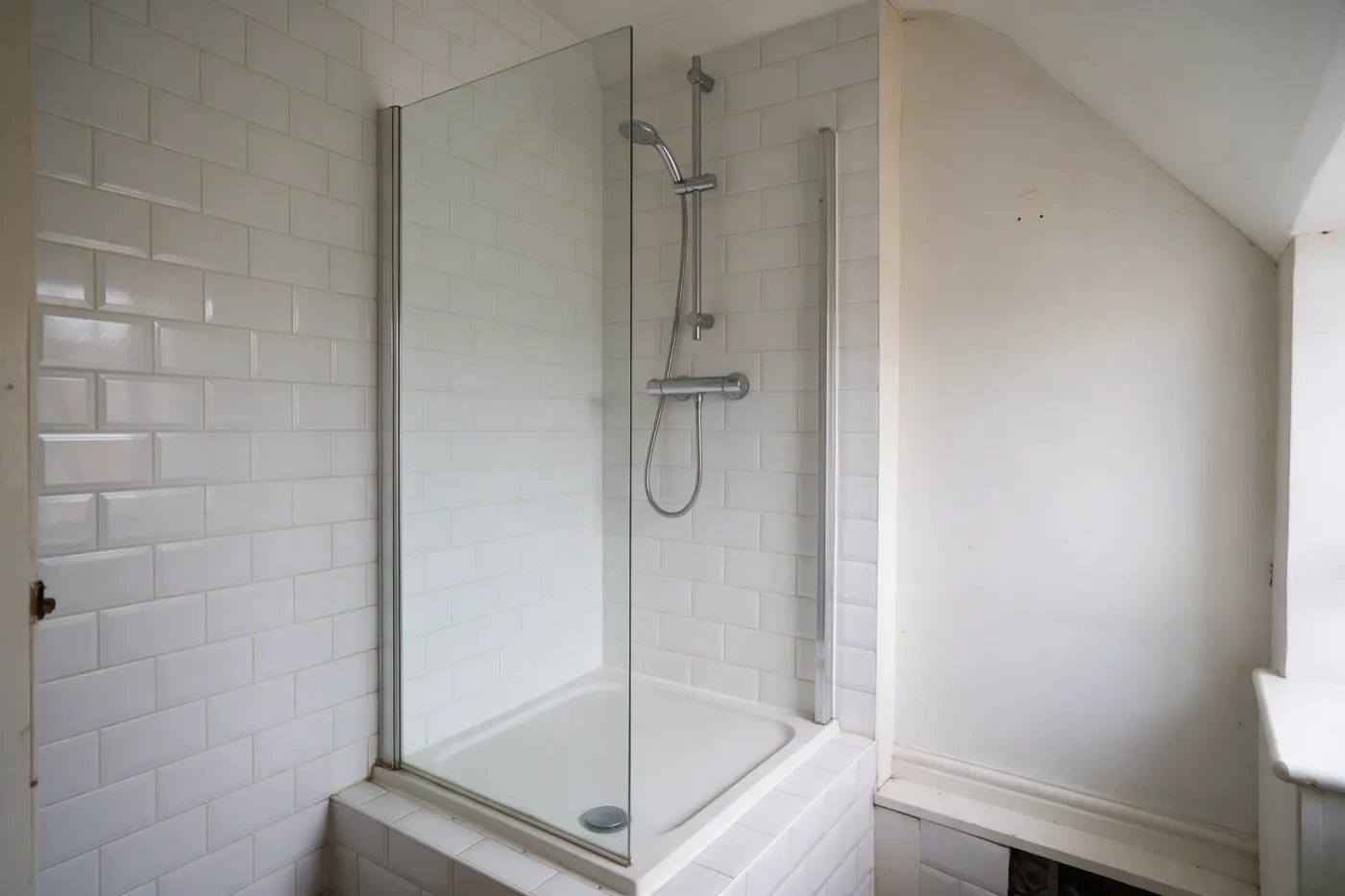
Check with your water company before fitting showers or heating appliances that need a minimum pressure to work, in case your area's pressure isn't enough. For showers on low pressure, see our shower installation costs.
When to call a plumber
Call a plumber if your neighbours are fine and the stop tap is fully open but the pressure is still low, if only some taps are affected, or if you suspect a leak inside or on your supply pipe. A good plumber will check the stop tap, valves, filters and pipework, and tell you whether the problem is yours or the water company's. See what a plumber charges.
What it costs
Prices, what moves them and who to hire, in our cost guides.
Free, no obligation.
Frequently asked questions
Why is my water pressure suddenly low?
Often a burst, repair or planned work in your area, or high demand at busy times. Ask a neighbour and check your water company's website. If it's only your home, check the stop tap is fully open and look for a leak.
Who is responsible for low water pressure in my house?
The water company is responsible for its mains and the pipe up to your property boundary. The supply pipe from the boundary into your home, and the plumbing inside, are yours. Your water company can test the pressure to show where the problem is.
What is the minimum water pressure a water company must provide?
Ofwat's standard is 7 metres static head (about 0.7 bar) in the communication pipe that serves your home. It doesn't apply inside your own supply pipe or your home.
How do I test my water pressure?
Turn off all taps and appliances and time how long your cold kitchen tap takes to fill a 1-litre jug. Under 7 seconds means the flow is fine.
Can I fit a pump to increase my water pressure?
Possibly, but you must notify your water company and get its consent before fitting a pump or booster that draws more than 12 litres a minute from the supply pipe.
Why is my hot water pressure low but cold is fine?
It's usually the hot water system. On a gravity system the pressure depends on how high the loft tank is. On a combi or unvented cylinder, check the valves feeding it are fully open, then get it looked at.
Does a water meter reduce water pressure?
No. Ofwat says you shouldn't notice any difference in your water pressure after a meter is installed.
How we checked this6 sources · 4 officialView sourcesHide
Rules come from the legislation and official guidance, read at source, and are linked where the guide states them. Practical advice comes from makers', trade bodies' and official guidance; where sources disagreed, we've said so. Prices aren't in our guides: they're on the cost pages linked above, each with its own sources. More on our method.
- OfficialWater pressure, Ofwat. Checked 26 Oct 2026.
- OfficialResponsibility for pipes and pumping stations, Ofwat. Checked 26 Oct 2026.
- OfficialLow water pressure (FAQ), Consumer Council for Water (CCW). Checked 26 Oct 2026.
- IndustryI have low water pressure, Southern Water. Checked 26 Oct 2026.
- OfficialThe Water Supply (Water Fittings) Regulations 1999, regulation 5 (notification and consent), legislation.gov.uk. Checked 26 Oct 2026.
- IndustryWhat type of shower do I need? (identify your water system), Mira Showers. Checked 15 Oct 2026.