The Short Answer
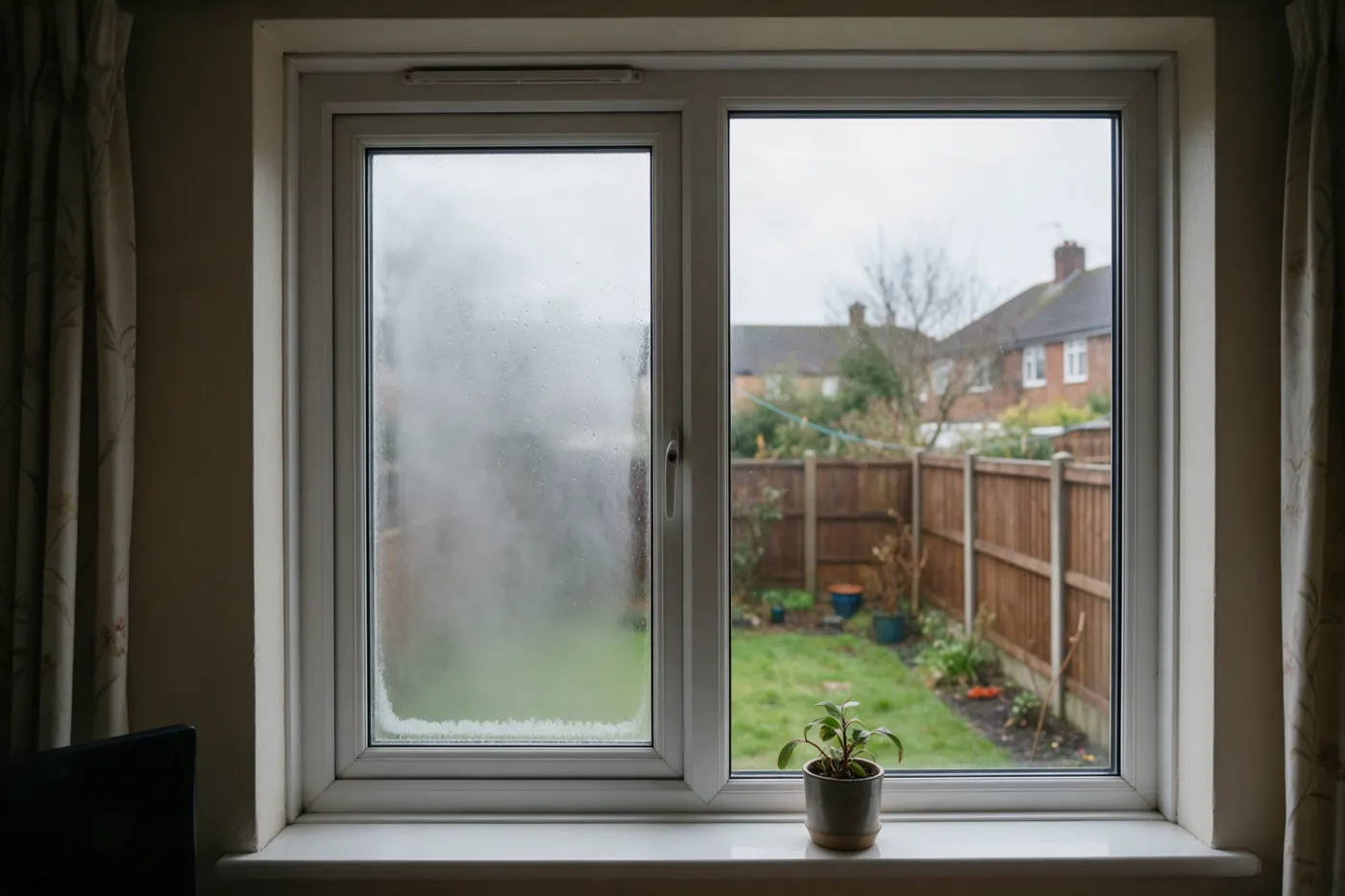
Condensation forms when warm, moist air inside meets cold glass. A bit on a cold morning that clears quickly isn't a problem. Where it appears tells you what's going on:
- On the inside: too much moisture in the room and not enough ventilation. Open the trickle vents, ventilate while you cook and shower, and wipe the glass dry.
- On the outside: not a problem. It's a sign your windows are very efficient, and it clears quickly.
- Between the panes: the sealed unit has failed and is letting air in. That usually means a new glass unit, not a new window.
Why windows get condensation
Warm air holds more moisture than cold air. When air next to a cold surface cools to its "dew point", it can't hold all its moisture, and water droplets form on any colder surface (BBC Weather). A window on a cold morning is the classic example.
The moisture comes from everyday life: cooking, boiling the kettle, showers and even breathing. A typical household produces up to 100 litres of moisture a week, and if ventilation doesn't remove it, it settles on surfaces or stays in the air. Whether it ends up on your windows comes down to three things: how much water vapour is in the air, how warm the room is, and how cold it is outside.
Inside, outside or between the panes?
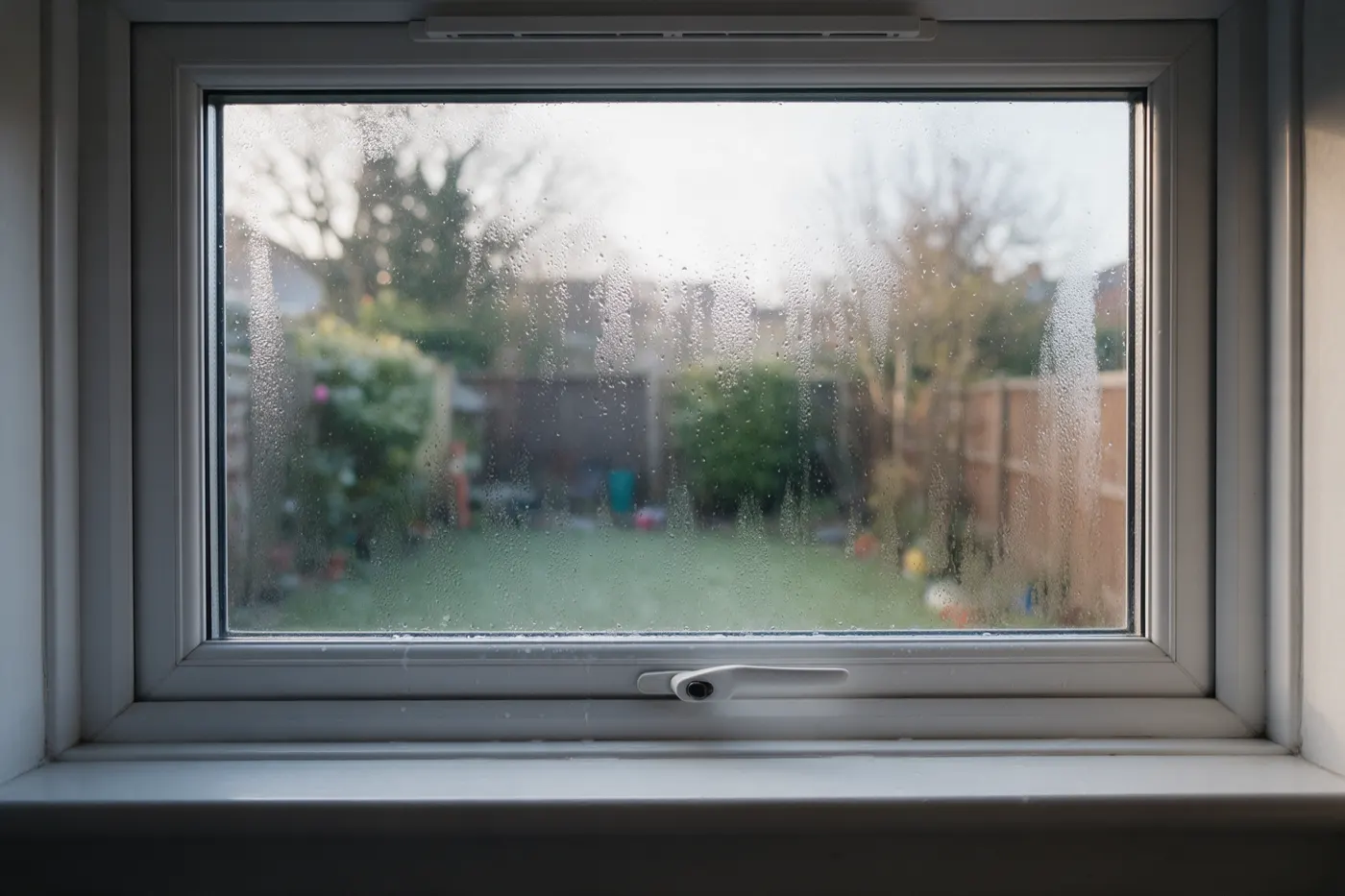
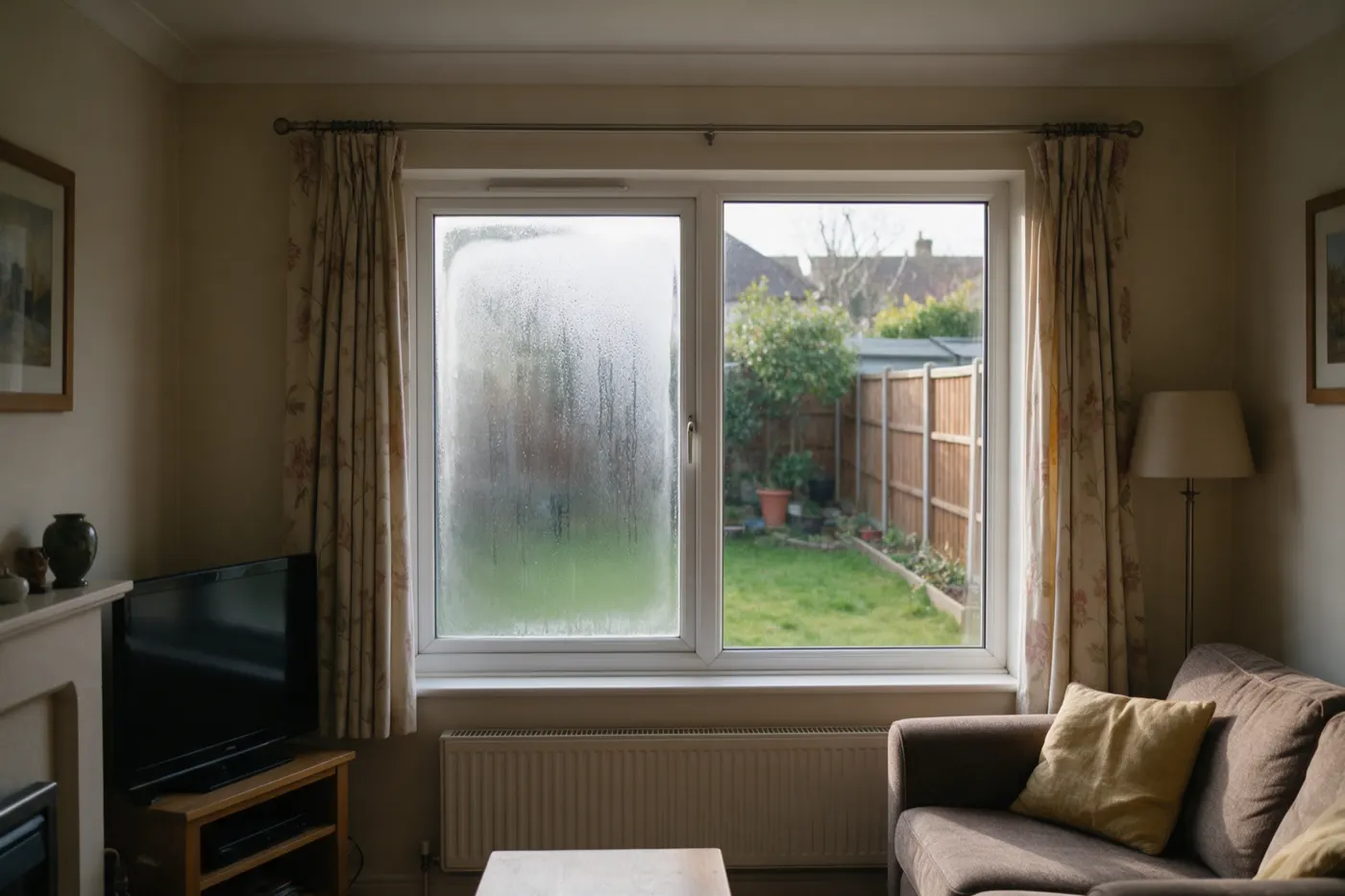
- On the inside of the glass: the room air is humid and the glass is cold. It's worst on cold mornings and in kitchens and bathrooms. A little that clears quickly isn't a problem; condensation that keeps building up on the inside of a window or wall can be a sign of a damp problem.
- On the outside: good double glazing keeps the outer pane cold, because the heat from inside doesn't reach it. On a still, humid night the air just outside cools below its dew point and condenses on the glass. It clears once the air warms up or the sun gets on it, and it's much harder to stop. You don't need to.
- Between the two panes: the seal on the double-glazed unit has failed and it's letting air in, which reduces its insulation. You can replace just the glass unit rather than the whole window. See misted double glazing repair costs.
How to stop condensation on the inside
Let the moisture out (Energy Saving Trust):
- keep the trickle vents in the window frames open and clear;
- open windows several times a day for at least 5 minutes, and longer if you can;
- run the bathroom extractor fan and the cooker hood while you shower or cook and for at least 15 minutes afterwards, or open a window if you don't have one;
- leave internal doors open where you can, with a gap of at least 10mm under them, and leave gaps between furniture and walls so air can move.
Make less of it:
- put lids on pans when you cook;
- dry washing outside when the weather allows;
- after a shower, wipe the walls and windows down with a squeegee or towel.
Wipe the windows dry in the morning. Regularly removing condensation from the glass helps prevent water damage to the frames and the conditions mould grows in. Don't let curtains or blinds trap moist air against the glass.
Keep the house evenly warm. Rooms where the heating is off or low in winter are more prone to damp, so ventilate them better or turn the heating up from time to time. Leaving the heating on all the time just to stop damp isn't sensible: it costs a lot.
A dehumidifier helps where there's a lot of moisture, or if you have to dry washing indoors: both the Energy Saving Trust and BBC Weather suggest one. It treats the symptom, though: FENSA calls controlled ventilation the most effective remedy, so start there.
Condensation and new windows
New double glazing keeps the inner pane warmer, so it should get less condensation than old single glazing: the warmer glass can hold more water vapour before it condenses. But the way we heat and insulate homes now leaves the moisture from everyday life fewer ways to escape, and FENSA, the competent person scheme for window installers, says condensation mostly comes down to ventilation.
That's what trickle vents are for: new windows usually have them, so keep them open. Don't fit new draught-proofing in a room that already has a condensation problem, and ask anyone fitting new windows or doors how they'll keep the ventilation. The building regulations on trickle vents in replacement windows are on new window costs.
When it's more than condensation
Moisture that keeps building up can lead to mould. Damp is more likely in the colder parts of a home, such as exposed corners, and where air can't circulate, such as behind furniture. The Energy Saving Trust says mould can cause symptoms like a stuffy nose, wheezing and eye or skin irritation, and that children, older people and anyone with skin or breathing conditions are most at risk.
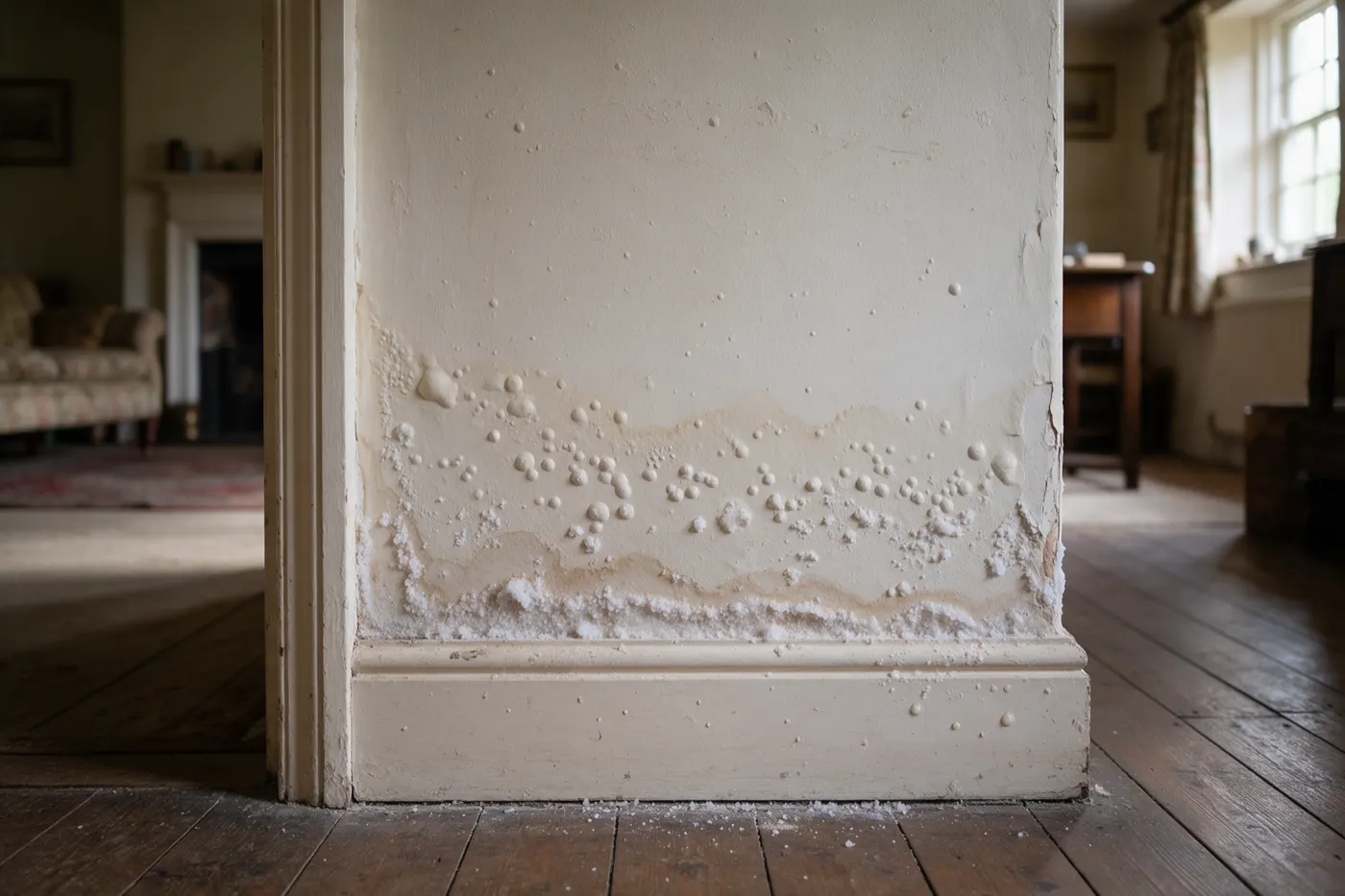
Damp in other places is a different problem. A tidemark along the bottom of a wall points to rising damp, and a patch that gets worse when it rains points to penetrating damp, such as from a leaking gutter or roof. If there are no leaks or rising damp, the problem is almost certainly condensation; if there are, you'll usually need a professional. See damp proofing costs.
What it costs
Prices, what moves them and who to hire, in our cost guides.
Free, no obligation.
Frequently asked questions
Is condensation on windows normal?
A little, on a cold morning, that clears quickly isn't a problem. If it builds up every day, or spreads to the walls, it's a sign there's too much moisture and not enough ventilation.
Why do I get condensation on the outside of my windows?
Because the glazing is efficient: the outer pane stays cold, and on a still, humid night the air outside condenses on it. It clears as the day warms up and isn't a problem.
How do I stop condensation on my windows overnight?
Keep the trickle vents open, ventilate while cooking and showering, don't dry washing indoors if you can avoid it, keep curtains or blinds from trapping air against the glass, and open the windows for at least 5 minutes a few times a day. Wipe the glass dry in the morning.
Should I wipe condensation off my windows?
Yes. Regularly removing it with a dry cloth helps prevent water damage to the frames and the damp conditions mould grows in.
Does a dehumidifier stop condensation on windows?
It reduces the moisture in the room, so there's less to condense, and it's worth using one for excess moisture or if you dry washing indoors. Ventilation is still the main fix.
Does condensation between the panes mean I need new windows?
Usually not. It means the sealed unit is letting air in; you can replace just the glass unit rather than the whole window.
How we checked this4 sourcesView sourcesHide
Rules come from the legislation and official guidance, read at source, and are linked where the guide states them. Practical advice comes from makers', trade bodies' and official guidance; where sources disagreed, we've said so. Prices aren't in our guides: they're on the cost pages linked above, each with its own sources. More on our method.
- IndustryHow to get rid of damp, Energy Saving Trust. Checked 23 Oct 2026.
- IndustryEnergy efficient windows and doors (updated 20 May 2026), Energy Saving Trust. Checked 26 Oct 2026.
- IndustryCondensation advice, FENSA. Checked 23 Oct 2026.
- IndustryWhy your windows get condensation and how to stop it (8 November 2025), BBC Weather. Checked 23 Oct 2026.