The Short Answer
Don't flush again: if the bowl isn't draining, another flush can make it overflow. Then work through these in order:
- A toilet plunger (not a sink plunger): seal it over the hole at the bottom of the bowl and push and pull firmly.
- Hot, not boiling, water and washing-up liquid: boiling water can crack the bowl.
- A toilet auger for a stubborn blockage further in.
If the sink, bath or shower is backing up too, the blockage is probably further down the drain, not in the toilet, and a plunger won't reach it.
Is it the toilet or the drain?
The signs of a blocked toilet are water rising higher than normal when you flush, slow or weak flushing, gurgling noises, or a bowl that fills and doesn't drain at all.
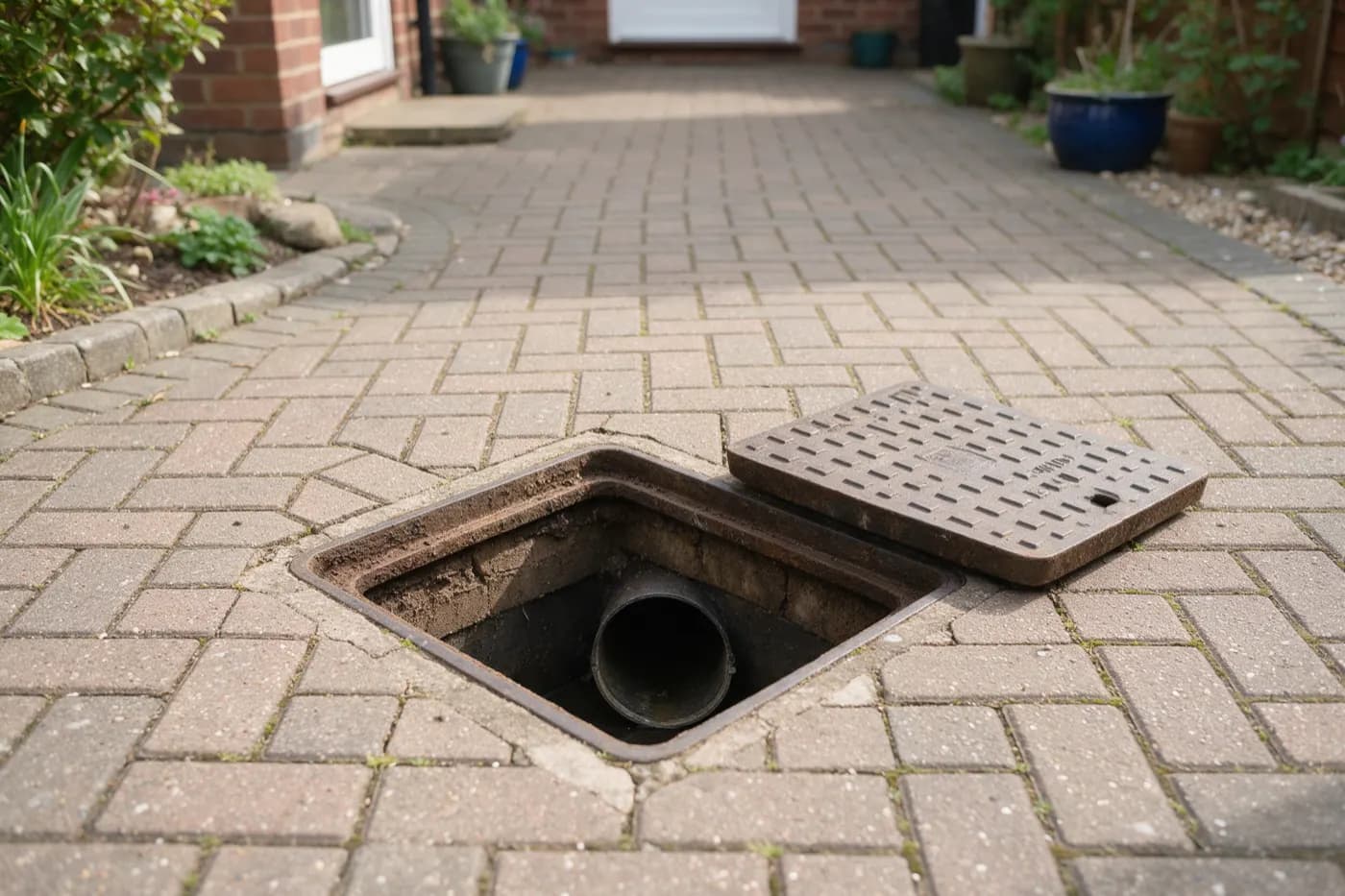
If other things on the same drain are backing up as well, such as the sink or shower, the problem is probably further down the drain. Thames Water adds two more clues: if upstairs is affected but downstairs works, the blockage is inside your home; and if the drain or sewer access point (the manhole outside) is clear, it's likely to be inside the home too. If you lift the cover and it's full of water, we'd take that as a blockage further down the drain, which is a job for a drain engineer or the water company (see below).
1. Use a plunger
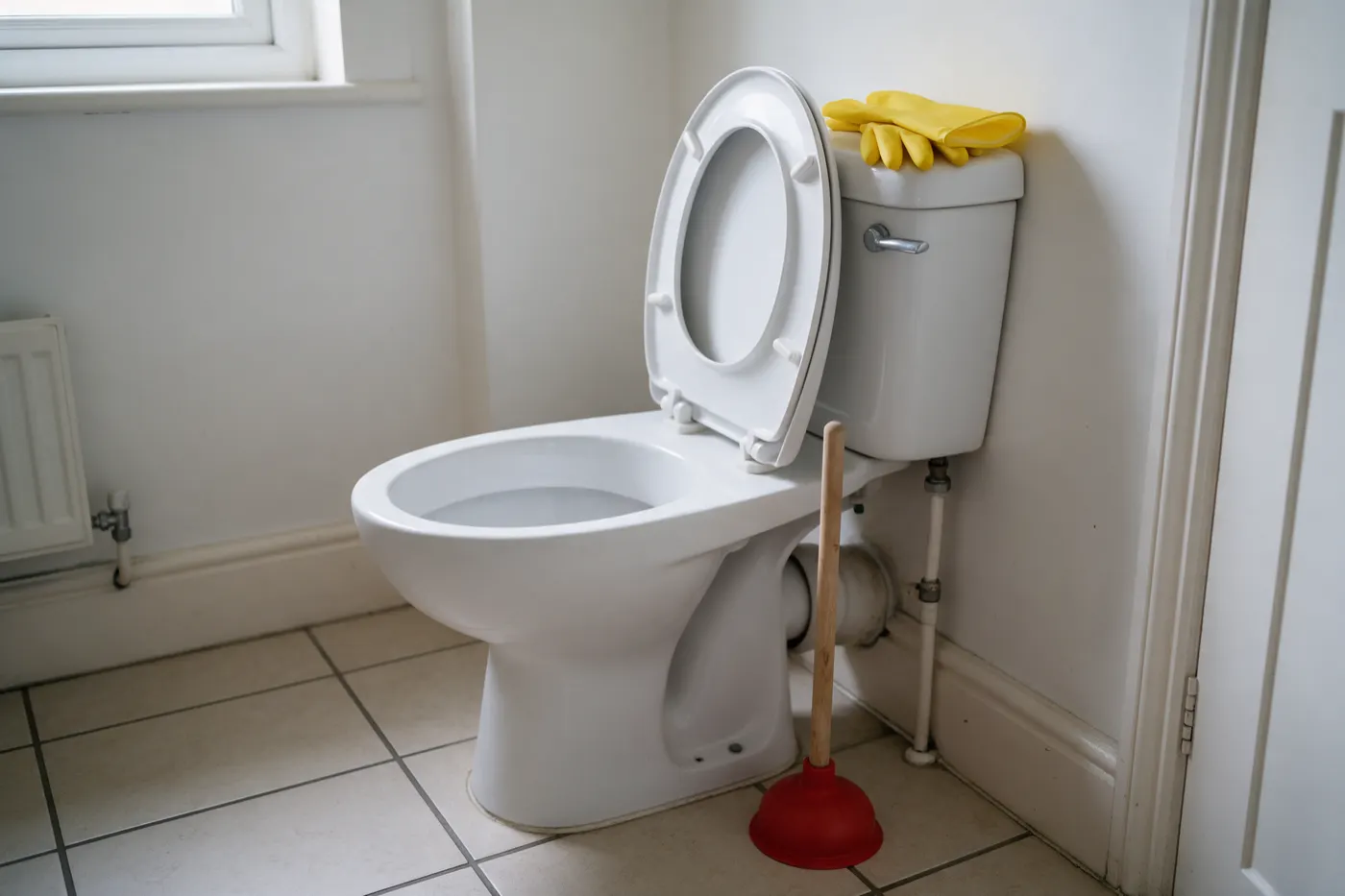
A plunger is the most common and effective method. Use one made for toilets: sink plungers don't normally work.
- Make sure there's enough water in the bowl to cover the rubber end of the plunger, and put it over the hole at the bottom so it seals. If it won't seal, running it under warm water softens it.
- Push down firmly to force water down the pipe, then pull back. Repeat, building up speed and force, but not so much that you damage anything.
- Take the plunger out and see if the water drains. If not, go again.
- Once it clears, flush at least once to make sure the pipe is clear.
2. No plunger? Hot water and washing-up liquid
- Let the bowl drain down so there's only a little water left.
- Squeeze in about 150ml of washing-up liquid and leave it for at least 15 minutes to loosen the blockage.
- Heat 2 to 3 litres of water, then let it cool a little: you want it hot, not boiling.
- Pour it from above the height of the seat, straight into the hole, so it rushes down the pipe. Repeat if it doesn't clear.
Bicarbonate of soda and white vinegar is another thing to try, which fizzes and loosens waste in the pipe.
Careful with bleach and chemicals
If you reach for bleach, never combine it with other products. The UK Health Security Agency warns that mixing bleach with acidic products such as vinegar, or alkaline ones such as ammonia, can release gases you then breathe in. So don't follow vinegar and bicarbonate of soda with bleach, or the other way round. If you buy a chemical unblocker, we'd use one made for toilets and follow its label exactly.
3. A toilet auger
A toilet auger is a coiled cable on a handle that you feed into the pipe to break up or hook the blockage. To use one:
- Put the metal tip into the hole at the bottom of the bowl and feed it into the pipe, turning the handle clockwise as you go.
- When you reach the blockage, work it gently backwards and forwards while still turning clockwise, until it breaks up or you can pull it out.
When to call someone, and who pays
If none of that works, or the drain outside is full, it's time for a plumber or drain engineer. Prices are on blocked drain costs and plumbing repair costs.
Thames Water explains who's responsible: you look after the pipes in your home, and the water company looks after the public sewers. A blockage is likely to be yours if only your home has a problem, you don't share a drain, and there's no other flooding nearby. It may be the water company's if there are public sewers in the area and the problem is outside your boundary or more than one property is affected. Which drains are whose, including shared ones, is on our blocked drain cost page. Some home insurance includes drainage cover, so check your policy before paying.
Why toilets keep blocking
Thames Water's rule is simple: bin anything that isn't pee, poo or toilet paper. It says blockages are often caused by:
- Wet wipes, even the ones labelled "flushable".
- Sanitary items, including towels and tampons.
- Fat, oil and food scraps that set solid in the pipes.
Don't rely on a "flushable" label: the water industry's own "Fine to Flush" certification for wipes ended in March 2024, and Water UK now runs a "Bin the Wipe" campaign instead.
Toilets with a low flow rate, or old, narrow or damaged waste pipes, are more prone to blocking. If yours blocks again and again with nothing obvious going down it, a camera survey of the drain will show what's wrong: see blocked drain costs. An old toilet that never flushes well may be worth replacing: toilet installation costs.
What it costs
Prices, what moves them and who to hire, in our cost guides.
Free, no obligation.
Frequently asked questions
What's the best way to unblock a toilet?
A toilet plunger, sealed over the hole at the bottom of the bowl and pushed and pulled firmly. If you haven't got one, try washing-up liquid and hot (not boiling) water, then a toilet auger.
How do you unblock a toilet without a plunger?
Let the bowl drain down, add about 150ml of washing-up liquid and leave it 15 minutes, then pour 2 to 3 litres of hot, not boiling, water from above seat height. A toilet auger works on tougher blockages.
Can I pour boiling water down a toilet to unblock it?
No. Boiling water can crack the bowl or damage the waste pipe. Use hot water that's been left to cool a little.
Will a blocked toilet unblock itself?
Normally not, so clear it before it gets worse, and don't keep flushing: if the bowl isn't draining, it can overflow.
Can I use bleach to unblock a toilet?
Never mix bleach with other products: the UK Health Security Agency warns that bleach mixed with acids such as vinegar or alkalis such as ammonia can release gases. A plunger, or hot water and washing-up liquid, is the safer first try.
Who is responsible for a blocked toilet?
If the blockage is in your home's own pipes, you are. If it's in a public sewer, outside your boundary or affecting more than one property, it may be the water company's, Thames Water explains.
How we checked this4 sources · 1 officialView sourcesHide
Rules come from the legislation and official guidance, read at source, and are linked where the guide states them. Practical advice comes from makers', trade bodies' and official guidance; where sources disagreed, we've said so. Prices aren't in our guides: they're on the cost pages linked above, each with its own sources. More on our method.
- IndustryHow to unblock a toilet, Screwfix. Checked 24 Oct 2026.
- IndustryBlockages and blocked drains, Thames Water. Checked 27 Oct 2026.
- IndustryFine to Flush certification to end (29 September 2023), Water UK. Checked 24 Oct 2026.
- OfficialSodium hypochlorite: general information, UK Health Security Agency. Checked 24 Oct 2026.