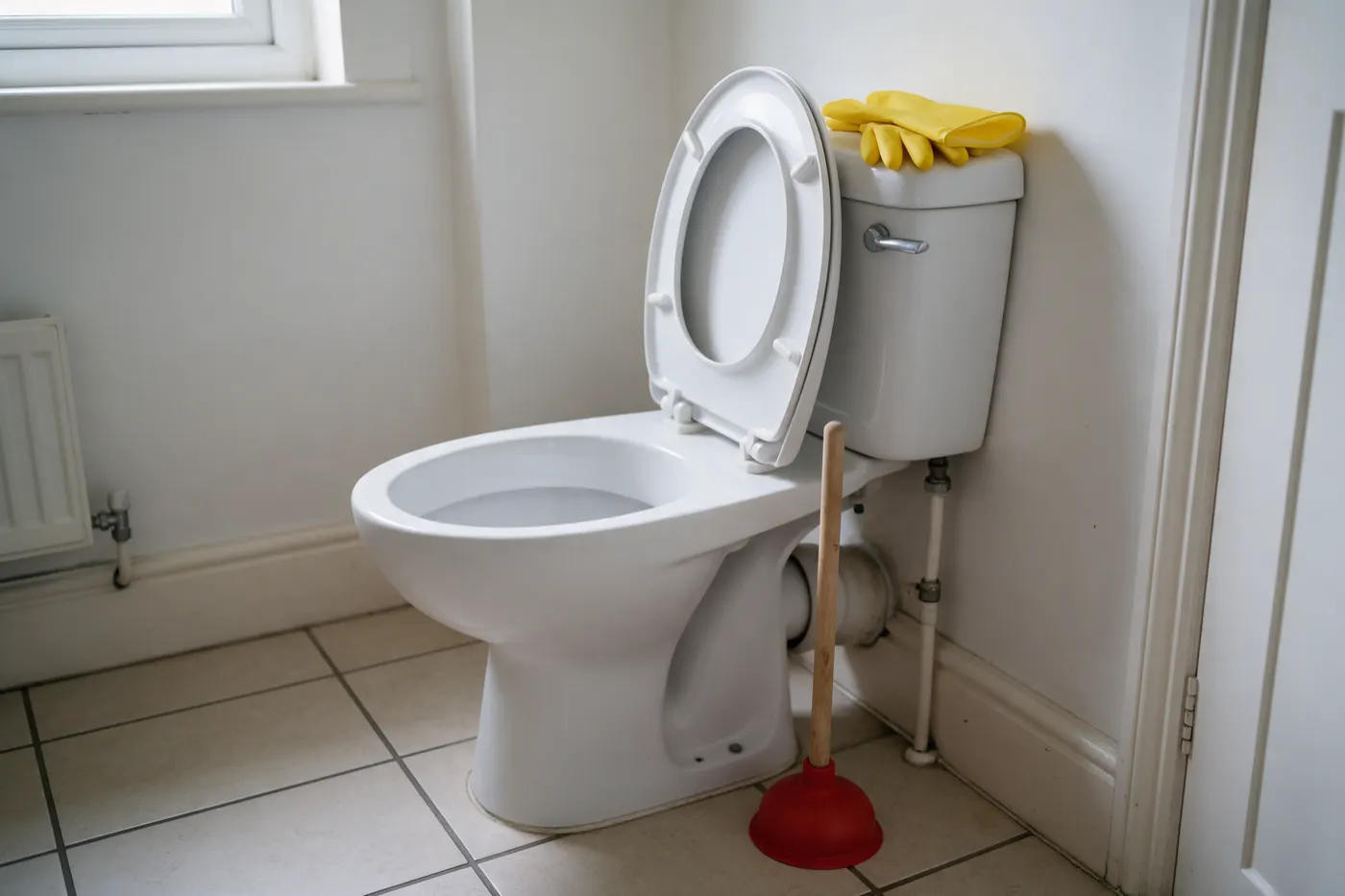
The Short Answer
One slow sink, bath or shower is often worth a go yourself. Work through these in order, cheapest and safest first:
- Pull out what you can see: hair under the plug, food in the plughole.
- Hot, not boiling, water for grease and soap.
- A plunger, with the overflow covered.
- Take the trap off over a bucket and clean it out.
- A pipe snake for a blockage further along.
We'd leave chemical unblockers until last: once one is in the pipe, you can't safely plunge it or open the trap. If more than one plughole or the toilet is backing up at once, the blockage is probably in the drain, not the sink.
Is it the sink or the drain?
If one sink, bath or shower is slow and everything else drains normally, the blockage is in that fitting's trap or waste pipe, and the steps below should reach it. If several are backing up at once, or the toilet gurgles when the sink empties, we'd expect a blockage further down the drain, which no plunger will shift: see blocked drain costs for what a drain engineer charges and which drains are whose.
What causes it depends on the room:
- Kitchen sinks: fat, oil and grease that set as they cool, and food scraps such as coffee grounds, pasta and rice, which together make a sticky sludge.
- Basins, baths and showers: hair and soap. Soap reacts with minerals in the water to leave a sticky film that catches hair.
1. Start with what you can see
If the sink is full, scoop the water out with a cup or bowl into a drain that's working. Then put on rubber gloves and pull out anything you can see in the plughole.
In a bathroom basin with a push-down plug, unscrew the cap: Toolstation says it turns anticlockwise by hand, pressed down if it's in the closed position. Check underneath for hair. In a shower, the drain cover comes off with a screwdriver.
2. Hot water, but not boiling
Hot water softens grease and soap scum. The advice on boiling water is split: Screwfix tells you to pour a kettle of boiling water down the plughole, while WaterSafe, the register of approved plumbers, says in its guide to a sink with standing water to use water that's very hot but not boiling, because boiling water can damage PVC pipes.
A pipe maker's figures show why. FloPlast rates its waste pipes for continuous flows up to 76°C and short bursts up to 100°C, as long as each lasts less than 2 minutes. Boiling water that runs straight away is within that. Boiling water poured into a sink that isn't draining sits in the plastic trap for far longer.
So we'd let the kettle stand for a few minutes first, and only pour once you've scooped out any standing water. If it's still slow, repeat once.
3. Use a plunger
Use a cup-shaped sink plunger with a flat bottom.
- Clear out any standing water and debris first.
- Cover the overflow with tape or a wet cloth, or the pressure escapes through it. Most bathroom basins have one. On a double kitchen sink, block the other plughole the same way.
- Run about 5cm of warm water into the sink so the plunger seals.
- Seal the plunger over the plughole and push and pull firmly, five to ten times.
- Lift it off and see if the water drains. If not, go again. Once it clears, run the hot tap to flush it through.
In a shower, there needs to be enough water in the tray to cover the plunger's cup.
4. Take the trap off and clean it
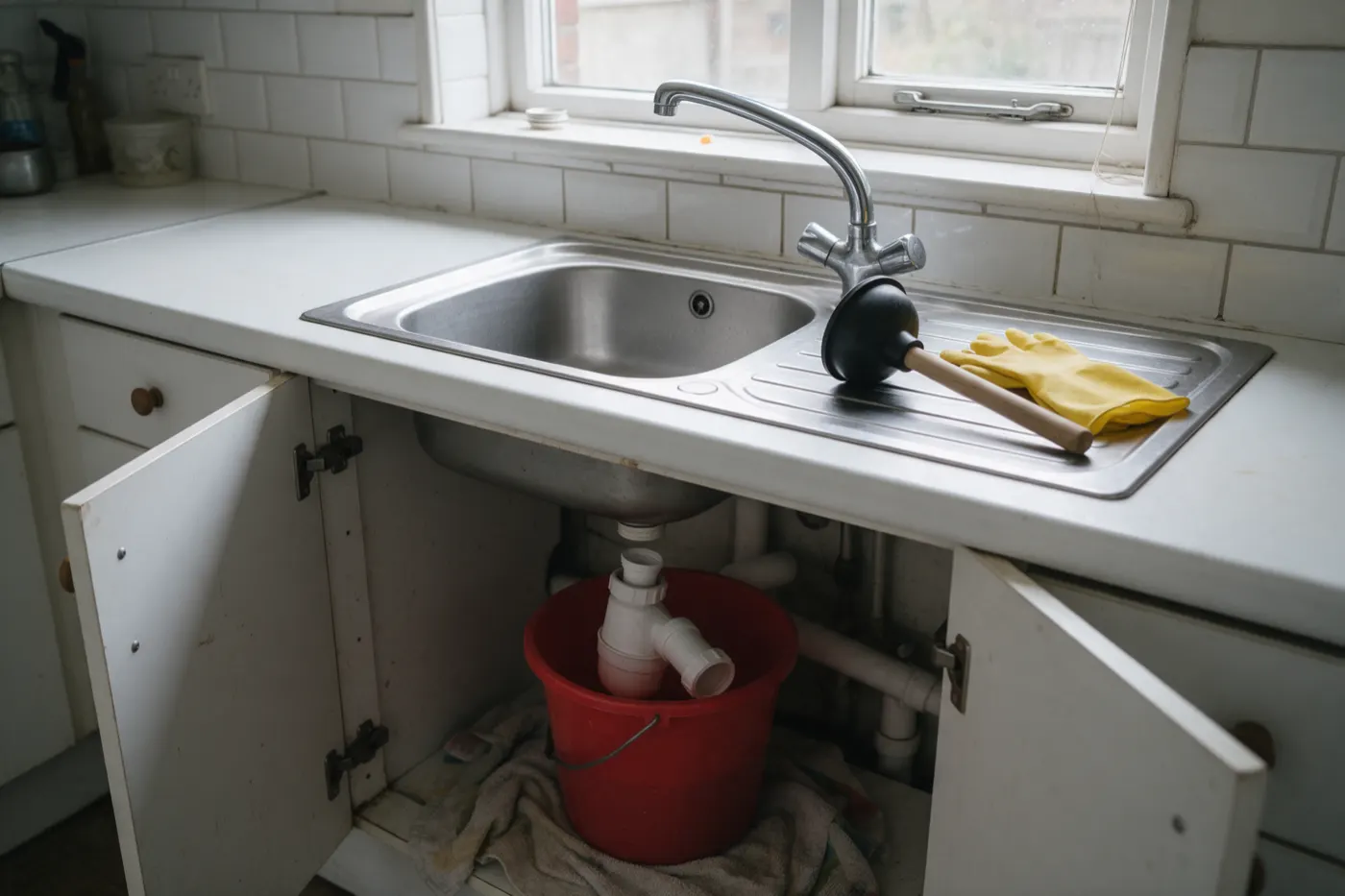
The trap is the bend or bottle-shaped fitting under the plughole. It holds water to stop drain smells coming up, and it's where food, soap and hair collect, so it's worth checking before anything stronger. Traps are meant to come apart: Approved Document H, the building regulations guidance on drainage, says a trap should be removable or have a cleaning eye so blockages can be cleared.
- Put a bucket under the trap, with old towels under that.
- Unscrew the nuts at each end (grips help if they're tight).
- Empty the trap into the bucket and clean it out with a brush or under a tap in another sink (not this one).
- Refit it, tighten the nuts and run the tap. Check for drips underneath and tighten again if needed.
If the trap is clean and the water still won't go down, the blockage is further along the waste pipe.
5. A pipe snake
A pipe snake (or drain auger) is a flexible cable that bends round the pipe to reach a blockage further in.
- Take out the plug or strainer, and put a bucket under the trap in case it leaks.
- Feed the snake in until you feel the blockage, turning the handle clockwise as you push.
- Keep turning to break it up or hook it. Don't force it: pushing too hard can drive the blockage further down.
- Pull the snake out slowly with whatever it's caught, then run hot water to check.
You can also go in from the pipe with the trap off, which avoids feeding the snake round the trap's bends.
Chemical unblockers: last, and carefully
Some drain cleaners contain caustic soda (sodium hydroxide). The UK Health Security Agency says household products containing it are unlikely to cause harm when used correctly, but stronger solutions can burn skin and damage eyes. If you get it on your skin or in your eyes, rinse with lukewarm water for at least 10 to 15 minutes and get medical advice.
That's why we'd use one last, not first. Mr Muscle's own label says not to use a plunger afterwards, because the product may still be in the pipe if it didn't clear, and to avoid splashing. The same goes for taking the trap off: with chemicals in it, you'd be emptying them into a bucket by hand.
If you do use one:
- Read the label first, and check it suits your sink. Mr Muscle's Drain Gel isn't for toilets, sinks with a waste disposal unit, or old, worn enamel or chrome.
- Open a window, and wear gloves and eye protection.
- Scoop out standing water, pour slowly, and keep children and pets away while it works.
Bicarbonate of soda and vinegar: Screwfix and WaterSafe both suggest it. Bicarbonate goes down the plughole, then white vinegar, with the drain covered while it fizzes, then a flush of hot water. It's cheap to try, but we'd go to the plunger and the trap first: they're quicker, and you can see whether they've worked.
Why it keeps blocking, gurgles or smells
Keeps blocking:
- Kitchen: don't pour fat or oil down the sink, even with hot water. Let it cool in a container and bin it when it's full. A sink strainer keeps food scraps out of the pipe.
- Bathroom: pull the hair off the plug or shower cover regularly, before it builds up in the trap.
Gurgles: Screwfix lists a partial blockage in the trap, a blocked vent pipe that lets air in and out of the system, a faulty trap, or a problem in the drain further down. A partial blockage is the one to rule out first, with the steps above.
Smells: clean the trap out first (step 4). The trap's water is the seal that keeps drain smells out of the room, so if a basin you rarely use starts to smell, run the tap for a minute to fill it again.
If it keeps coming back, or there's a foul smell that cleaning doesn't fix, WaterSafe says it could point to a problem further down the drain. A camera survey will show what's wrong: see blocked drain costs.
When to call someone, and who pays
Call a plumber if nothing above has worked, it blocks again and again, more than one fitting is affected, or a pipe is broken or leaking. If the outside drain is blocked too, a drain engineer is the right person. Prices for both are on plumbing repair costs and blocked drain costs. When you call, say which fittings are slow, what you've tried, and whether any chemical is still in the pipe.
Renting in England? Shelter says your landlord must sort out repairs to sinks, baths, toilets, plumbing and drains, even if the tenancy agreement doesn't say so. Report it as soon as you can. You might have to pay for a blockage you caused, such as by flushing nappies.
What it costs
Prices, what moves them and who to hire, in our cost guides.
Free, no obligation.
Frequently asked questions
What's the best way to unblock a sink?
Pull out anything you can see, then try hot (not boiling) water, a sink plunger with the overflow covered, and then take the trap off over a bucket and clean it. A pipe snake reaches blockages further along. We'd leave chemical unblockers until last.
How do you unblock a sink with standing water in it?
Scoop the water out first with a cup or bowl into a drain that's working, then work through the usual steps: pull out what you can see, a plunger, and cleaning the trap. A plunger needs only a little water in the sink to seal.
Can I pour boiling water down a sink?
We'd let the kettle stand for a few minutes first. FloPlast rates its waste pipes for continuous flows up to 76°C and short bursts up to 100°C of under 2 minutes, and WaterSafe warns boiling water can damage PVC pipes. Never pour it into a sink that isn't draining, where it would sit in the trap.
Is caustic soda safe for unblocking a sink?
Used as the label says, household products containing it are unlikely to cause harm, the UK Health Security Agency says, but stronger solutions can burn skin and damage eyes. Wear gloves and eye protection, and if it gets on your skin or in your eyes, rinse with lukewarm water for at least 10 to 15 minutes and get medical advice. Don't plunge or open the trap afterwards.
Does bicarbonate of soda and vinegar unblock a sink?
Screwfix and WaterSafe both suggest it, and it's cheap to try. We'd use a plunger and clean the trap first, because they're quicker and you can see whether they've worked. Never follow a bleach-based product with vinegar.
Why does my sink gurgle?
Screwfix lists a partial blockage, a blocked vent pipe, a faulty trap or a problem further down the drain. Rule out a partial blockage first by plunging and cleaning the trap.
Who pays to unblock a sink in a rented home?
In England, Shelter says your landlord must sort out repairs to sinks, baths, plumbing and drains even if the tenancy doesn't say so. You might have to pay for a blockage you caused.
How we checked this11 sources · 3 officialView sourcesHide
Rules come from the legislation and official guidance, read at source, and are linked where the guide states them. Practical advice comes from makers', trade bodies' and official guidance; where sources disagreed, we've said so. Prices aren't in our guides: they're on the cost pages linked above, each with its own sources. More on our method.
- IndustryHow to fix a sink not draining, Screwfix. Checked 27 Oct 2026.
- IndustryHow do you unblock a sink with standing water in it?, WaterSafe. Checked 27 Oct 2026.
- IndustryWhy is my sink not draining?, WaterSafe. Checked 27 Oct 2026.
- IndustryHow do you clear a clogged shower drain?, WaterSafe. Checked 27 Oct 2026.
- IndustrySoil and Waste Systems (technical brochure): working temperature, FloPlast. Checked 27 Oct 2026.
- IndustryHow to fix a pop up sink plug, Toolstation. Checked 27 Oct 2026.
- OfficialApproved Document H: Drainage and waste disposal (2015 edition), GOV.UK. Checked 15 Oct 2026.
- IndustryMr Muscle Drain Gel 500ml: directions for use, Mr Muscle (SC Johnson). Checked 27 Oct 2026.
- OfficialSodium hydroxide: general information (updated 28 November 2024), UK Health Security Agency. Checked 27 Oct 2026.
- OfficialSodium hypochlorite: general information, UK Health Security Agency. Checked 24 Oct 2026.
- IndustryLandlord and tenant responsibilities for repairs (updated 27 October 2025), Shelter England. Checked 27 Oct 2026.