The Short Answer
The main choices for a pitched roof are concrete interlocking tiles, clay or concrete plain tiles, clay pantiles and natural slate. Concrete tiles are the UK's most popular roof covering and usually the cheapest. Clay costs more and keeps its colour.
If you're re-roofing, start from what's on the roof now. Like for like is the simple route. Changing type means checking three things:
- The pitch: every tile has a minimum, and plain tiles need a steeper roof than interlocking ones.
- The weight: a change of more than 15% needs a structural survey.
- The look: in a conservation area, or on a listed building, we'd talk to the council first.
Roof pitch
The angle of the roof slope. A roofer can measure it.
These suit a 35° roof:
- Concrete interlocking tiles (from 17.5°): like for like
- Clay pantiles (from 15°): about 8% lighter than now
- Large concrete tiles with a plain-tile look (from 22.5°): about 4% lighter than now
- Clay plain tiles (from 30°): about 28% heavier than now, so a structural survey
- Concrete plain tiles (from 35°): about 48% heavier than now, so a structural survey
The roofing trade body's scheme says a change of more than 15% in the weight of the covering needs a structural survey, and the Planning Portal says changing to a significantly heavier or lighter material is likely to need building regulations approval.
Figures are one maker's (Marley) and vary with the tile, its finish and the overlap: check the minimum pitch for the exact tile you choose. Re-roofing that doesn't materially change how the house looks usually doesn't need planning permission.
The main types
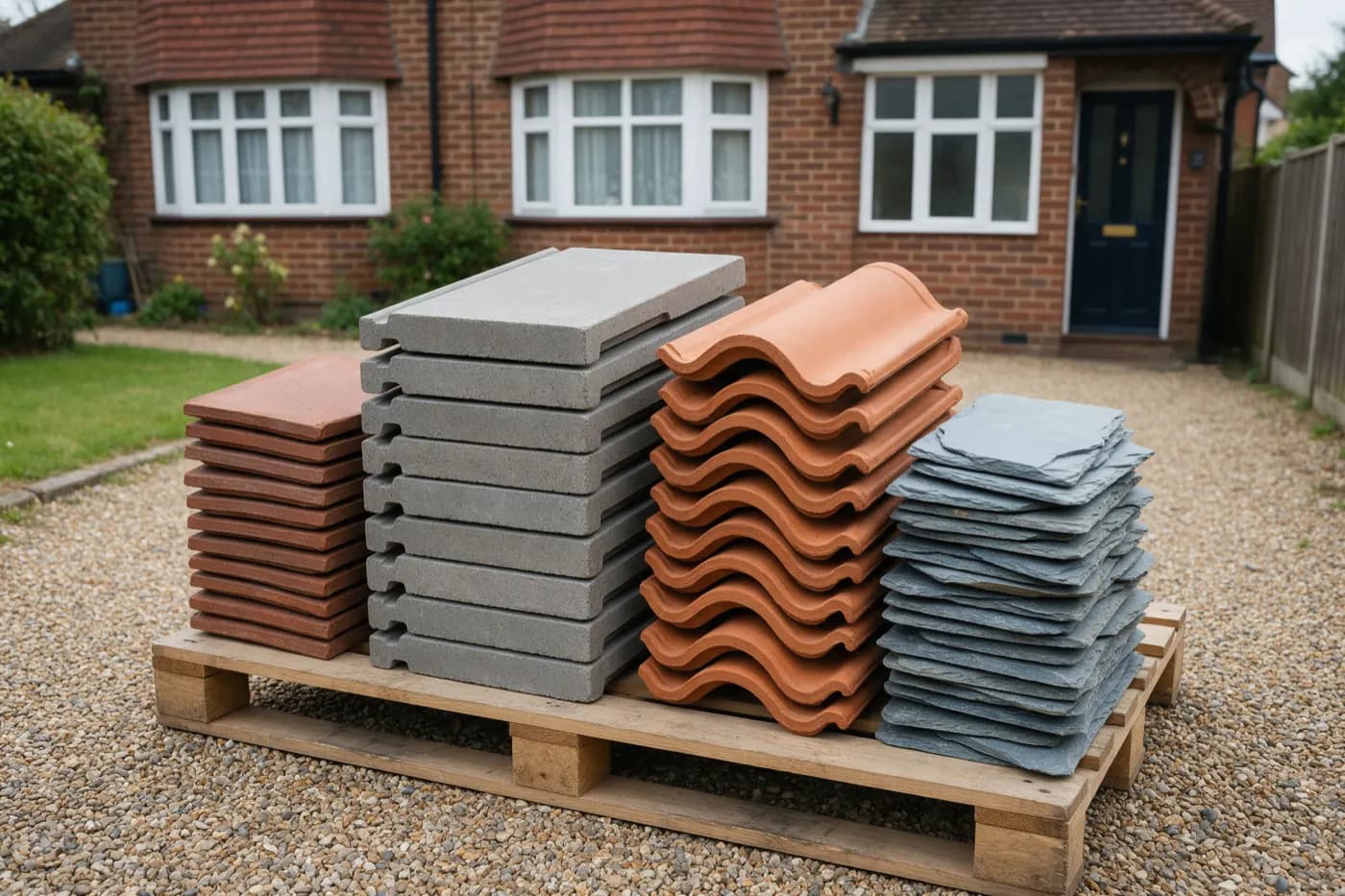
| Type | What it is | Minimum pitch | Weight per m² | Tiles per m² |
|---|---|---|---|---|
| Concrete interlocking | Large tiles that lock together at the sides, laid with a single overlap; flat or profiled | 17.5° | 50kg | 9.9 |
| Clay pantile | S-shaped, wavy clay tiles that interlock | 15° | 46.2kg | 14.9 |
| Large-format "double plain" | Concrete interlocking tiles made to look like plain tiles | 22.5° | 48kg | 17.5 |
| Clay plain | Small rectangular tiles, laid with a double overlap | 30° (40° handmade) | 64kg | 60 |
| Concrete plain | The same shape as clay plain tiles, in concrete | 35° | 73.8kg | 60 |
| Natural slate | Thin split stone, nailed in overlapping rows | Varies by size | About 35kg | Varies by size |
Where you live shapes what's usual. Wienerberger, which makes clay tiles, says natural slate is common in Wales, plain tiles in the south east and clay pantiles along the east coast of England. Marley also makes cedar shingles for roofs from 14°, and slate-look concrete tiles. For metal, see metal roof costs.
Clay or concrete?
Wienerberger says the two perform almost identically for keeping water out and lasting, so the choice mostly comes down to looks, budget and planning. Marley says much the same: similar lifespans, both low maintenance.
- Concrete is usually cheaper and is the most popular roof covering in the UK. Its painted finish can fade over time, and it can show temporary white staining (efflorescence).
- Clay costs a little more and its colour lasts the life of the tile. Handmade clay tiles cost more again.
- Weight depends on the shape as much as the material: on Marley's figures, clay plain tiles are lighter than concrete plain tiles, and concrete interlocking tiles are lighter than both.
Our view: on a house that already has concrete interlocking tiles, we'd stay with them unless you want a different look and the pitch and weight allow it. Clay is worth paying for where the look matters most: an older house, a street of clay roofs, or a conservation area.
Plain or interlocking?
Plain tiles are small and rectangular, and have to be laid with a double overlap to keep the weather out. That gives the traditional look, but it takes about 60 tiles to cover a square metre and needs a steeper roof.
Interlocking tiles fit together at the sides, so they only need a single overlap. They're bigger, so you need far fewer (about 9.9 per square metre for Marley's Modern tile), which Marley says makes them quicker and more cost-effective to lay. They also go on shallower roofs.
In between are large-format "double plain" tiles, which Marley says give the look of plain tiles at a much lower cost and on a lower pitch.
Changing to a different tile
Three things decide whether you can:
- Pitch. Every tile has a minimum pitch, and Marley says it can vary with the tile's texture and overlap. A roofer can measure yours; check it against the maker's figure for the exact tile.
- Weight. The roofing trade body's competent person scheme says a change in the weight of the covering of more than 15%, up or down, needs a structural survey. Going from slate to concrete interlocking tiles is about 43% heavier on the figures above. The Planning Portal says changing to a different material, such as slate to tiles, is likely to need building regulations approval, and a much heavier or lighter covering may mean strengthening the roof.
- The look. The Planning Portal says re-roofing that doesn't materially change how the house looks usually doesn't need planning permission. Wienerberger notes councils often want a new roof to match the area, so ask the planning office early if you're changing the look. In a conservation area, or on a listed building, we'd check any change of material or colour with the council before going further.
Which tiles have you got?
Three things tell most tiles apart from the ground or a window:
- Size: plain tiles are small, about 60 to a square metre; interlocking tiles are much bigger, around 10 to 18.
- Shape: flat rectangles (plain tiles or flat interlocking), an S-shaped wave (pantiles) or alternating flat and curved sections (Roman tiles).
- Material: concrete's painted finish can fade over the years; clay keeps its colour for the life of the tile.
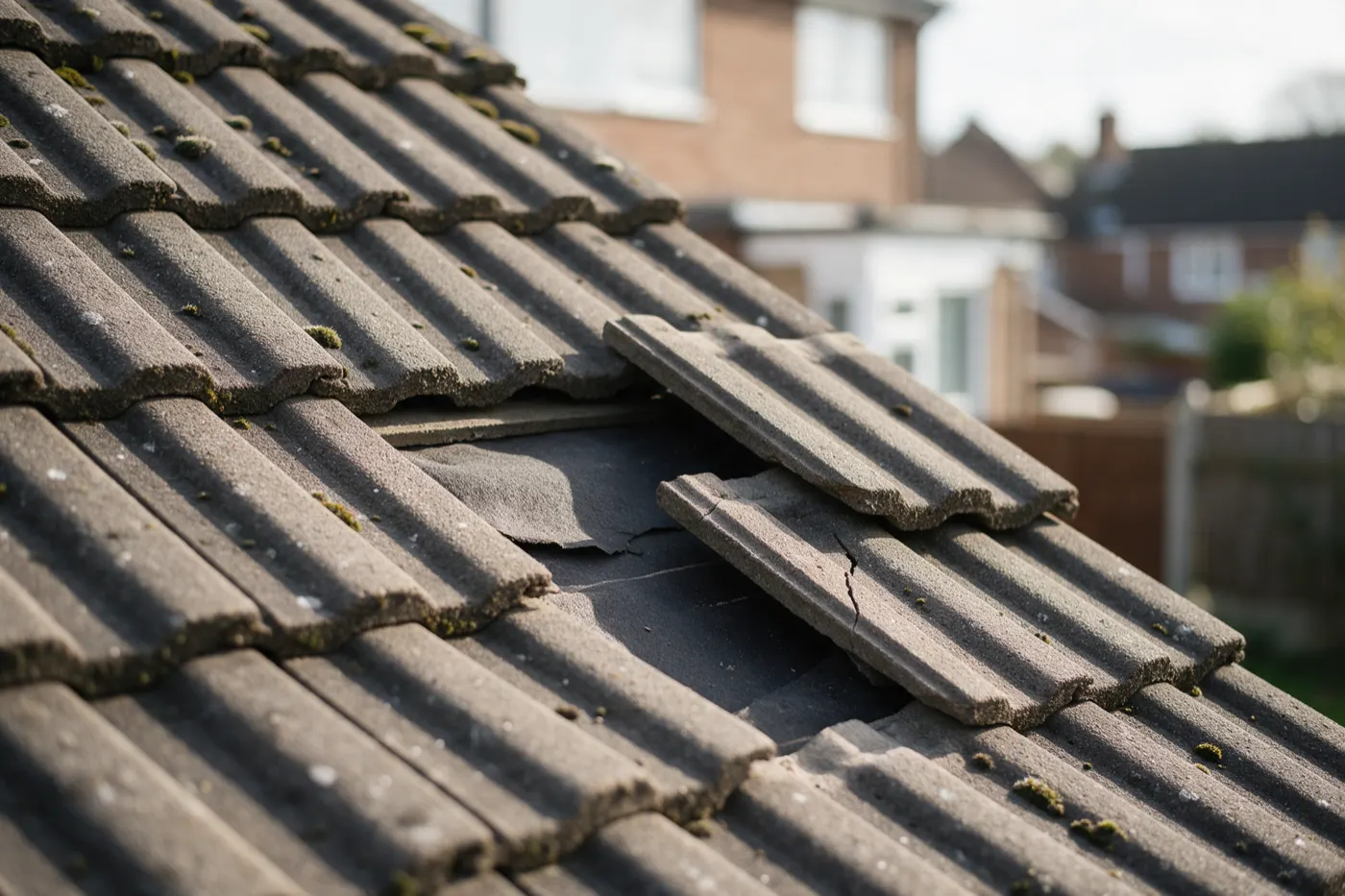
For a repair, the match matters more than the type. Marley says replacement tiles should be a close match, ideally the same tile from the same maker, so the size, shape and interlocks work with the ones already there. We'd take a spare or broken tile to a roofer or a roofing merchant to match it.
How long roof tiles last
Marley says its roof tiles are typically expected to last around 60 years, and that this is the expected life in normal conditions when correctly installed, not a guarantee. What shortens it, by the same maker's account: walking on the roof without crawl boards, pressure washing, poor installation, pollution, high winds and frost.
Marley suggests checking the roof twice a year, in autumn and spring, and after big storms: look for cracked, loose or missing tiles, damaged flashings and blocked gutters. Leave the pressure washer out of it: Marley warns it can crack tiles and force water into the roof. Repairs are on roof repair costs, and a whole new roof on new roof costs.
What it costs
Prices, what moves them and who to hire, in our cost guides.
Free, no obligation.
Frequently asked questions
What are the main types of roof tiles?
Concrete interlocking tiles, clay and concrete plain tiles, clay pantiles and natural slate cover most pitched roofs in the UK. There are also large-format concrete tiles made to look like plain tiles, and cedar shingles.
What type of roof tile is best?
It depends on the house. Concrete interlocking tiles are usually the cheapest and go on shallower roofs; clay costs more and keeps its colour. On a re-roof, we'd start from what's there now: like for like avoids weight and planning questions.
Are clay roof tiles better than concrete?
Wienerberger says they perform almost identically for keeping water out and lasting. Clay keeps its colour and costs more; concrete is cheaper but its finish can fade.
How long do roof tiles last?
Marley says its tiles are typically expected to last around 60 years when correctly installed, though that's not a guarantee. Walking on the roof, pressure washing, poor installation and the weather all shorten it.
Can I change my roof tiles to a different type?
Usually, if the pitch suits the new tile and the weight doesn't change by more than 15%, beyond which the roofing trade body's scheme says you need a structural survey. Changing material is likely to need building regulations approval, and in a conservation area or on a listed building, we'd check with the council first.
What's the minimum roof pitch for tiles?
It depends on the tile. On Marley's figures, its concrete interlocking tiles go down to 17.5° and its clay pantiles to 15°, while plain tiles need 30° (clay) to 35° (concrete). Check the figure for the exact tile.
How do I identify my roof tiles?
Look at the size (small plain tiles or big interlocking ones), the shape (flat, S-shaped pantiles or Roman) and the colour (concrete fades; clay's colour lasts). For a repair, take a spare or broken tile to a roofer or roofing merchant to match it.
How we checked this14 sources · 3 officialView sourcesHide
Rules come from the legislation and official guidance, read at source, and are linked where the guide states them. Practical advice comes from makers', trade bodies' and official guidance; where sources disagreed, we've said so. Prices aren't in our guides: they're on the cost pages linked above, each with its own sources. More on our method.
- IndustryA guide to different roof tile types (updated 1 August 2025), Marley. Checked 27 Oct 2026.
- IndustryModern concrete interlocking roof tile: technical specification, Marley. Checked 27 Oct 2026.
- IndustryPlain concrete roof tile: technical specification, Marley. Checked 27 Oct 2026.
- IndustryAcme single camber clay plain tile: technical specification, Marley. Checked 27 Oct 2026.
- IndustryLincoln clay interlocking pantile: technical specification, Marley. Checked 27 Oct 2026.
- IndustryAshmore interlocking double plain tile: technical specification, Marley. Checked 27 Oct 2026.
- IndustryHow much does slate weigh?, Cupa Pizarras. Checked 27 Oct 2026.
- IndustryClay vs concrete roof tiles: understanding the differences, Wienerberger. Checked 27 Oct 2026.
- OfficialNFRC Competent Person Scheme: property owners' FAQ, NFRC CPS. Checked 27 Oct 2026.
- OfficialBuilding regulations: re-roofing, Planning Portal. Checked 27 Oct 2026.
- OfficialRoof: planning permission and building regulations for re-roofing, Planning Portal. Checked 27 Oct 2026.
- IndustryWhat is the life expectancy of roof products?, Marley. Checked 27 Oct 2026.
- IndustryWhat is the life expectancy of roof tiles, Marley. Checked 27 Oct 2026.
- IndustryA homeowner's guide to roof tile maintenance, Marley. Checked 27 Oct 2026.