The Short Answer
Let the heating run for 15 to 20 minutes, then feel where the radiator is cold. That tells you the cause:
- Cold at the top, warm at the bottom: trapped air. Bleed it.
- Warm at the top, cold at the bottom: sludge. Bleeding won't help: it needs cleaning out, or a power flush if several radiators are affected.
- Cold all over, the rest working: usually the valve. Turn it up, then check for a stuck pin.
- Every radiator cold: the boiler, its settings or the pressure, not the radiators.
Cold at the top: trapped air. Bleed it.
With the heating off and the radiator cool, open the bleed valve a little (anticlockwise) until the hissing stops and water appears, then close it. Check the boiler pressure afterwards and top it up if it's dropped.
Always let the radiators cool before bleeding or touching the valves: the water inside can scald. Anything inside the boiler is for a Gas Safe registered engineer only.
First, check it properly
When the heating first comes on, a radiator is hotter at the bottom near the inlet, and the heat spreads up over the next few minutes. So give it 15 to 20 minutes, then put your palm flat at the bottom in the middle and slide it up to the top. A working radiator feels about the same temperature all over.
Cold at the top: trapped air
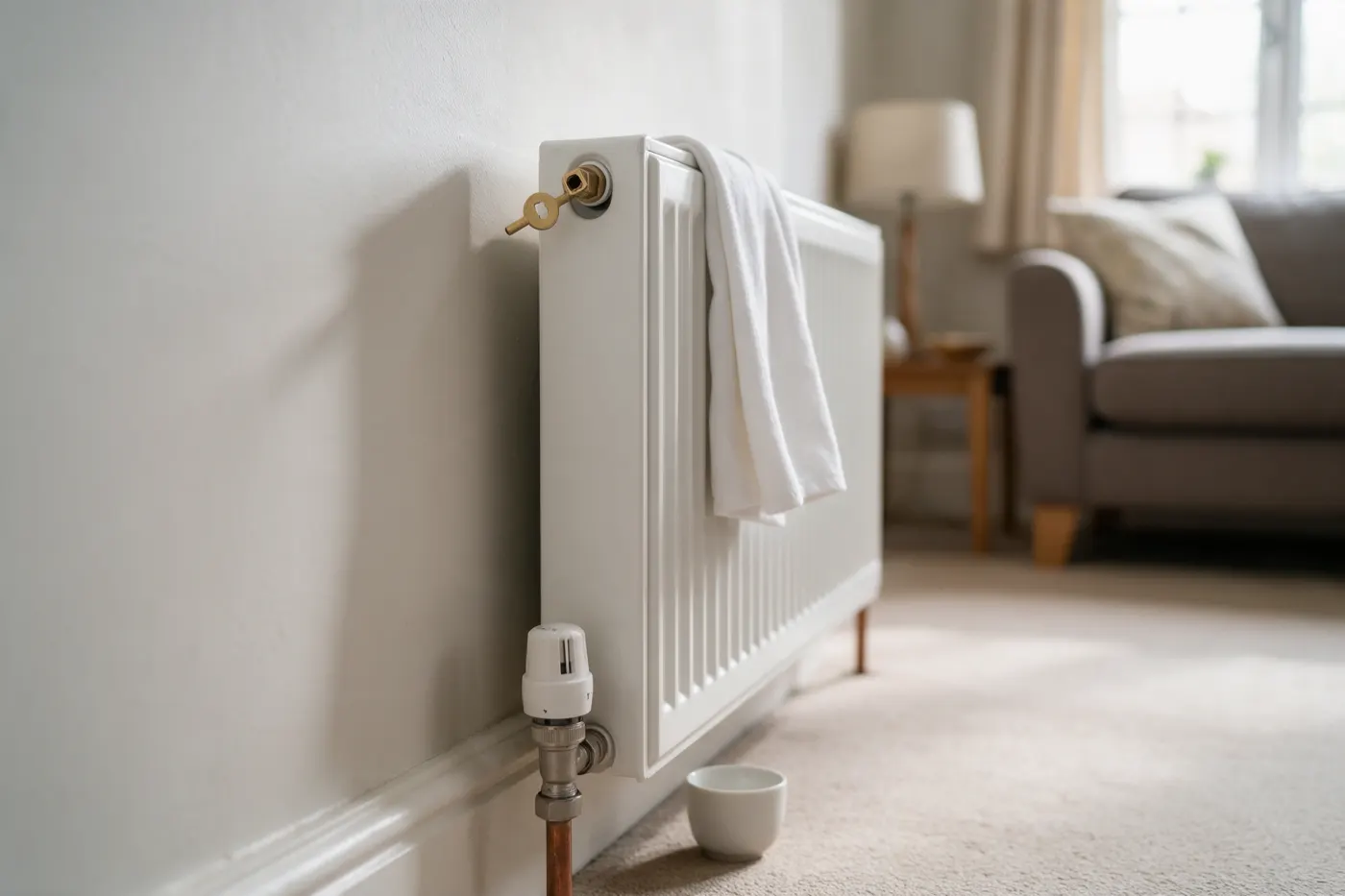
Air collects at the top of the radiator, where hot water can't reach. The fix is to bleed it:
- Turn the heating off and let the radiators cool: the water inside can scald.
- Find the bleed valve at the top: on the end, at the back, or on top of a towel rail. Most need a radiator key; some take a flat-head screwdriver.
- Hold a cloth and a small container under it, and open it slightly anticlockwise. You'll hear a hiss as the air escapes.
- Close it as soon as water comes out. Gently: it doesn't need to be tight. Don't open it all the way.
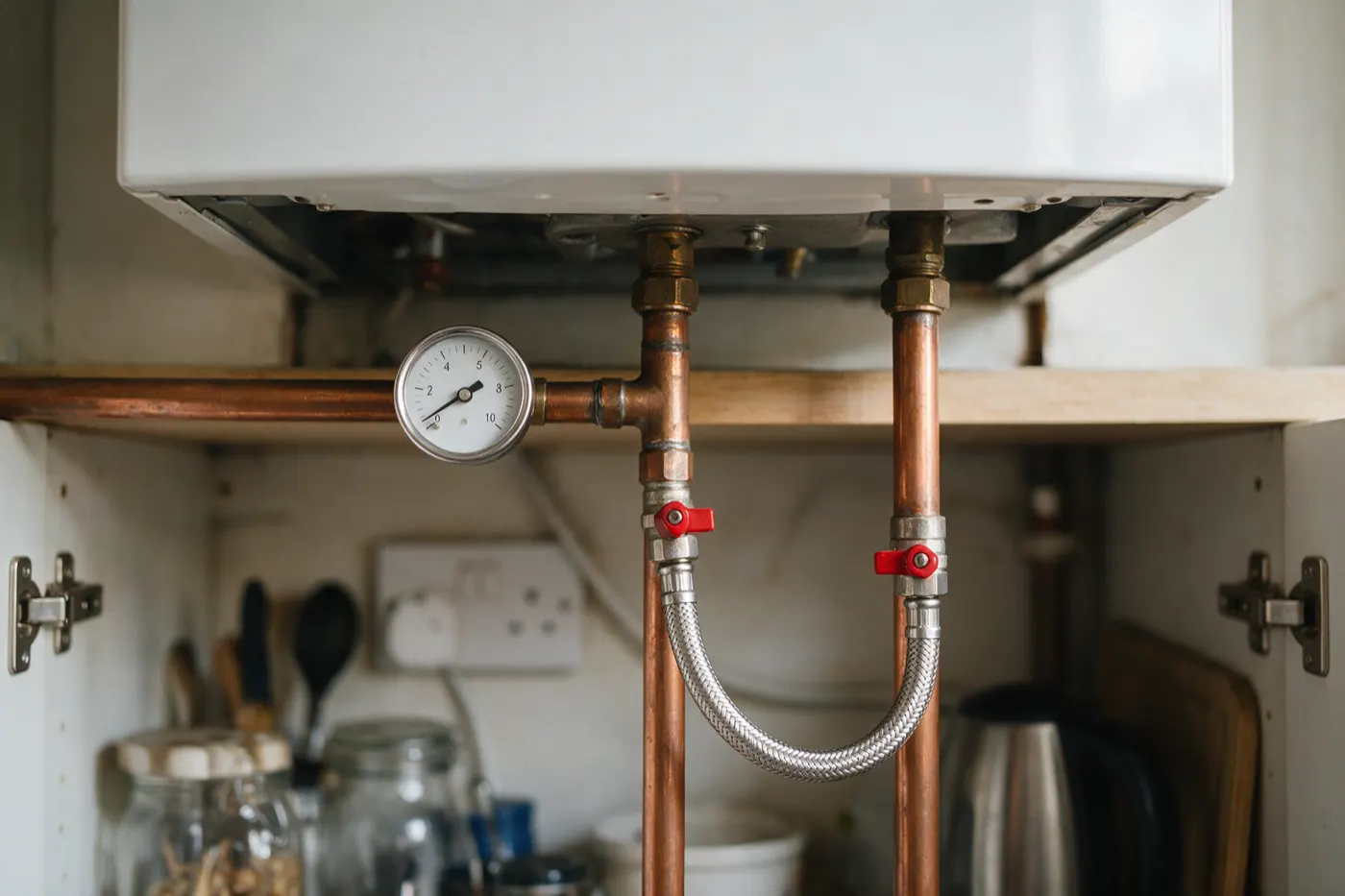
- Check the boiler pressure. British Gas says it should be about 1 to 1.5 bar with the heating off; if it's dropped below that, top it up (see our boiler pressure guide).
If radiators need bleeding again and again, air is getting in or being made inside the system. Corrosion inside it gives off gas as well as sludge, which is one reason an inhibitor in the water matters.
Cold at the bottom: sludge
A radiator that's warm at the top and cold at the bottom has hot water flowing across the top but not through the bottom, almost always because of sludge. It's iron oxide from the inside of steel radiators and pipes, and it settles in the middle and bottom of the radiator. Bleeding won't help: there's no air in the way.
- Just one radiator: it can be taken off, flushed through with a hose outside until the water runs clean, and refitted. Ideal Heating says that's fine for an accomplished DIYer; British Gas advises against flushing radiators yourself. We'd say one radiator is a reasonable DIY job if you're confident isolating the valves and topping up the boiler pressure afterwards (taking a radiator off nearly always drops it). If not, it's a job for a heating engineer.
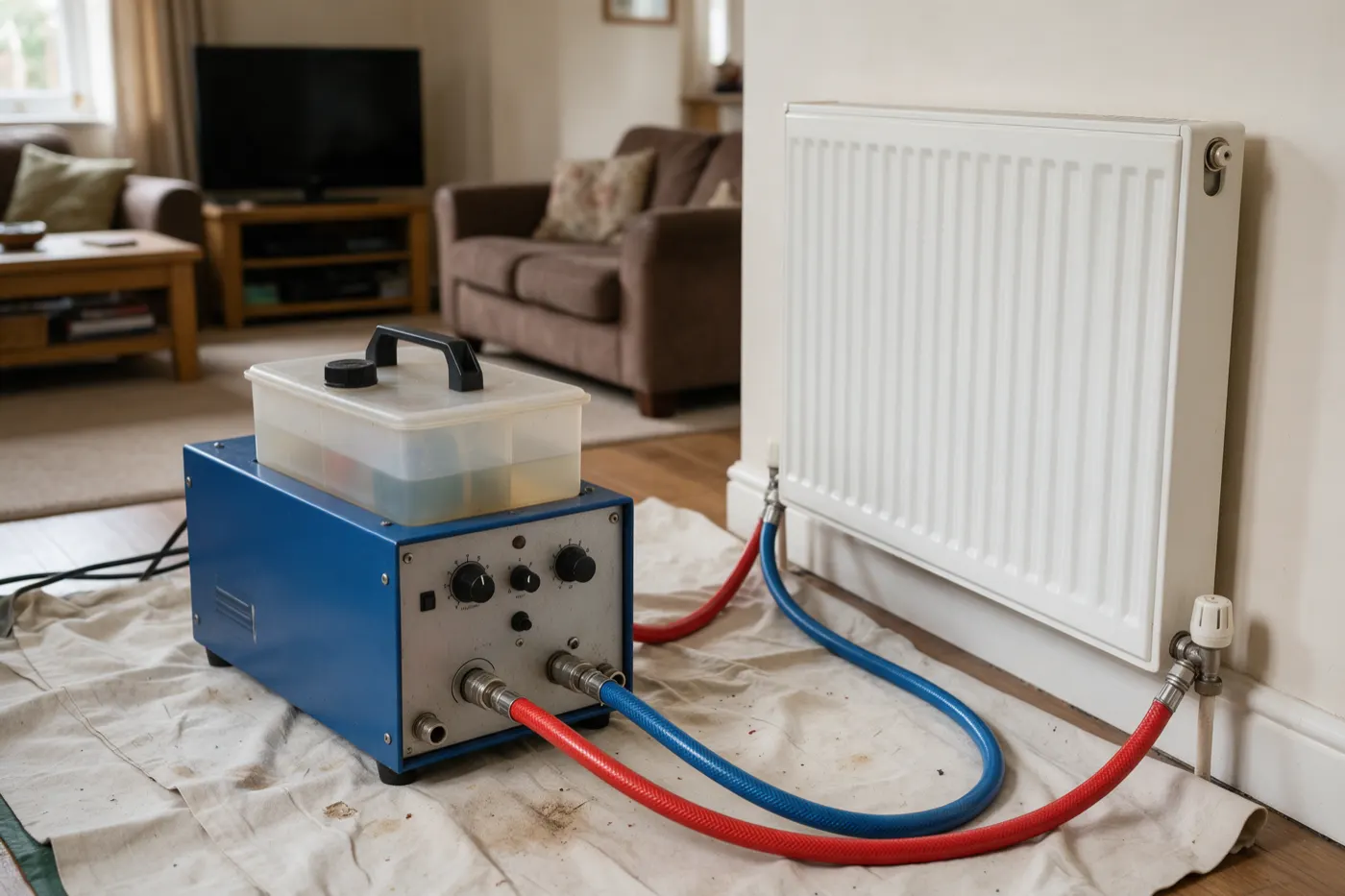
- Several radiators: the sludge is through the whole system. A power flush forces water and cleaning chemicals through every radiator; a chemical clean, left in the system for a while then drained and refilled, is the other option. Both are jobs for a heating engineer.
Stopping it coming back: ask for an inhibitor in the system water, which slows the corrosion that makes sludge, and a magnetic filter on the boiler pipework to catch what does form (Ideal Heating).
One radiator cold all over
If one radiator stays cold while the rest heat up, start with its valves:
- Turn the thermostatic valve right up. It may simply be set too low.
- Bleed it, in case it's full of air.
- Check for a stuck pin. Thermostatic valve pins can stick. With the heating off, unscrew the valve head and press the pin with the flat end of an Allen key: Danfoss, which makes them, says it should move in 2 to 3mm and spring back. If it's stuck, tap the side of the valve gently and work the pin in and out until it frees, then refit the head and check for leaks.
- Check the lockshield valve at the other end, under its plastic cap. If it's been closed, the radiator gets no water; it opens anticlockwise with a lockshield key or adjustable spanner.
If it's still cold, the valve may be blocked with sludge or limescale, or the radiator itself may be failing: that's for a heating engineer.
Some rooms always colder: balancing
If every radiator works but the ones furthest from the boiler are always slow or cooler, the system needs balancing. Without it, the radiators nearest the boiler take most of the hot water. Balancing means adjusting each lockshield valve so they all heat evenly. Screwfix aims for a 12 degree drop between the pipe in and the pipe out of each radiator, measured with a thermometer. It's also worth doing after a new radiator goes in. If a new radiator stays cold, check both its valves are open and bleed it first.
Every radiator cold, but there's hot water
When all the radiators are cold, the problem is the boiler or its controls, not the radiators. Glow-worm's checklist, in order:
- The boiler settings: is the heating switched on, not just hot water, and not held off by a timer?
- The flow temperature: if it's been turned right down, radiators only get lukewarm. Glow-worm suggests 60 to 70°C.
- The room thermostat: turned up (18 to 21°C is comfortable), out of direct sun and draughts, and, if it's wireless, with working batteries.
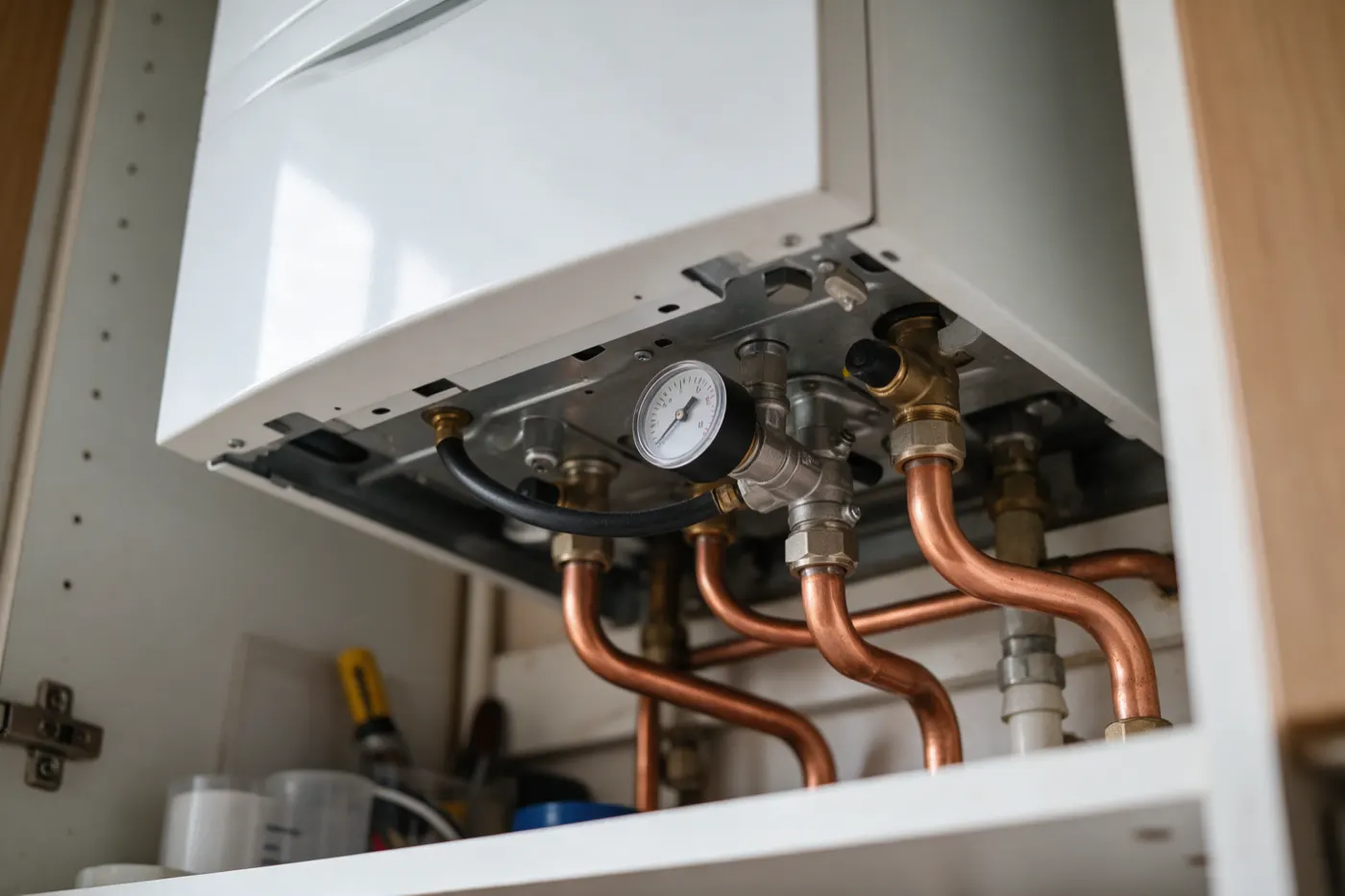
- The pressure gauge: top it up if it's low (see our boiler pressure guide).
- Any fault code on the display: look it up in the manual or our boiler error codes guide.
On a combi boiler, if all that's fine and every hot tap is off but the heating still won't come on, it could be a stuck or faulty diverter valve, the part that switches the hot water between the taps and the radiators.
What it costs
Prices, what moves them and who to hire, in our cost guides.
Free, no obligation.
Frequently asked questions
Why is my radiator cold at the bottom and hot at the top?
Almost always sludge: iron oxide from inside the system settling in the bottom of the radiator and blocking the flow. Bleeding won't fix it. One radiator can be taken off and flushed; several usually need a power flush.
Why is my radiator cold at the top?
Trapped air. With the heating off and the radiator cool, open the bleed valve slightly anticlockwise until the hiss stops and water appears, then close it and check the boiler pressure.
Why is one radiator not getting hot after bleeding?
If it's cold at the bottom, it's sludge, which bleeding won't touch. If it's cold all over, check the thermostatic valve is turned up, the pin under its head isn't stuck (it should move in 2 to 3mm and spring back), and the lockshield valve at the other end is open.
Why do I have hot water but no heating?
Check the heating is switched on and not held off by a timer, the room thermostat is turned up, and the boiler pressure is about 1 to 1.5 bar with the heating off. On a combi, if those are fine, it could be the diverter valve, which needs a Gas Safe registered engineer.
Why are my radiators only lukewarm?
The boiler's flow temperature may be set low: Glow-worm suggests 60 to 70°C. If only some are lukewarm, the system may need balancing, or those radiators may have sludge.
Do I need a plumber for a cold radiator?
Not to start with: bleeding, turning the valve up, freeing a stuck pin and topping up the pressure are all things you can try. Call a heating engineer for sludge through several radiators, a valve that won't free, or anything inside the boiler, which needs a Gas Safe registered engineer.
How we checked this8 sourcesView sourcesHide
Rules come from the legislation and official guidance, read at source, and are linked where the guide states them. Practical advice comes from makers', trade bodies' and official guidance; where sources disagreed, we've said so. Prices aren't in our guides: they're on the cost pages linked above, each with its own sources. More on our method.
- IndustryRadiator cold at the bottom? Possible causes and solutions, Ideal Heating. Checked 2 Nov 2026.
- IndustryRadiator cold at the top? Here's why and what to do, Ideal Heating. Checked 2 Nov 2026.
- IndustryWhy is my radiator not working?, Vaillant. Checked 2 Nov 2026.
- IndustryHow to bleed a radiator, British Gas. Checked 2 Nov 2026.
- IndustryHow to balance radiators, Screwfix. Checked 2 Nov 2026.
- IndustryWhy is my boiler giving me hot water but no heating?, Glow-worm. Checked 2 Nov 2026.
- IndustryWinter preparations: save money by winter-proofing your radiator, Danfoss. Checked 2 Nov 2026.
- IndustryWhat pressure should my boiler be set at?, British Gas. Checked 19 Oct 2026.