The Short Answer
Bleed a radiator when it's cold at the top and warm at the bottom: that's trapped air. Then:
- Turn the heating off and let the radiators cool.
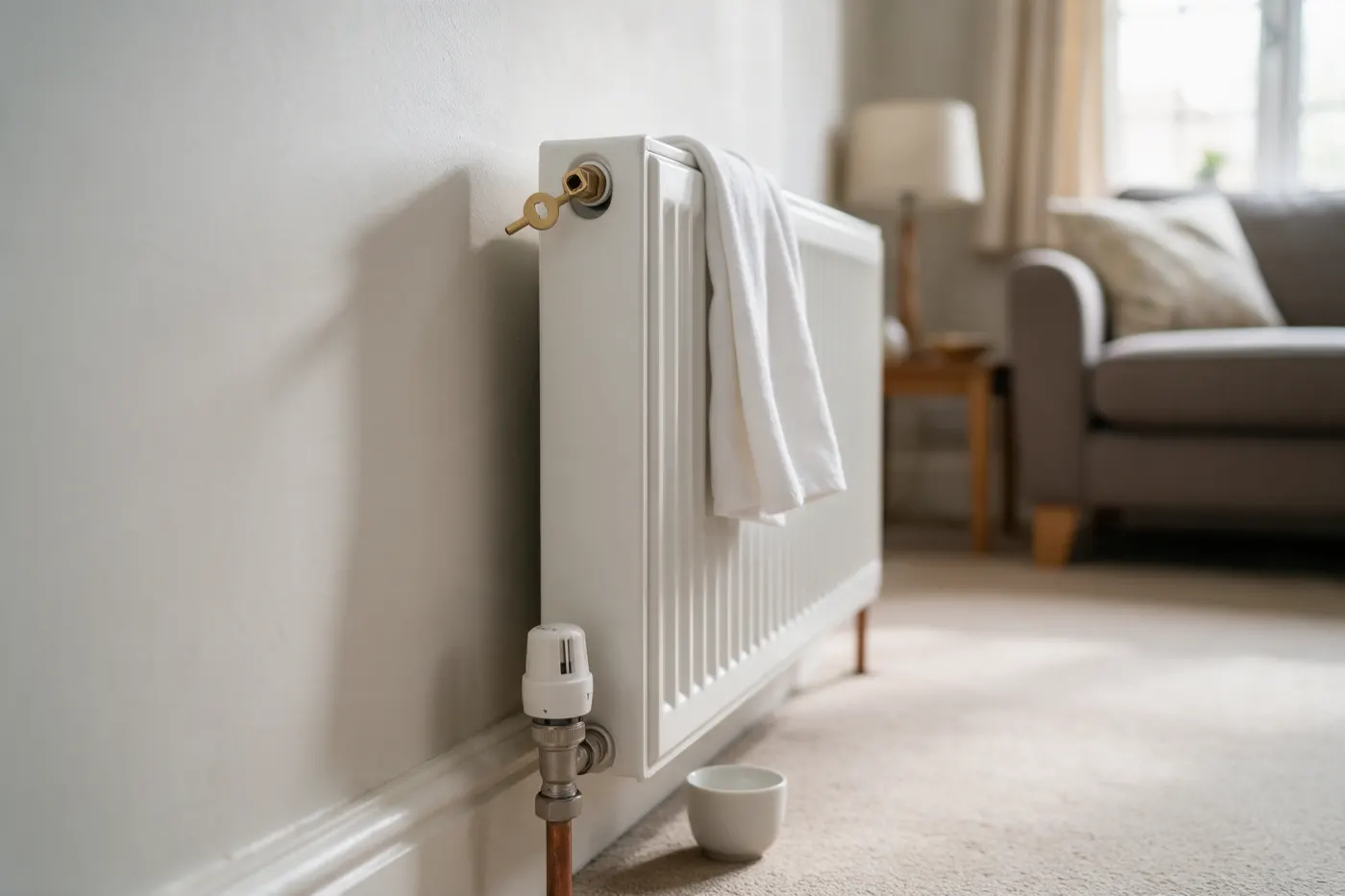
- Hold a cloth under the bleed valve at the top corner and open it slightly anticlockwise with a radiator key or a flat-head screwdriver.
- When the hissing stops and water comes out, close it clockwise.
- Do the others that need it, then check the boiler pressure and top it up if it's dropped.
If it's cold at the bottom instead, bleeding won't help: that's usually sludge.
Does it need bleeding?
Turn the heating on and let it run for 15 to 20 minutes, then feel each radiator from the bottom up. Air collects at the top, so the signs are:
- cold at the top, warm at the bottom;
- gurgling or hissing from the radiator;
- a room that takes longer to warm up than it used to.
Only bleed the ones that need it. A radiator that's warm at the top and cold at the bottom doesn't: that points to sludge, and bleeding won't help. Our radiator not heating up guide covers that and the other causes.
What you need (and bleeding without a key)
- A radiator key, the small L-shaped key that fits the square end of the bleed valve. Modern ones are a standard size, and DIY shops and plumbers' merchants sell them.
- Or a flat-head screwdriver, if the valve has a single straight slot rather than a square or hex end. Many modern radiators do.
- A cloth or old towel and a small container, to catch the drips.
No key and no slot? A radiator spanner, an Allen key or a combination radiator wrench can also open some valves. Don't use pliers or a cross-head screwdriver: they can damage the screw, so it's hard to close or bleed next time. We'd buy a key: it's cheap and fits properly, and if a valve is stiff, a cloth over the key gives you a better grip. On a radiator around 30 years old the valve may be an old imperial size: a clock key between size 8 and 12 should fit.
How to bleed a radiator, step by step
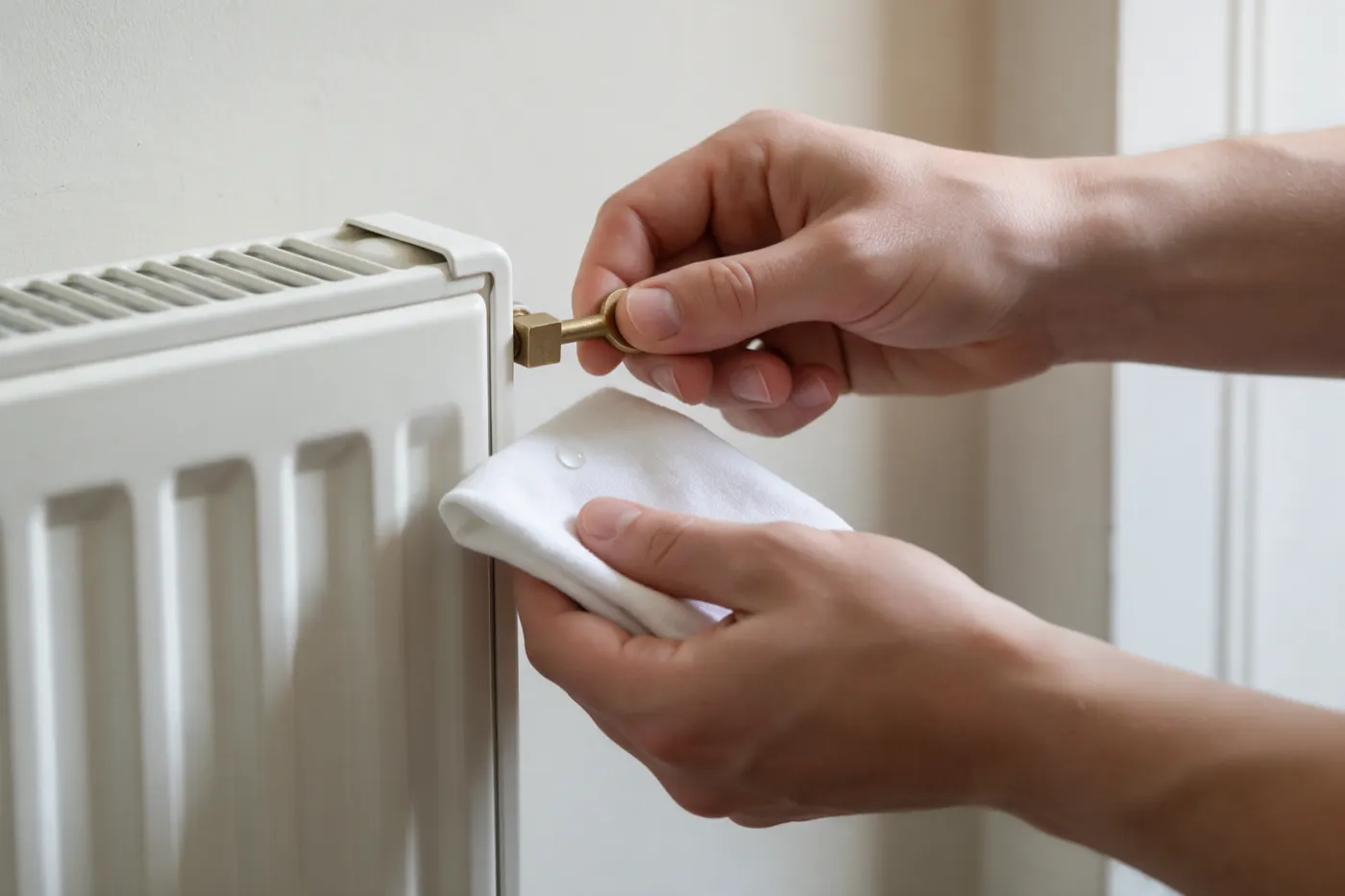
- Turn the heating off and let the radiators cool. The water and air inside can be hot enough to scald.
- Find the bleed valve. It's at the top, usually at one end. Look on the back face too, and under old paint.
- Hold the cloth under it, with the container below.
- Open it slowly and only slightly, anticlockwise. You'll hear a hiss as the air comes out. Don't open it all the way: you'll lose a lot of water and pressure, and the screw can come out.
- Close it clockwise when water comes out in a steady trickle rather than spits. Snug, not forced: it doesn't need much.
- Do the other radiators that need it, in order (below).
- Check the boiler pressure, then turn the heating back on and check each radiator is warm all over.
A note on direction: you may see a guide that says turn the valve clockwise to open it. Anticlockwise is right: it's the normal way to undo a screw, and it's what every other guide we checked says.
Which radiator to bleed first
Start downstairs, with the radiator furthest from the boiler, and work back towards it. Then go upstairs and do the same. Starting low and far from the boiler lets the air out in the order it collects. Bleeding one radiator doesn't bleed the others: each has its own valve, and you only need to do the ones that were cold at the top.
Heated towel rails
A towel rail connected to the central heating is bled the same way. The valve is often on the top, pointing up, rather than on the end. With the heating off and the rail cool, open it slightly with the key, wait for the hiss to stop and water to appear, and close it.
Combi boilers and the pressure afterwards
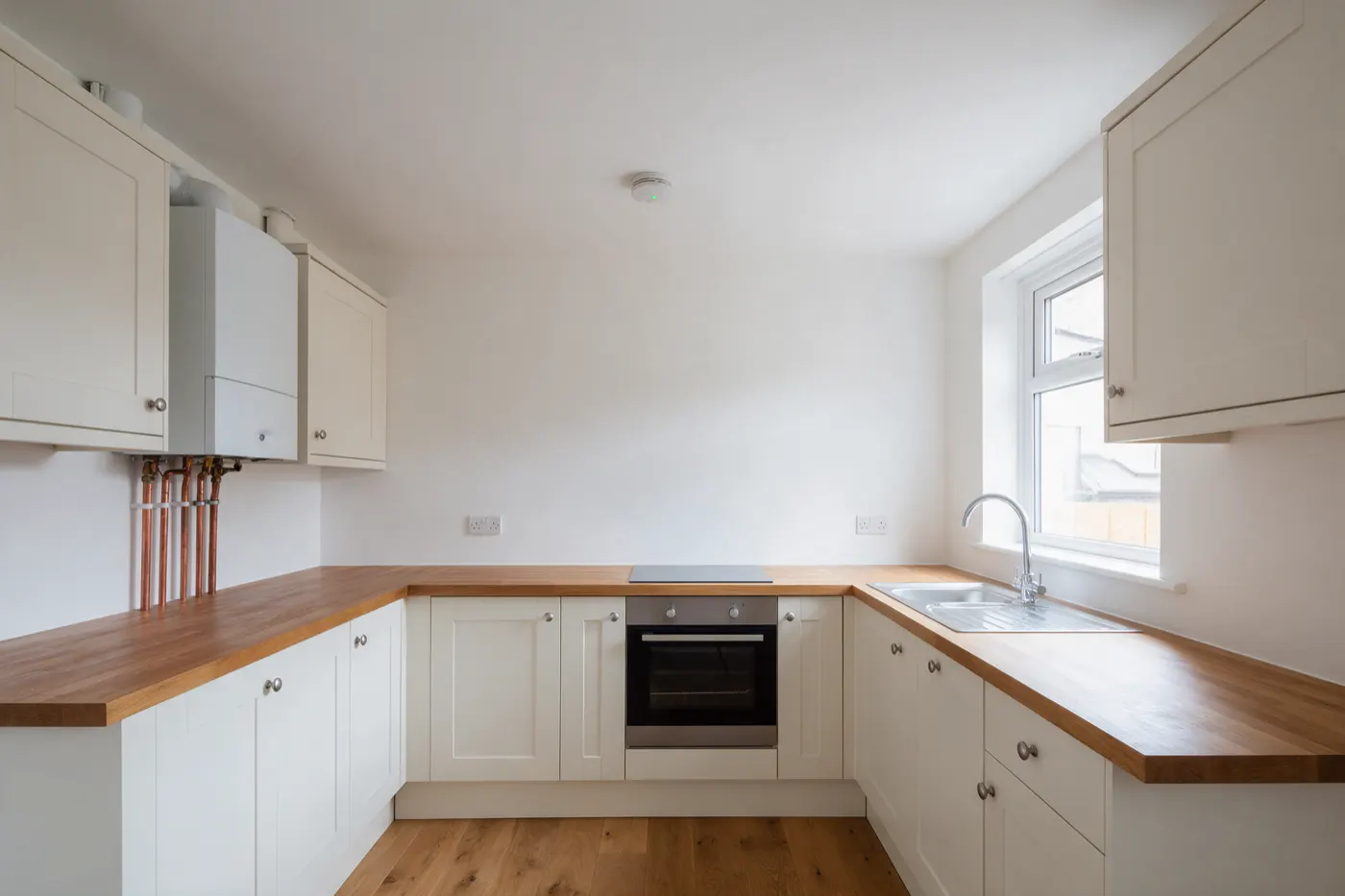
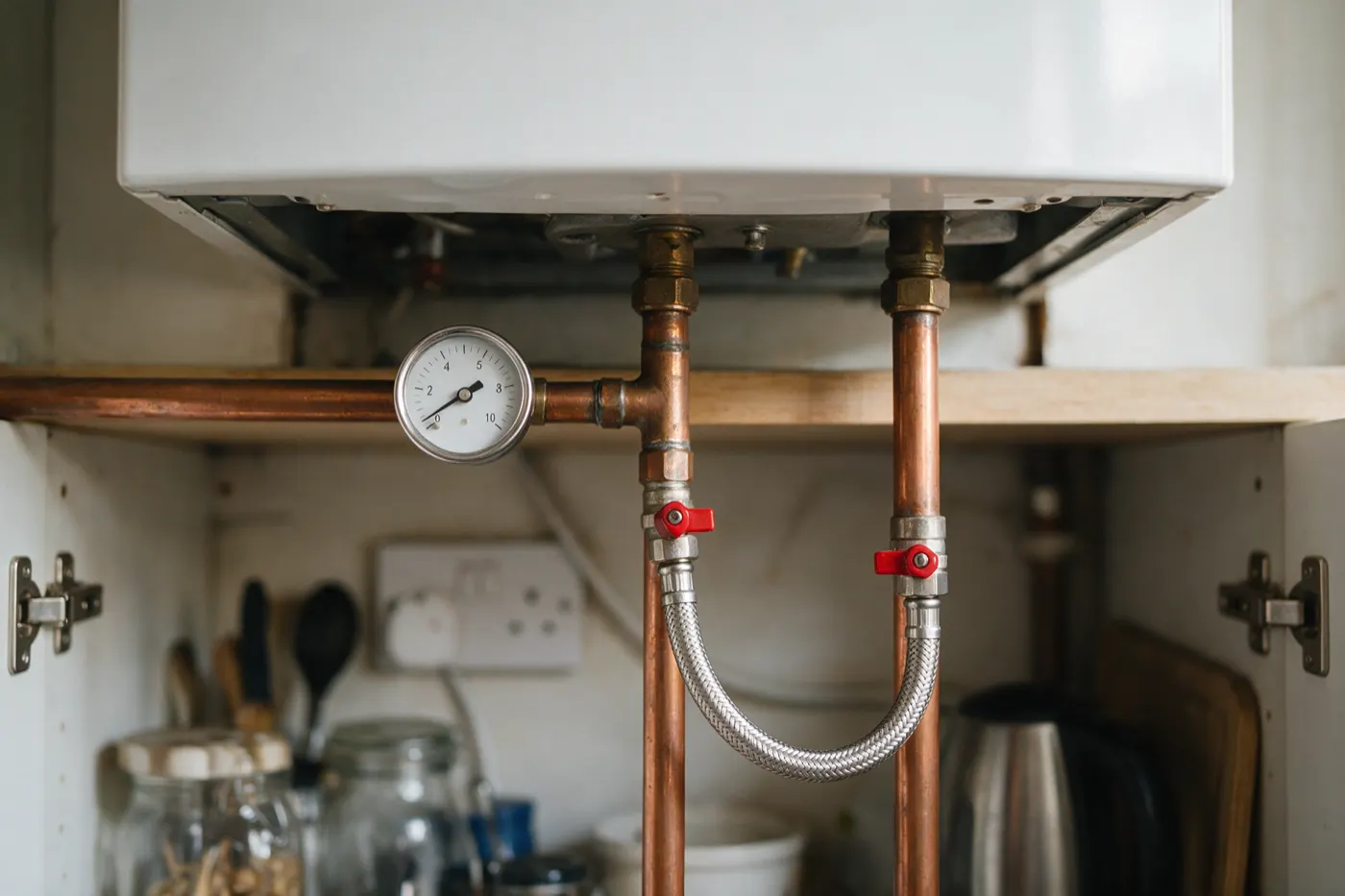
A combi boiler doesn't change how you bleed a radiator: what matters is the pressure. Modern combi and system boilers run on a sealed system, with a pressure gauge on the boiler, and letting air and water out lowers the pressure, so check it and top it up once you've finished.
Most sealed systems sit at about 1 to 1.5 bar with the heating off, but your boiler's manual is the one to follow. If it's dropped below that, top it up with the filling loop: our boiler pressure guide shows how. A small drop after bleeding is expected. If it keeps falling after you've topped it up, something else is wrong, and that guide covers the causes.
Still cold after bleeding?
Check the boiler pressure first: low pressure can stop the radiators heating properly. Then look at where it's cold:
- Still cold at the bottom: sludge, which bleeding won't shift.
- Cold all over: probably the valve, or a stuck pin under the thermostatic head.
- Every radiator cold: the boiler or its controls.
Our radiator not heating up guide has a checker that works through these. If a radiator stays cold after a proper bleed and those checks, call a heating engineer: it may be a faulty valve or a blockage. Prices are on our boiler repair and power flush cost pages.
How often to bleed radiators
Advice varies from every few months to once a year. We'd do it whenever a radiator is cold at the top, and feel them all at the start of the heating season, in September or October, after the summer off.
What it costs
Prices, what moves them and who to hire, in our cost guides.
Free, no obligation.
Frequently asked questions
Do you bleed radiators with the heating on or off?
Off, and let them cool first. The water and air inside a hot radiator can scald you when the valve opens. Turn the heating on beforehand only to find which radiators are cold at the top.
Which way do you turn a radiator bleed valve?
Anticlockwise to open it, slowly, until you hear the hiss; clockwise to close it once water comes out. Only open it slightly.
Which radiator should you bleed first?
Start downstairs with the radiator furthest from the boiler, work back towards the boiler, then do the same upstairs.
Does bleeding one radiator bleed them all?
No. Each radiator has its own bleed valve, and the air sits in the radiators that are cold at the top. Bleed each of those.
How do you bleed a radiator without a key?
If the valve has a straight slot, use a flat-head screwdriver. A radiator spanner or an Allen key can also fit some valves. Avoid pliers and cross-head screwdrivers, which can damage the screw.
Do I need to top up my boiler after bleeding radiators?
Check the gauge: on a sealed system it drops as you bleed. If it's below about 1 bar with the heating off (or below what your manual says), top it up with the filling loop.
How long do radiators take to heat up after bleeding?
Turn the heating back on and give it 15 to 20 minutes, then feel each radiator from the bottom up. It should be about the same temperature all over.
How we checked this7 sourcesView sourcesHide
Rules come from the legislation and official guidance, read at source, and are linked where the guide states them. Practical advice comes from makers', trade bodies' and official guidance; where sources disagreed, we've said so. Prices aren't in our guides: they're on the cost pages linked above, each with its own sources. More on our method.
- IndustryHow to bleed a radiator, British Gas. Checked 2 Nov 2026.
- IndustryHow to bleed a radiator, Worcester Bosch. Checked 4 Nov 2026.
- IndustryHow to bleed a radiator: step-by-step guide, Screwfix. Checked 4 Nov 2026.
- IndustryHow to bleed a radiator without a key (24 March 2022), Viessmann. Checked 4 Nov 2026.
- IndustryHow to bleed a radiator: when, how often and step by step, City Plumbing. Checked 4 Nov 2026.
- IndustryRadiator cold at the top? Here's why and what to do, Ideal Heating. Checked 2 Nov 2026.
- IndustryWhat pressure should my boiler be set at?, British Gas. Checked 19 Oct 2026.