The Short Answer
Paint peels when it loses its grip on the surface underneath. The usual causes are moisture (condensation or damp behind the paint), a dusty, greasy or crumbly surface, new plaster painted too soon, or modern paint over an old finish it can't stick to.
- Fix the cause first, or the new paint will peel too.
- Then scrape off everything loose back to a firm edge, sand the edges smooth, dust off, prime and repaint. If the paint could date from before 1992, read the lead advice below first.
- Don't paint over loose paint. It will only come away again, taking the new coat with it.
Take care with older paint: lead paint was common before the 1970s and wasn't used after 1992, so paint older than that may contain lead.
Paint from before 1992 may contain lead (it was common before the 1970s). Keep young children away from flaking old paint, and out of the room while it's scraped or sanded until the dust is cleaned up and the room aired.
Most likely condensation.
Moisture from showers and cooking builds up in the air and gets behind the paint. Get the moisture out first: a working extractor fan, used every time, or a window open. Then scrape off everything loose, feather the edges, prime and repaint, with a paint made for kitchens and bathrooms. Let it dry fully before the room steams up again.
Why paint peels
Paint stays on a wall because it's stuck to what's underneath. It peels or flakes when something breaks that bond:
- Moisture behind the paint, from condensation or damp in the wall.
- A powdery or crumbly surface, so the paint is stuck to dust rather than the wall.
- Dirt, grease or polish on the surface when it was painted.
- Movement, such as cracks or joints opening, which cracks the paint and lets moisture in.
- Thick coats on a badly prepared surface, which tend to come off in sheets. A classic case is emulsion over old distemper.
- New plaster painted too soon, or sealed with PVA first.
Where it's peeling, and how it comes off, usually tells you which. The checker above walks through the common patterns.
How to fix peeling paint
- Deal with the cause. Stop the condensation, fix the damp, or let new plaster dry. Paint over a wet or contaminated surface fails again.
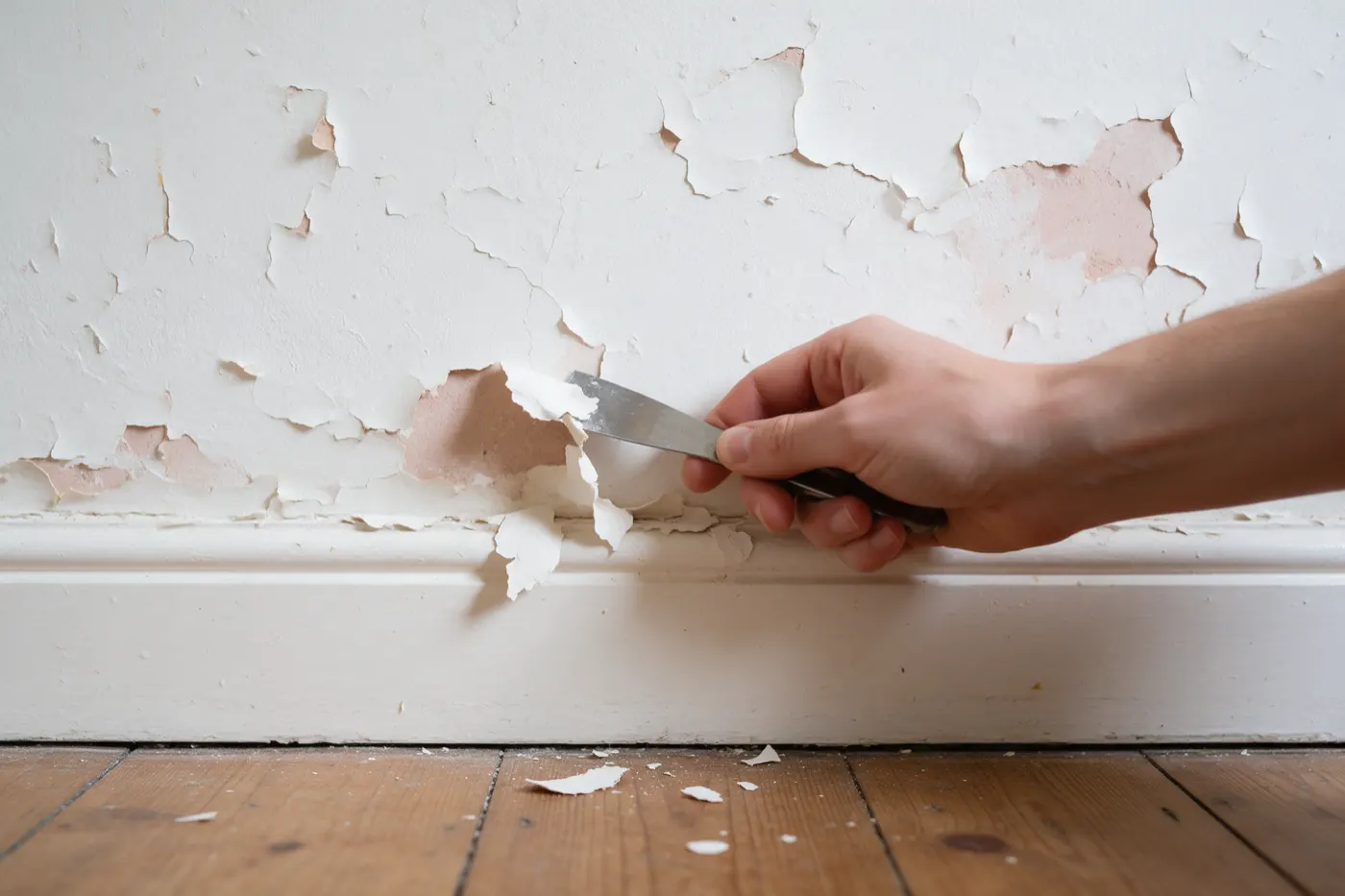
- Scrape off everything loose with a scraper, back to paint that's firmly stuck. If the paint could date from before 1992, read the section on lead below first.
- Sand the edges of the sound paint so they blend into the bare patches (decorators call it feathering), then dust off.
- Wash off grease or grime with warm water and detergent, rinse and let it dry.
- Prime the bare patches, then repaint.
If most of the wall or ceiling is flaking, it's best to strip the whole area back and start again rather than patch it. In an old house, or where the paint could contain lead, get advice before you strip it: stripping old paint can release lead dust, and Historic England warns it can take away layers of history that can't be replaced.
Can you paint over peeling paint?
Not over the loose parts. New paint is only as good as what it's stuck to, so paint over a flake and it comes away with the flake. Once the loose paint is off and the edges are sanded smooth, you can paint over the old paint that's still firmly stuck.
Bathroom and kitchen ceilings
Bathroom and kitchen ceilings often peel because of condensation: moisture from showers and cooking builds up in the air, condenses and gets behind the paint. Repainting won't last until the moisture has somewhere to go, so start with the ventilation: a working extractor fan, used every time, or a window open.
Then scrape, prime and repaint with a paint made for kitchens and bathrooms, which is made to resist moisture and steam. Let it dry fully, as long as the tin says, before the room steams up again. If there's mould as well, see our guide to black mould on walls.
Paint peeling off new plaster
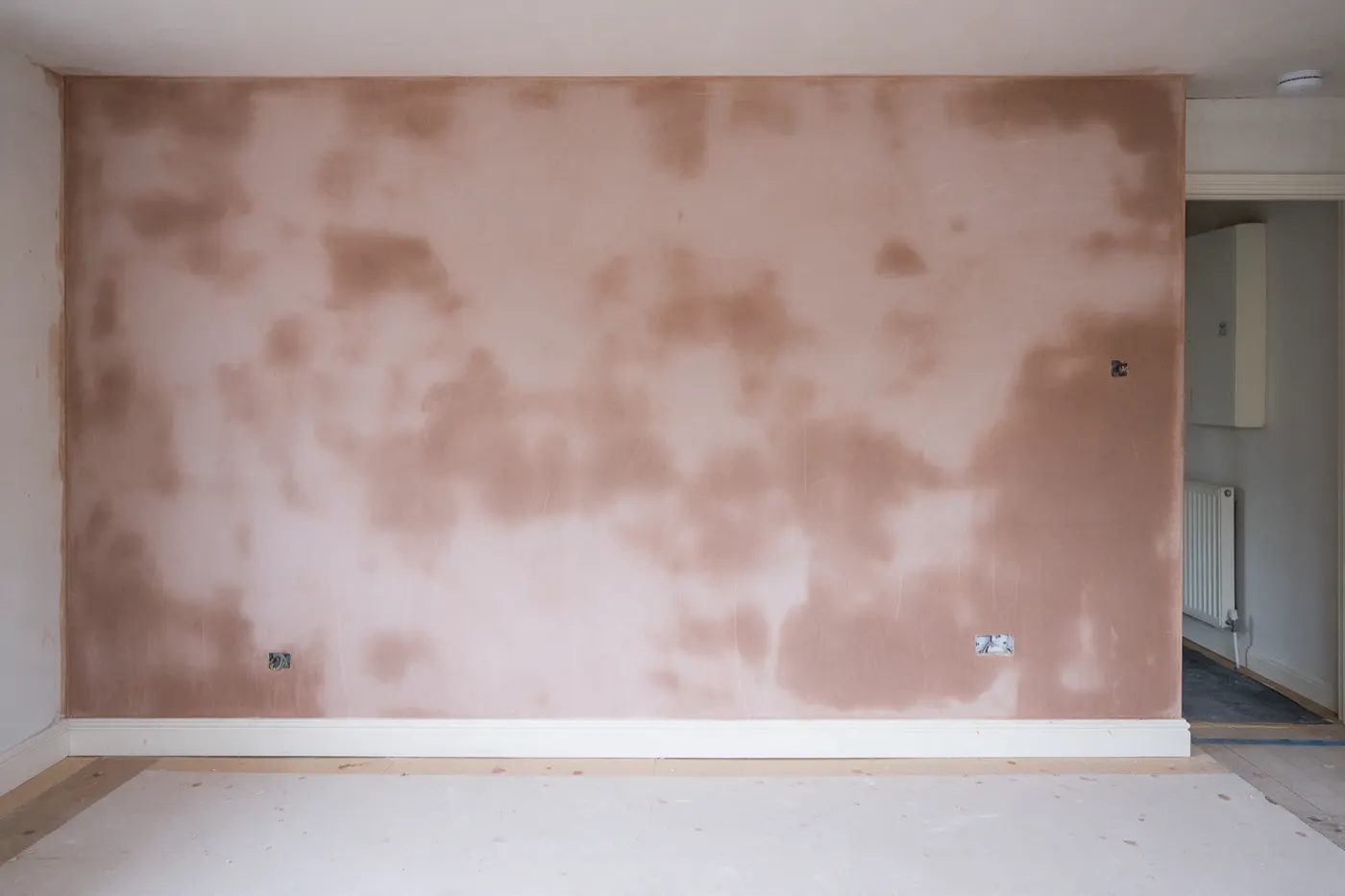
Paint peels off new plaster when it goes on before the plaster is dry, without a mist coat, or over a coat of PVA. Scrape off what's loose, let the plaster dry, then seal it with a mist coat and repaint. Our mist coat guide covers drying times and the mistakes in full.
Old houses and distemper
If paint comes off an old wall or ceiling in big sheets, there may be distemper underneath. Soft distemper is an old water-based paint made from chalk bound with glue, widely used on plaster walls and ceilings before the early 20th century. The SPAB (the Society for the Protection of Ancient Buildings) gives a simple test: it rubs off easily on a damp fingertip, bringing the colour with it. Modern emulsion doesn't grip it well.
Scrape off everything loose and wash off what's left of the distemper before you repaint. Old walls also need to let moisture out, as Historic England points out, or it can cause damp. In an old or listed house, we'd ask a decorator who knows traditional finishes.
When it's damp
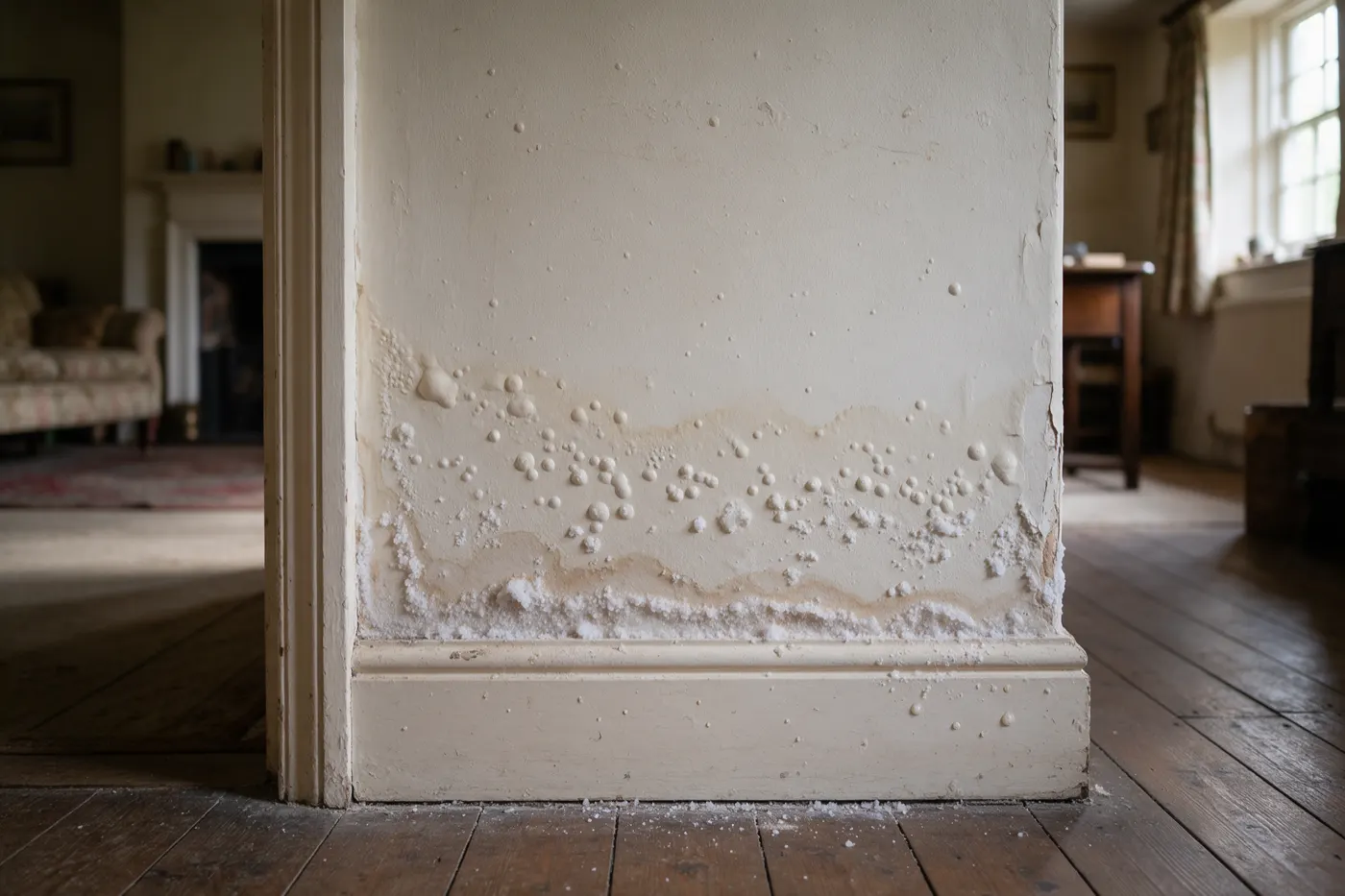
Peeling paint with a damp patch, staining or mould means moisture is the problem, and new paint will peel the same way until it's fixed. Condensation from inside the home is one of the most common causes; it can also be water getting in from outside, or rising damp from the ground. Our black mould guide has the checks, and damp proofing costs covers the bigger fixes.
Old paint and lead
Paint peeling off outside walls
The same rules apply outside: find the cause, scrape back to a firm edge and repaint. Historic England warns that painting brick, stone or concrete walls can create damp problems, and that modern paint can be almost impossible to remove without damage, so on an older house get advice first. For prices, see exterior painting costs.
When to get a decorator
We'd get a decorator for whole ceilings, stairwells, old houses where there may be distemper or lead, and anywhere the peeling keeps coming back after you've fixed the cause. You can ask local decorators to quote with the form below; prices are on our painter and decorator costs page.
What it costs
Prices, what moves them and who to hire, in our cost guides.
Free, no obligation.
Frequently asked questions
Why is my paint peeling off the wall?
Something has broken the paint's grip on the surface: moisture behind it (condensation or damp), a dusty, greasy or crumbly surface, new plaster painted too soon, or modern paint over an old finish such as distemper. Find the cause before you repaint, or it will peel again.
Does peeling paint mean damp?
Not always. Damp and condensation are common causes, but so are poor preparation, grease, new plaster painted too soon and old distemper. If there's a damp patch, staining or mould too, treat it as damp and find where the water is coming from.
Can you paint over peeling paint?
Not over the loose parts: the new paint comes off with them. If the paint could date from before 1992, check the lead advice before you go further. Then scrape back to paint that's firmly stuck, sand the edges smooth, prime the bare patches and paint.
Why is the paint peeling off my bathroom ceiling?
Usually condensation: moisture from showers and cooking gets behind the paint. Sort the ventilation first (a working extractor fan or an open window), then scrape, prime and repaint with a paint made for kitchens and bathrooms.
Why is paint peeling off my new plaster?
Usually because it was painted before the plaster was dry, without a mist coat, or over PVA. Scrape off the loose paint, let the plaster dry, mist coat it and repaint.
Is peeling paint harmful?
It can be if it's old. Lead paint was common before the 1970s and wasn't used after 1992. Young children can be poisoned by eating flakes of it, so keep them away from flaking old paint. When redecorating, exposure is only likely if old paint is scraped or sanded: keep children out of the room until the dust is cleaned up and the room aired.
How do I stop paint peeling again?
Fix the cause first (moisture, grease, dust, unready plaster), scrape back to a firm edge, prime bare areas and use the right paint for the room, such as a kitchen and bathroom paint where there's steam.
How we checked this5 sources · 3 officialView sourcesHide
Rules come from the legislation and official guidance, read at source, and are linked where the guide states them. Practical advice comes from makers', trade bodies' and official guidance. Prices aren't in our guides: they're on the cost pages linked above, each with its own sources. More on our method.
- OfficialI want to redecorate my house (15 May 2013), Historic England. Checked 15 Oct 2026.
- IndustrySoft distemper, SPAB (Society for the Protection of Ancient Buildings). Checked 12 Nov 2026.
- IndustryPaint, SPAB (Society for the Protection of Ancient Buildings). Checked 12 Nov 2026.
- OfficialUnderstanding and addressing the health risks of damp and mould in the home (updated 1 April 2026), GOV.UK (MHCLG, DHSC and UKHSA). Checked 24 Oct 2026.
- OfficialLead: information for the public (published 8 October 2024), UK Health Security Agency (GOV.UK). Checked 27 Oct 2026.